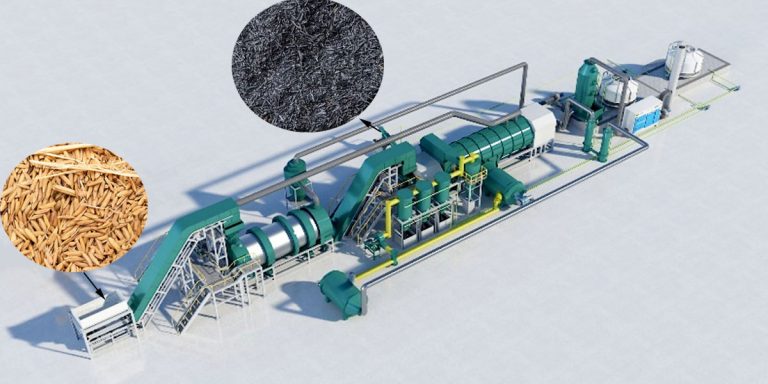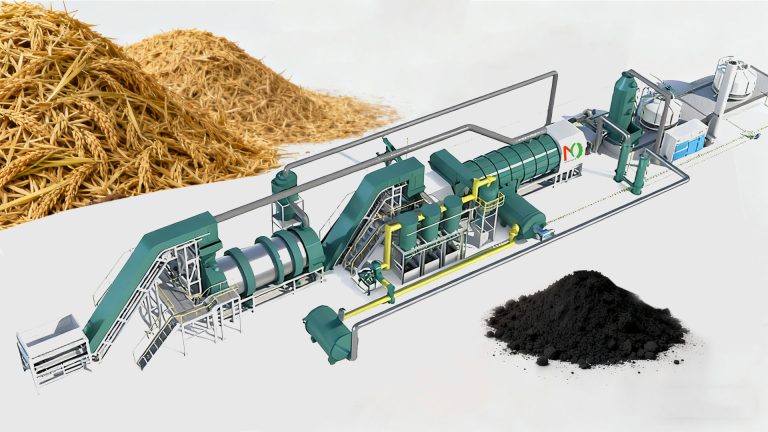
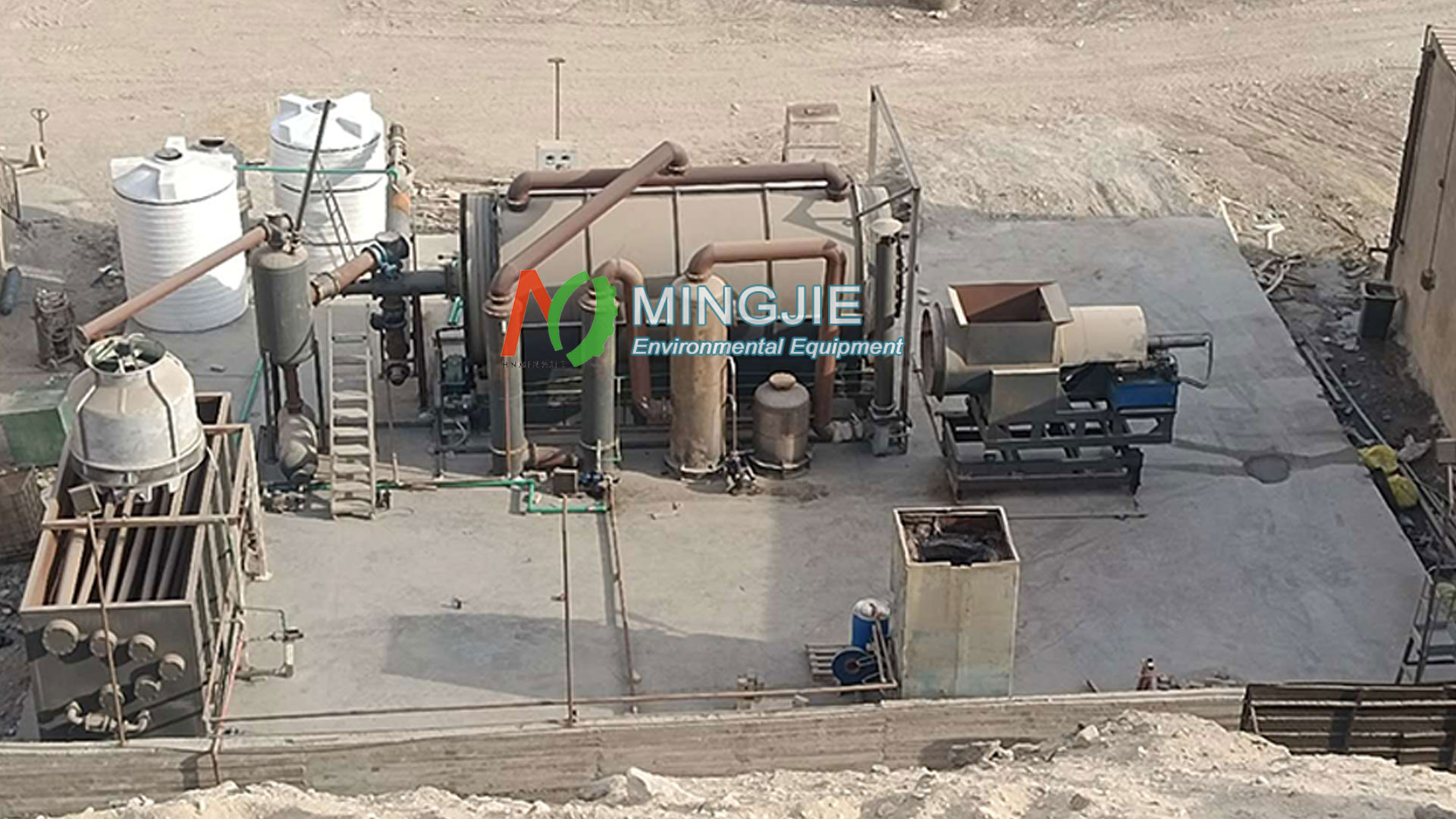
On February 5, 2026, Mingjie Group completed the installation and commissioning of MJ-12 pyrolysis plant in Egypt. The pyrolysis plant can achieve the resource utilization and treatment of waste materials such as plastics, oil sludge, and tires. It has become the choice of many investors for waste recycling projects.
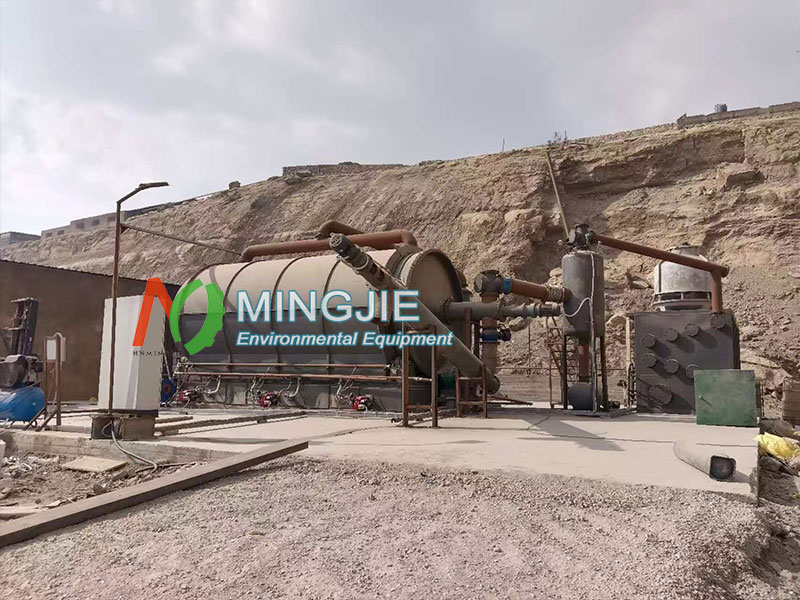
The MJ-12 pyrolysis plant in Egypt consists of feeding system, pyrolysis reactor, heating system, condenser, discharge system, control system, and exhaust gas treatment system. After debugging, pyrolysis plant in Egypt successfully converted waste plastics into pyrolysis oil, carbon black, and syngas.
Running of Plastic Pyrolysis Plant in Egypt
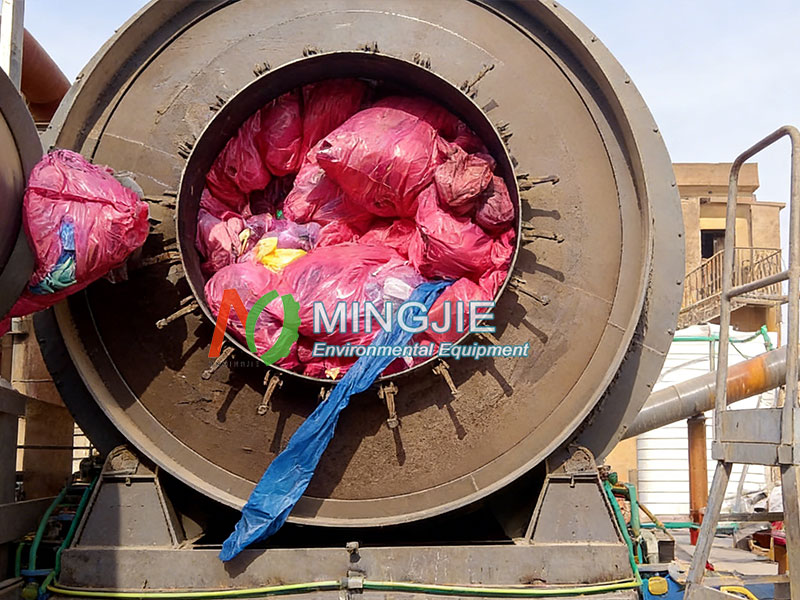
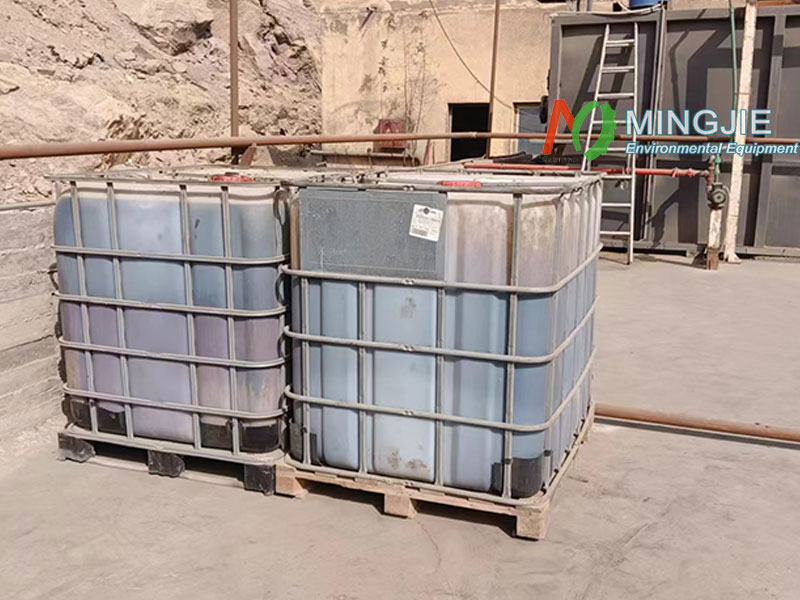
The MJ-12 pyrolysis plant in Egypt uses a batch mode for the thermal decomposition of waste. The operating cycle of a batch pyrolysis system includes feeding and sealing, heating and pyrolysis reaction, product separation and collection, cooling and residue discharge.
Feeding and Sealing
Waste plastics are loaded into the pyrolysis reactor through the feeding system. The reactor door is then closed and completely sealed. This is crucial for creating an oxygen-free environment.
Heating and Pyrolysis Reaction
The pyrolysis reactor is heated using an external heat source (such as a fuel oil, gas burner, or electric heater). External fuel is typically used during the initial heating phase.
The pyrolysis reactor is the core equipment of pyrolysis plant in Egypt. It is made of high-temperature and high-pressure resistant stainless steel and has a lifespan of 5-8 years.
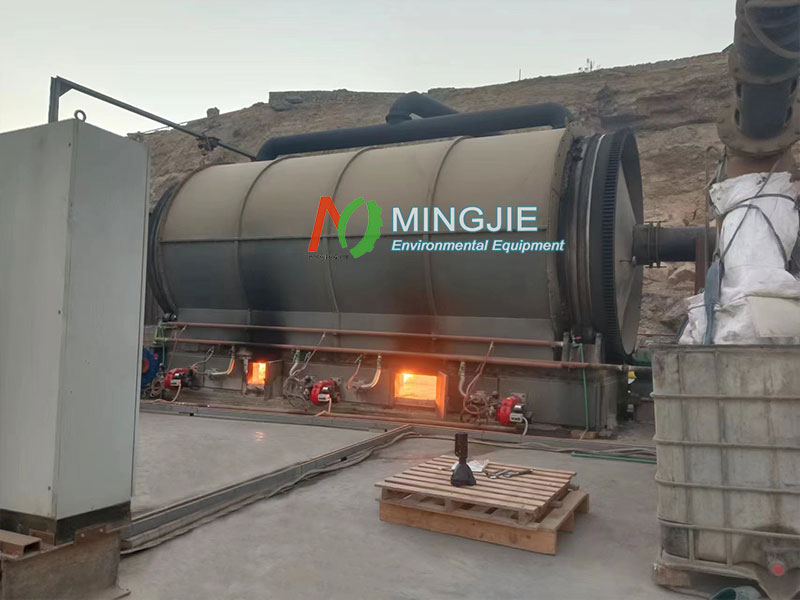
- As the temperature rises, the plastic begins to soften and melt at 200–300 ℃.
- At 300–380 ℃, the long chains of the polymer break down, producing a mixture of oil and gas vapors and a small amount of gas.
- At 380–500 ℃, a large amount of pyrolysis oil and combustible gas are generated.
Product Production and Separation
The high-temperature oil and gas mixture produced by the reaction is discharged from the top of the pyrolysis reactor.
The high-temperature oil and gas enter the condensation system of pyrolysis plant in Egypt. The oil and gas are rapidly cooled by circulating cooling water. The condensable components condense to form pyrolysis oil, which is collected in a storage tank.
Plastic Pyrolysis Oil
Pyrolysis oil is the most valuable and highest-yielding product of plastic pyrolysis. It is a viscous liquid, dark brown or black in color, with a complex composition. Further distillation of pyrolysis oil can refine it into transportation fuels, such as gasoline and diesel.
Raw materials include waste plastics such as PE/PP/PS (excluding PVC/PET). Polyolefin plastics such as PE, PP, and PS have the highest oil yield, reaching 70%-90%.
PET does not produce oil during the pyrolysis process. Furthermore, it releases oxygen during pyrolysis, which violates the anaerobic reaction conditions of plastic pyrolysis equipment.
PVC produces hydrogen chloride after pyrolysis, which corrodes pipelines. In addition, the finished oil also contains chlorine. Burning PVC pyrolysis oil releases dioxins, which are carcinogens.
Non-condensable Syngas
The non-condensable syngas, after passing through a gas purification system, is introduced into the pyrolysis gas burner. The purification system cools the exhaust gas and removes dust. Finally, the exhaust gas is discharged through the chimney.
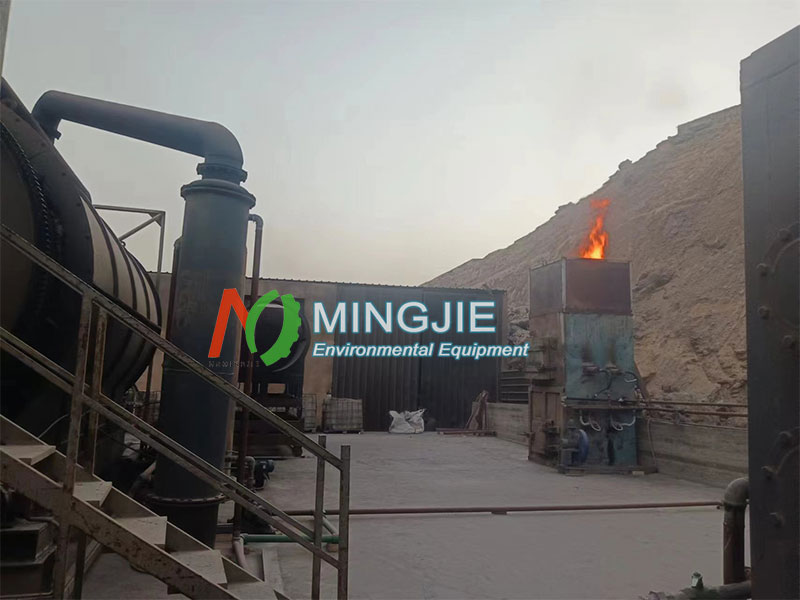
Syngas accounts for 10–30% of the plastic pyrolysis products and can be used for self-heating. Burning this gas provides the energy to continuously heat the reactor. Typically, after a certain period from the start of the reaction, the pyrolysis plant in Egypt can sustain the pyrolysis process using the syngas produced.
Cooling and Slag Removal
When the oil yield decreases and the oil color turns dark brown, the oil extraction process is essentially complete. After the reaction, the pyrolysis reactor is allowed to cool naturally or is force-cooled by introducing a cooling medium.
The solid residue carbon black has a temperature between 300-450°C. It is discharged and cooled by a water-cooled screw conveyor before being collected.
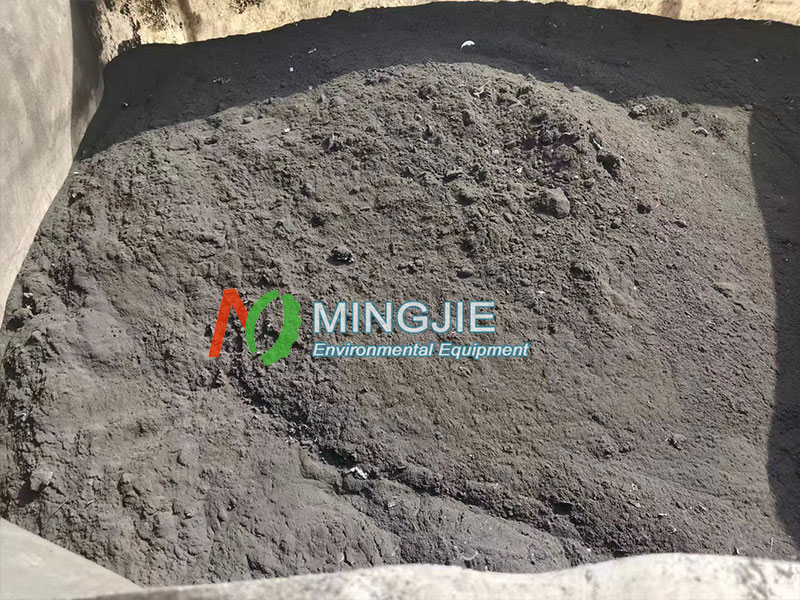
The carbon black produced from the pyrolysis of PE and PP is relatively pure. It mainly consists of carbon, has a low yield (approximately 1-3%), but possesses high potential value. The carbon yield from PS pyrolysis is extremely low.