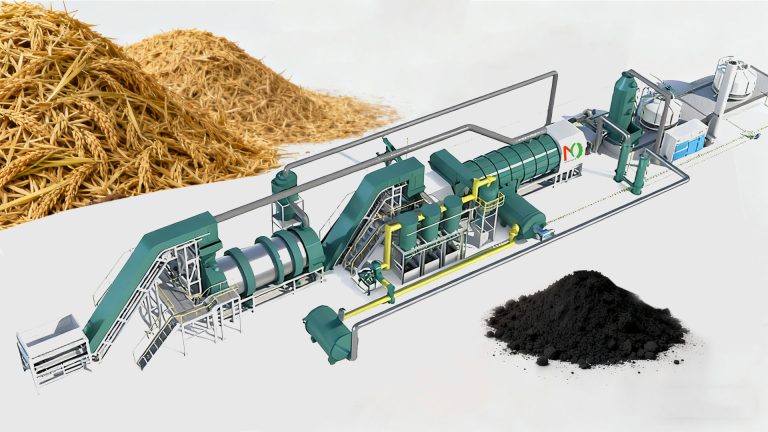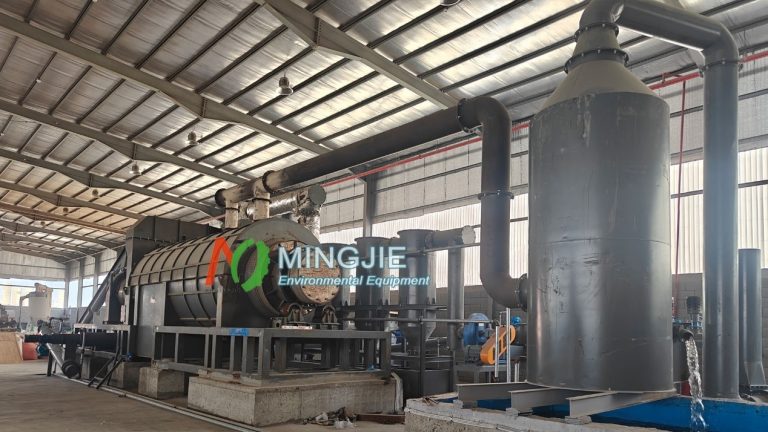
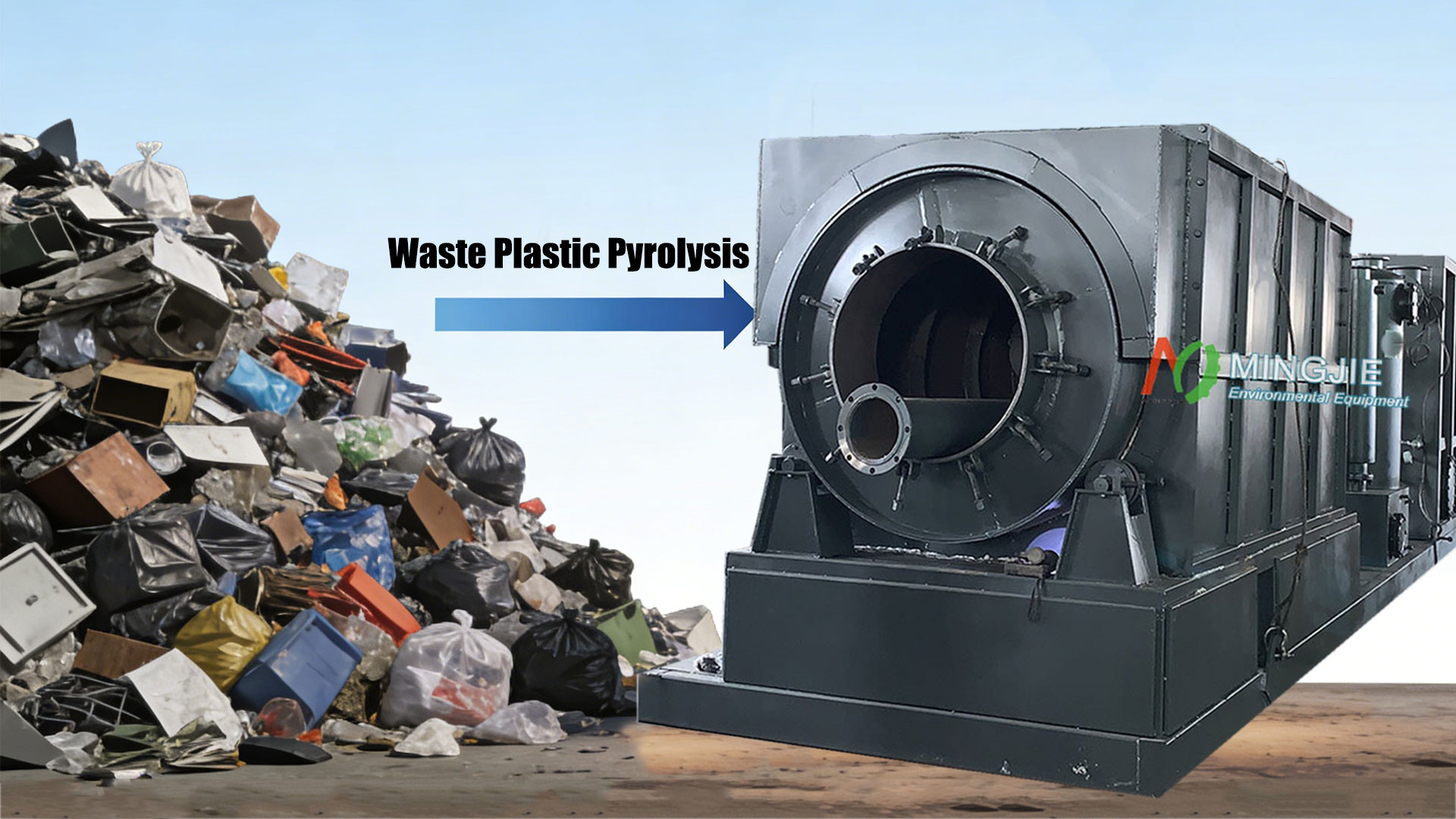
In municipal solid waste management, pyrolysis technology demonstrates exceptional volume reduction capabilities in the waste plastic disposal. It is gradually becoming a key force in alleviating the pressure on landfills and incineration facilities.
Pyrolysis technology, as a new method for waste plastic disposal, differs fundamentally from traditional landfill and incineration. Its working principle is based on the decomposition of organic matter in waste through high temperatures in an oxygen-free or low-oxygen environment.
When municipal solid waste enters the plastic pyrolysis plant, it is heated to a specific temperature range under oxygen-free conditions. As the temperature rises, the organic molecules in the waste become more active, and chemical bonds gradually break. Large organic molecules are progressively broken down into smaller molecules of combustible gases, liquid fuels, and solid residues.
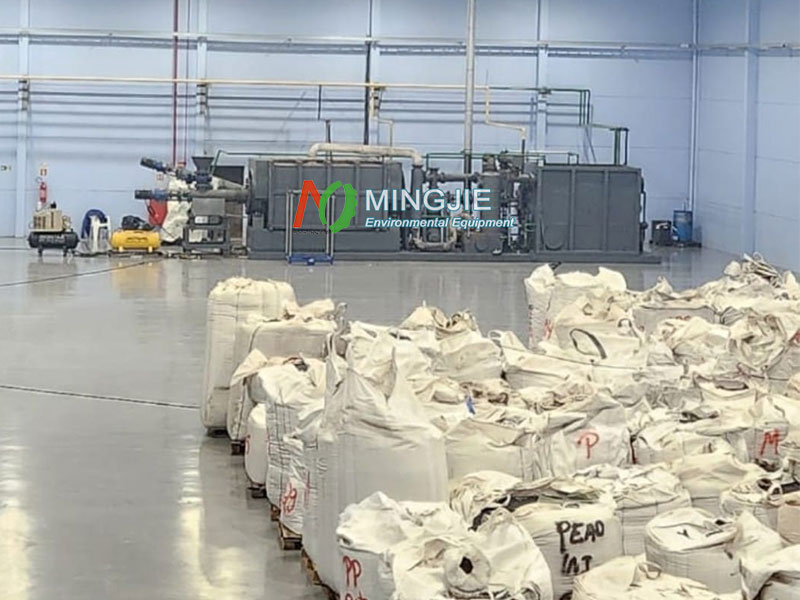
Pyrolysis equipment has selective processing capabilities for waste plastics. Suitable plastic types for pyrolysis include polyethylene (PE), polypropylene (PP), and polystyrene (PS). Polyvinyl chloride (PVC) and polyethylene terephthalate (PET) are not ideal for pyrolysis.
PVC contains chlorine, and pyrolysis releases corrosive hydrogen chloride gas and highly toxic dioxins, severely damaging equipment and causing environmental pollution. PET contains oxygen in its molecular chain, resulting in low-value pyrolysis products and easily causing blockages in the pyrolysis equipment.
Classification of Household Plastic Waste
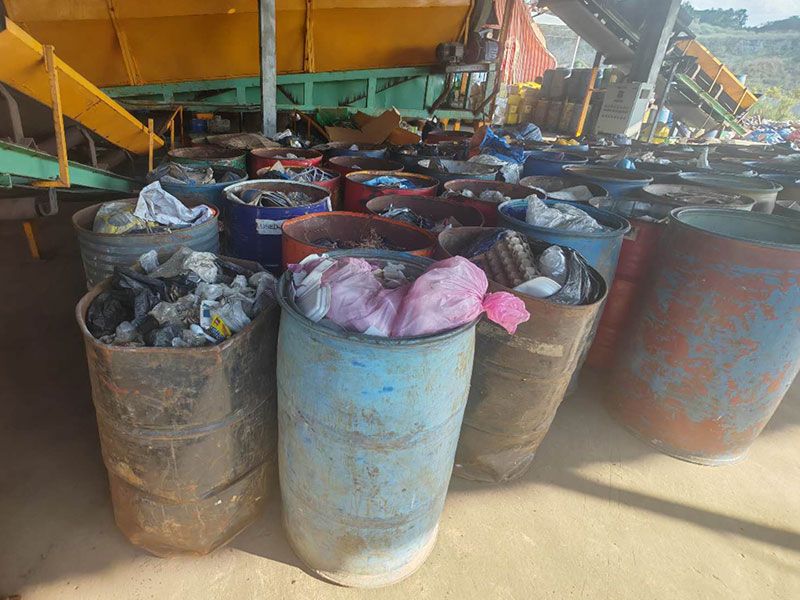
Waste plastics in household waste mainly come from plastic products that we discard after daily consumption and use. Based on their source and properties, they can be mainly divided into the following categories:
Disposable packaging materials, including shopping bags, food packaging bags, express delivery bags, foam packaging, plastic food containers, and beverage bottles. The main types of plastics are polyethylene (PE), polypropylene (PP), and polystyrene (PS).
Daily consumer goods, including buckets, basins, cups, plates, toys, toiletries containers, and clothing packaging. These are diverse in type, mainly consisting of polyolefins (such as PE and PP).
Waste from specific industries, such as agricultural films, fertilizer bags, fishing nets, and construction pipes, which are mainly polyethylene (PE).
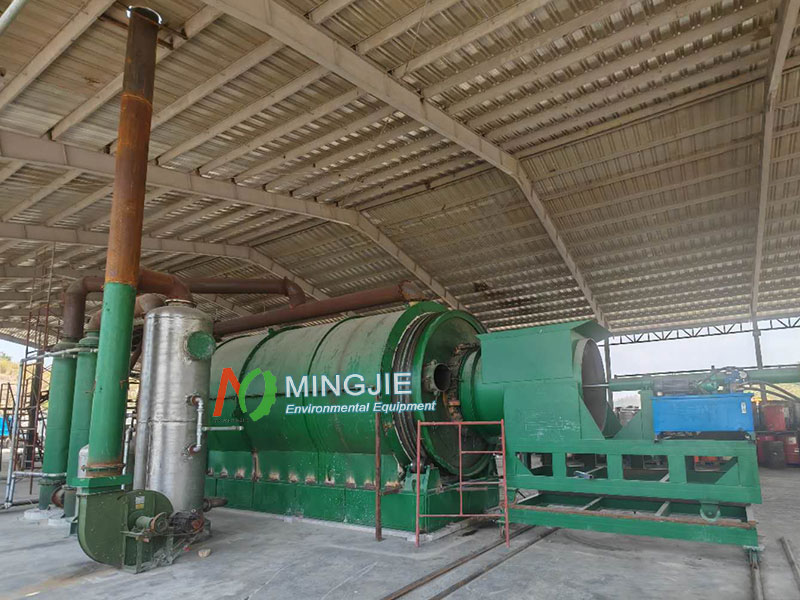
Pyrolysis Equipment for Waste Plastic Disposal
Pyrolysis equipment can convert organic matter in municipal solid waste into valuable resources. It provides a chemical recycling pathway for the waste plastic disposal in municipal solid waste.
Mingjie pyrolysis machine improves the pyrolysis efficiency of plastic waste through a rotating kiln design. After the material enters the furnace through the feed port, it continuously tumbles as the furnace rotates, ensuring even heating. This plastic pyrolysis equipment can process mixed municipal solid waste of various shapes and properties.
Advantages of Municipal Solid Waste Pyrolysis
Pyrolysis technology demonstrates exceptional volume reduction capabilities in MSW waste plastic disposal. Through high-temperature decomposition, pyrolysis equipment can reduce waste volume by more than 80%. This not only alleviates the pressure on landfills but also saves valuable land resources for sustainable urban development.
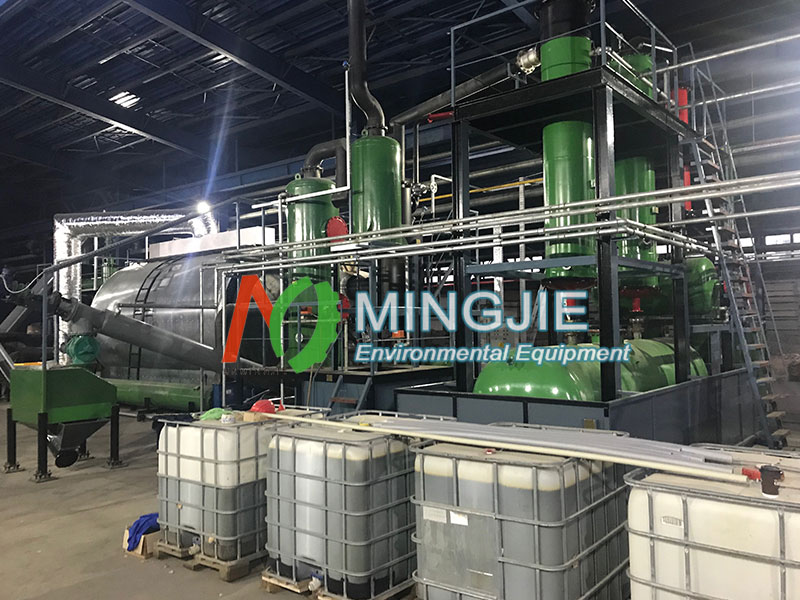
Pyrolysis equipment can convert organic matter in municipal solid waste into pyrolysis oil, carbon black, and synthesis gas. Pyrolysis oil has high utilization value and can be used as fuel in industrial boilers. After further distillation and refining, plastic pyrolysis oil can even become high-quality transportation fuel. Carbon black is an indispensable raw material in industrial production, widely used in rubber, plastics, inks, and other industries.
Pyrolysis technology has significant environmental advantages, effectively reducing secondary pollution. Municipal solid waste pyrolysis plant is carried out in an oxygen-free or low-oxygen environment, fundamentally inhibiting the generation of dioxins.
At the same time, heavy metals and other harmful substances produced during the waste plastic pyrolysis process are stably solidified in the residue. Furthermore, the amount of flue gas produced by pyrolysis is relatively small. It can effectively remove pollutants through a flue gas purification system, ensuring that emissions meet strict environmental standards.