Pyrolysis technology is the most effective treatment technology for waste tyre recycling, and represents the current development direction of waste tyre disposal. Waste tyre pyrolysis is a chemical reaction process carried out in the absence of oxygen or in an inert gas, producing pyrolysis oil, carbon black, synthesis gas, and steel wire. The tyre pyrolysis oil (TPO) and recovered carbon black (rCB) obtained from the pyrolysis equipment are sold to the market as energy sources, with good market prospects.
Tyre pyrolysis plant is an environmentally friendly and pollution-free method for waste tyre disposal. It converts waste tires into pyrolysis oil and carbon black, thus maximizing the recycling and utilization of waste resources.
Waste Tyre Disposal Plant for TPO Production
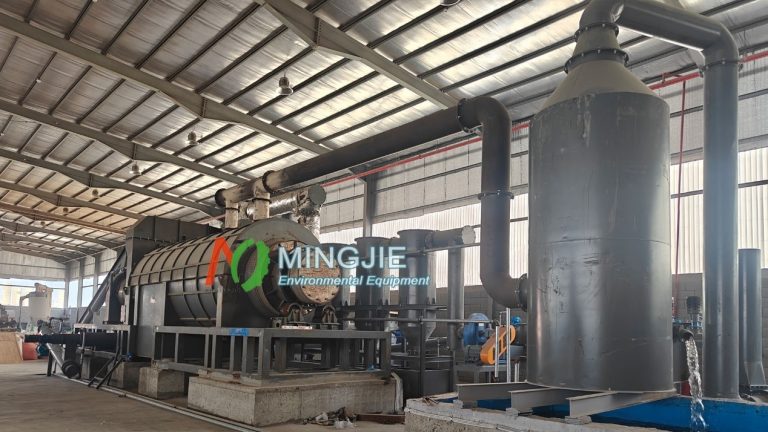
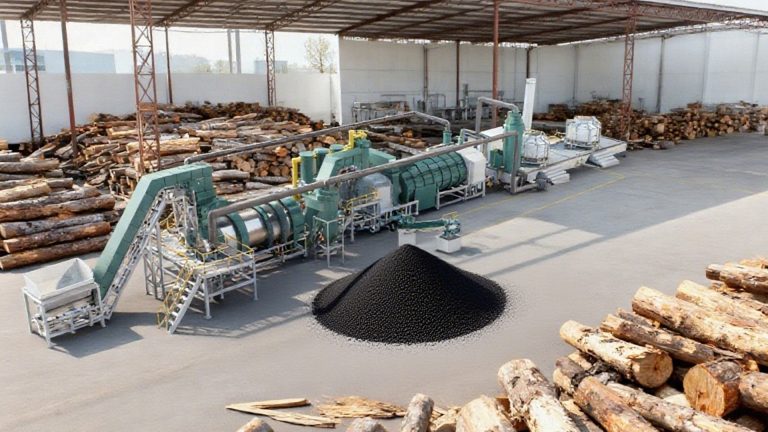
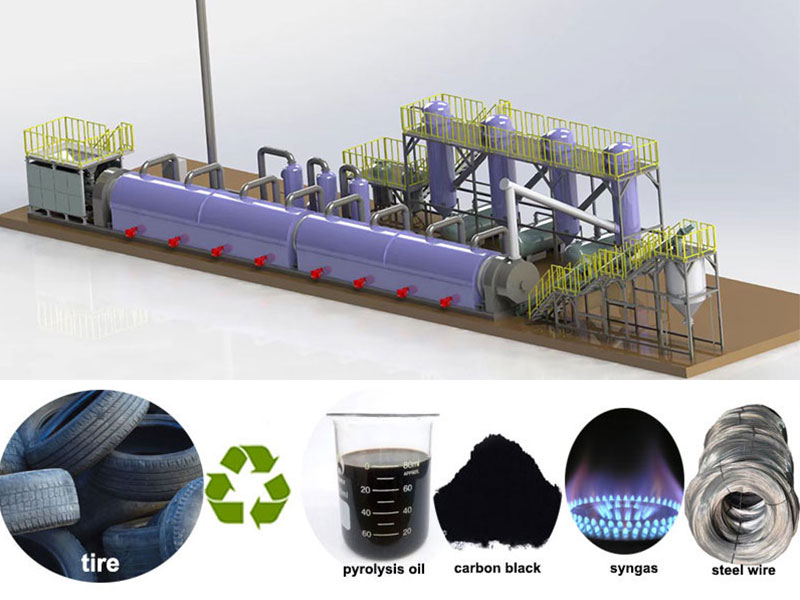
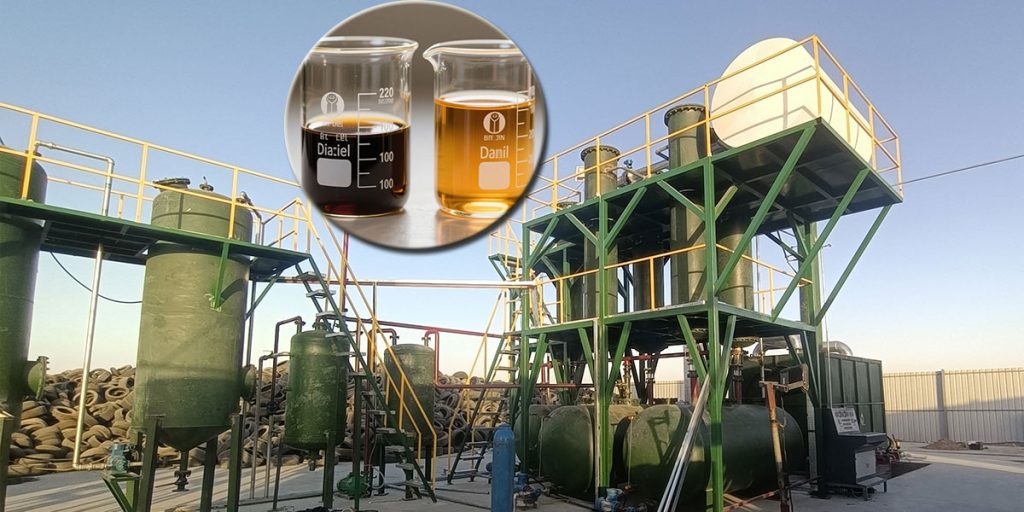
The waste tyre disposal plant mainly includes feeding system, pyrolysis system, oil gas cooling system, discharge system, flue gas purification system, circulating cooling water system, PLC intelligent control system, and safety warning system.
The pyrolysis reactor is equipped with feed inlet, flue gas outlet, and oil gas outlet. The lower part of the furnace body has a solid material discharge port connected to the carbon black recovery system. The flue gas outlet is connected to the flue gas emission system through a flue pipe. The oil gas outlet is connected to the oil and gas recovery system through an oil and gas discharge pipe.
The pyrolysis reactor uses a closed furnace body to ensure that the waste tyre disposal process is always carried out in an oxygen-free environment. The carbon black recovery system is equipped with a jacketed screw cooling conveyor. The jacketed screw cooling conveyor includes a shell with a water-cooled jacket, and a screw conveying mechanism is installed inside the shell.
TPO Production Process
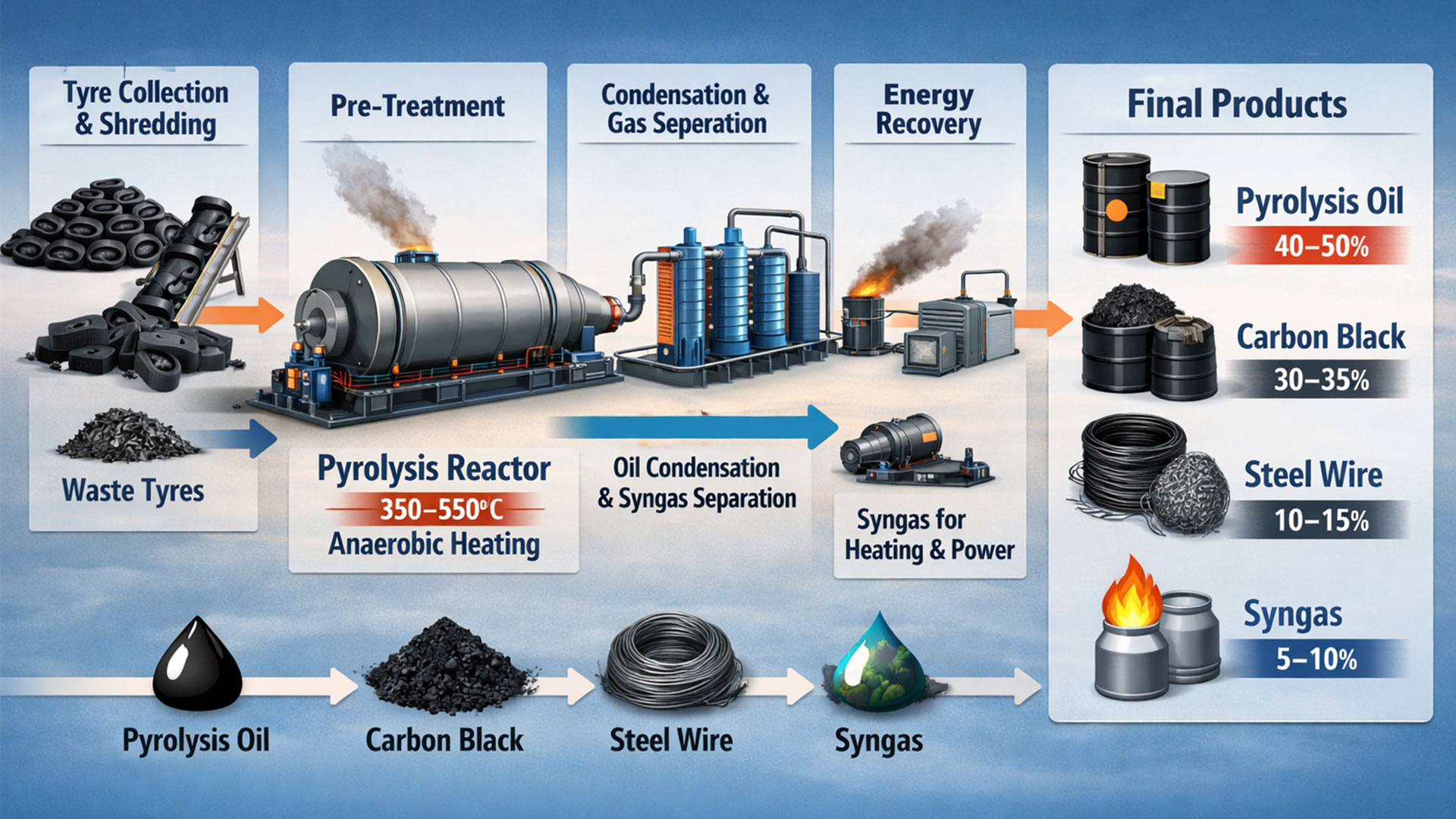
Waste tyres are fed into the pyrolysis reactor via a feeding machine. The material undergoes a pyrolysis reaction under oxygen-free or low-oxygen, normal pressure, and sealed conditions. The tyre pyrolysis oil and gas are then fractionated and cooled to obtain fuel oil and a small amount of non-condensable combustible gas.
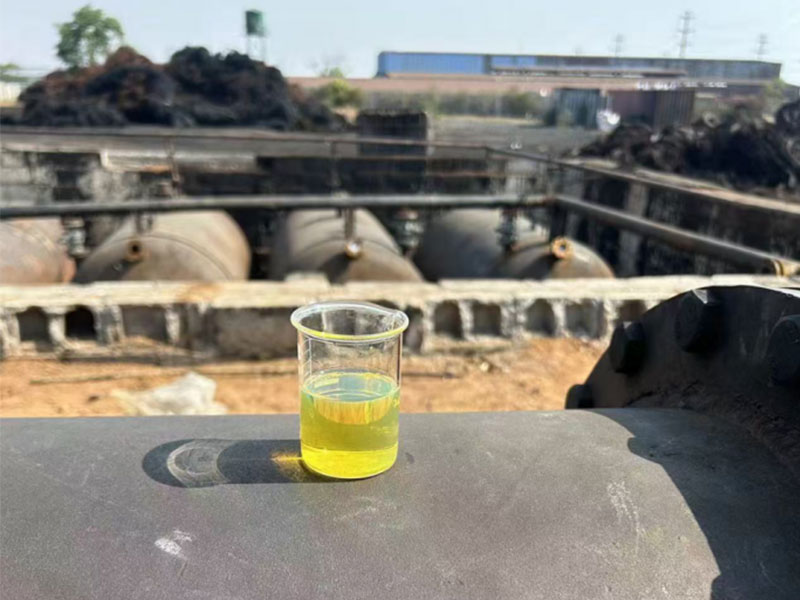
Tyre pyrolysis oil is a high-calorific fuel oil, with a calorific value of approximately 44.30 MJ/kg. Crude tire pyrolysis oil is a dark-colored oil. It can be used directly as fuel in non-precision combustion applications such as industrial boilers, cement kilns, and steel plant heating.
Crude tyre pyrolysis oil can also be processed through distillation system to obtain a clearer fuel oil, separating out diesel and gasoline fractions.
The non-condensable combustible gas is purified by purification system and recycled back to the pyrolysis heating system. The solid products obtained from pyrolysis (carbon black and steel wire) are cooled and magnetically separated, and then transported to the solid product processing and storage workshop.
Environmental and Economic Advantages of Waste Tyre Pyrolysis
- Achieves reduction, harmless treatment, and resource utilization of waste tyres.
- Avoids pollution caused by landfilling and open burning.
- Low system energy consumption and recyclable combustible gas.
- Tyre pyrolysis products have stable market demand.
- Can be integrated with LCA (Life Cycle Assessment) and carbon emission accounting.
- Suitable for ESG and circular economy projects.
From an industrial economics perspective, waste tyre disposal pyrolysis projects have excellent profitability and return on investment. Project revenue comes not only from the sale of fuel oil but also from the added value of by-products such as carbon black and combustible gases.
Companies using advanced technologies generally achieve gross profit margins of over 40%, significantly higher than the 20% typical of companies using traditional processes. The average investment payback period in the industry is 3-5 years, which is significantly shorter than that of typical environmental protection projects.
With increasing global demands for solid waste management and carbon emission reduction, the waste tyre disposal by pyrolysis equipment is gradually developing towards continuous, large-scale, and standardized operations.