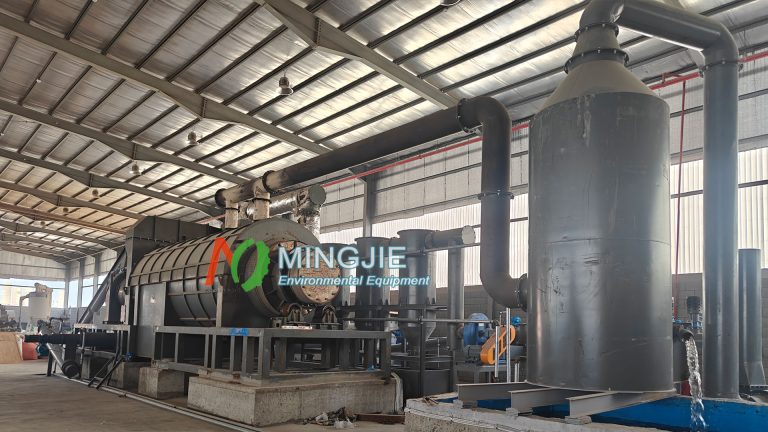
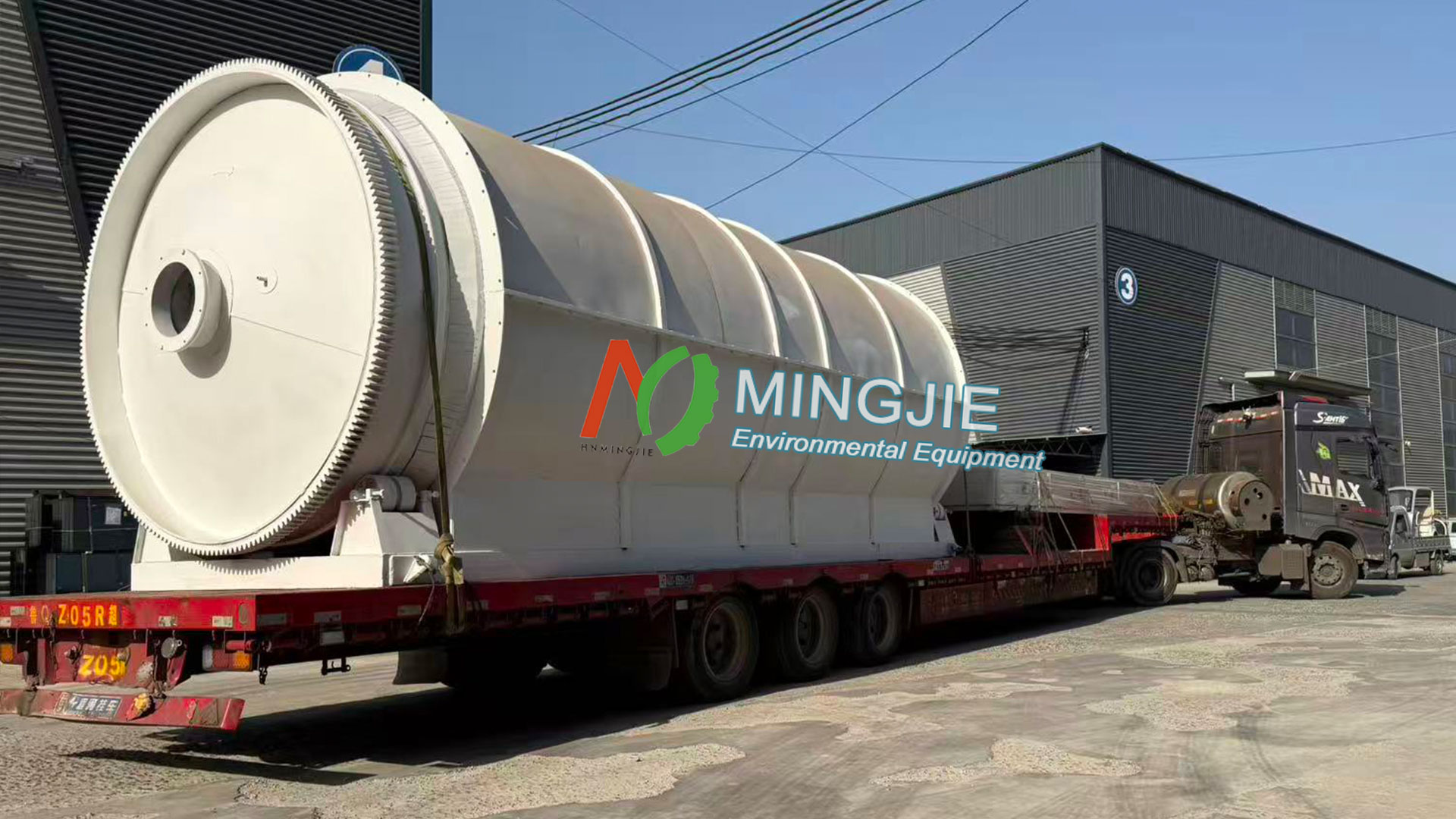
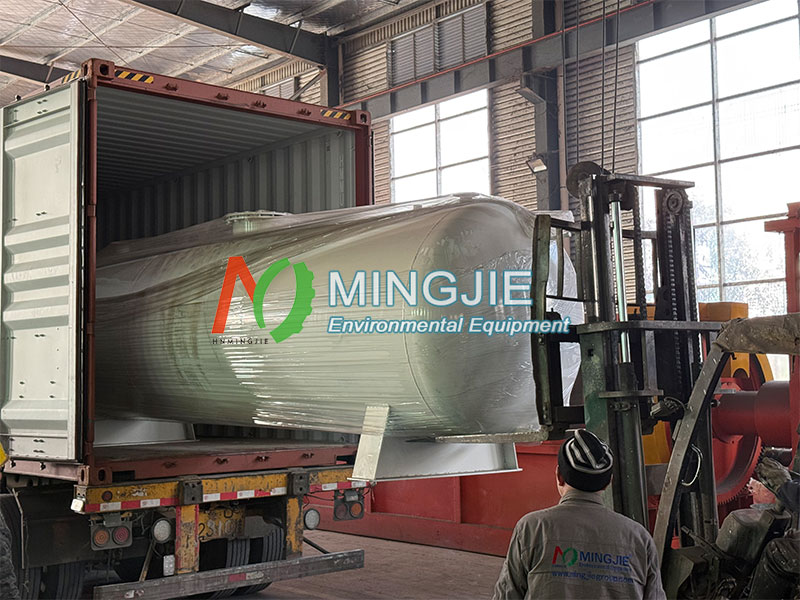
On December 5, 2025, Mingjie Group completed the shipment of the MJ-15 pyrolysis plant for sale to Argentina from the factory. This customer purchased two pyrolysis units for processing solid waste, thereby converting waste into fuel oil.
The MJ-15 pyrolysis plant features a large furnace door design and is equipped with feeding system. It can process various types of waste, including waste tires, plastics, solid municipal waste, medical waste, and oil sludge. MJ-15 pyrolysis plant for sale to Argentina will bring significant ecological and economic benefits to waste management.
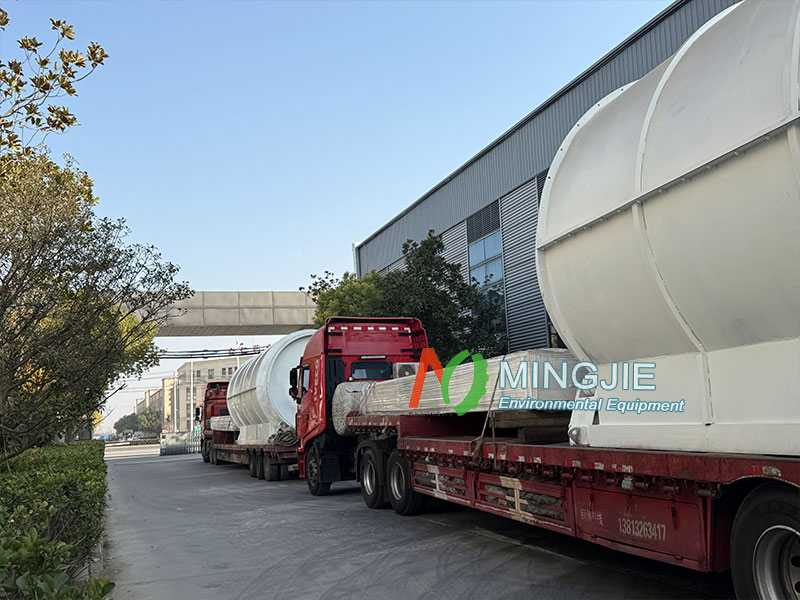
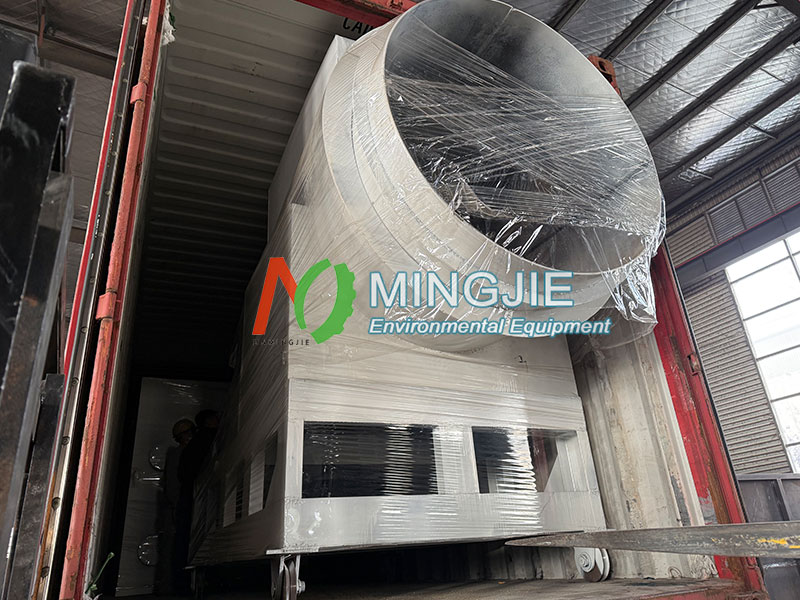
Main Systems of Pyrolysis Plant for Sale to Argentina
A pyrolysis plant is not a single piece of pyrolysis equipment. The pyrolysis plant for sale to Argentina primarily consists of feeding system, pyrolysis reactor, condensation system, exhaust gas purification system, and control system.
Feeding System
The feeder adjusts the feeding speed through frequency conversion control. It is also equipped with a sealed structure to prevent air from entering the reactor. An oxygen-free environment is crucial for the pyrolysis of solid waste. Air ingress can lead to waste combustion and the production of harmful gases.
Pyrolysis Reactor
It is the core component of Pyrolysis Plant for Sale to Argentina, converting waste into energy (fuel oil, synthesis gas, and carbon black) in an oxygen-free environment. The rotary kiln is a type of reactor commonly used in the thermal decomposition of solid waste. Through continuous rotation and tumbling, it can uniformly convert waste materials such as tires and plastics into fuel oil.
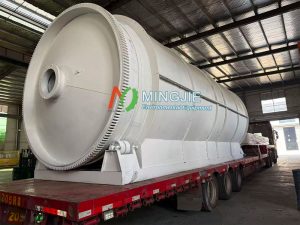
Advantages of Rotary Pyrolysis Reactor
- Material Conveyance and Mixing: The rotary kiln pyrolysis reactor is tilted and rotates slowly, allowing the materials to tumble and move from the higher end to the lower end under the influence of gravity and friction.
- Efficient Heat Transfer: Heat is typically supplied from an external furnace surrounding the kiln body (indirect heating). Although this heating method has lower thermal efficiency, it ensures a completely oxygen-free environment inside, which is crucial for producing high-quality pyrolysis oil.
- Strict Atmosphere Control: Sealing devices are used at both ends of the pyrolysis reactor to maintain an oxygen-free environment inside. This is the fundamental prerequisite for waste to undergo pyrolysis rather than combustion.
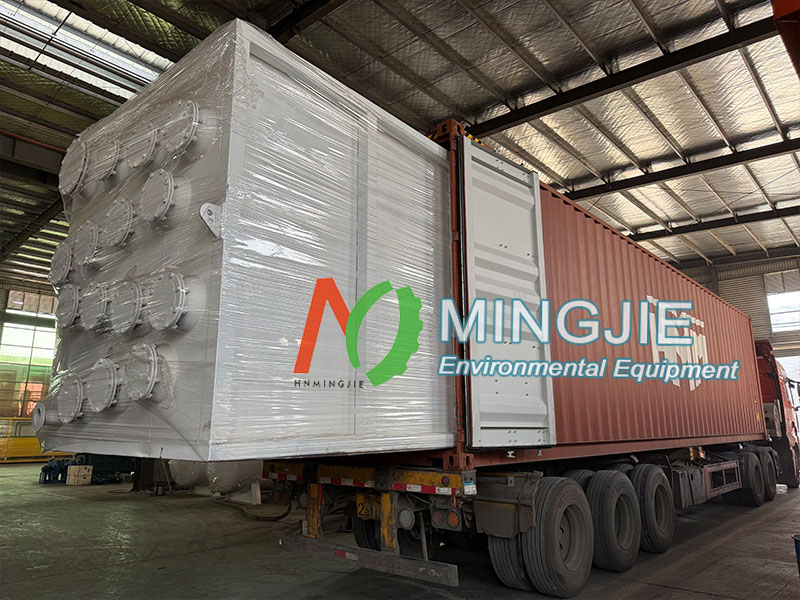
Integrated Condenser
It integrates multiple functions required for the oil and gas cooling process into a compact, box-like structure. Integrated condenser in Pyrolysis Plant for Sale to Argentina enables efficient and continuous liquefaction and recovery of pyrolysis oil. The core advantages of this integrated design are high efficiency, energy saving, space saving, and simplified operation. It improves the oil yield and oil quality stability of solid waste pyrolysis by optimizing the process.
Exhaust Gas Purification System
To meet Argentina’s stringent environmental standards, the exhaust gas purification system employs a multi-stage treatment process to ensure compliance with emission limits. The purification system includes a spray tower, a dust collector, and a denitrification unit. After treatment by the entire system, the exhaust gas is rendered harmless before discharge.
Control System
The control system can adjust the operating parameters of each unit. It significantly reduces downtime and ensures the stable operation of the project.
The core value of the pyrolysis plant for sale to Argentina lies in the synergistic interaction of its various systems, rather than the performance of any single module.
The feeding system feeds the waste into the pyrolysis reactor. The reactor, operating in an oxygen-free environment at 400-800℃, produces pyrolysis gas while simultaneously separating out carbon black. The pyrolysis gas is then condensed to obtain fuel oil. The exhaust gas is treated through desulfurization, adsorption, and dust removal before being discharged in compliance with environmental standards.
Throughout the entire process, the control system continuously adjusts the parameters of each stage, ensuring precise matching at every step.