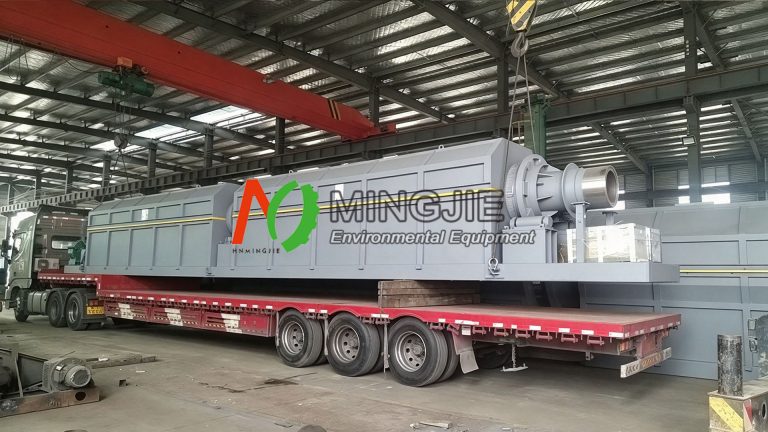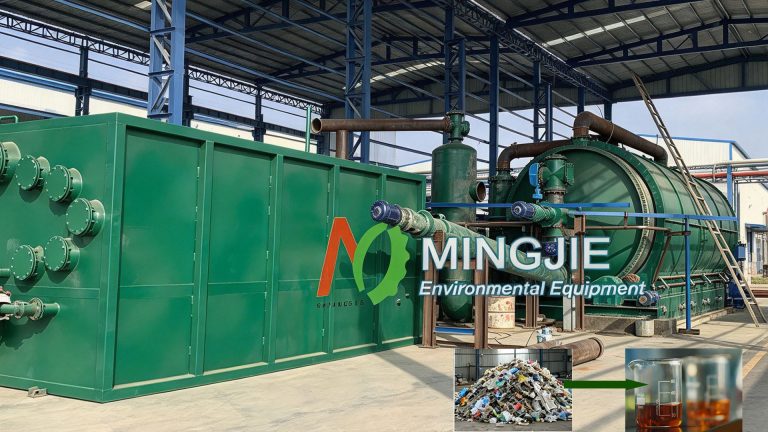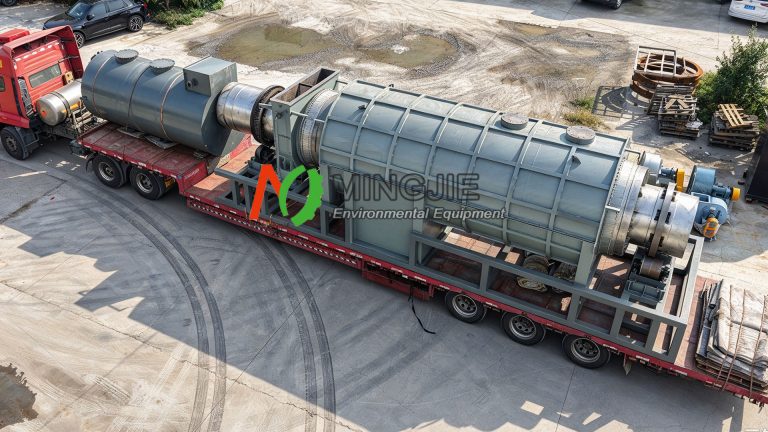
Pyrolysis is currently the most commonly used method for producing biochar. Making biochar from wood chips is in a high-temperature, oxygen-deficient environment using biomass pyrolysis equipment. The manufacturing process of biochar involves transforming disordered biomass macromolecules through thermochemical conversion, rearranging them into highly ordered aromatic carbon structures.
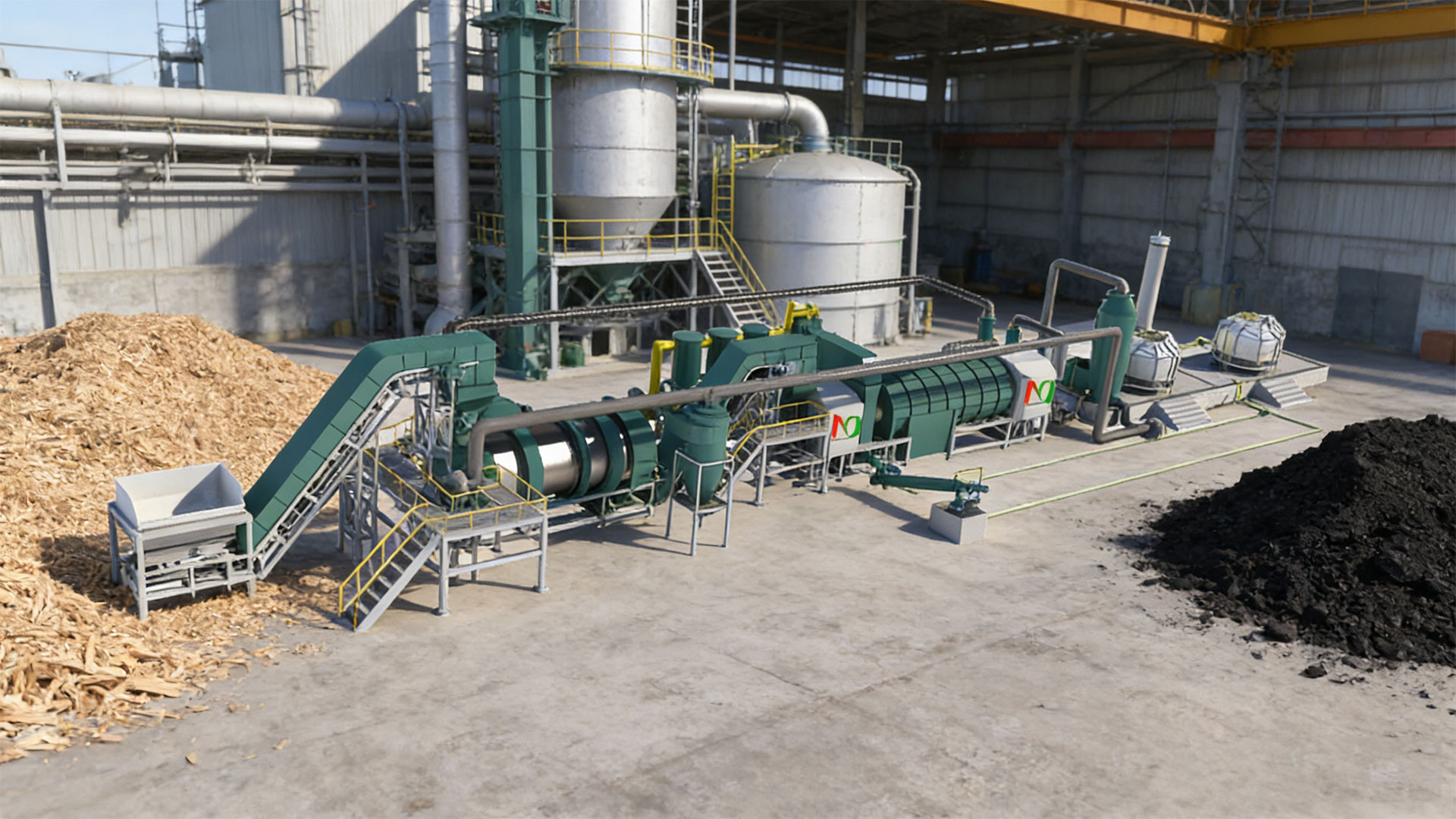
The continuous pyrolysis system integrates multiple stages, including drying, pyrolysis, gas combustion, and product cooling. It achieves continuous feeding of wood chips and automated operation. Mingjie biomass pyrolysis plant is suitable for large-scale industrial production of wood biochar.
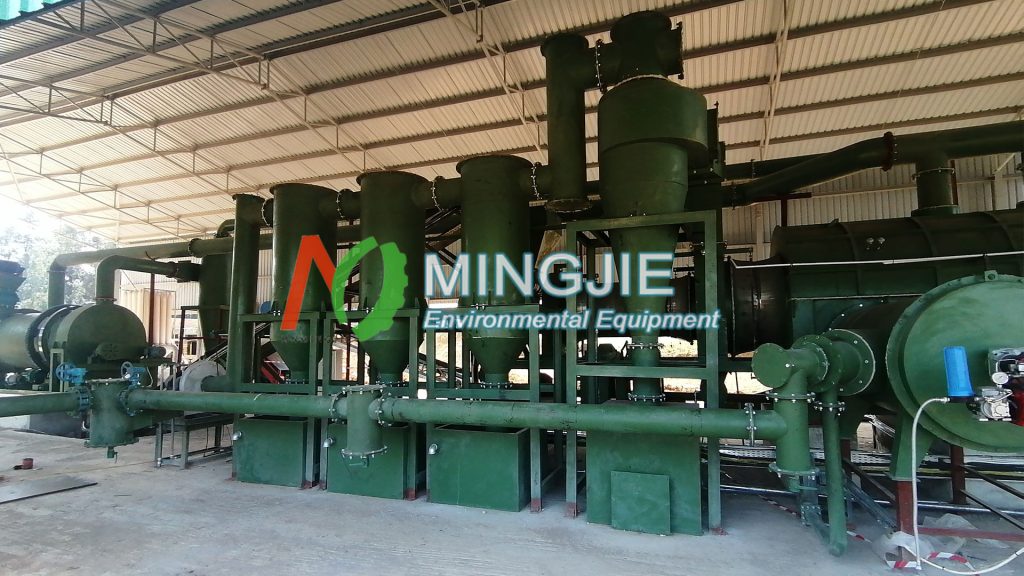
Wood Chips Biochar Making Process
Pre-treatment
Continuous pyrolysis requires extremely high consistency of raw materials. The raw material size must be less than 20mm, and the moisture content must be stably controlled below 15%. Continuous biochar production plant can utilize the waste heat from the pyrolysis gas to heat and dry the drying system.
Continuous Feeding and Pyrolysis
The pre-treated wood chips are fed into the carbonization furnace at a constant speed via a variable-frequency conveyor. The feeding speed must be precisely matched with the pyrolysis rate and discharge speed. All interfaces of the furnace body are sealed with high-temperature resistant materials to ensure oxygen-free pyrolysis conditions.
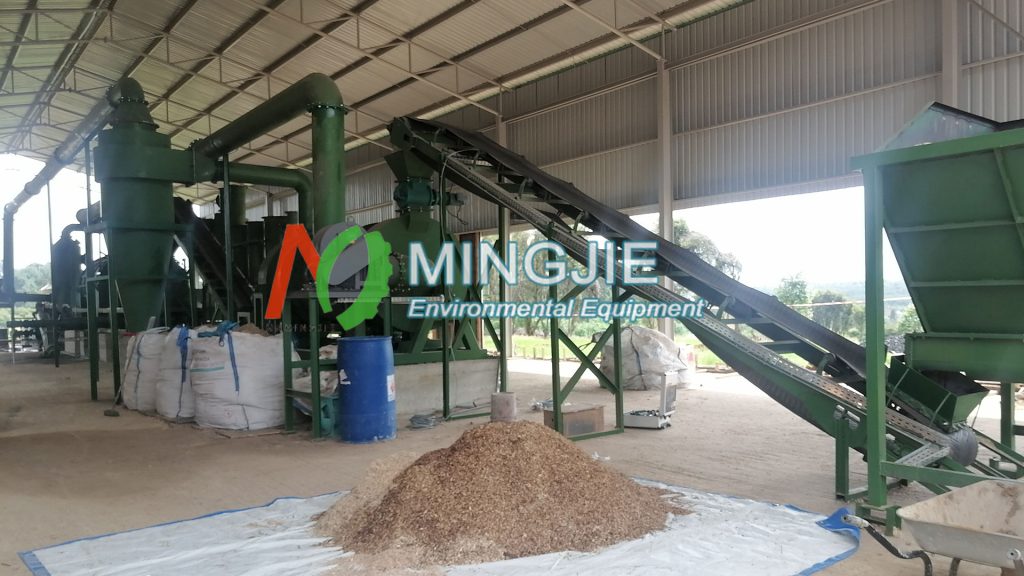
Continuous pyrolysis adopts a segmented temperature control mode, divided into drying section, pre-pyrolysis section, main pyrolysis section, and carbonization section. The temperature of each section is precisely controlled to achieve efficient conversion.
- The drying section temperature is controlled at 120-180℃. This further removes residual moisture from the raw materials, preventing it from affecting subsequent pyrolysis reactions.
- The pre-pyrolysis section is heated to 250-350℃. The hemicellulose in the wood chips is initially decomposed, releasing a small amount of volatile matter, preparing for the subsequent main pyrolysis reaction.
- The main pyrolysis section temperature is raised to 450-600℃. At this stage, cellulose and lignin are largely decomposed, releasing combustible gases and bio-oil vapor. Simultaneously, primary biochar is formed, with a heating rate controlled at 5-10℃/minute. Precise temperature control can be achieved by adjusting the heating power.
- The carbonization section temperature is maintained at 600-700℃. The primary biochar further removes volatile matter, the carbon content continues to increase, and the structure becomes more stable. The residence time is controlled at 20-40 minutes.
The entire process of making biochar from wood chips is automatically controlled by PLC control system. It links the heating devices and temperature sensors in each section. The purified syngas is used as the heating energy for the reactor, achieving energy self-sufficiency.
Continuous Cooling and Discharge
The biochar from wood chips after carbonization reaches temperatures as high as 600-700℃ and requires rapid cooling through a continuous cooling device to prevent oxidative degradation in the air.
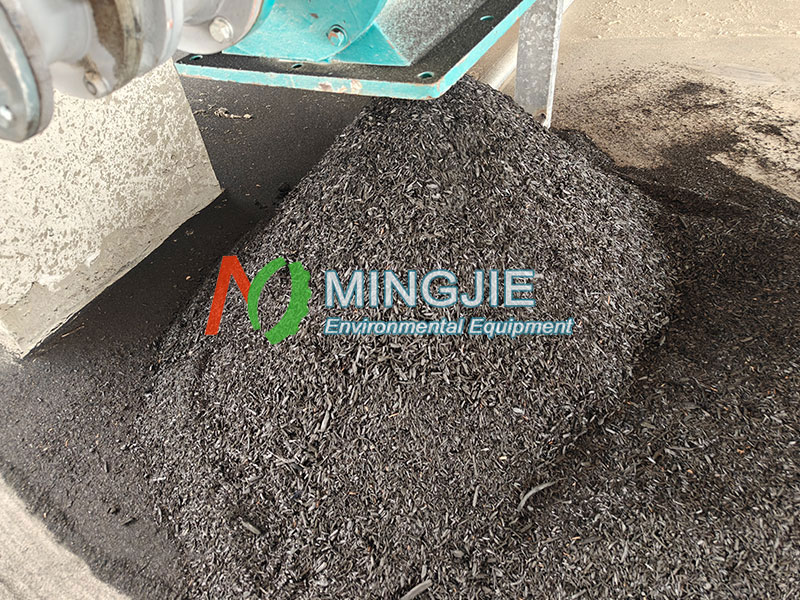
Mingjie biochar equipment utilizes a closed-loop water-cooled screw conveyor. It transports the high-temperature biochar into a cooling chamber, where cooling water indirectly exchanges heat with the char through a jacketed system.
The cooling rate is controlled at 10-15℃/minute, reducing the char temperature to below 80℃. This prevents cracking of the char due to sudden cooling and avoids carbon loss caused by slow cooling.
The entire cooling and discharge process is completely enclosed, forming a continuous closed loop with the feeding and pyrolysis stages. This continuous biomass pyrolysis plant is suitable for large-scale making biochar from wood chips.
Application of Biochar form Wood Chips
Directly burning waste wood causes pollution, but converting it into biochar using wood chips carbonization equipment allows for the resource utilization of forestry waste. Biochar from wood chips has a significant effect on soil improvement. When applied to farmland, it simultaneously achieves both soil remediation and carbon sequestration.

Biochar for Soil Conservation
In terms of soil conservation, biochar from wood chips effectively improves soil fertility, with a total carbon content of 30% to 90%. Its unique porous structure increases soil porosity and water retention. The alkaline base ions it contains can neutralize acidic soil, mitigating the loss of base ions and soil acidification caused by excessive fertilization.
In terms of pollution control, biochar from wood chips can reduce the activity of heavy metals in the soil, adsorb organic pollutants, and create a protective barrier for the soil.
Wood Biochar for Emissions Reduction
Biochar from wood chips is a rare “negative carbon technology” in the agricultural field. The organic carbon in biomass is converted into inert carbon after high-temperature pyrolysis. It can be stably sequestered for hundreds to thousands of years, thus forming a huge carbon sink.
At the same time, it can also reduce other greenhouse gas emissions. Research estimates that the annual emission reduction potential of sustainably applying biochar globally is up to 1.8 billion tons of carbon dioxide equivalent.
It reduces methane emissions by increasing soil porosity and creating an aerobic environment. It reduces nitrous oxide production by reducing nitrogen fertilizer requirements and regulating microbial activity.