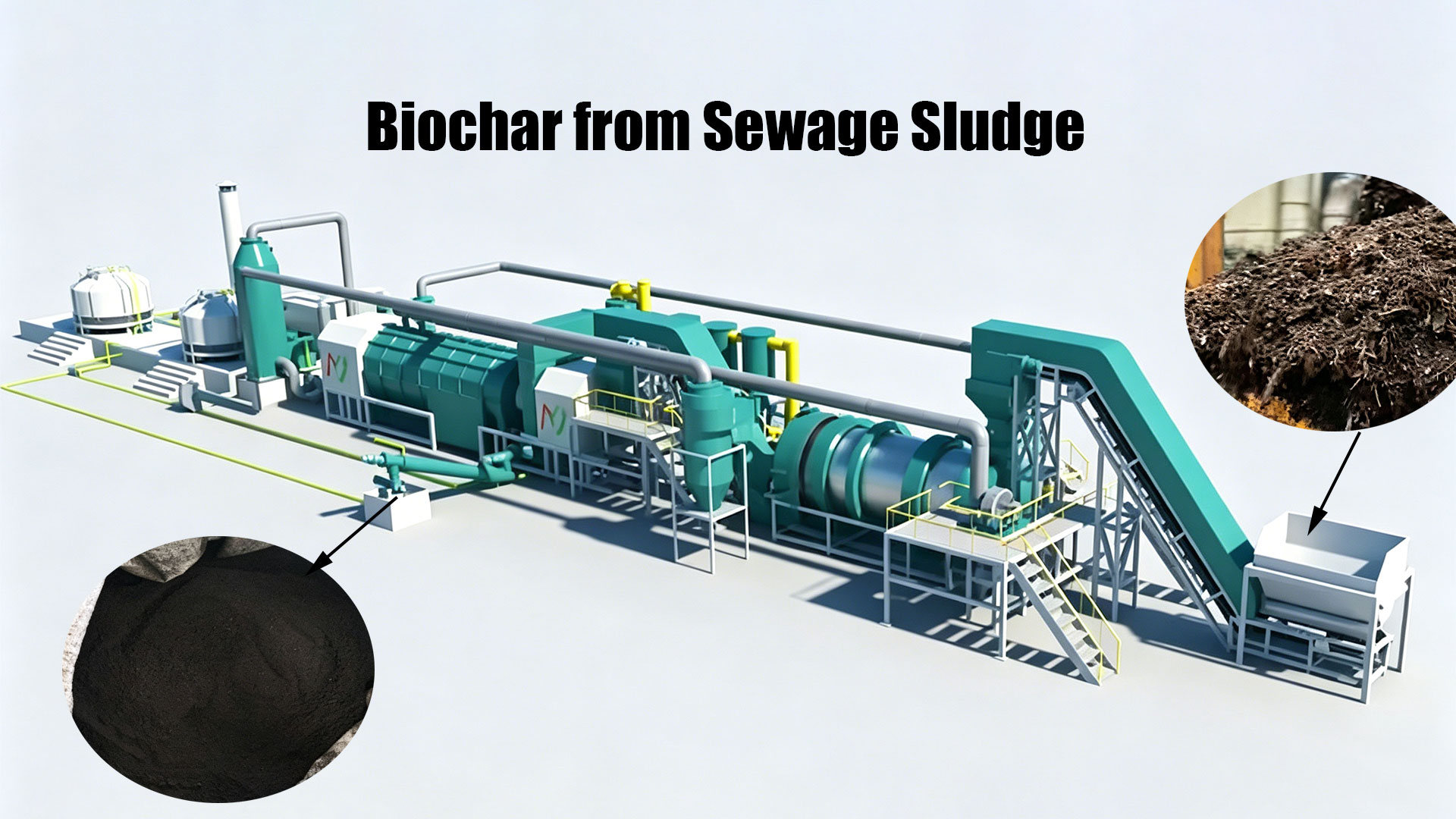
Mingjie biomass carbonization equipment can obtain biochar from sewage sludge by pyrolysis carbonization. It provides an effective way for the wastewater treatment industry to achieve sludge resource utilization. In an anaerobic environment, heating causes the organic matter in the sludge to undergo pyrolysis, condensation, and carbonization reactions. Ultimately, the sludge is converted into biochar and syngas.
Simultaneously, biomass carbonization plant can recover and reuse carbon, nitrogen, and phosphorus resources from sludge, achieving both environmental and economic benefits. The carbonization plant also offers advantages such as low investment and operating costs and a small footprint.
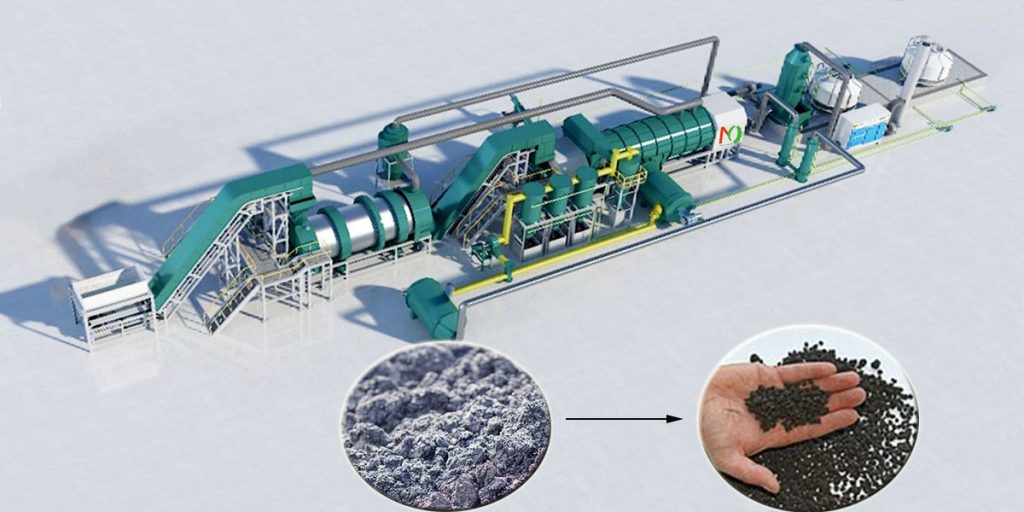
Carbon sequestration is the contribution of sludge biochar to addressing climate change. Converting organic carbon in sludge into a stable biochar form allows for long-term carbon fixation. This helps reduce pollution and carbon emissions in the wastewater treatment industry.
Biochar from Sewage Sludge
Compared to straw and fruit shell biochar, biochar from sewage sludge contains its own mineral components. Its multi-level pore structure exhibits excellent removal and fixation capabilities for heavy metals, organic pollutants, and nitrogen and phosphorus in water.
Sludge biochar has numerous advantages, including high aromaticity, strong stability, rich pore structure, large specific surface area, and strong adsorption capacity. It holds broad application prospects in soil carbon sequestration, pollutant remediation, and soil improvement.
Among the current technologies for the resource utilization of sludge, sludge pyrolysis carbonization technology is one of the most advanced environmental protection technologies in the world.
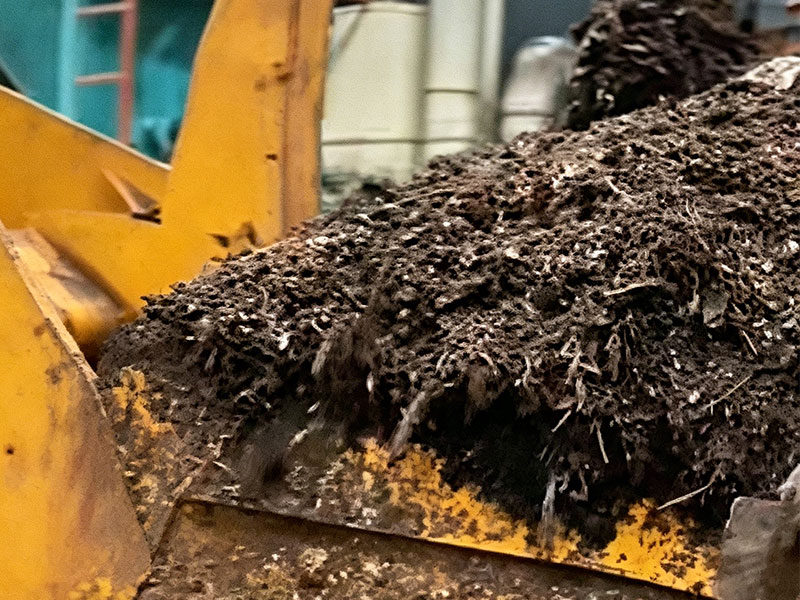
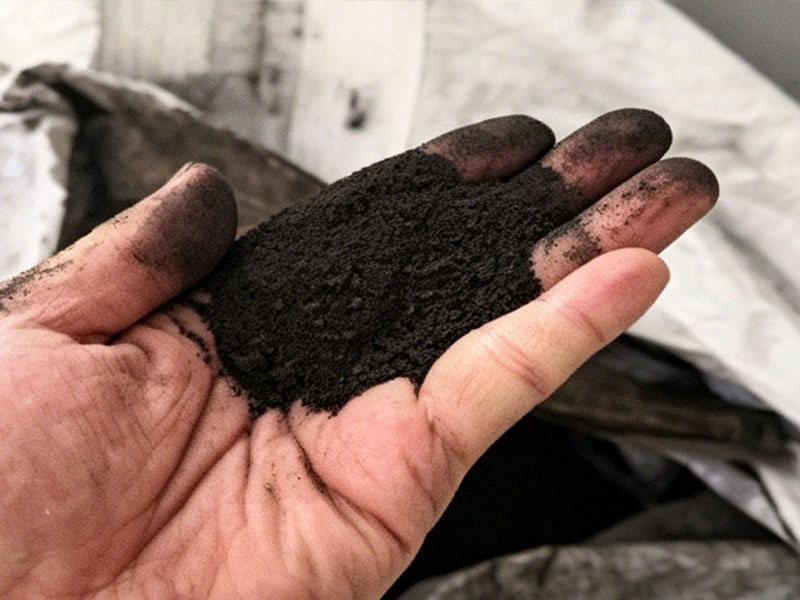
Sludge Pyrolysis and Carbonization Process
- Sludge Drying: Wastewater is dried to reduce the moisture content of sludge from high moisture content to below 15%.
- Pyrolysis and Carbonization: The dried sludge is fed into a pyrolysis and carbonization furnace for the reaction. The resulting sludge char is discharged, cooled, and then sent to a char storage silo.
- Pyrolysis Gas Combustion: Purified syngas enters the combustion unit to provide heat for the pyrolysis and carbonization process. To fully recover heat, the flue gas produced after combustion can be used to heat the drying system.
- Flue Gas Treatment System: The flue gas is treated through denitrification, desulfurization, and dust removal processes to meet emission standards.
Sludge Carbonization Technology
Based on sludge carbonization temperature, carbonization techniques can be classified into low-temperature carbonization, medium-temperature carbonization, and high-temperature carbonization.
- Low-temperature carbonization (200–400℃) has low energy consumption and retains more organic matter in the product, but the processing cycle is long.
- Medium-temperature carbonization (400–600℃) has a fast reaction rate, high carbonization efficiency, and strong product stability.
- High-temperature carbonization (600–800℃) achieves deep decomposition of organic matter and significant volume reduction.

Advantages of Sludge Carbonization
Sludge carbonization is a thermochemical treatment method that can replace sludge incineration. It demonstrates significant advantages in sludge energy utilization, resource recovery, pollutant control, and carbon dioxide removal.
Volume Reduction: During the sludge carbonization process in a high-temperature environment, moisture is evaporated and organic matter is decomposed. Approximately 0.1 tons of sludge biochar are produced after carbonization of 1 ton of sludge. The volume reduction rate of sludge carbonization can reach about 90%.
Stabilization: Carbonization of sludge in a high-temperature, anaerobic environment completely eliminates the activity of microorganisms in the sludge. Simultaneously, easily degradable organic components in the sludge are transformed into stable aromatic carbon structures – sludge biochar. Pyrolysis carbonization achieves complete stabilization of the sludge, reducing the risk of secondary environmental pollution.
Detoxification: The high temperature and anaerobic environment during carbonization decompose pathogens, insect eggs, and organic pollutants in the sludge into smaller molecules. At the same time, heavy metals in the sludge are passivated and solidified, rendering them inactive.
Resource Utilization: The only solid product formed during carbonization is biochar. It can be used as a soil conditioner and adsorbent, achieving complete resource utilization.