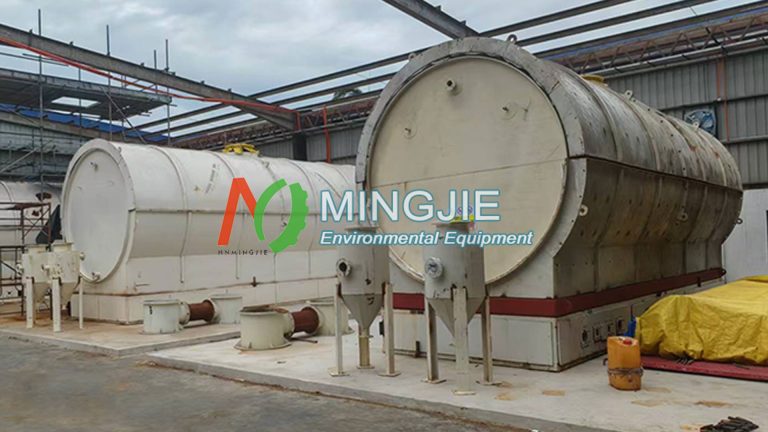
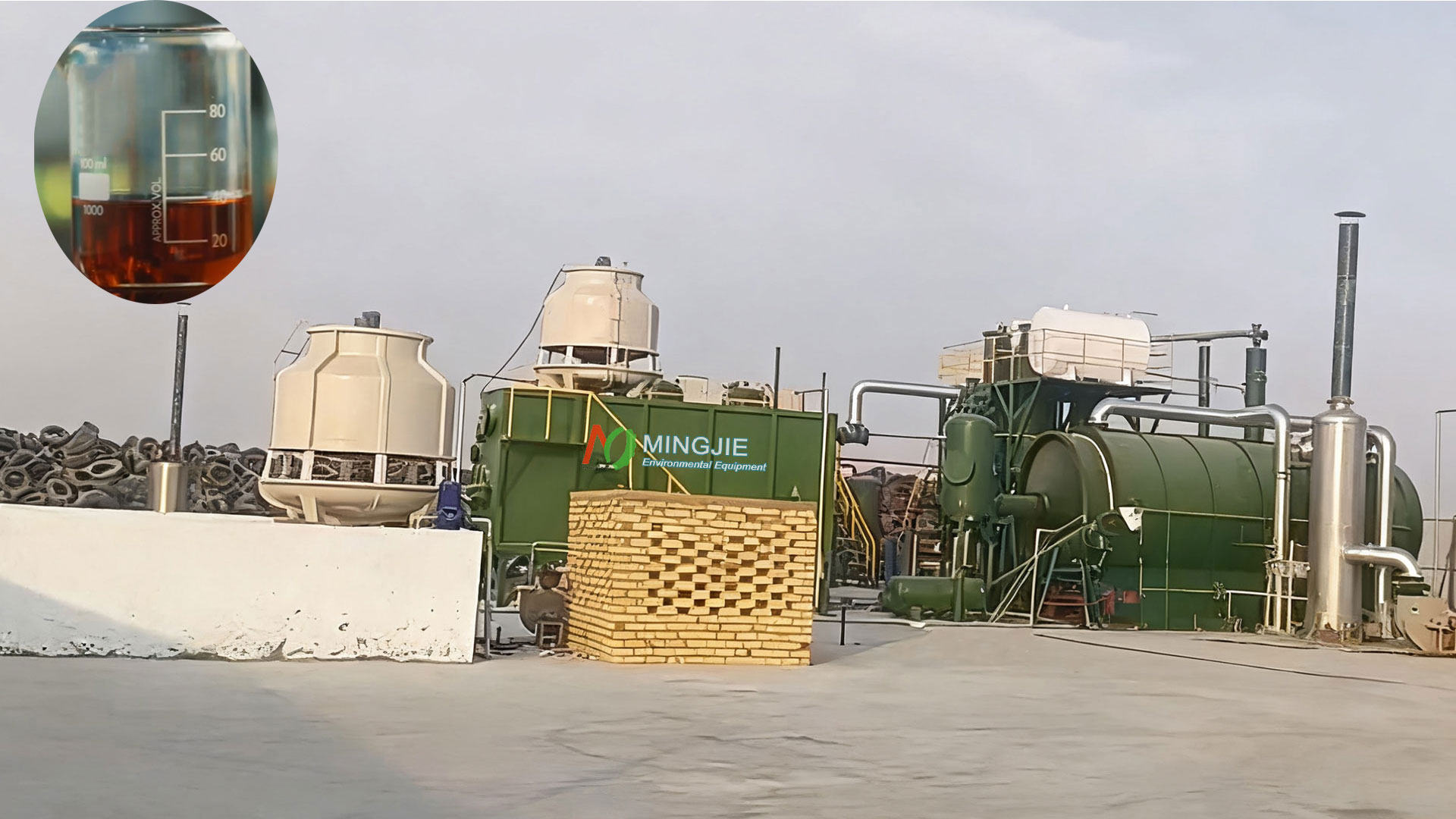
Extracting oil from tyres relies on pyrolysis plant to complete this chemical conversion process. Rubber is the key component in this conversion. During pyrolysis, the oxygen-free, high-temperature environment inside the pyrolysis plant breaks the chemical bonds in the rubber molecular chains. The previously tightly linked macromolecular structure is broken down, transforming into products such as fuel oil, syngas, and carbon black.
The tyre pyrolysis system converts solid tires into liquid fuel oil through three key steps: heating, pyrolysis, and condensation. It is crucial for realizing the resource and energy recovery of waste tires.
The functions of the pyrolysis plant include:
- Providing a closed, oxygen-free environment to prevent rubber combustion and instead facilitate the pyrolysis reaction.
- Heating the tires to their pyrolysis temperature, causing the rubber polymers to decompose into oil and gas.
- Rapidly cooling the oil and gas through a condensation system to obtain liquid fuel oil.
- Recovering non-condensable gases as fuel, achieving self-sufficiency in energy.
- Collecting byproducts such as carbon black and steel wire for resource utilization.
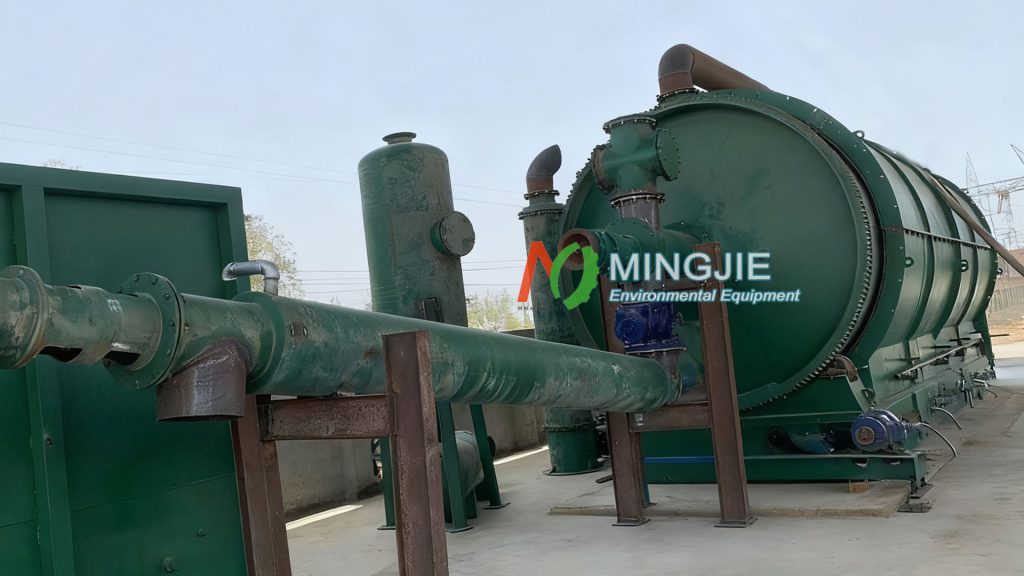
Extracting Oil from Tyres in Pyrolysis Plant
Feeding Process
The feeding method varies depending on the type of pyrolysis plant.
For batch waste tire pyrolysis equipment, manual or hydraulic automatic feeding is typically used. Batch pyrolysis machine is suitable for slowly pushing tires into the pyrolysis furnace and is suitable for processing whole, untreated waste tires.
Semi-continuous and fully continuous pyrolysis machine uses automatic feeding. This requires the material to have a certain particle size and flowability. Therefore, the waste tires need to be pre-treated before feeding.
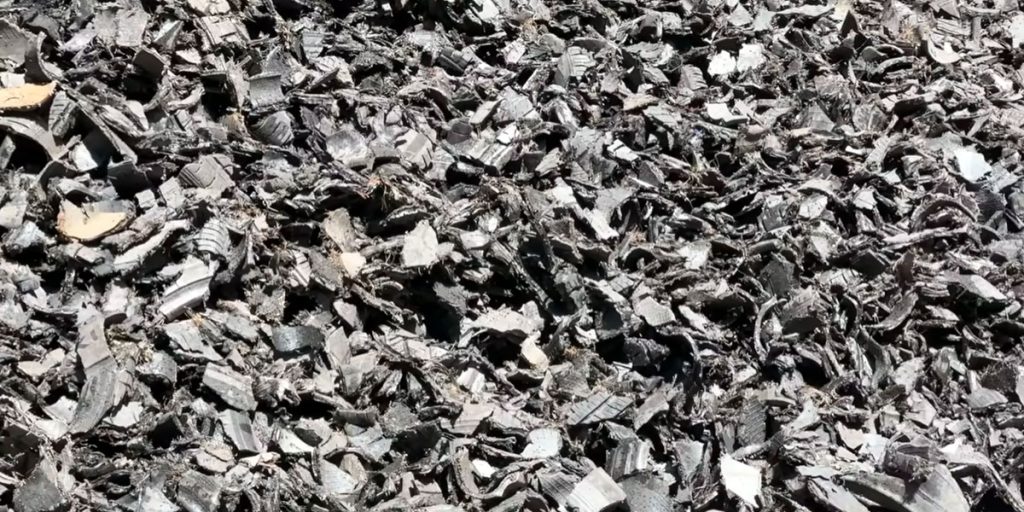
Waste tires need to be cut into pieces of about 3-5 cm and then ground into 16-18 mesh rubber powder using a grinding mill. The automatic feeding device stably delivers the rubber powder to the pyrolysis furnace, ensuring the continuity and stability of the feeding process.
Pyrolysis Stage
This is the core step in extracting oil from tyres. When tires or rubber powder enter the pyrolysis reactor, the burner is started to heat the reactor.
Indirect heating is typically chosen. Indirect heating involves setting up a combustion chamber outside the reactor, and the heat generated by combustion is transferred to the material inside through the reactor wall. This method avoids direct contact between the material and the flame, reducing localized overheating and coking, and extending the equipment’s lifespan. Fuel such as oil, natural gas, or coal can be used during the heating process.
As the temperature inside the pyrolysis reactor gradually rises, the tires or rubber powder are fully heated. Under a slightly positive pressure, oxygen-free environment of 280-320℃, the organic matter, such as rubber, in the tires begins to undergo a pyrolysis reaction. The original large molecular structure gradually decomposes, eventually becoming oil gas and carbon black.
Condensation Stage
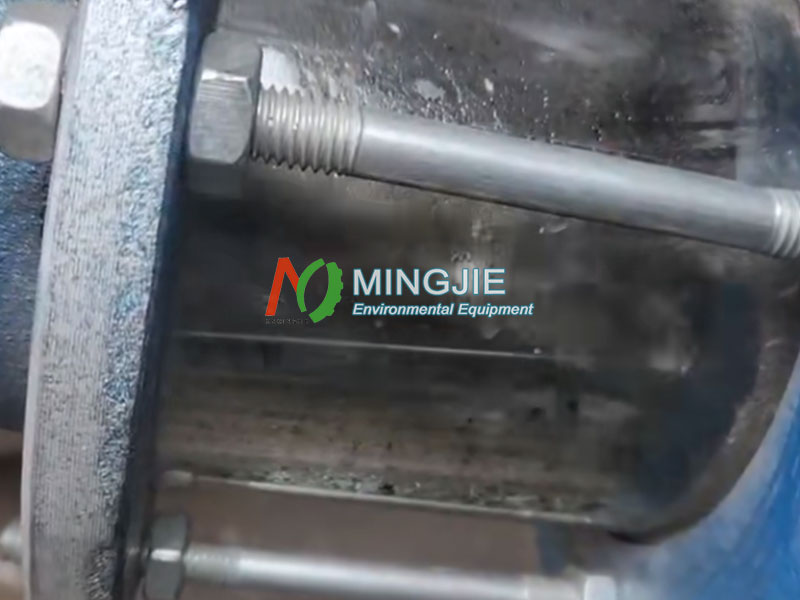
Tire pyrolysis oil requires a condensation unit to transform its gaseous state into a liquid state.
Common condensation units include tubular condensers and water tank condensers.
A tubular condenser consists of many tubes. Oil and gas flow inside the tubes, while circulating water flows outside. Heat exchange occurs through the tube walls, causing the oil and gas to cool and condense into a liquid.
A water tank condenser, on the other hand, introduces the oil and gas into a water tank filled with water, where they cool and condense. The oil and gas produced by pyrolysis first enter a buffer tank, which slows the flow rate and settles some of the carbon black and other impurities carried within. Then, the oil and gas sequentially enter the condensation unit, where, after cooling by circulating water, they gradually form liquid pyrolysis oil, which is then stored in an oil tank.
Non-condensable gases, after being treated by a tail gas purification unit, can be reused as fuel in the reactor for combustion.
Slag Discharge Treatment
Besides producing oil and gas, tire pyrolysis also generates some carbon black and a small amount of residual steel wire.
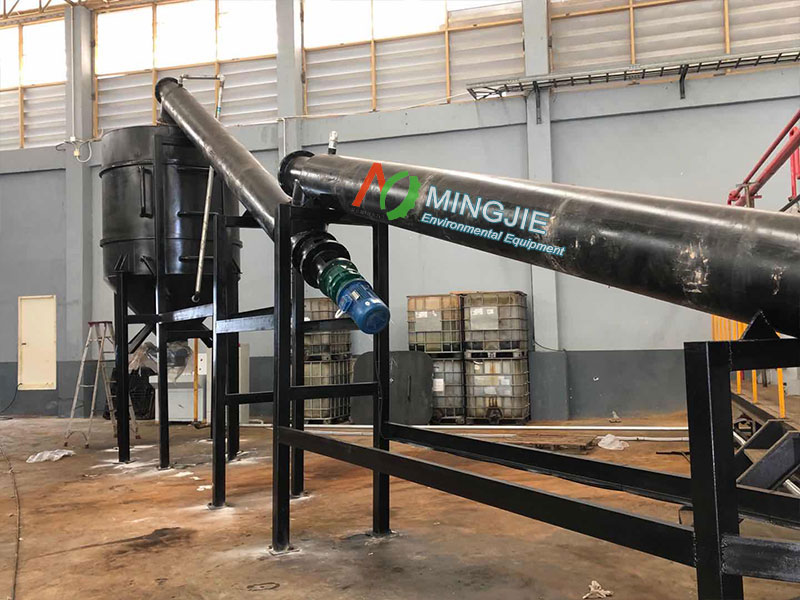
For intermittent tire pyrolysis furnaces, the carbon black and steel wire can be discharged through slag discharge after cooling.
Semi-continuous and fully continuous slag discharge methods utilize water-cooled spiral slag discharge systems to achieve continuous high-temperature slag discharge. This allows for continuous discharge of high-temperature carbon black without shutting down the reactor, improving production efficiency.
Flue Gas Treatment
During the process of extracting oil from tyres using pyrolysis plant, the flue gas needs to be treated by a series of environmental protection devices. After treatment by these devices, the pollutant content in the flue gas is significantly reduced, and it can be discharged in compliance with the prescribed emission standards.