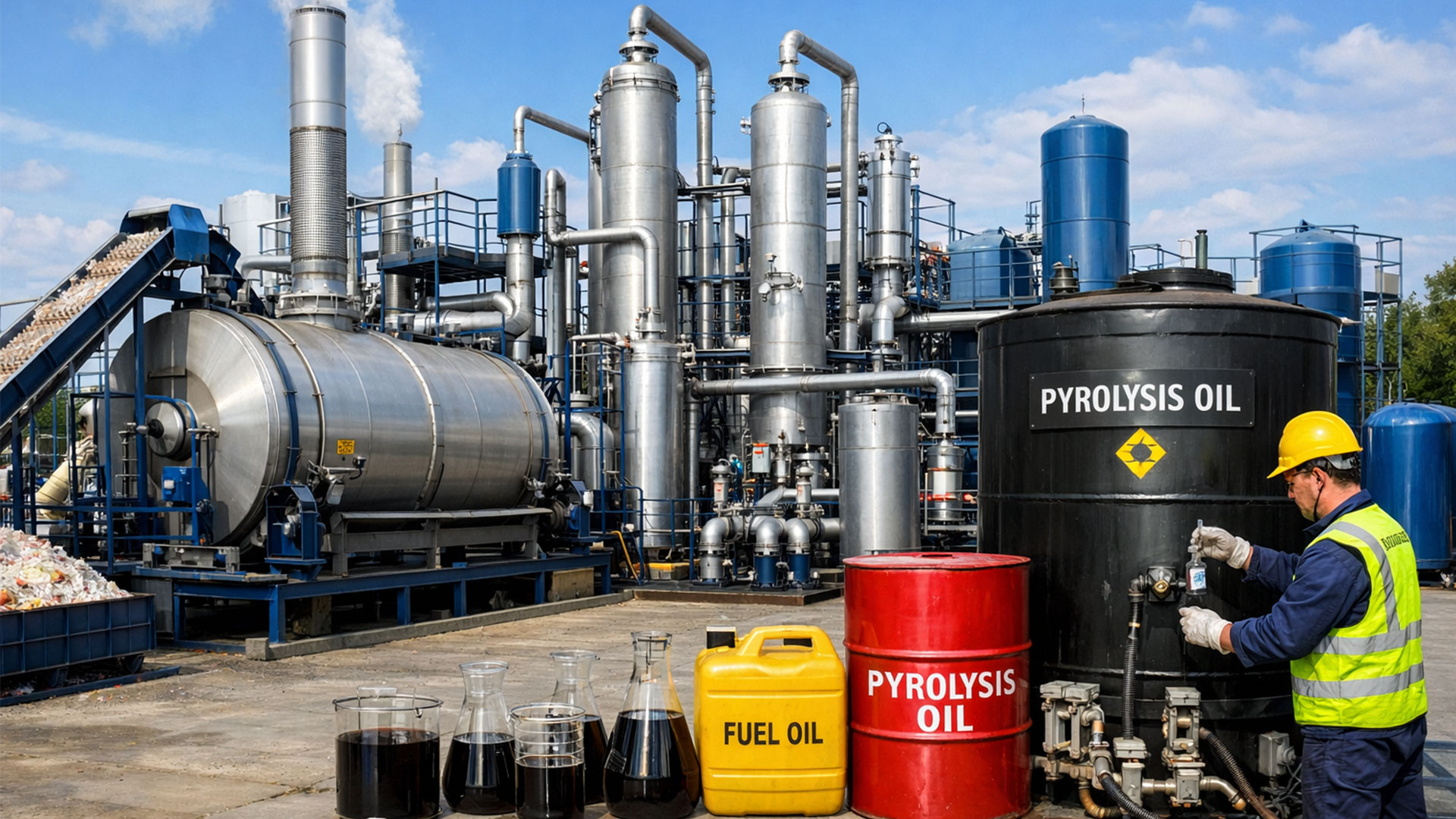
The core equipment of plastic pyrolysis to fuel oil plant mainly includes pyrolysis plant and pyrolysis oil distillation plant. The pyrolysis equipment converts waste plastics into primary pyrolysis oil. The distillation equipment refines the primary pyrolysis oil into higher-value fuel. From plastic pyrolysis to fuel oil refining, these equipments is crucial for achieving the resource utilization of plastic waste.
Plastic Pyrolysis Plant
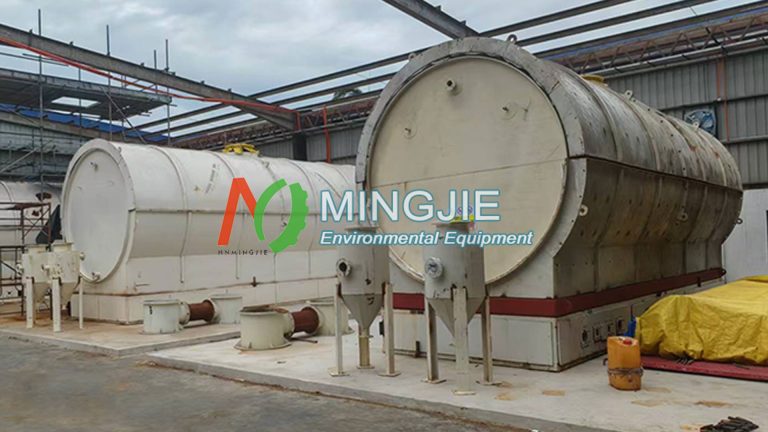
Plastic pyrolysis plant is the key equipment for plastic pyrolysis to fuel oil, providing the necessary space and conditions for the pyrolysis reaction. Inside the pyrolysis reactor, waste plastics undergo thermal decomposition, producing pyrolysis oil, synthesis gas, and carbon black.
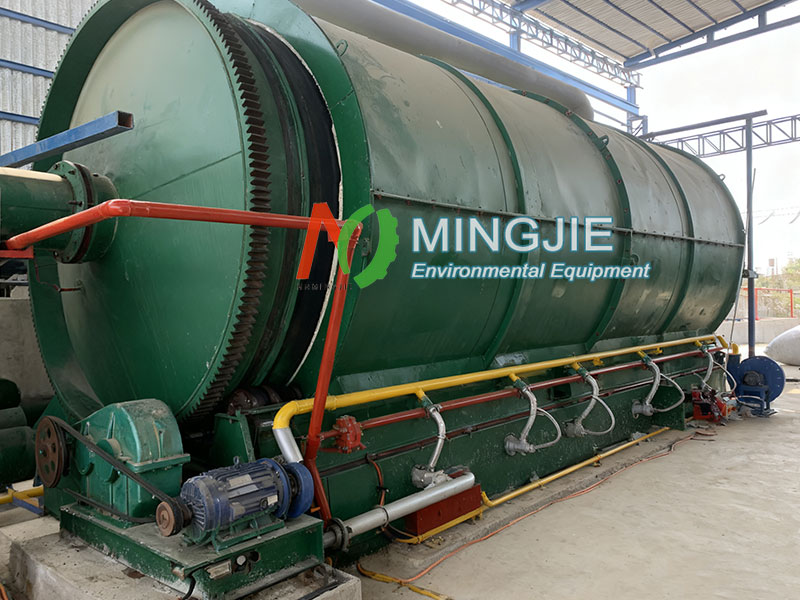
Pyrolysis Reactor
Rotary kiln reactors are commonly used horizontal pyrolysis reactors. The raw materials move gradually forward within the rotary kiln as the cylinder rotates, completing the pyrolysis reaction during this movement. It is suitable for processing a variety of raw materials, including plastics, tires, oil sludge, medical waste, and municipal solid waste.
After the plastic undergoes pyrolysis, a mixture of oil and gas containing various components is produced. At this point, a separator and condenser are needed for initial separation and cooling to obtain primary fuel oil.
Oil Separator
The oil separator is a crucial piece of plastic to oil plant for the initial separation of oil and gas mixtures. Its working principle is primarily based on the sedimentation principle. The oil and gas mixture produced by pyrolysis enters the oil separator and is separated under the influence of gravity and the special internal structure of the separator.
The heavier components gradually settle to the bottom of the oil separator, forming a liquid, which is the heavy component oil. The lighter components continue to move upwards and enter the subsequent condenser for further processing.
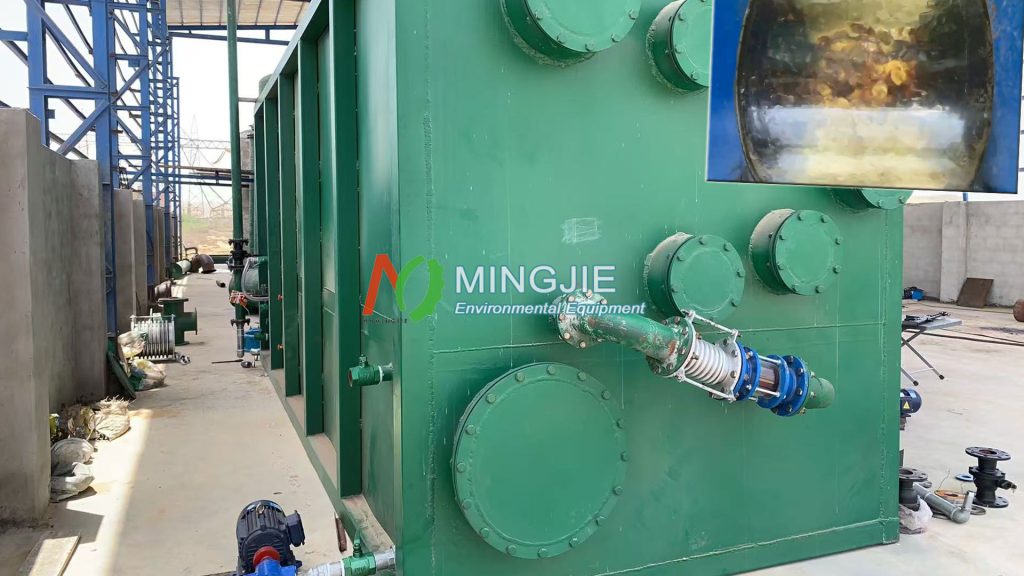
High-Efficiency Condenser
The high-efficiency condenser is located immediately after the oil separator. It cools the light components separated by the oil separator into primary fuel oil. The condenser generally uses water cooling and has a carefully designed tube structure.
The light component gas passes through the tubes, while the cooling water circulates outside the tubes. In this way, the heat from the light component gas is absorbed by the cooling water, and the temperature gradually decreases. When the temperature drops to a certain level, the light component gas condenses into a liquid, which is the primary fuel oil.
Pyrolysis Oil Distillation Plant
Pyrolysis oil refining has become crucial for improving the quality of fuel oil. It allows for further removal of impurities and adjustment of components, enabling the fuel oil to meet higher quality standards.
The distillation reactor, as the core equipment of pyrolysis oil distillation plant, plays a crucial role in the pyrolysis oil refining process. Its main function is to effectively separate different boiling point fractions based on the differences in boiling points of the components in the pyrolysis oil, through heating and condensation processes.
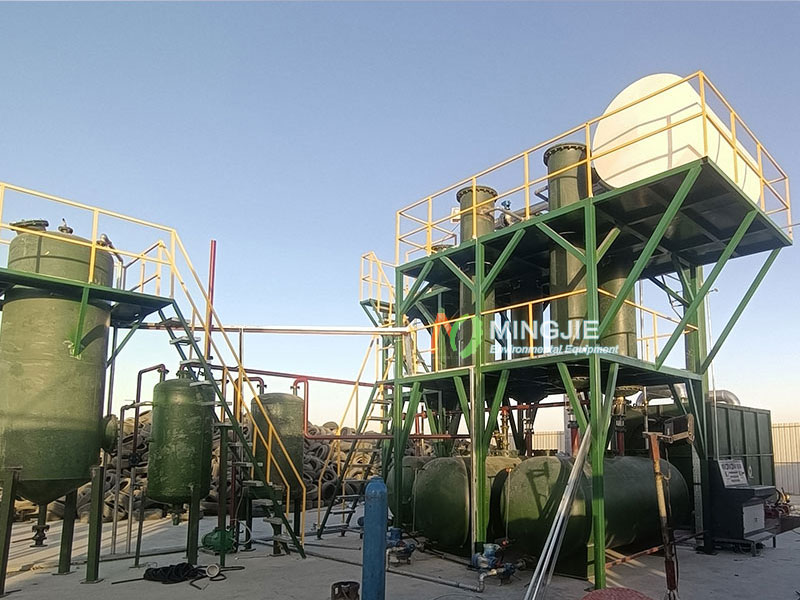
In the pyrolysis oil refining process, crude oil is separated into various fractions such as gasoline, diesel, and heavy oil using the distillation reactor.
When the pyrolysis oil is heated and enters the distillation reactor, the lower boiling point components vaporize first, forming rising steam. As the steam rises in the tower, the temperature gradually decreases. These low boiling point components condense into liquid at different heights on the trays and are collected as light fractions. The higher boiling point components remain at the bottom of the tower, forming heavy fractions. Through this process, the distillation tower achieves the initial separation of different fractions in the pyrolysis oil.
During the pyrolysis oil refining process, various additives are added to the fuel oil. These additives remove pigments and odors from the fuel oil. Filtration is the final step in fuel oil refining. It provides fine filtration of the fuel oil, removing residual small impurities and particles.