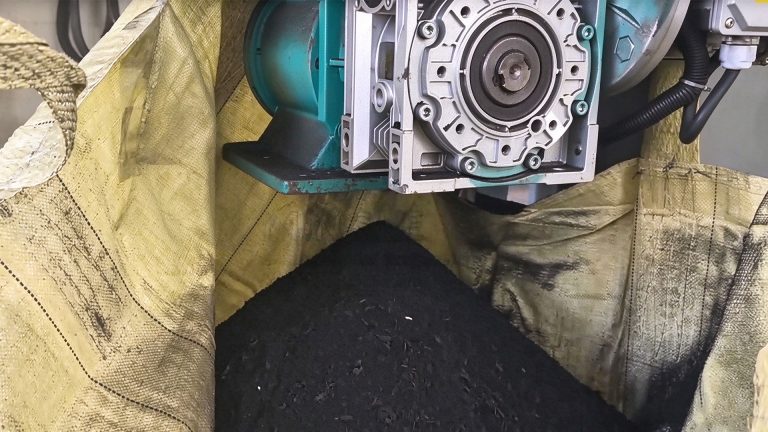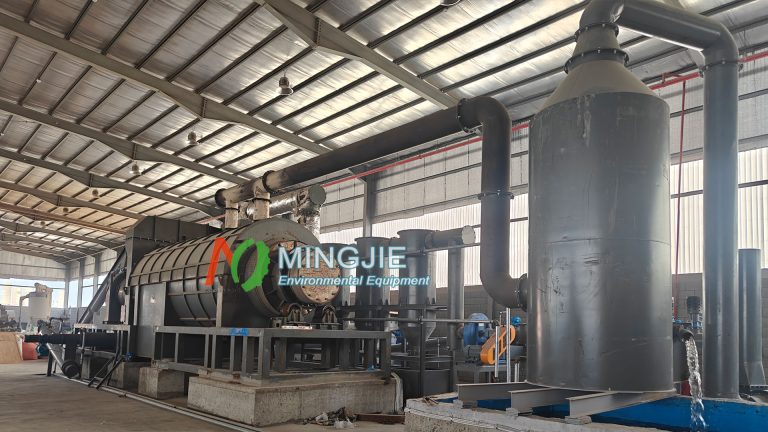
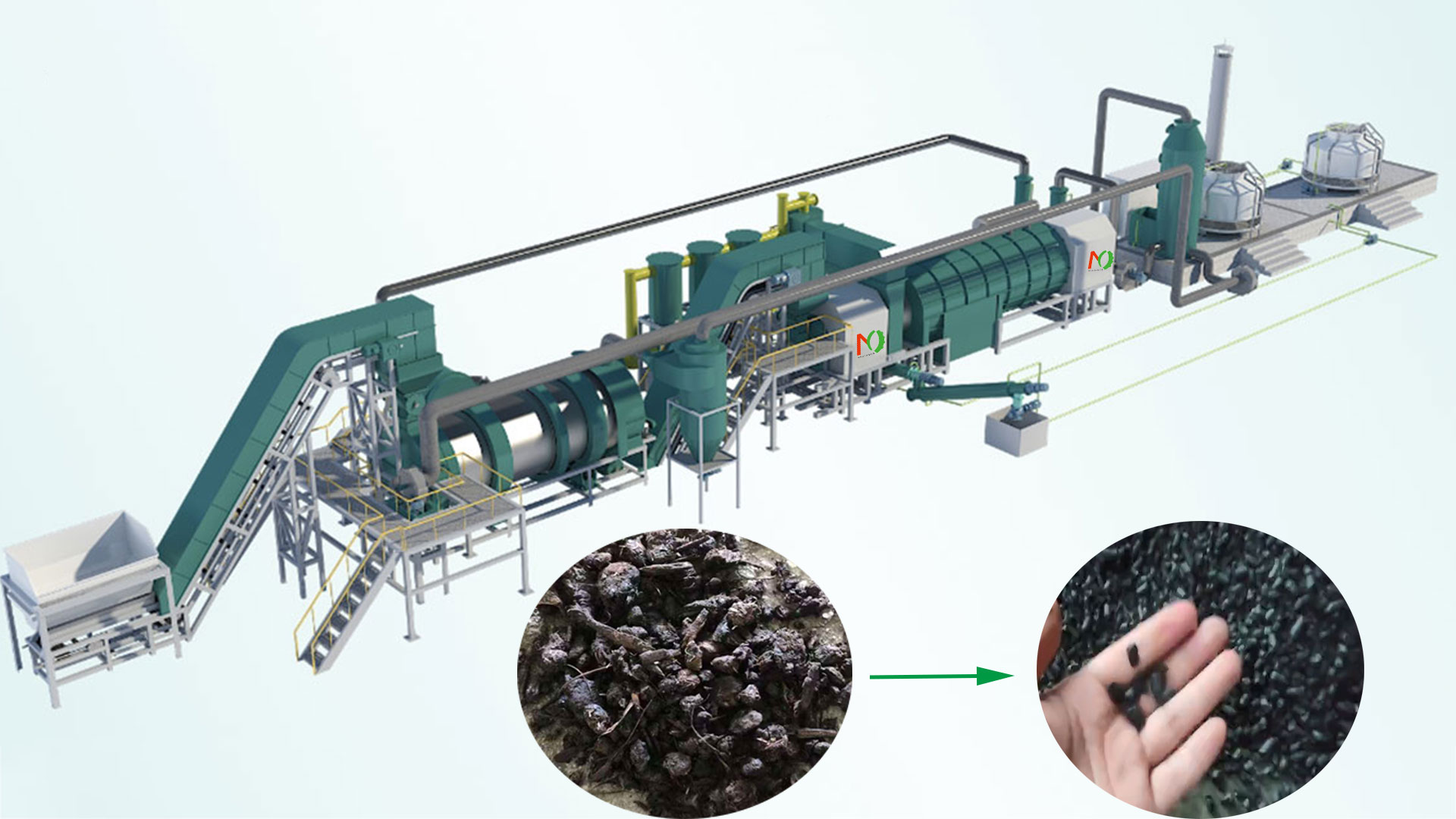
Making biochar from animal manure is a highly promising waste resource utilization pathway. It connects animal husbandry, environmental protection, and agriculture, aligning with the concept of sustainable development. Mingjie biomass carbonization plant can convert animal manure into biochar.
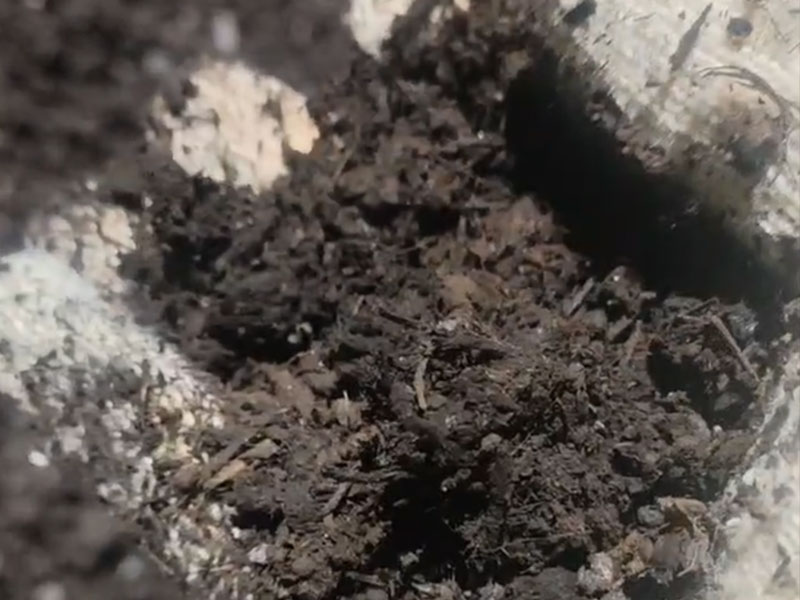
Animal manure is an excellent raw material for biochar production, primarily due to its unique composition and properties. In terms of composition, animal manure is rich in organic matter, which forms the basis for the rich porous structure and high carbon content of biochar.
Cattle manure typically contains 70%-80% organic matter, while chicken manure contains even higher levels, reaching 80%-90%. During biomass pyrolysis process, this organic matter undergoes a series of complex chemical reactions, gradually transforming into a stable carbon structure. This gives biochar from animal manure excellent adsorption properties and chemical stability.
Process of Making Biochar from Animal Manure
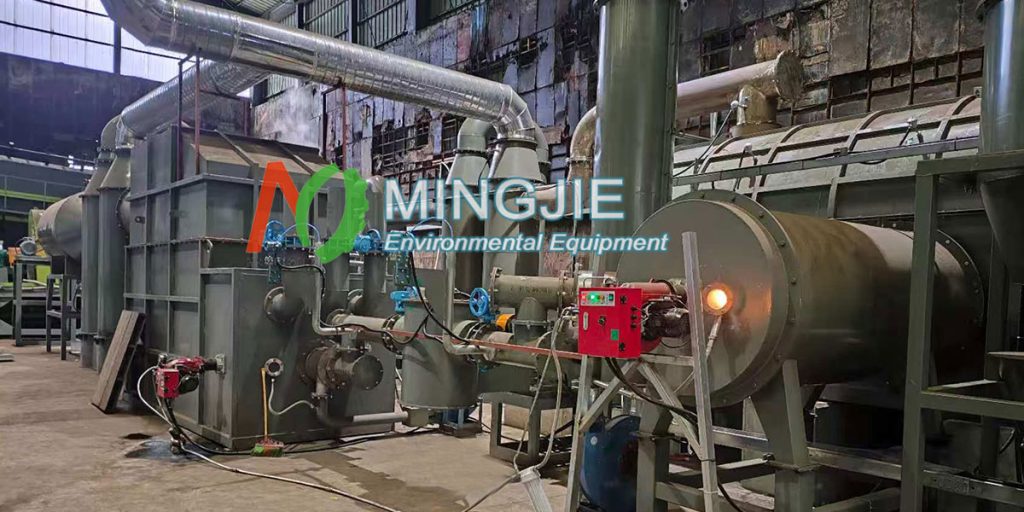
- Pre-treatment: Drying is an important step in the pretreatment process. Animal manure typically has a high water content, which will affect the pyrolysis reaction. Wet animal manure needs to be dried to reduce its moisture content to below 15% and crushed to a size smaller than 20mm to ensure uniform heating.
- Core pyrolysis stage: Drying (150℃): Primarily removes physically bound free water.
- Main pyrolysis reaction (400-600℃): Complex cracking and recombination of organic matter occurs in biomass carbonization equipment. Temperature, heating rate, and residence time are the three key control parameters.
- Biochar collection: The biochar produced after the pyrolysis of animal manure is discharged through a water-cooled screw conveyor. This prevents oxidation and combustion of the biochar.
Main Products of Animal Manure Pyrolysis
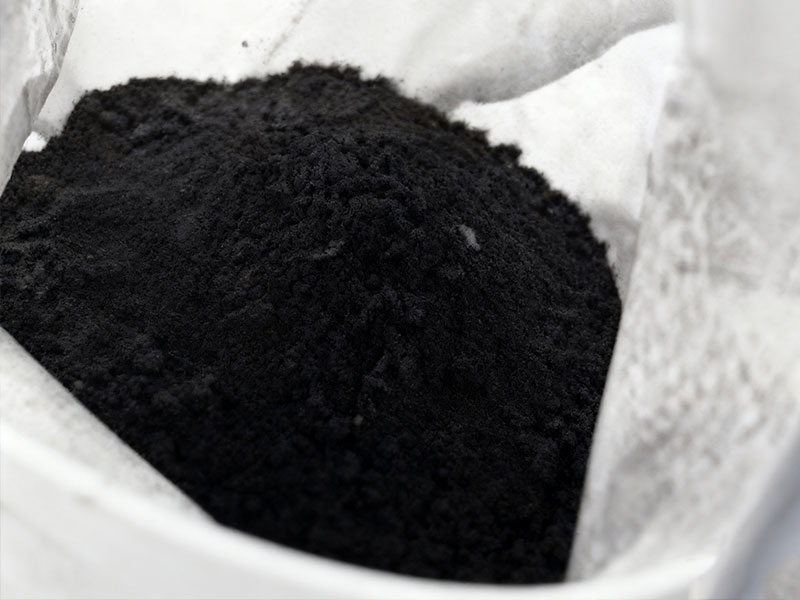
- Biochar: Rich in stable carbon and porous, it is a functional material used for soil improvement, pollutant adsorption, and other applications.
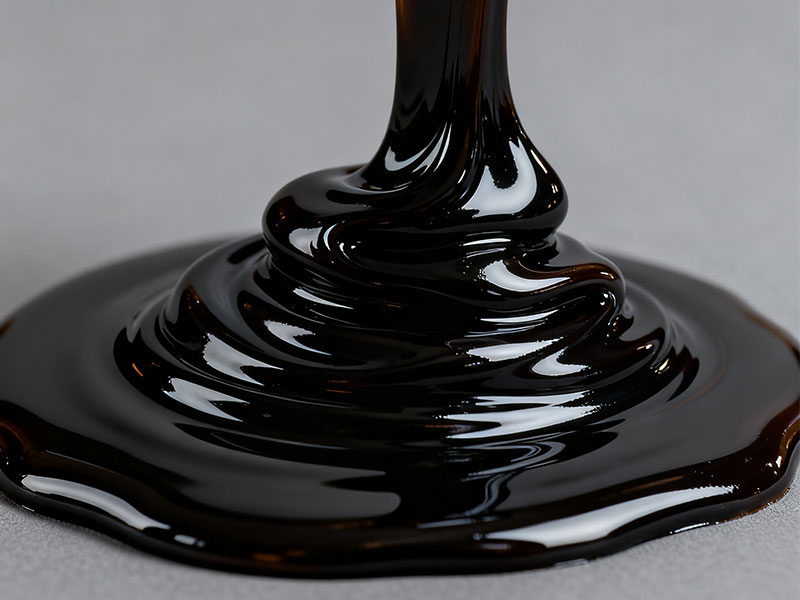
- Bio-oil: A complex liquid mixture that, after purification, can be used as a chemical feedstock or directly as fuel oil.
- Syngas: Its main components are CO, H₂, and CH₄, and it has a high calorific value. It is recovered in the pyrolysis system and used to heat the pyrolysis reactor, achieving energy self-sufficiency.

Applications of Animal Manure Biochar
Biochar from animal manure is an emerging environmentally friendly adsorbent. It holds immense potential in addressing the challenges of agricultural waste resource utilization and wastewater treatment. Its abundant mineral phases (carbonates, phosphates) and active functional groups (-COOH, -OH) support a variety of adsorption mechanisms.
In the field of environmental protection, biochar holds promise as a powerful tool for pollution control.
On the one hand, biochar possesses strong adsorption capabilities for heavy metal ions and organic pollutants, making it widely applicable in soil and water pollution remediation. The functional groups on the surface of biochar can complex with heavy metal ions, fixing them in the soil.
On the other hand, biochar from animal manure has enormous potential in carbon sequestration. It can sequester carbon from animal manure, reducing the emission of greenhouse gases such as carbon dioxide, and contributing to addressing global climate change. The application of biochar in carbon capture and storage (CCS) provides a new pathway for achieving carbon neutrality goals.
In the agricultural sector, biochar from animal manure will inject new vitality into the development of green agriculture.
As a soil conditioner, biochar from animal manure can improve soil structure and enhance soil water and nutrient retention. It can promote the growth and reproduction of soil microorganisms, thereby increasing soil fertility and crop yields.
In the energy sector, biochar also presents unique development opportunities.
The bio-oil and syngas can be used as clean energy sources, replacing some traditional fossil fuels. Biochar can also be used as a solid fuel for power generation, heating, and other applications. By mixing it with other biomass fuels, biochar can improve the combustion efficiency and stability of the fuel.