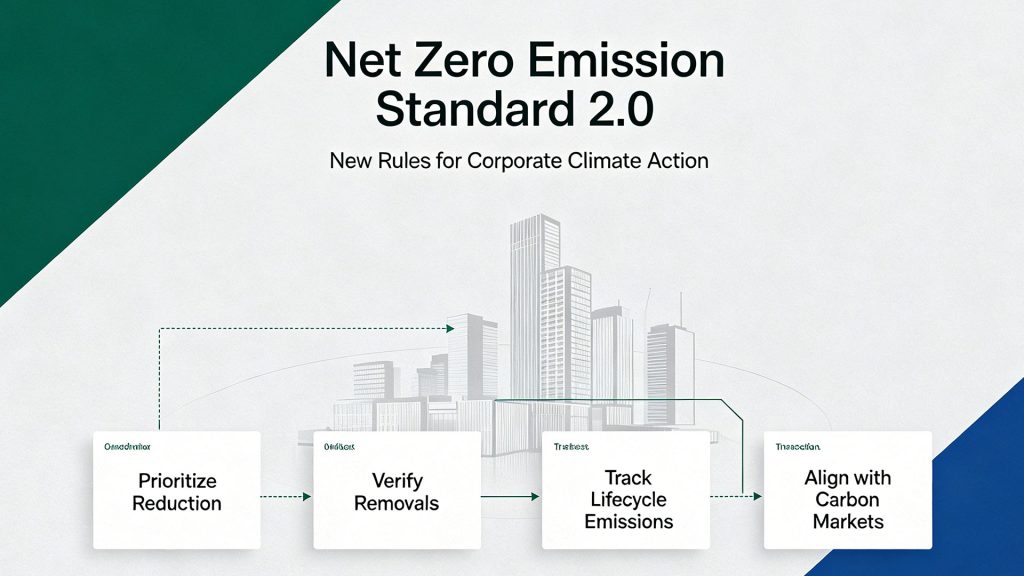
In June 2026, the Scientific Carbon Targeting Initiative (SBTi) officially released the Corporate Net Zero Standard 2.0, scheduled to fully take effect in February 2027. It systematically and standardized for the first time defined the application boundaries, accounting rules, and compliance priorities of artificial carbon dioxide removal technology. This will fundamentally change the industry landscape of corporate carbon offsetting and carbon asset accounting.
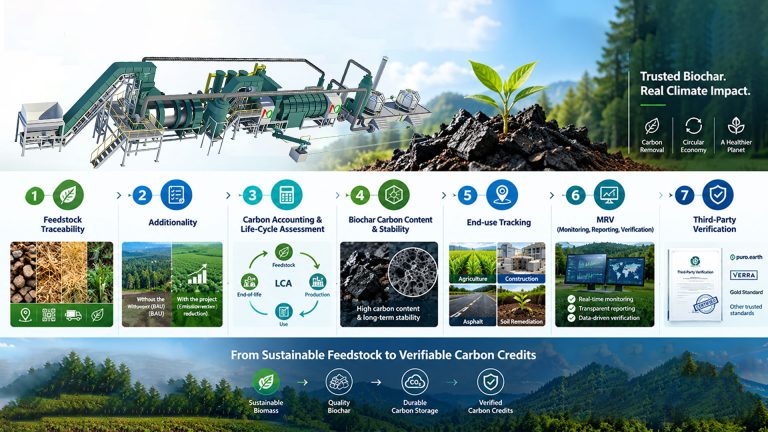
This standard, through its core Ongoing Emissions Responsibility framework, is the first to incorporate carbon removal into a mandatory compliance framework for businesses. This means that purchasing carbon removal credits is no longer a “bonus” for companies, but rather an institutional requirement. It creates a large potential buyer’s market for biochar carbon removal credits.
Carbon dioxide removal technology is gradually gaining market pricing. International carbon credit certification platforms have begun issuing carbon credits for persistent carbon removal projects, such as biochar.
What is Carbon Dioxide Removal Technology?
Carbon dioxide removal technology refers to the activities that remove carbon dioxide from the atmosphere and store it permanently. It aims to address historical and residual emissions. The International Energy Agency (IEA) states that large-scale deployment of carbon removal technologies is crucial to addressing global warming.
Biochar Carbon Dioxide Removal Technology
Carbonization technology, which directly solidifies biomass into biochar, is one of the important negative emission technology pathways for achieving long-term carbon storage. Compared to BECCS (Biochemical Oxygen-Free Carbon Sequestration System), biochar is not limited by geological sequestration capacity.
In recent years, novel carbon dioxide removal technology has attracted significant attention, such as direct air capture (DAC), biochar, BECCS, biomass storage, and enhanced weathering. However, the reality is that global carbon removal still heavily relies on traditional natural carbon sinks. Biochar holds a leading position in the field of CDR. It has the largest delivered carbon removal capacity and the most widespread global distribution.
Biochar has the potential to achieve substantial production within a decade. Currently, carbon credits are priced between $100 and $200 per tonne. Its cost-effectiveness far surpasses that of Direct Air Capture (DAC) and it is also competitive with earlier bioenergy carbon capture and storage (BECCS) technologies.
How Biochar Effectively Reduces Carbon Dioxide?
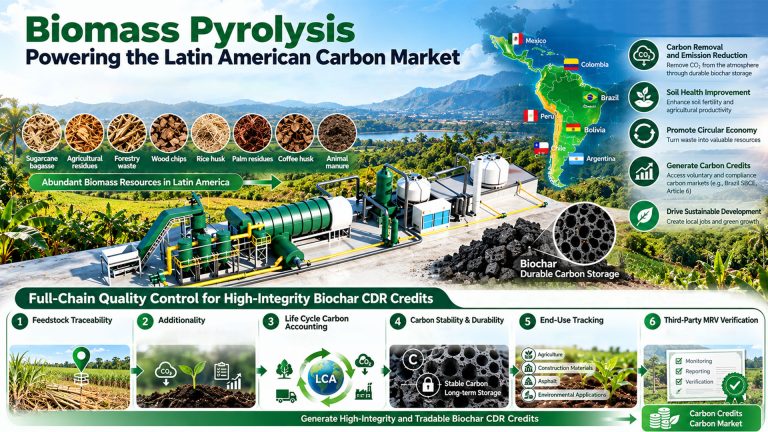
Biomass pyrolysis carbonization technology is currently the most scalable, low-cost, and highly stable negative carbon dioxide removal technology. It is the core pathway for enterprises to offset residual carbon emissions and cultivate carbon sink assets.
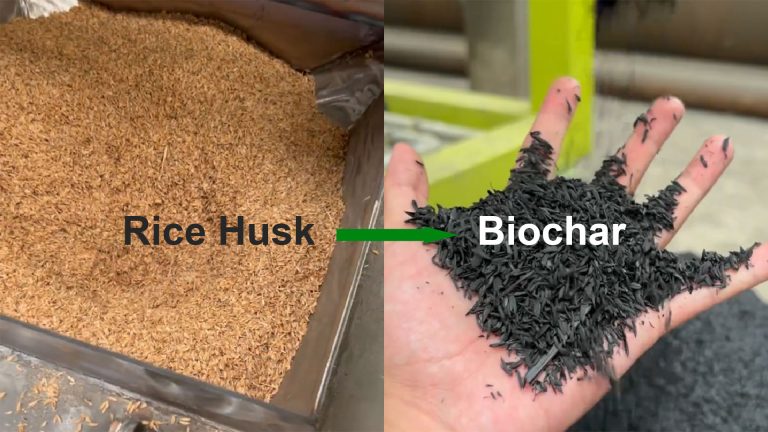
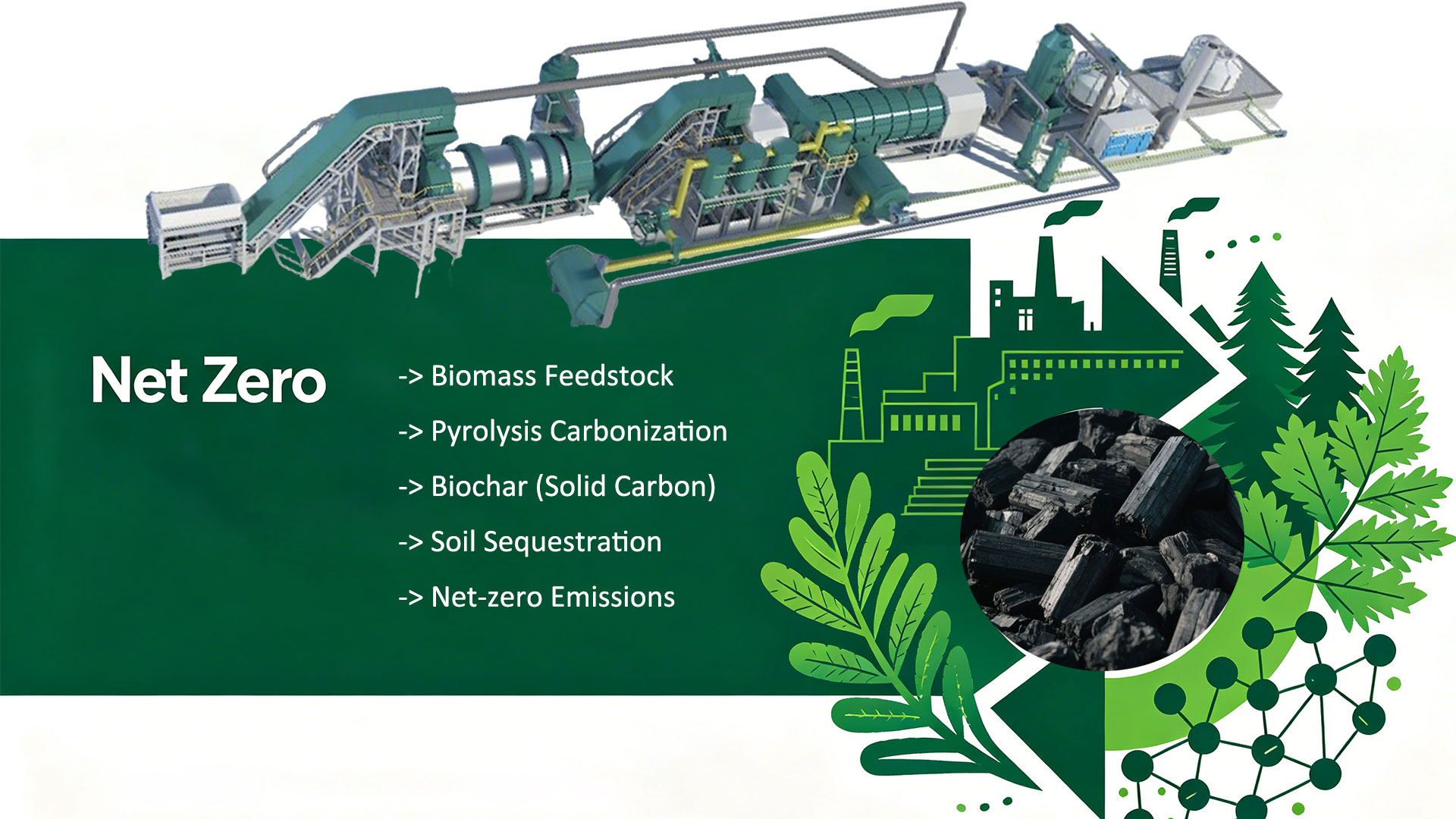
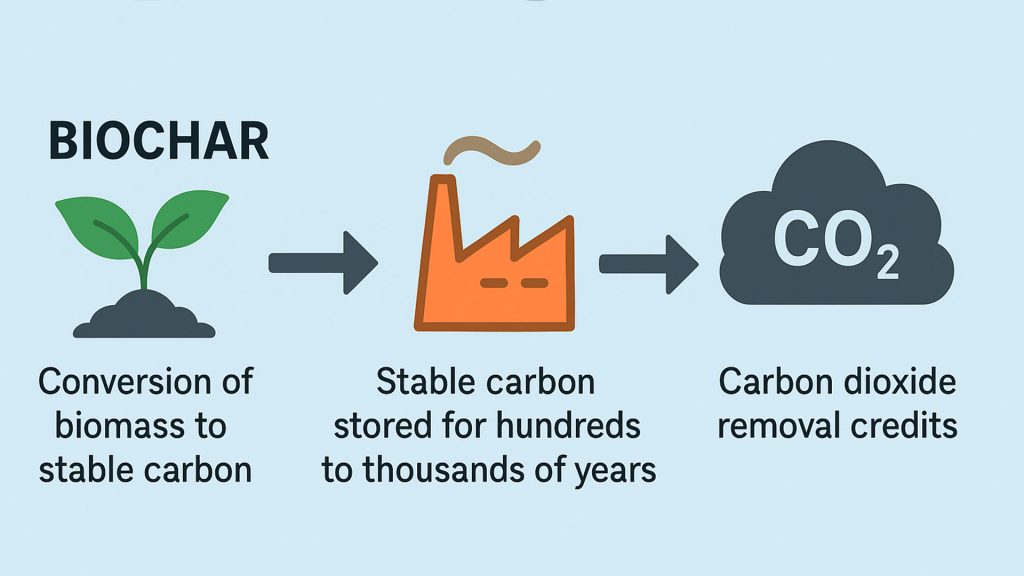
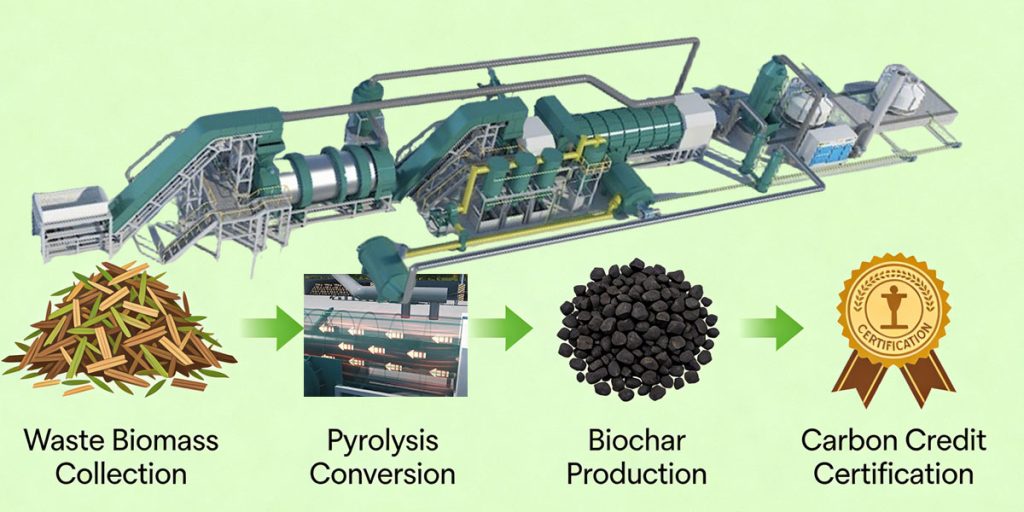
Biomass carbonization equipment converts biomass into biochar through thermochemical treatment under anaerobic conditions. This process locks carbon, which would otherwise return to the atmosphere through natural decomposition or incineration, into a stable, long-term form within a solid material.
The core logic of this process lies in altering the natural carbon cycle. Under natural conditions, carbon fixed by plants through photosynthesis is decomposed into carbon dioxide by microorganisms and released back into the atmosphere after the plants die. Biomass carbonization equipment, through artificial intervention, transforms this “carbon source” process into a “carbon sink” process. The carbon in biomass is converted into highly aromatized biochar, which has a half-life in soil that can reach hundreds or even thousands of years.
Carbon Removal Mechanism of Biomass Carbonization Equipment
The contribution of biomass carbonization plant to carbon removal is primarily reflected in the physical sequestration of carbon. During the carbonization process, the carbon in the biomass raw materials is fixed in the solid structure of biochar. This avoids carbon dioxide emissions from natural decomposition or incineration.
The carbon sequestration effect is even more significant when biochar is applied to the soil. Applying 1 ton of biochar is equivalent to removing 1.5 tons of carbon dioxide. This ratio reflects the net carbon removal efficiency of biochar throughout its entire life cycle.
From a microscopic perspective, biochar has a well-developed porous structure. This porous structure not only enhances the physical protection of carbon in the soil but also provides the structural basis for its adsorption and fixation of carbon dioxide from the environment.