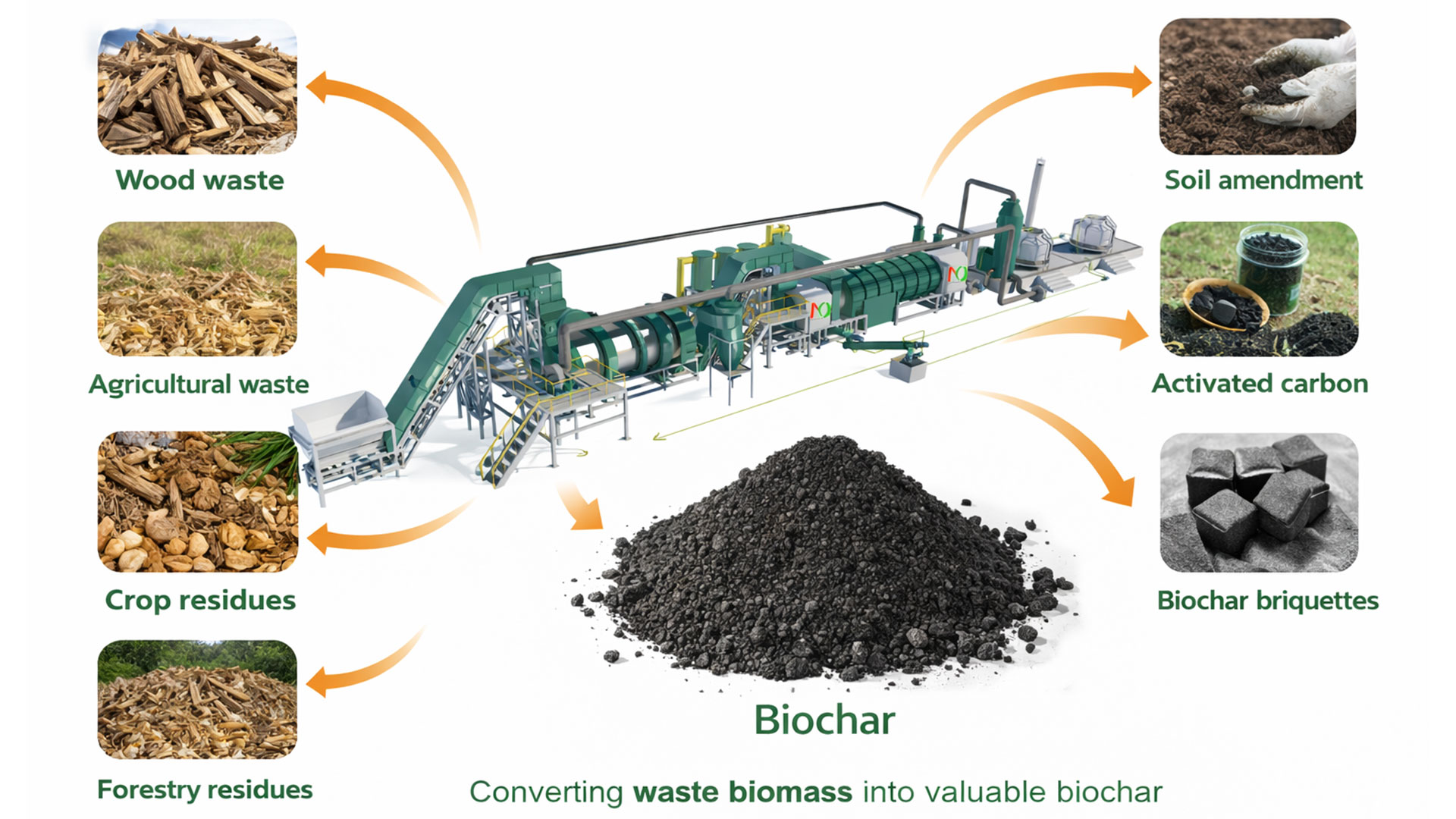
With increasing environmental protection demands, biochar production equipment has evolved from traditional charcoal kiln to modern industrial carbonization plant. Carbonization plant can process biomass waste, such as olive pits, walnut shells, hazelnut shells, pistachio shells, straw, fruit shells, waste wood, date pits, palm kernel shells, and coconut shells. Biochar is the main product of biomass carbonization plant.
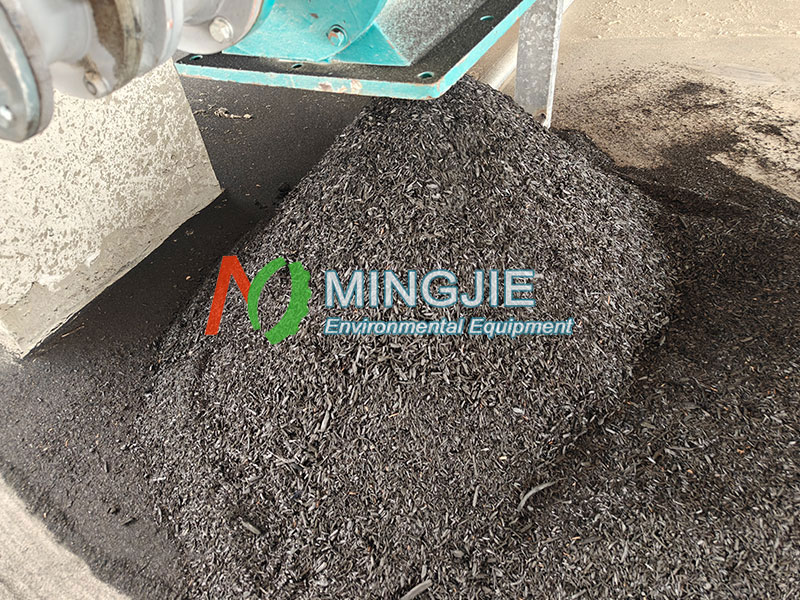
The biochar is a carbon-rich and stable solid material, can improve soil health. Simultaneously, it can achieve permanent carbon sequestration, providing a natural solution to address the greenhouse effect.
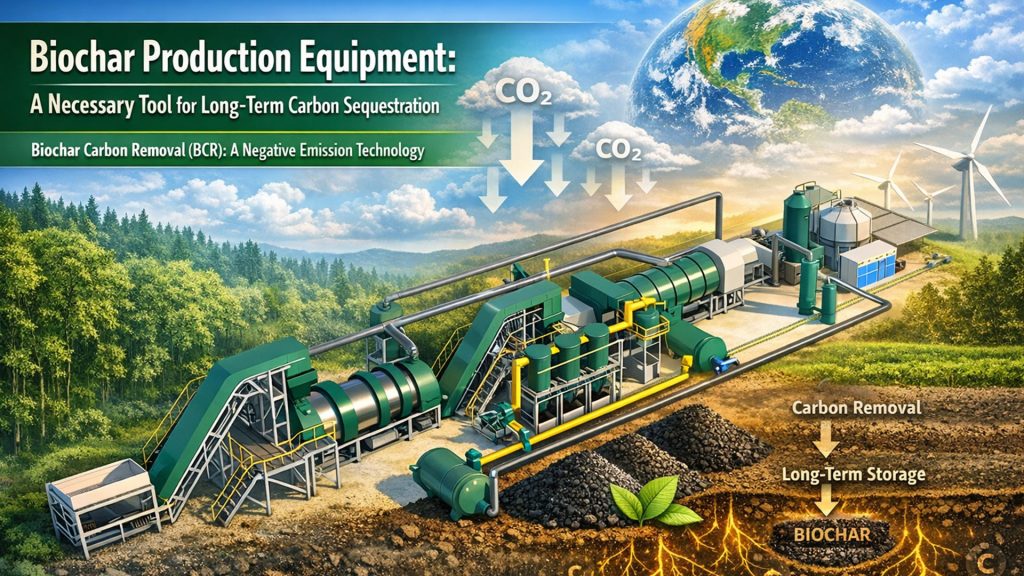
What is Biomass Carbonization?
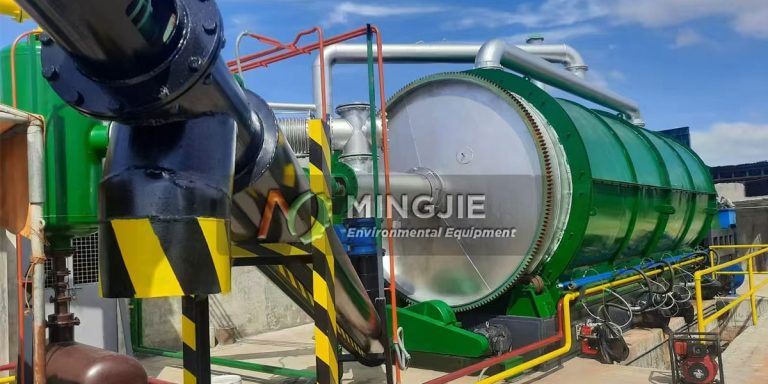
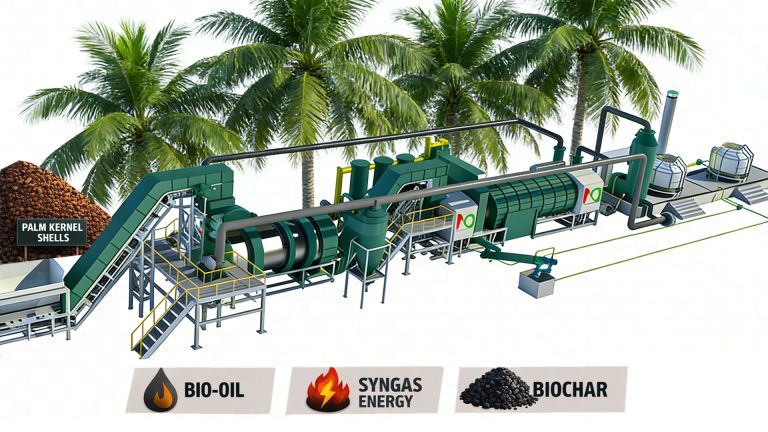
The carbonization plant essentially converts biomass to biochar through pyrolysis technology. The biomass carbonization process involves heating biomass under anaerobic or oxygen-deficient conditions, causing the complex organic matter within it to undergo thermochemical decomposition. This ultimately produces solid biochar, liquid bio-oil, and syngas.
This is similar to the principle of burning charcoal. But modern industrial carbonization plants prioritize high efficiency, low emissions, and precise control over the products.
The modern biochar plant operates in closed, controlled, and environmentally friendly conditions. It produces high-quality biochar while recovering combustible gases and bio-oils. This forms a circular economy model with high economic and ecological value.
Biochar is called “black gold” because of its highly stable carbon structure. When applied to soil, biochar can remain for hundreds to thousands of years, thus permanently fixing carbon dioxide from the atmosphere.
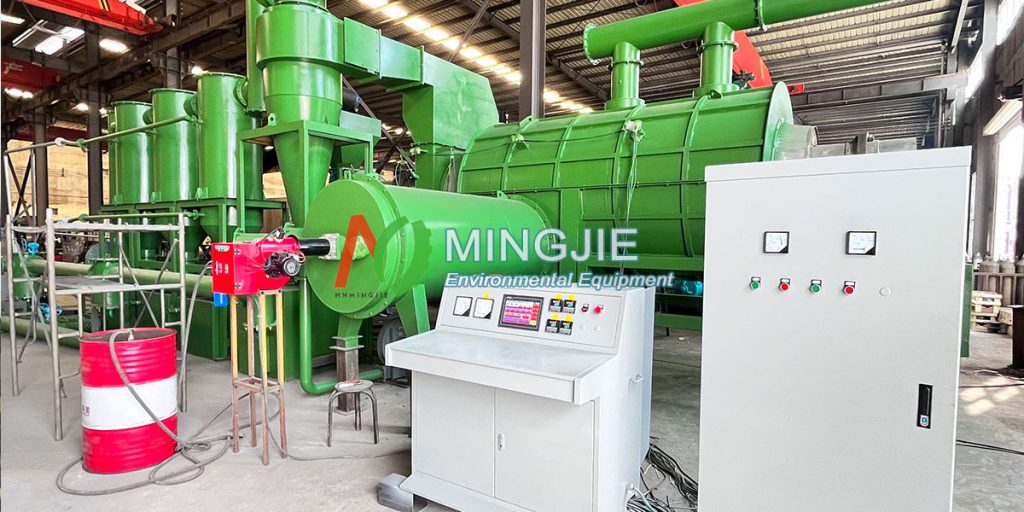
Main Equipment of Biomass Carbonization Plant
A typical biomass carbonization plant comprises five core systems:
① Pre-treatment System: Crusher, dryer, conveyor.
Function: Crushes biomass to 5–50 mm and reduces moisture content to below 15%.
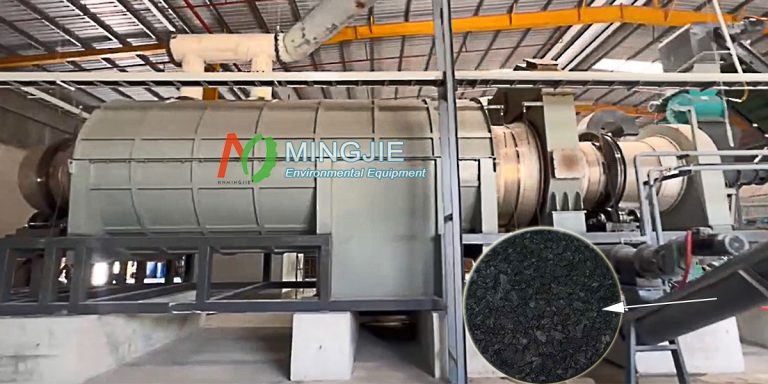
② Main Carbonization System: Continuous horizontal rotary kiln.
Features: Uniform heating, stable temperature, continuous feeding and discharging.
③ Flue Gas and Exhaust Gas Purification System: Dust removal, deodorization, desulfurization, and denitrification.
Function: Ensures emissions meet environmental standards.
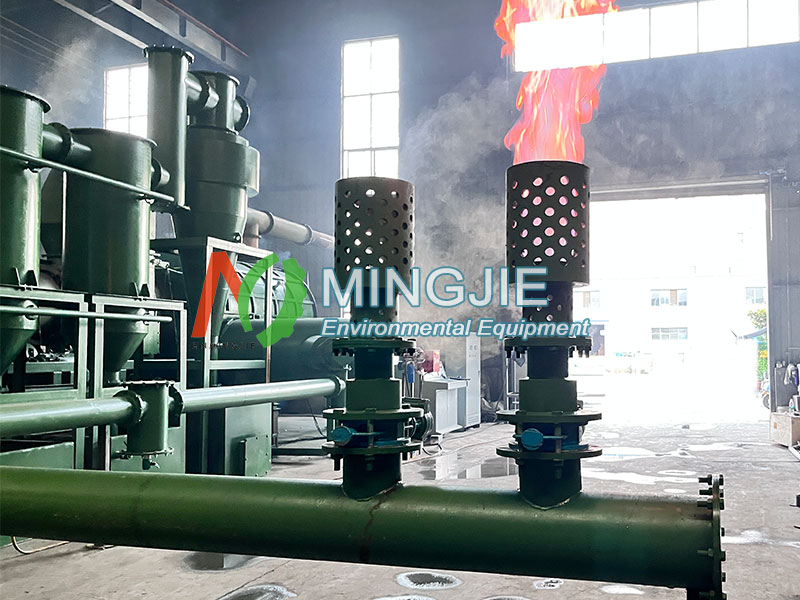
④ Energy Recovery System: Burns combustible gases to provide heat for the kiln.
Function: Achieves energy self-sufficiency.
⑤ Cooling and Slag Removal System: Water-cooled spiral slag removal system.
Advantages of Modern Biochar Production Plant
- Completely Continuous Operation: High efficiency and stable output.
- Energy Self-sufficiency: No additional fuel required.
- Low Emissions: Smokeless and odorless, meeting national standards.
- High-Quality Biochar: High fixed carbon content, low ash content, and low volatile matter content.
- High Adaptability: Can process almost all biomass waste.
- High Profitability: Biochar, bio-oil, and gas can all generate revenue.
Diverse Raw Material Sources
The one advantage of biomass carbonization plant is their wide adaptability to raw materials. Theoretically, almost all products of photosynthesis can be utilized, especially agricultural and forestry waste.
Oil palm residues: such as empty fruit bunches, kernel shells, and palm kernel residue.
Agricultural straw and shells: rice straw, peanut shells, coffee shells, cashew shells, etc.
Waste wood and urban pruning branches: including construction waste and garden pruning waste.
Diverse Applications of Biochar
Biochar, with its high porosity, high specific surface area, and carbon-rich properties, shows application potential in multiple fields.
Soil Improvement and Agricultural Efficiency Enhancement: Biochar can significantly improve soil water retention and aeration, and provide habitats for microorganisms. Especially in arid and semi-arid regions, it helps crops resist drought. Furthermore, biochar itself is rich in nutrients such as silicon, potassium, and phosphorus, and can be used as a slow-release fertilizer carrier.
Carbon Credits and Negative Carbon Emissions: By fixing carbon from biomass in the soil and preventing its rapid decomposition, biochar projects can generate high-credit carbon removal. This involves converting agricultural waste into biochar and applying it to farmland, while simultaneously using the waste heat to power local communities.
Emerging Material Applications: Researchers are exploring the applications of biochar in high-tech fields. For example, its conductivity and porous structure are being used to process it into electrode materials for supercapacitors.