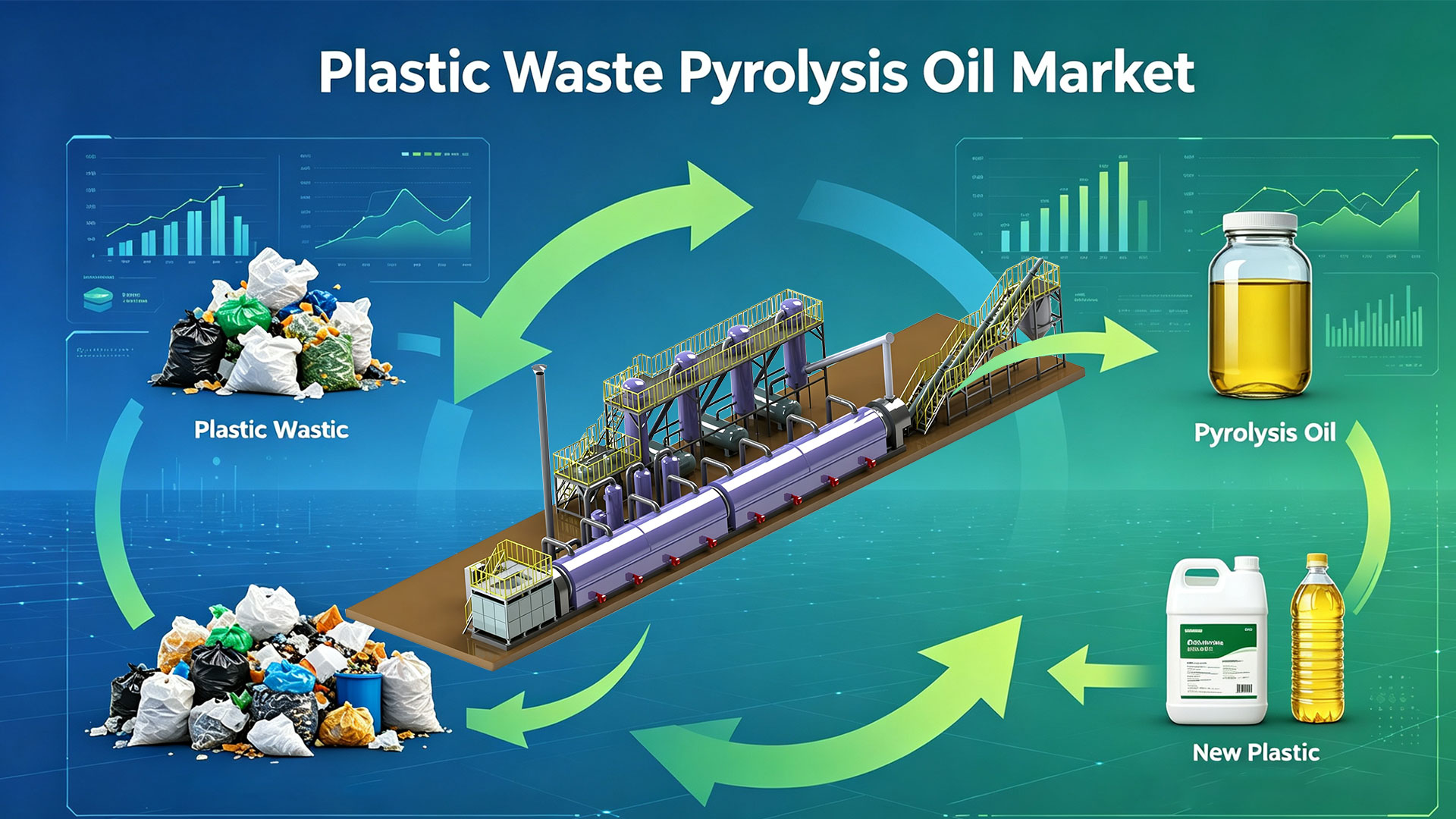
The global plastic waste pyrolysis oil market is transitioning from demonstration projects to industrial expansion. This pyrolysis industry, which transforms low-value mixed waste plastics into high-value oil products, is demonstrating remarkable growth potential. The global plastic waste pyrolysis oil market size was US$718.26 million in 2025. It is projected to grow from US$758.22 million in 2026 to US$1.16927 billion in 2034, with a CAGR of 5.56% over the forecast period.
The raw material for plastic pyrolysis oil is primarily post-consumer mixed plastics (mainly PE and PP). Products are divided into two main categories: Crude Pyrolysis Oil and Refined Pyrolysis Oil. Crude pyrolysis oil is mainly used as fuel for industrial kilns and for boiler heating. Pyrolysis oil that has undergone distillation and refining can be blended into diesel fuel.

Plastic Waste Pyrolysis Oil Market Landscape
Europe: It is the most mature plastic waste pyrolysis oil market, holds approximately 29% market share. Policies and regulations are well-developed, ISCC-PLUS certification is widespread, and refineries have well-established co-processing capabilities. The Netherlands, Germany, and Northern Europe have a large number of commercial projects, with products primarily used as chemical feedstocks and SAF production. However, the cost of waste plastic feedstock in Europe is relatively high, and projects are highly dependent on certification.
North America: Large-scale plastic pyrolysis projects are concentrated in the US, with companies like Brightmark building large-scale pyrolysis plants with capacities of hundreds of thousands of tons. Capital supply is ample. Policies vary across states, resulting in long approval cycles. The main downstream applications are industrial fuels and refinery feedstocks.
Asia Pacific: The fastest growing region, with a compound annual growth rate of 31%. China, Southeast Asia, and India generate massive amounts of waste plastics, offering a significant cost advantage in raw materials. Strong domestic equipment manufacturing capabilities have led to the commissioning of numerous semi-continuous and continuous pyrolysis plants. Weaknesses lie in the lack of a compliance traceability system and insufficient ISCC certification coverage. Exports of high-end chemical-grade pyrolysis oil are restricted, with most products primarily used for industrial fuel consumption.
Middle East, Africa, and Latin America: These regions are in their initial stages, relying on waste management policies. Priority is given to developing small-to-medium-sized modular pyrolysis projects, primarily for local fuel consumption.
Regionally, the Asia-Pacific region, with its massive plastic consumption and manufacturing base, is the world’s largest plastic waste pyrolysis oil market. Europe follows closely, benefiting from the most aggressive environmental policies and plastic taxes. North America is predicted to be the fastest-growing region, especially after the implementation of stricter carbon standards and sustainable aviation fuel tax credits in various US states. Many energy and chemical giants are accelerating their commercialization projects in the region.
What Drives the Growth of Plastic Waste Pyrolysis Oil Market?
The global plastic waste pyrolysis oil market is expanding rapidly. Key drivers include environmental policies, the limitations of mechanical recycling, the supply chain, and economic benefits.
Limitations of Mechanical Recycling
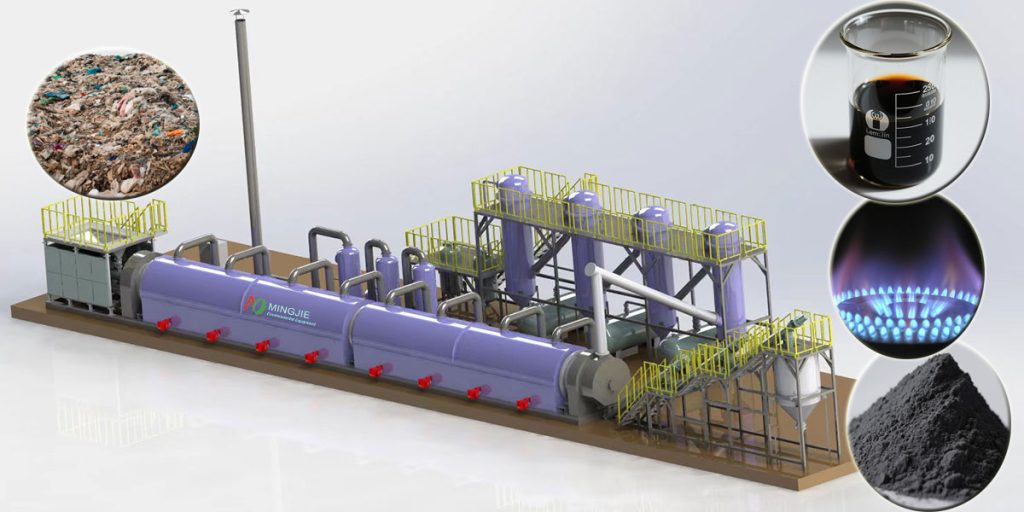
Traditional mechanical recycling is only suitable for clean, single-type plastics. Large quantities of contaminated waste plastics cannot be physically recycled and are mostly landfilled or incinerated. Pyrolysis plants can convert mixed waste plastics into pyrolysis oil and carbon black, forming a complementary closed-loop recycling system.
Strict Policy Incentives and Regulations
Global policies strongly promote the development of chemical recycling. Many countries restrict the direct landfill and incineration of plastics, further promoting the utilization of waste plastic pyrolysis oil.
Extended Producer Responsibility (EPR) regulations require brand owners to meet renewable material content targets. Mechanical recycling alone cannot fully achieve these targets.
Furthermore, the EU Sustainable Aviation Fuel (SAF) regulation and the US Renewable Fuel Policy recognize waste plastic pyrolysis oil as a qualified high-value feedstock. This opens up high-end downstream plastic waste pyrolysis oil market.
Co-refining by Refineries Opens Up Commercial Exports
Previously, the biggest challenge for pyrolysis oil was the inability to sell the finished product. Now, petrochemical giants (BASF, Shell, Neste, Total, etc.) accept co-refining of pyrolysis oil with crude oil.
- Crude pyrolysis oil is fed into existing refinery FCC and hydrotreating units, replacing naphtha.
- No need to build a new complete chemical plant. Existing global refining infrastructure can be reused.
- Numerous petrochemical companies have signed long-term offtake agreements, securing stable sales channels for pyrolysis plants. This will significantly reduce project investment risk.
Technological Iteration and Continuous Improvement in Project Economics
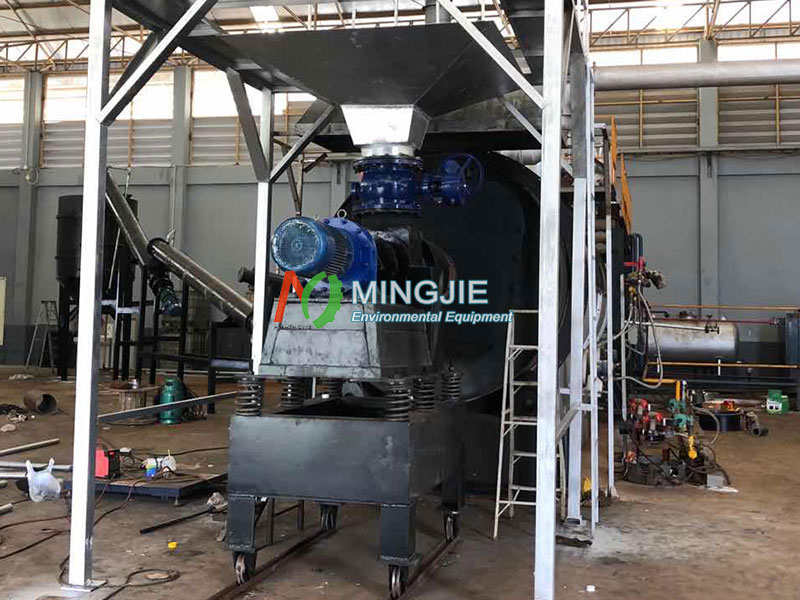
Mature Continuous Pyrolysis Process: Compared to batch pyrolysis, continuous pyrolysis technology improve the conversion rate of waste plastics to oil and reduce unit energy consumption. Fully automatic pyrolysis plant is suitable for large-scale industrial production of waste plastic pyrolysis oil.
Modular Equipment Application: Prefabricated skid-mounted small pyrolysis plant reduces infrastructure investment, enabling small pyrolysis projects to be implemented.
Advances in Pretreatment and Oil Upgrading Technologies: Reduced impurities improve the quality of pyrolysis oil, allowing products to be upgraded from low-cost industrial fuels to chemical feedstocks.
Carbon Credits and Sustainable Certification Bring Additional Premiums
Waste plastic pyrolysis delivers outstanding carbon reduction benefits. Pyrolysis oil ISCC products obtain green attribute premiums and tradable carbon credits. Additional carbon revenue further shortens the investment payback period.