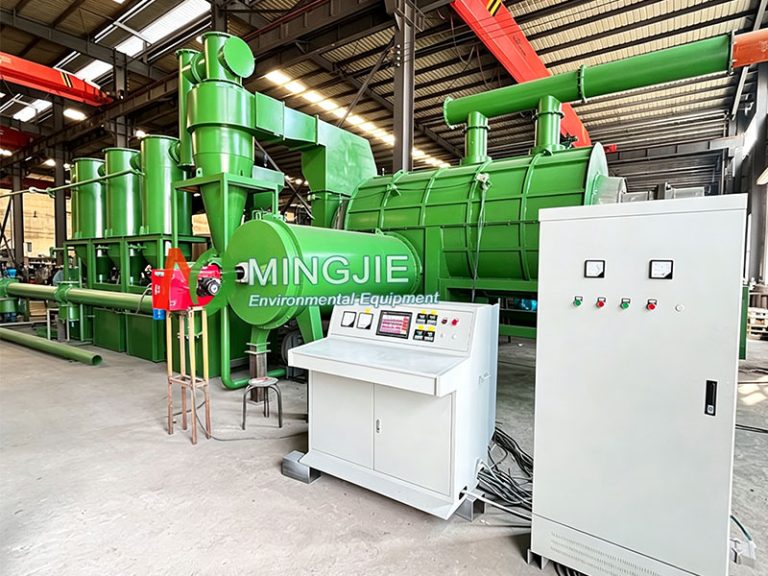
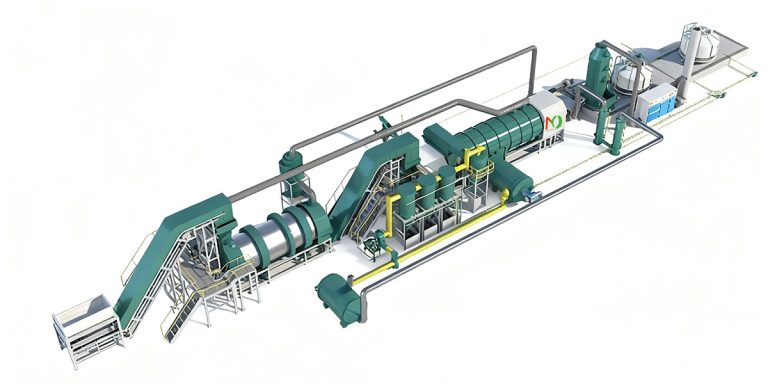
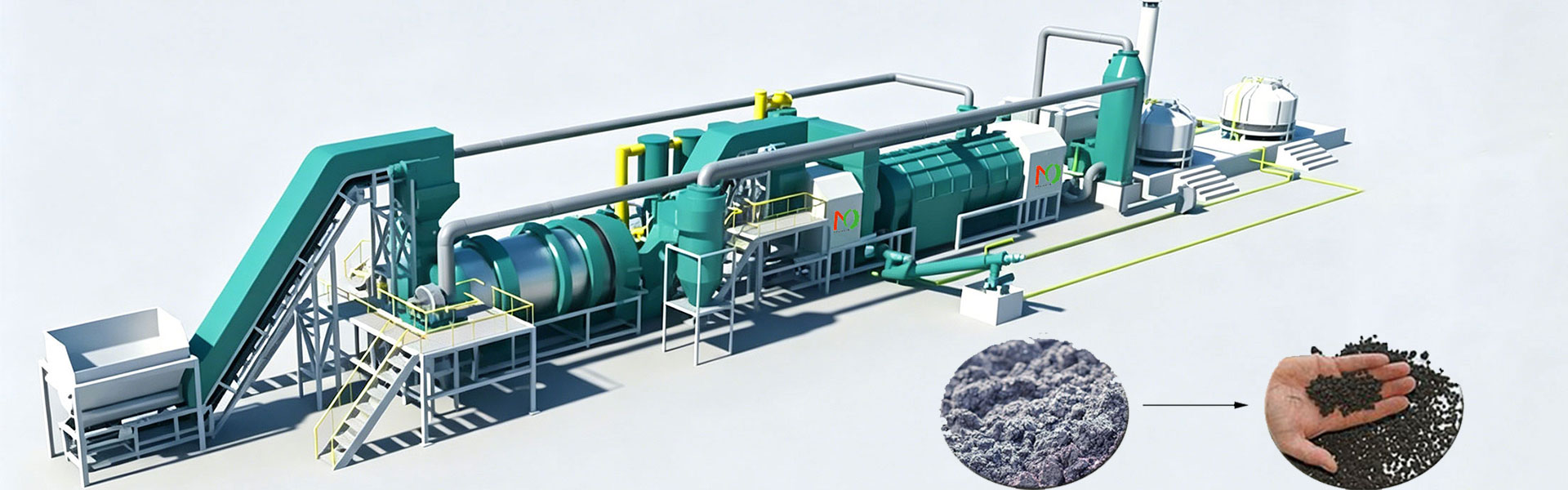
Sludge biochar production equipment can convert dry sludge into biochar through pyrolysis carbonization technology. Therefore, it is also called sludge pyrolysis machine, carbonization plant.
Sludge Carbonization Plant
The sludge carbonization plant utilizes continuous pyrolysis technology, enabling continuous production of sludge biochar. Its core principle is to allow the sludge to undergo thermal decomposition in an anaerobic, high-temperature environment, ultimately transforming organic matter into carbon-rich solid products.
Sludge biomass carbonization plant enables the resource utilization, harmless treatment, and volume reduction of sludge. It provides an efficient and green solution for municipal and industrial sludge treatment, realizing the recycling of solid waste resources.
Sludge Pyrolysis Products
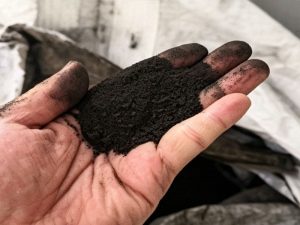
Sludge Biochar
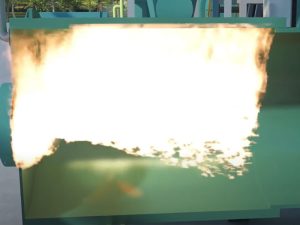
Syngas
Sludge biochar has well-developed pores, strong adsorption capacity, and stable properties. It is widely used in soil improvement, water remediation, carbon sequestration, emission reduction, and heavy metal solidification.
Syngas is not directly emitted but is fed into a burner for heating the reactor. The resulting high-temperature flue gas provides heat for the drying system. This reduces the external energy consumption of the carbonization equipment.
As a professional pyrolysis plant manufacturer, Mingjie Group offers pyrolysis solutions for different types of biomass. Please tell us the project you want to handle, and we will recommend you the suitable biomass carbonization equipment.
Pyrolysis carbonization has become the mainstream green technology pathway for sludge disposal. Sludge biochar production equipment is the core carrier for implementing pyrolysis carbonization technology. It transforms waste sludge into sludge biochar through precise temperature control, anaerobic pyrolysis, and closed-loop energy recovery.
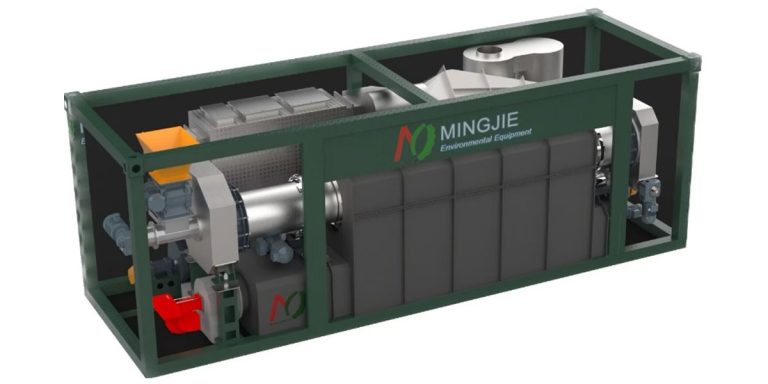
Portable Small Carbonization Equipment: skid mounted design, continuous operation, generally used as a verification machine. It is suitable for the treatment of 5-20mm dry sludge (water content less than 15%).
Large Scale Biochar Production Equipment
Fully Automatic Biochar Production Equipment: The entire system mainly consists of conveying unit, drying pretreatment unit, pyrolysis carbonization unit, tail gas purification and energy recovery unit, and intelligent control unit.
Model
MJT-100
MJT-500
MJT-1000
MJT-2000
MJT-3000
MJT-5000
Input Capacity
50-100kg/h
300-500kg/h
800-1000kg/h
1500-2000kg/h
2500-3000kg/h
4500-5000kg/h
Structure
Skid Mounted
Modularized
Modularized
Modularized
Modularized
Modularized
Reactor Type
Single Layer
Dual cylinder
Working Method
Fully Continuous
Reactor Material
304 Stainless steel
Feedstock Size
<20mm
Feeding Moisture
<15%
Initial Heating Oil Consumption
20L
30-40L
35-50L
50-70L
80-90L
120-140L
Land Area
L12m*W2.5m
L29m*W12m
L34m*W13m
L36m*W15m
L42m*W15m
L50m*W18m
If you’re interested in purchasing or learning more about Biochar Production Equipment, you can contact Mingjie Group. Contact us for a free quote!
Core Working Principle of Sludge Biochar Production Equipment
The core process of sludge pyrolysis equipment is anoxic/anaerobic mesophilic pyrolysis carbonization. The entire process operates under closed negative pressure, without open flame combustion, avoiding the generation of toxic and harmful gases such as dioxins.
The entire sludge treatment process is divided into five core stages: pretreatment drying, pyrolysis carbonization, product separation, tail gas purification, and energy recovery, forming a complete closed-loop treatment system.
First is the pretreatment stage. The drying system dries the sludge, reducing the moisture content to below 15%, meeting the requirements of the pyrolysis process.
The dried sludge then enters the pyrolysis carbonization reactor. Within the closed furnace, mesophilic pyrolysis is carried out at a controlled temperature between 500 and 650°C. The organic components in the sludge undergo thermal decomposition, breaking down into solid biochar, syngas, and tar products.
The syngas, after purification, can be used as an auxiliary heat source for the sludge carbonization unit, achieving energy self-sufficiency for the equipment. The solid biochar is discharged through a cooling and slag removal system.
Small amounts of exhaust gas and dust are treated in the purification system and discharged only after meeting the standards.
CONTACT US
Please Feel free to give your inquiry in the form below, and we will reply you in 24 hours.