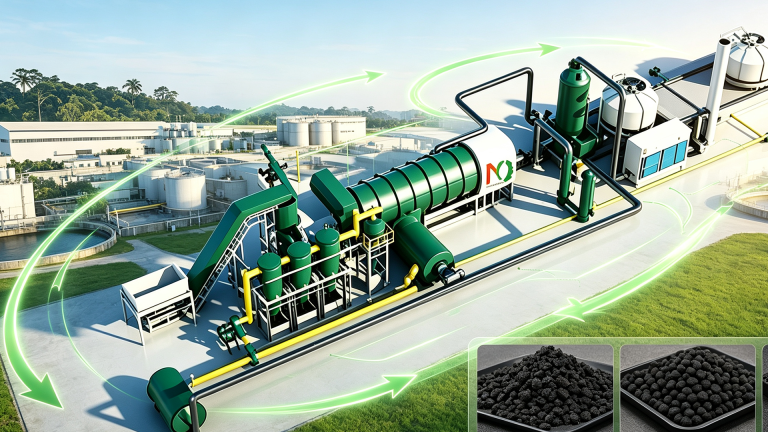
Biochar system is a comprehensive technology that transforms agricultural and forestry waste into valuable resources. Through pyrolysis, it converts rice husks, wood, and coconut shells into biochar, which can improve soil and rehabilitate the environment. Biomass pyrolysis system is becoming an important bridge connecting agriculture, environmental protection, and new energy sources.
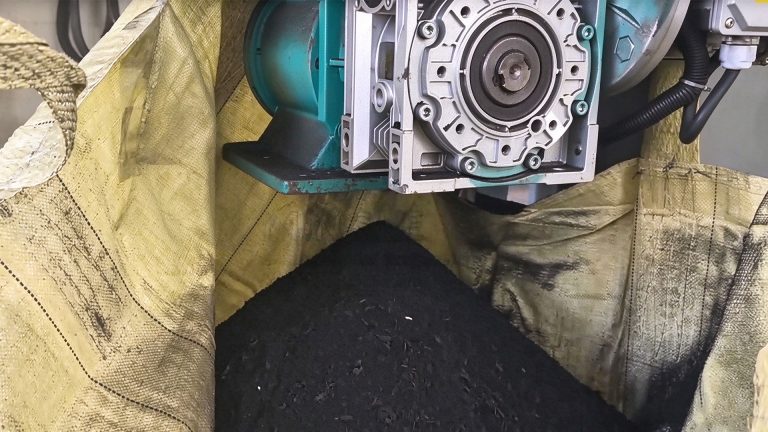
Mingjie Biomass Carbonization Plant utilizes pyrolysis technology to convert waste biomass into high-value biochar under anaerobic conditions. Its core is thermochemical conversion, making it a biochar system that achieves high-value utilization of waste resources. It can reduce environmental pollution and greenhouse gas emissions caused by biomass combustion.
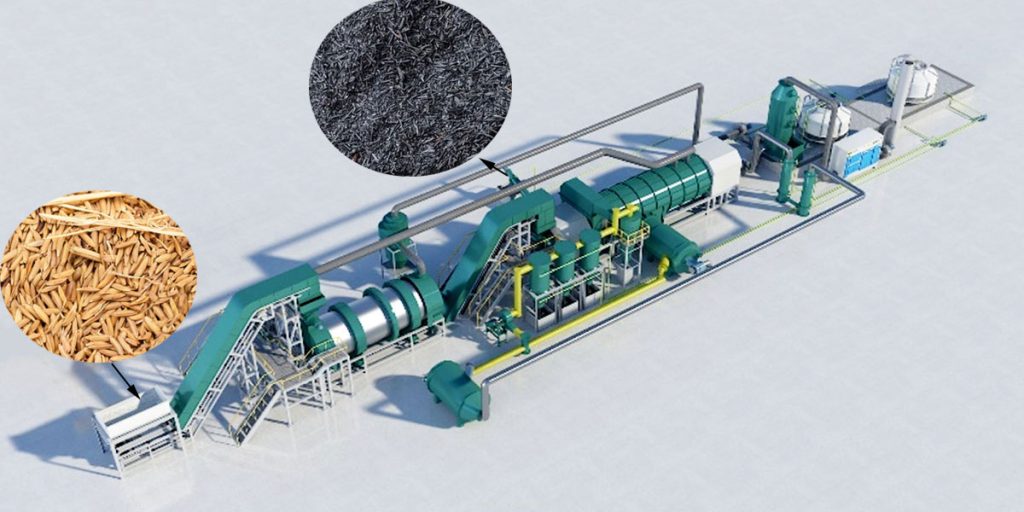
Besides its core product, biochar, the entire biochar system also produces valuable byproducts such as syngas and tar. Syngas is a combustible gas that can be recycled to provide heat for the system itself, achieving energy self-sufficiency.
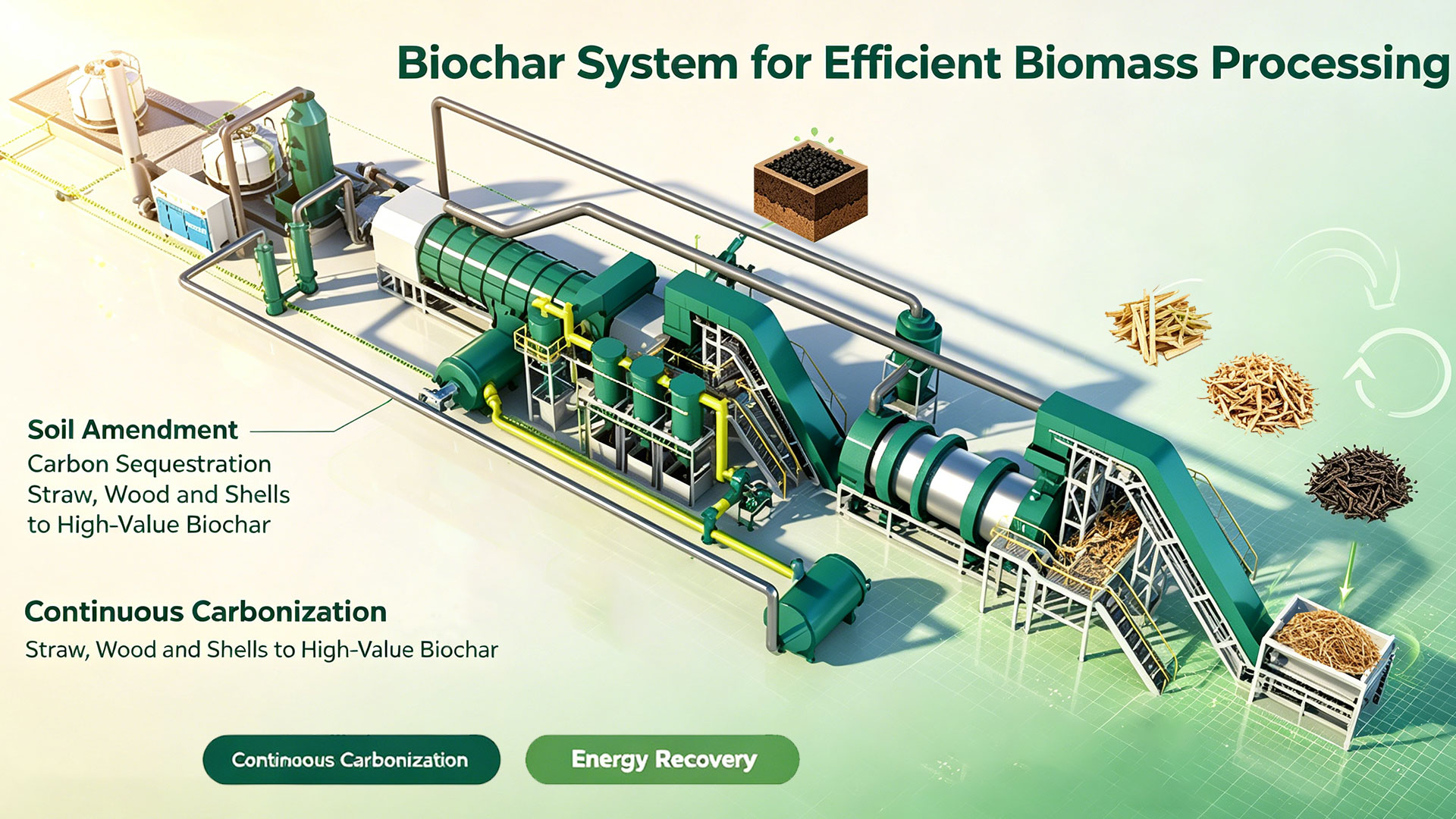
Composition of a Biochar System
A complete biochar system integrates multiple technologies and equipment.
- Raw Material Pretreatment: Raw materials such as straw are crushed to prepare for subsequent reactions.
- Core Reactor: A double-layer rotary pyrolysis carbonization reactor is used to ensure efficient reaction.
- Product Cooling: A multi-stage spiral water cooling system is used to cool and collect high-temperature products.
- Gas Purification: Multiple purification systems are provided to purify and improve the quality of the produced fuel gas.
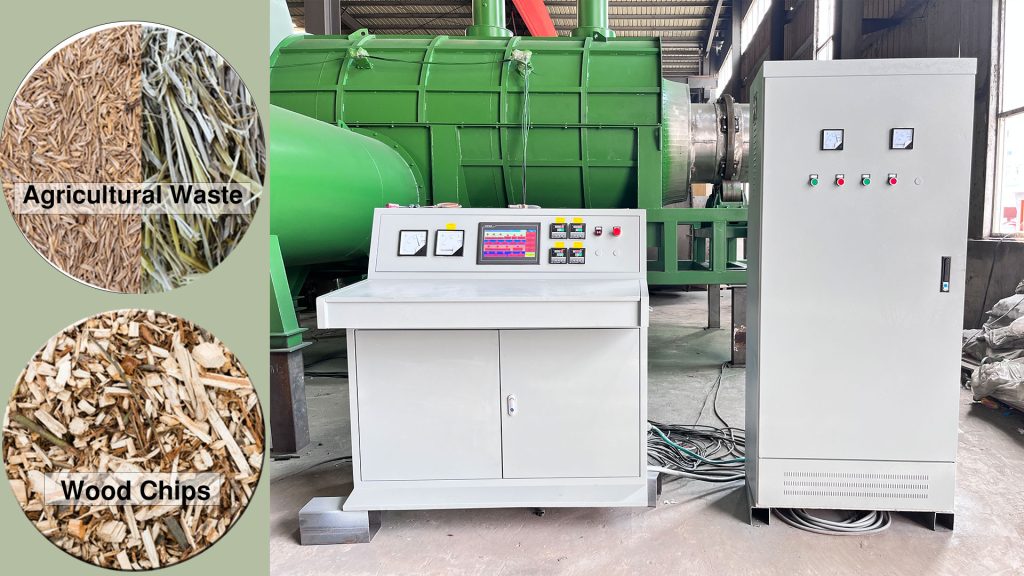
- Intelligent Control System: Sensors and algorithms are used to precisely control key parameters such as feed rate and temperature.
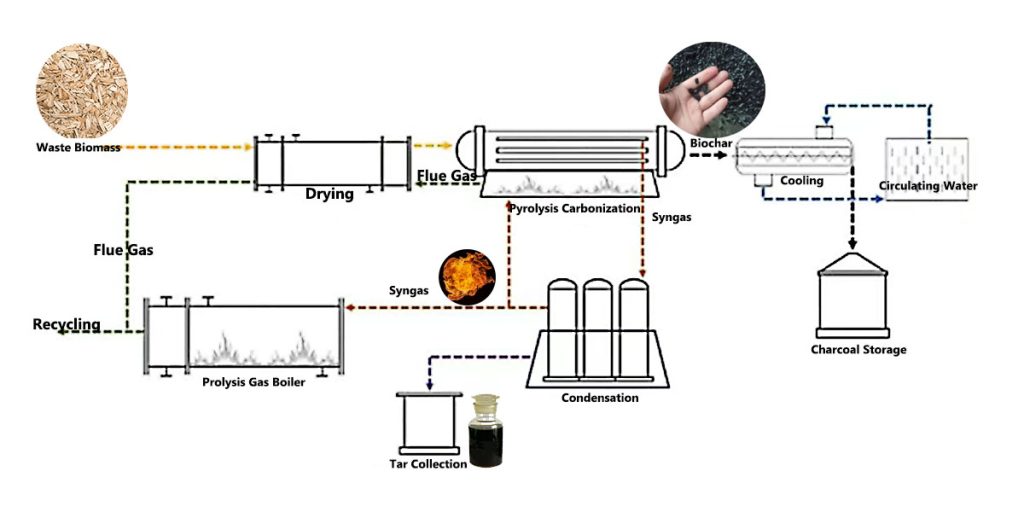
Process of Biochar System Processing Biomass
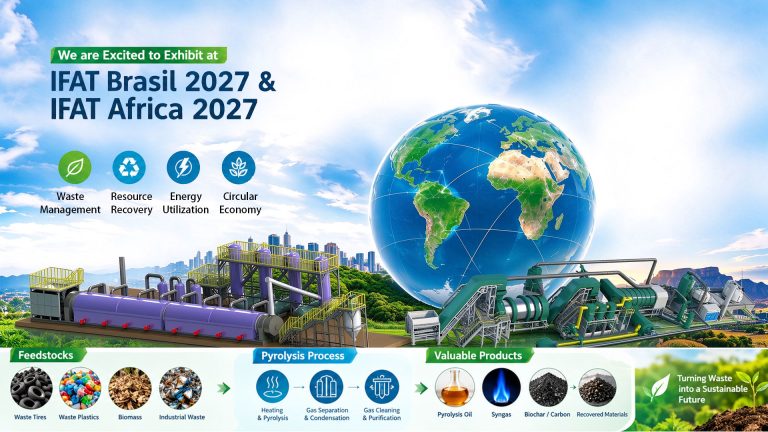
Biochar production equipment primarily relies on pyrolysis—a process of heating organic matter in a low-oxygen environment. This biomass pyrolysis process breaks down complex organic molecules into three main products: biochar, syngas, and bio-oil.
Key steps in a biochar system for treating waste biomass include the following:
- Drying the feedstock to reduce moisture content.
- Heating at a controlled temperature for pyrolysis and carbonization.
- Collecting the resulting solid residue and separating syngas and tar.
- Recovering and utilizing the heat and syngas generated during pyrolysis.
- Purifying the exhaust gas to meet emission standards.
Common Biomass Materials Used in Biochar Making
Many types of biomass materials can be turned into biochar by using biochar system.
Agricultural waste includes crop stalks such as corn stalks, wheat stalks, rice straw, and rice husks. Various forestry wastes, such as sawdust, bamboo chips, wood chips, and coconut shells, are also suitable. Animal manure and sludge can also be pyrolyzed using biomass carbonization equipment.
The raw materials suitable for our biomass carbonization machines are 5-20 mm biomass (moisture content below 15%). Our fully continuous biochar production line is equipped with crushers and dryers for larger-sized and high-moisture raw materials.
Challenges with Diverse Biomass Materials
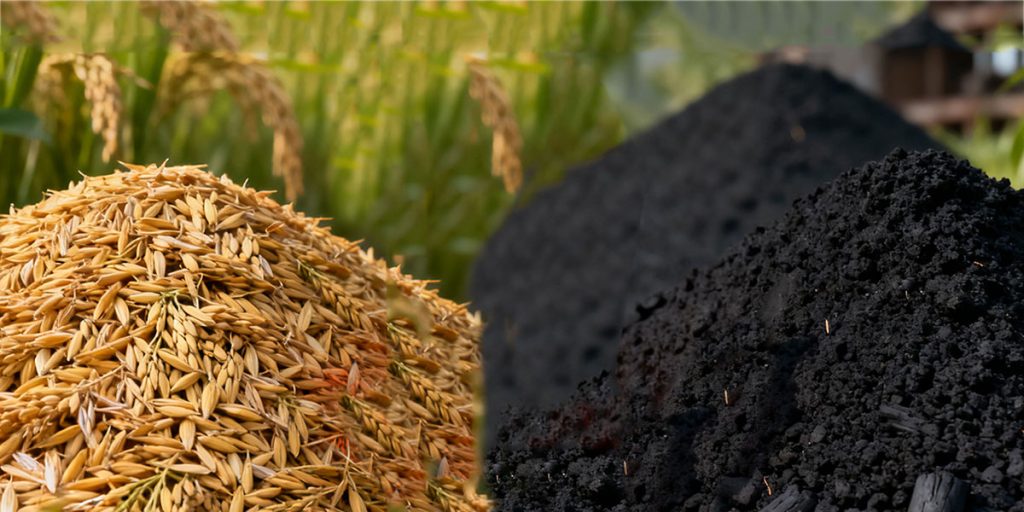
Different biomass materials have different characteristics, such as chemical composition and moisture content, which may affect their suitability for pyrolysis. For example, biomass with high moisture content may need to undergo a drying process prior to pyrolysis.
Some biomass may have high lignin and cellulose content, which may require a different temperature range for optimal carbonization and consequently affect the biochar yield and quality.
How Biochar Making Machines Adapt to Different Biomass Types
Modern biochar making machines are engineered with flexibility in mind to handle diverse feedstocks efficiently. Adjustable feeding systems allow operators to accommodate materials with different particle sizes or densities. Temperature control mechanisms ensure stable operation across a range of biomass types by maintaining consistent thermal conditions throughout the reactor chamber.
Fully automatic biomass to biochar system is typically equipped with crushing and drying pretreatment systems, enabling it to process biomass materials with a particle size greater than 20 mm and a moisture content between 15% and 65%, such as wood, straw, coconut shells, and bamboo.
Before entering the carbonization unit, the raw materials are crushed and dried so that their particle size is reduced to below 20 mm and the moisture content is lowered to less than 15%. This ensures that the feedstock meets the requirements of the carbonization equipment and helps maintain stable pyrolysis operation as well as consistent biochar quality.
Innovations in Biochar Machine Technology
With the rapid development of modern technology, automation and monitoring systems are applied in new biochar machines. Advanced sensors in the reactors are used for real time monitoring of temperature, pressure and gas compositions. According to the physical and chemical properties of different biomasses, the intelligent control system in the equipment will be dynamically adjusted, so as to realize the best production efficiency. The fully automatic bamboo charcoal making machine has high yield, fast speed of charring, and continuous production. It can be inputting the raw materials and outputting the charcoal at the same time.
Technologies for Improving Biochar Yield and Consistency
To increase biochar yield in small-scale biochar production plants or large-scale systems, it may be necessary to crush certain biomass feedstocks to obtain uniform particle size. Drying the biomass before pyrolysis is also crucial to significantly reduce moisture content. Adding catalysts during pyrolysis is another effective method to accelerate biomass conversion and thus increase biochar carbon yield.
Quality Control Measures in Biochar Production
Biochar quality assurance is essential to ensure that the produced biochar meets the standards for agricultural or industrial applications. Analytical parameters such as porosity, specific surface area, fixed carbon content, pH value, and ash content can provide information about the properties of the biochar. Biochar producers typically integrate continuous sampling systems into fully automated production lines to provide sampling points for each batch cycle.