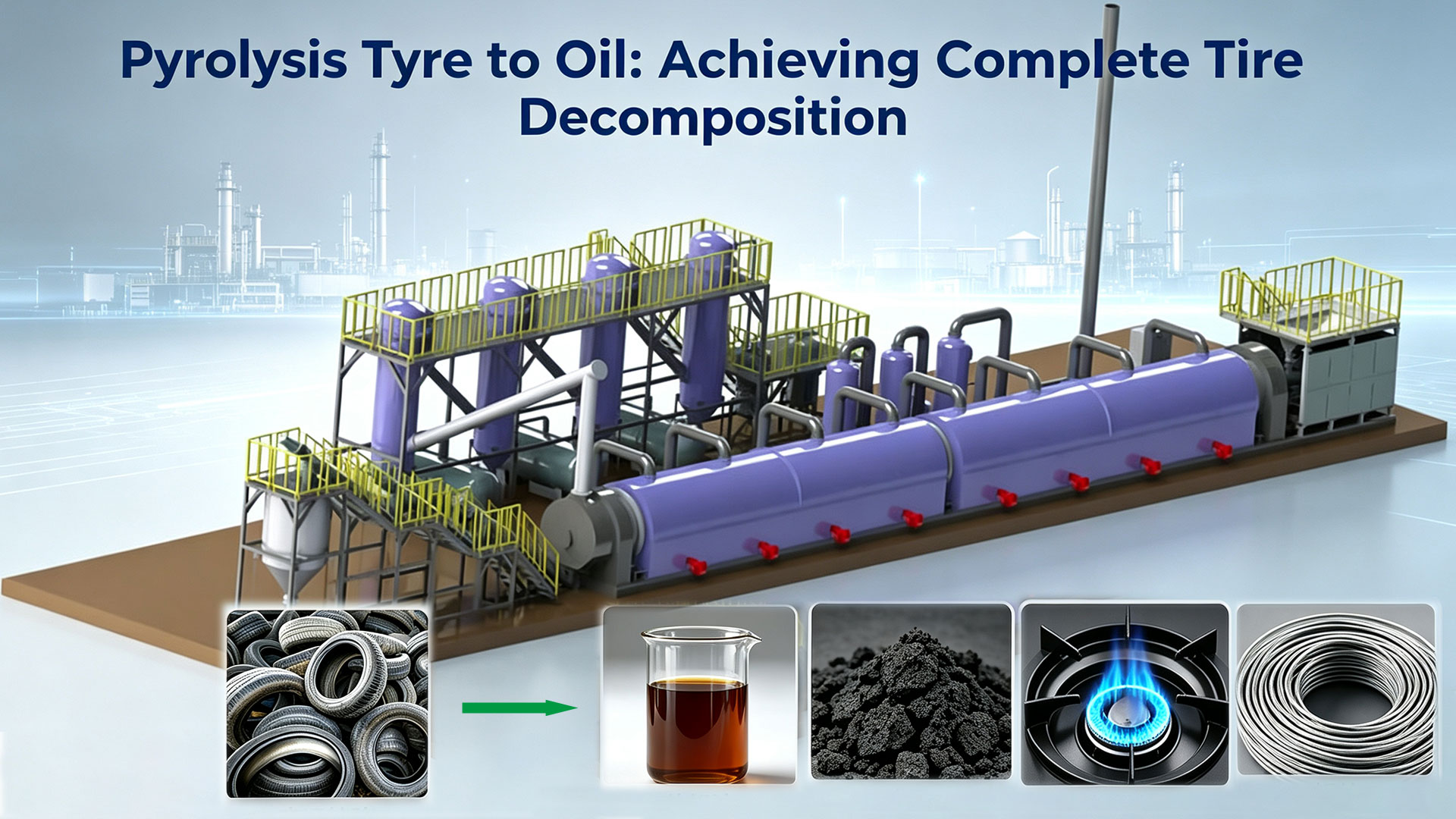
Tyre pyrolysis involves the thermal decomposition of end-of-life tires in an anaerobic environment, producing pyrolysis oil, combustible gases, carbon black, and steel wire. Pyrolysis Tyre to oil is the most technically complex of standard recycling methods, requiring significant capital investment and specialized operational skills. However, it is the only method capable of achieving complete tire decomposition. Furthermore, when operated correctly, tyre pyrolysis plants produce no solid waste residue.
When is Pyrolysis Tyre to Oil Suitable?
Pyrolysis tyre to oil is not the only option for waste tire recycling, but its advantages are significant in specific scenarios.
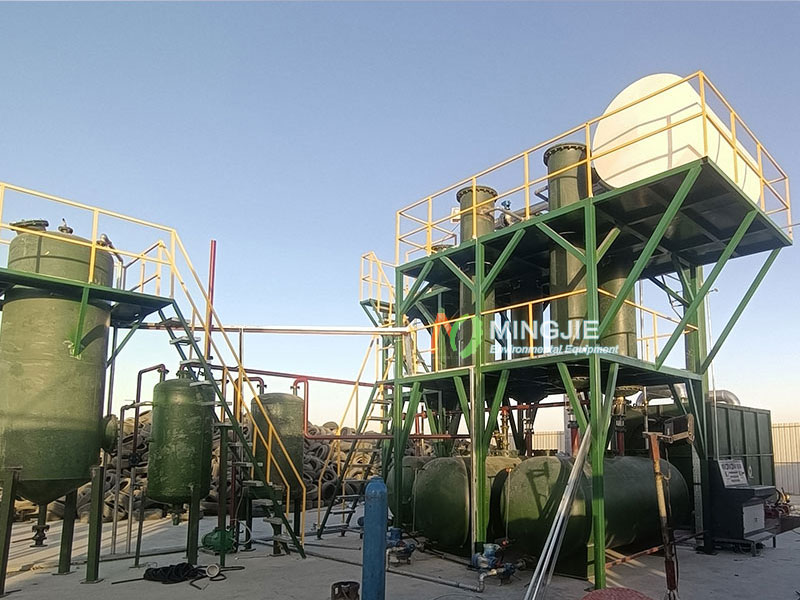
Recycling Goal: Maximizing Resource Utilization
Pyrolysis is one of the few technologies that can completely utilize waste tires. Tyre pyrolysis plant can produce pyrolysis oil (40-45%), recovered carbon black (30-35%), combustible gas (10%), and steel wire (15%). This is an ideal technology for tire recycling projects that aim to extract high-value raw materials from waste and build a circular economy model.
Environmental Protection: Thorough and Harmless Treatment
Compared to incineration, the pyrolysis process takes place in an oxygen-free or oxygen-deficient environment, theoretically eliminating the conditions for dioxin generation. Furthermore, the environmental benefits of pyrolysis tyre to oil have been quantified. Studies have shown that compared to using virgin materials, processing 1 ton of waste tires using pyrolysis technology can reduce carbon dioxide emissions by approximately 1.1 tons.
Flexible Waste Tire Processing
The tire to oil pyrolysis process offers flexibility to adapt to various situations.
Raw Material Adaptability: Pyrolysis tyre to oil plants can process various types of tires, including passenger car tires and truck tires. However, it is generally required to avoid mixing in halogen-containing rubber to prevent the generation of corrosive gases.
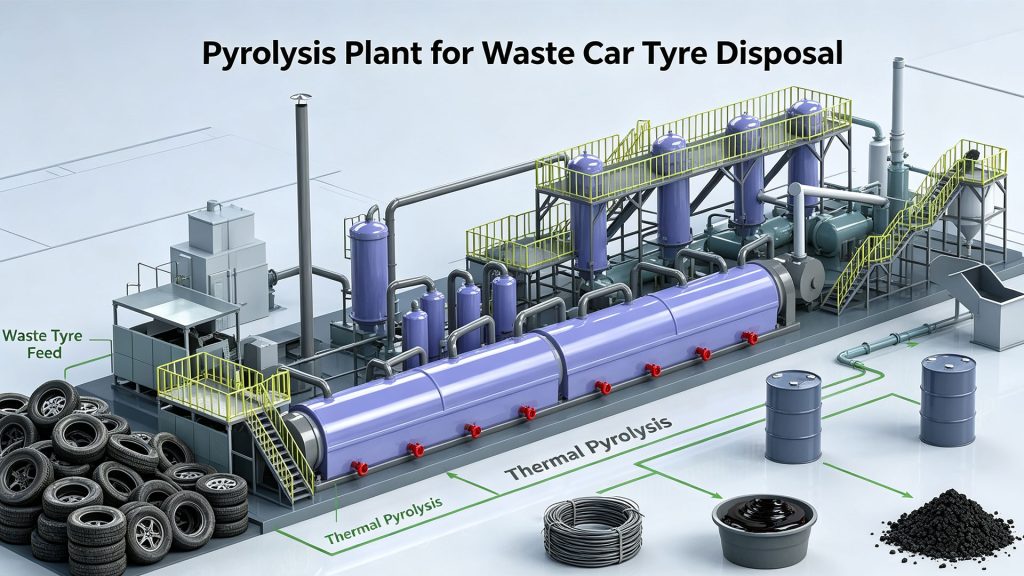
Technology and Scale Selection: Currently, there are two main process routes: batch pyrolysis plant and continuous pyrolysis plant. Companies can choose based on their investment budget, target capacity, and environmental requirements. Currently, the pyrolysis tyre to oil industry is transitioning from batch to more efficient continuous and intelligent production.
Potential Problems Investing in the Tire Pyrolysis Industry
High Capital Investment and Long Profitability Cycle
Tyre pyrolysis is a capital-intensive industry, investment cannot be estimated based solely on a single pyrolysis reactor. A complete tire pyrolysis recovery project typically includes systems for raw material storage and pretreatment, pyrolysis, oil and gas condensation, syngas recovery or safe disposal, flue gas treatment, and deep processing of oil and carbon.
Difficulty in Achieving Stable Scale-Up Operation
Scaling up pyrolysis plant from small scale to commercial production line may lead to increased maintenance costs and product upgrade issues.
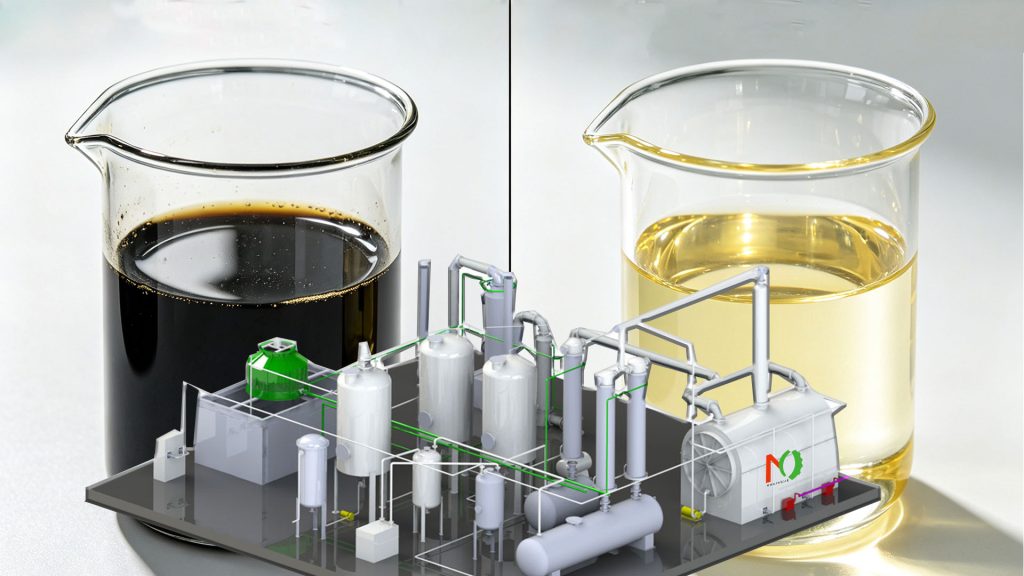
Tire pyrolysis oil typically contains sulfur, nitrogen, and various complex hydrocarbons. Depending on the target application, the pyrolysis oil may require treatments such as sedimentation filtration, dehydration, distillation, desulfurization, or hydrogenation.
The pyrolysis carbon black is not equivalent to rCB (recycled carbon black) that meets tire application requirements. It usually requires further processing, including impurity removal, grinding, grading, granulation, or modification.
High Environmental Compliance Costs and Regional Regulatory Differences
Projects in Europe and America typically require pyrolysis plants to specify requirements for waste gas, wastewater, solid residue, noise, fire protection, and chemical management in their construction and operation permits. Pyrolysis Tyre to oil projects should focus on controlling the airtightness of the oil and gas system, the reuse of non-condensable gases or safe combustion, combustion flue gas, and production wastewater.
In other markets, such as Africa, regulatory capacity may be uneven.
Summarize
Against the backdrop of the global circular economy and dual-carbon strategy, pyrolysis has become a key development direction in the field of solid waste treatment. Tire pyrolysis is a waste treatment technology with environmental benefits as its primary focus. It perfectly solves many shortcomings of traditional tire recycling technologies and is a core technology for realizing a tire-to-tire circular economy.
Tyre Pyrolysis is a technically feasible resource recovery solution with significant environmental advantages. It is particularly suitable for scenarios with high environmental requirements and a focus on maximizing resource recycling. However, it also requires comprehensive consideration of technology, funding, and policy to realize its full potential.