Continuous carbonization equipment transforms agricultural waste into high-value biochar and tradable carbon credits. These carbon credits represent verified, quantifiable, and long-term sequestered carbon dioxide removals.
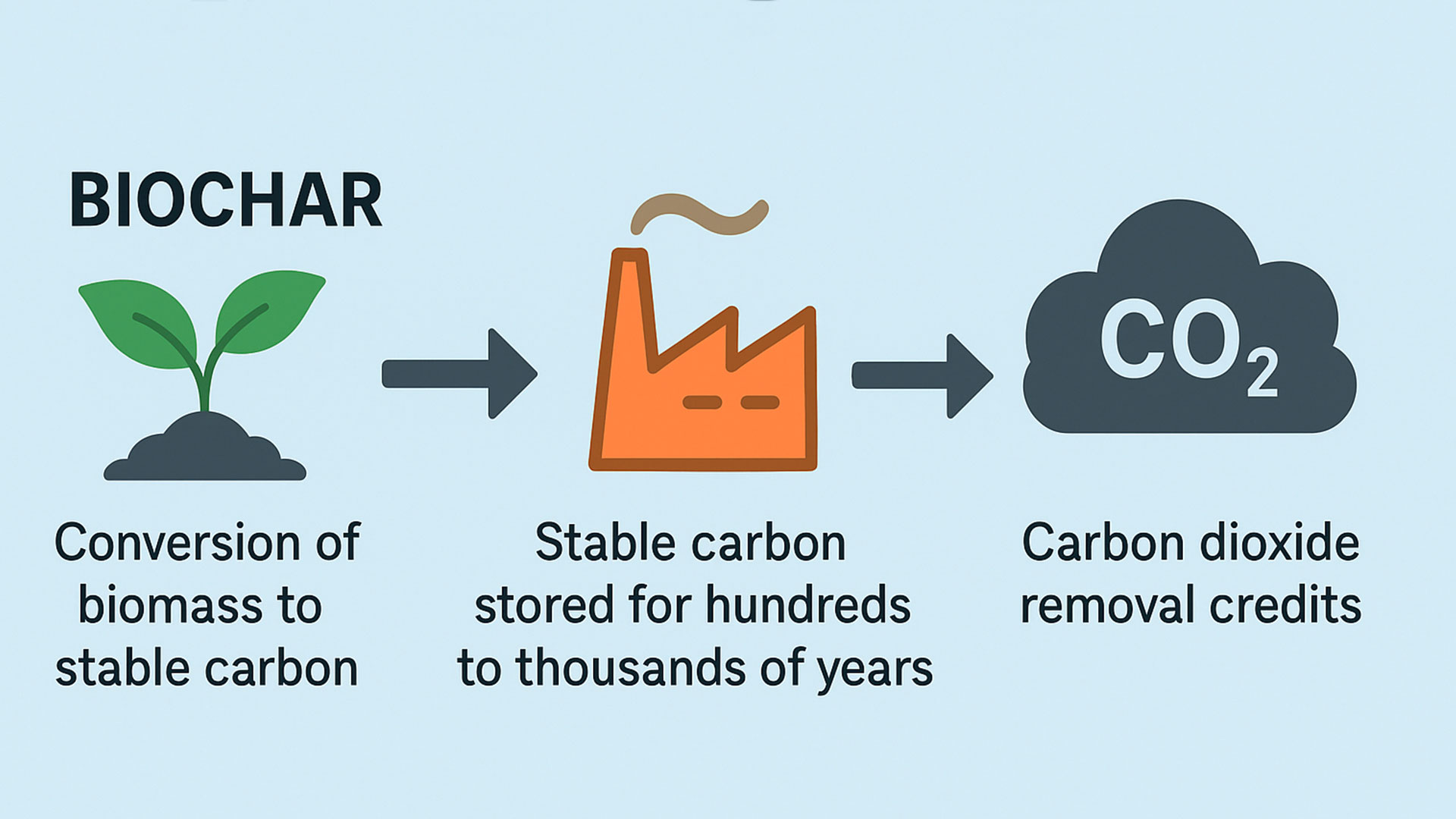
The continuous carbonization equipment converts biomass into highly stable biochar under high-temperature, oxygen-free conditions. When applied to the soil, this “black gold” sequesters carbon for centuries or even millennia, thereby achieving permanent carbon dioxide removal (CDR) from the atmosphere. Applying one tonne of biochar is roughly equivalent to removing 1.5 tonnes of carbon dioxide.
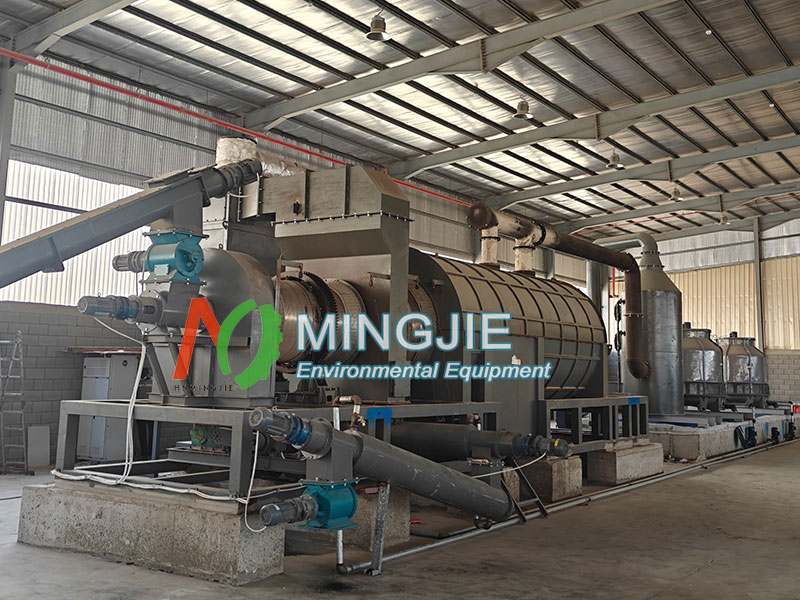
Pathways for Generating Carbon Credits via Continuous Carbonization Equipment
Continuous carbonization equipment generates carbon credits through three types of carbon benefits:
Direct Carbon Removal
Permanent carbon sequestration via biochar production is the core source of carbon credits. One tonne of dry agricultural or forestry biomass contains approximately 0.4–0.5 tonnes of carbon, with a continuous carbonization yield of 32%–38%. The finished biochar has a fixed carbon content of 70%–82%. Each tonne of qualified biochar can sequester 2.5–3 tonnes of CO₂ equivalent. After deducting energy consumption during production and carbon emissions from transportation, the net carbon removal volume is determined, corresponding to the tradable carbon credit quota.
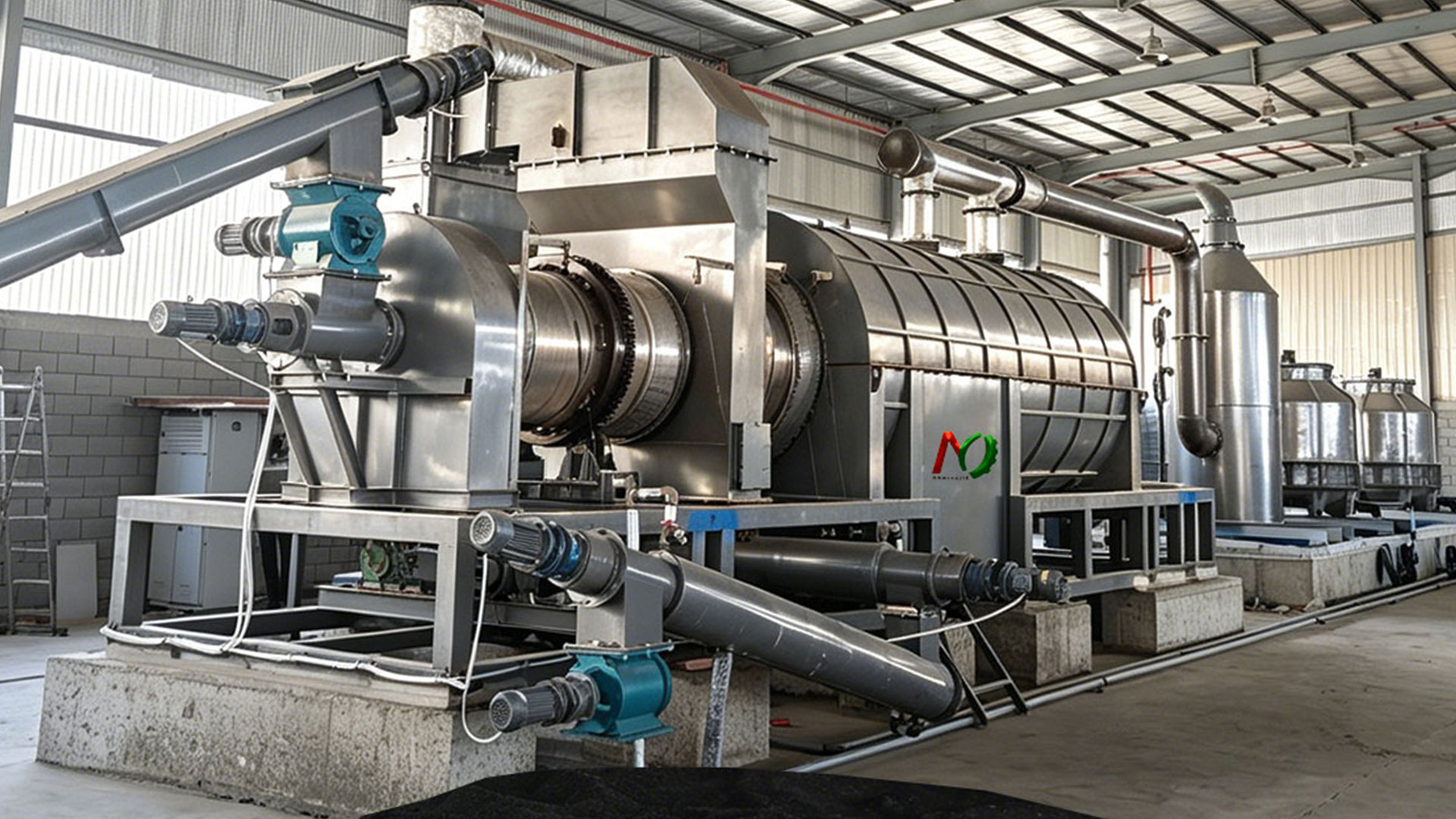
Continuous carbonization equipment enables 24-hour, uninterrupted biochar production. A single Mingjie continuous biomass carbonization plant processes 10–100 tonnes of feedstock daily. Its large-scale annual carbon sequestration capacity makes it commercially viable. In contrast, small-scale biomass pyrolysis machines have low annual outputs, and the carbon revenue they generate is insufficient to cover auditing costs.
Avoiding High Emissions
Continuous carbonization equipment serves as an alternative to incineration or landfilling, thereby generating carbon reduction credits. Open-air straw burning and manure landfilling release carbon dioxide and methane.
The continuous carbonization process operates entirely under negative pressure within a sealed system, without open flames. All pyrolysis flue gas is recovered and combusted to provide heat, the emissions avoided through this process are factored into carbon accounting.
Energy Self-Sufficiency
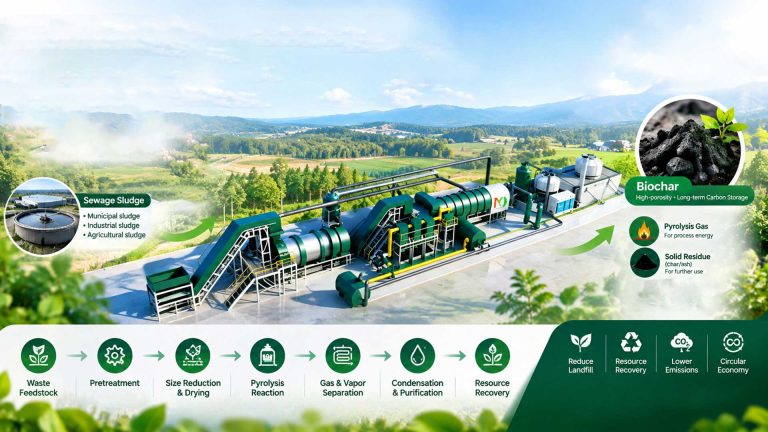
Continuous biomass carbonization plant reduces fossil fuel consumption and lower the carbon footprint of the production process. These biochar plants feature a continuous carbonization system utilizing a dual-layer rotary kiln equipped with a gas circulation loop. Syngas is recovered to provide process heat, meaning external fuel is consumed only during the initial startup and preheating phase.
In carbon accounting, fossil carbon emissions from the production stage are deducted from the total sequestered carbon. The low energy consumption inherent in continuous carbonization directly increases the volume of net carbon credits issued.

Key Advantages of Mingjie Continuous Biomass Carbonization Plant
- Stable Output: Capable of continuous 24/7 operation, providing the foundation for the mass generation of predictable carbon credits.
- Significantly Reduced Energy Consumption: Utilizes syngas combustion for self-heating, drastically cutting the need for external energy input.
- Consistent and Controllable Quality: Ensures uniform temperature distribution and consistent heating of materials within the system. Coupled with intelligent temperature control, this guarantees batch-to-batch consistency in biochar quality.
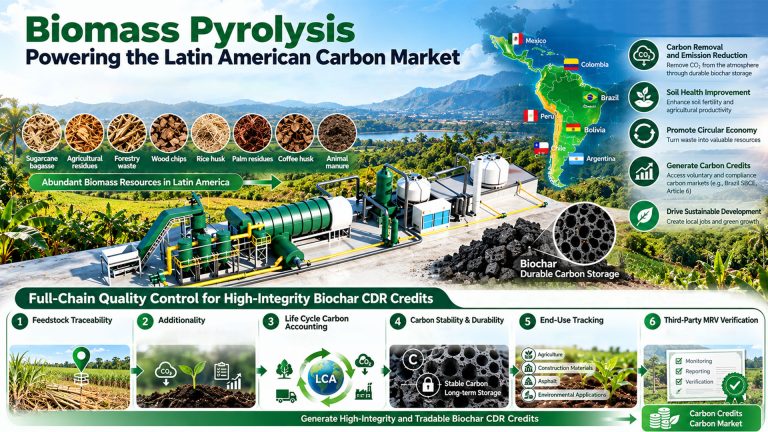
- Broad Feedstock Adaptability: Modern continuous carbonization equipment can process a wide range of biomass feedstocks, including agricultural waste (straw, rice husks, peanut shells), forestry waste (wood, branches, bamboo), livestock manure, and sludge.
- Environmentally Friendly: Operates in a fully enclosed, continuous manner, with flue gas treated by purification systems to meet emission standards. Biochar itself acts as a carbon sequestration medium, contributing positively to mitigating the greenhouse effect.
- Superior Cost-Efficiency: Scaled and automated production methods lower unit costs and enhance the project’s overall economic viability.
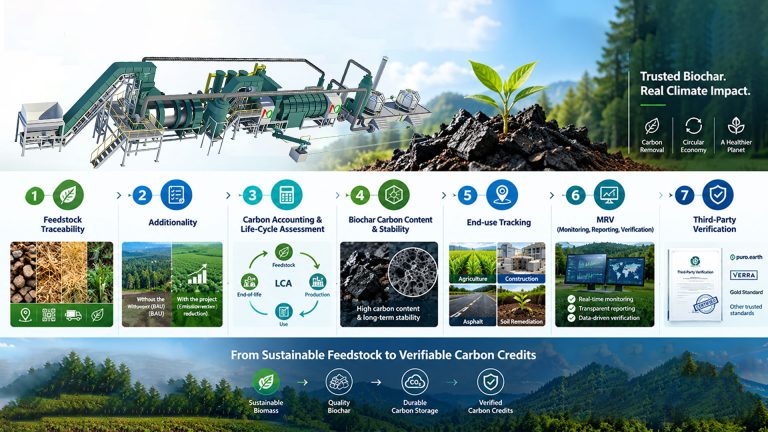
- Data Traceability: Highly automated production lines facilitate the implementation of precise Monitoring, Reporting, and Verification (MRV) systems—a mandatory requirement for passing international carbon credit audits.
Summary
The core of carbon credits lies in quantifiable, verifiable, and long-term sequestered carbon removal. Continuous biomass carbonization equipment serves as the indispensable hardware foundation for achieving this goal. Through stable and controlled anaerobic pyrolysis, the biochar production equipment produces biochar capable of long-term carbon sequestration. While an integrated data monitoring system ensures compliance with MRV (Measurement, Reporting, and Verification) requirements for carbon certification. Simultaneously, it significantly reduces the production-stage carbon footprint and maximizes carbon credit output.
Biomass projects equipped with continuous carbonization equipment represent the mainstream investment pathway for the future carbon-negative industry. They simultaneously deliver threefold value: the resource utilization of agricultural and forestry waste, the ecological improvement of farmland, and participation in carbon asset trading.