
Biochar, as one of the few scalable engineered carbon removal technologies, has seen explosive growth in sales through carbon credit (BCR) trading. Microsoft signed a 1.24 million-ton biochar carbon removal (BCR) offtake agreement in 2025. This deal not only broke industry records but also sent a clear signal: the purchasing power of the biochar carbon removal market is becoming the core engine driving the expansion of global biochar production.
Unlike traditional agricultural markets that rely on soil amendment products for revenue, biochar carbon removal prices the Carbon Sequestration Value independently. This brings incremental cash flow to waste biomass carbonization projects.
Between 2023 and 2025, global biochar production rapidly climbed from 180,000 tons to 520,000 tons. Carbon credit orders and revenue are the core drivers of this capacity explosion. However, a significant gap exists between contract signings and actual deliveries, reflecting the complex reality of carbon market demand and biochar production.
Biochar Carbon Removal Market Drives Production Expansion
Long-term purchase agreements signed by leading buyers such as Microsoft, Google, BCG, and JPMorgan Chase provide biochar producers with stable revenue expectations. Data shows that 62% of the global high-quality biochar supply was locked in by long-term contracts in 2025, and nearly 30% of the capacity was sold ahead of schedule in 2026.
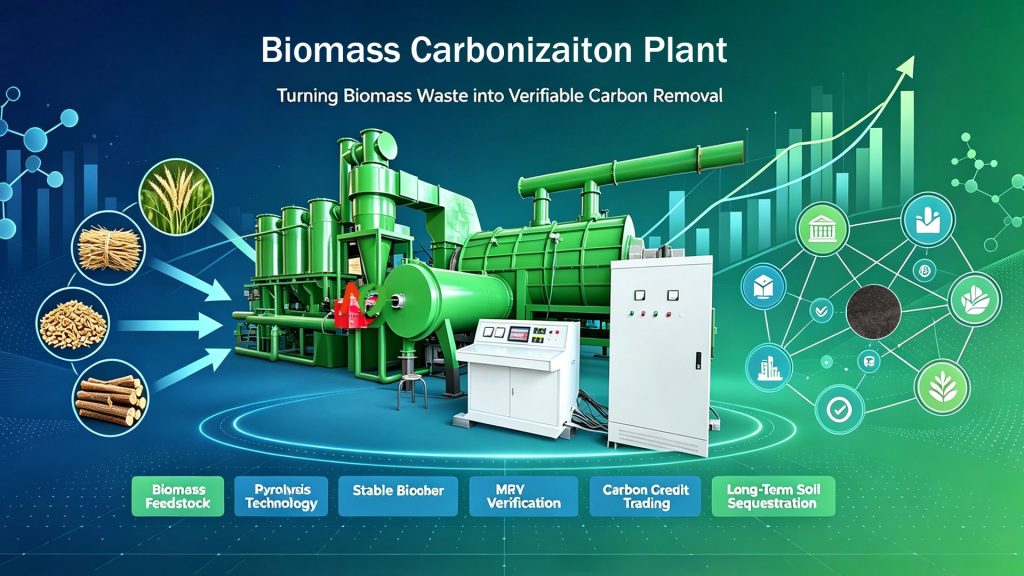
Long-term offtake agreements are the most important tool for transmitting carbon sales revenue to the production end. Large companies like Microsoft and Google have signed multi-year carbon removal offtake contracts, locking in carbon credit output for the next few years. This provides predictable cash flow for large scale biochar production projects, enabling them to secure financing and support the construction and implementation of new fully continuous biomass pyrolysis plant.
Market data shows that over 89% of global high-quality biochar capacity in 2025-2026 has already been locked in with long-term contracts. This pre-emptive demand, drawing on supply, in turn stimulates the accelerated planning of new biomass pyrolysis production lines worldwide.
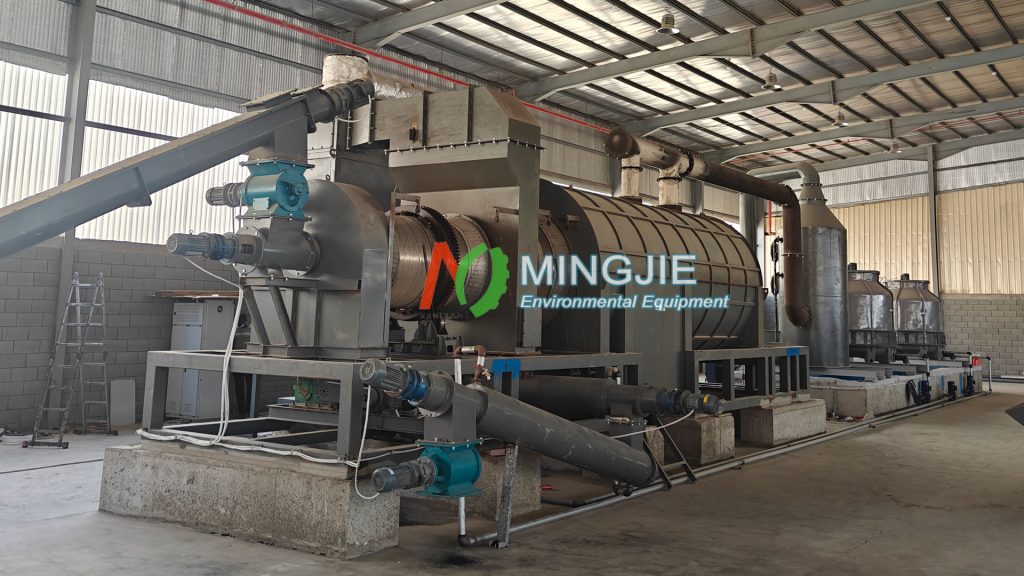
Reconstructing the Commercial Feasibility of Biomass To Biochar Projects
From 2023 to 2025, the proportion of producers reporting no carbon credit revenue decreased from 58% to 35%. Carbon credits are gradually transforming from an additional source of income into a core revenue pillar for many biomass carbonization projects.
The traditional biochar industry is highly dependent on sales from agricultural soil amendments, resulting in relatively low prices for biochar products. Simply selling biochar makes it difficult for most projects to cover the costs of the biochar plant, leading to long investment return cycles.
Carbon removal credit trading opens up a second source of revenue for biochar plants. Companies purchase biochar carbon removal certificates to achieve net-zero targets. Carbon credits are independent of physical biochar, forming a dual revenue model of “biochar product sales revenue + carbon removal sales revenue”. US industry data shows that carbon credits account for 30%-70% of the total revenue for some producers. A few biochar plants derive over 90% of their revenue from carbon removal sales, making carbon revenue the lifeblood of their projects.
Carbon Credit Market Change Biochar Project Choices
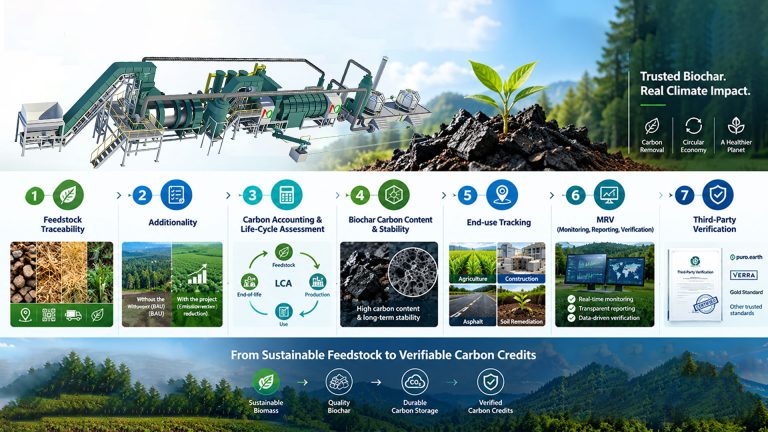
Carbon credits are subject to strict standards (Verra VM0044, Puro.earth), imposing stringent requirements on biochar’s carbon stability, pyrolysis conditions, raw material traceability, life-cycle LCA, and final application and storage. This directly forces biochar production companies to make trade-offs in their technology routes.
Slow Pyrolysis for Biochar Carbon Removal Projects
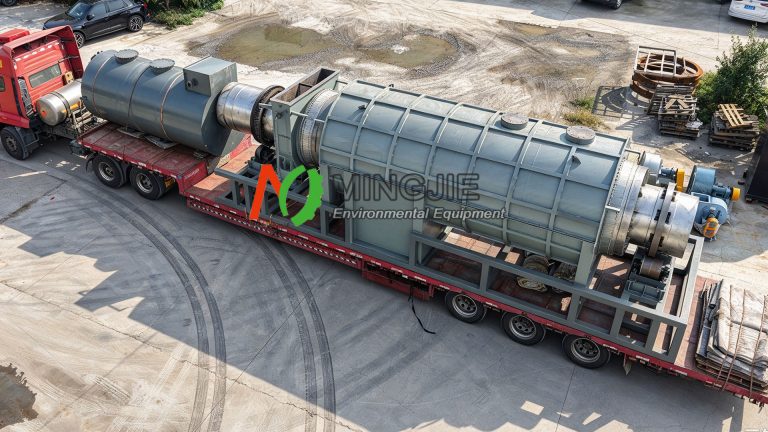
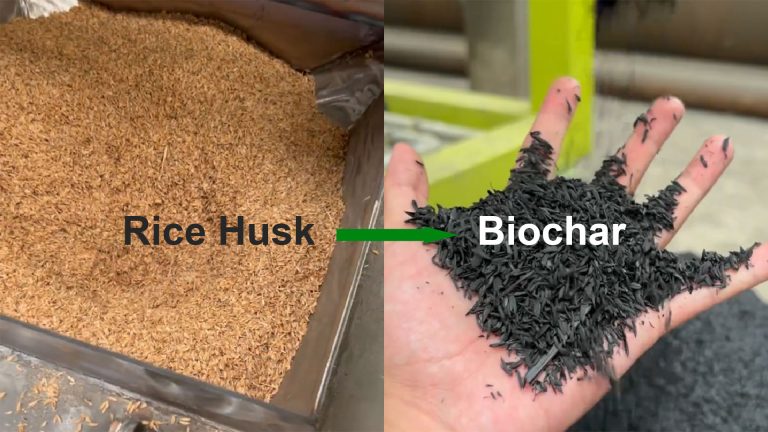
Fast pyrolysis and gasification processes can produce more oil and gas energy, but the biochar output is low and the char quality is unstable, making it difficult to meet carbon sequestration targets. To adapt to carbon credit accounting, biochar carbon removal projects generally prioritize slow pyrolysis. Mingjie Biomass Carbonization plant uses continuous pyrolysis technology, specifically designed for maximizing biochar production. By controlling temperature and residence time, it ensures high aromaticity of the produced biochar and H/Corg < 0.7.
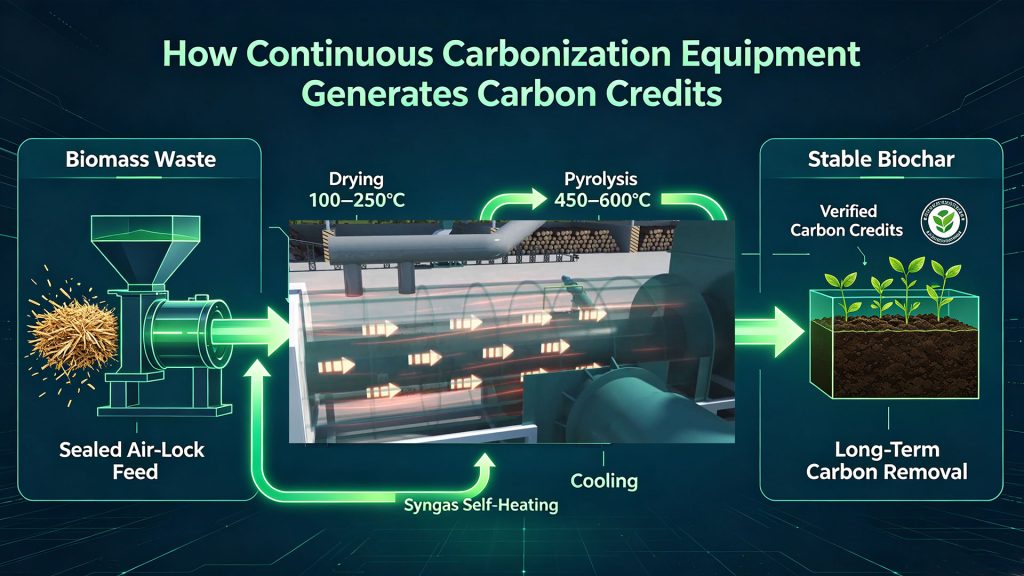
Traditional biomass pyrolysis projects prioritize energy gains from pyrolysis oil and syngas. Biochar carbon removal projects prioritize biochar yield and quality. Syngas can be used for self-heating of the plant, reducing process carbon emissions and improving LCA assessment results, thereby obtaining higher carbon credits. If the biomass pyrolysis plant has excessively high energy consumption, the net removal volume will be significantly reduced over its entire life cycle. Even if a large amount of biochar is produced, it may result in the inability to issue carbon credits.
Continuous Pyrolysis Equipment Equipped with MRV Monitoring System
Biochar production lines geared towards carbon trading can no longer be simple, rudimentary carbonization furnaces. Biomass pyrolysis carbonization projects need to be equipped with material metering, temperature monitoring, energy consumption records, and raw material traceability ledgers to meet third-party verification requirements.
Small biomass pyrolysis machine, unable to provide auditable data, is generally unable to participate in carbon credit trading. The market demand for fully automatic pyrolysis plant is further amplified by the carbon market.