

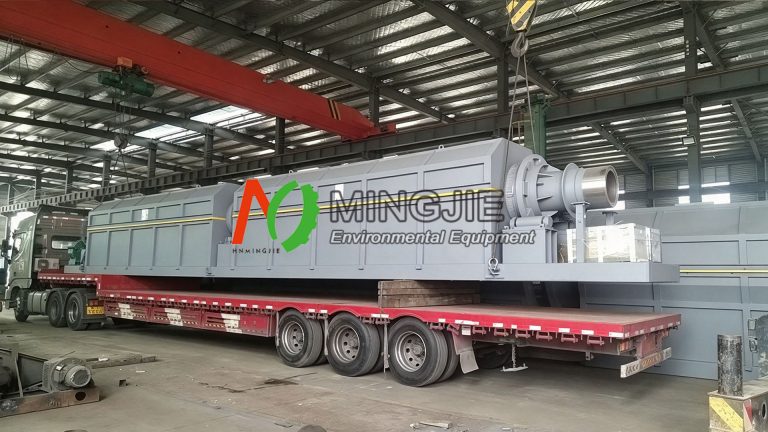
The fully continuous pyrolysis plant can achieve fully automated operation from feeding to pyrolysis and discharge. It is the mainstream equipment for large-scale solid waste resource utilization and circular economy.
Fully Continuous Pyrolysis Plant for Sale
Fully continuous pyrolysis plant can process organic solid waste, such as waste tires, waste plastics, and oil sludge. It is a key piece of equipment in the current solid waste treatment field, moving towards high efficiency and large-scale production. The fully automatic pyrolysis plant precisely controls the temperature, ensuring that the pyrolysis reaction takes place in a stable environment, resulting in stable quality of the pyrolysis oil and carbon black products. The syngas is recycled to heat the pyrolysis reactor, achieving energy self-sufficiency.

- Feeding size shall be 5-8mm rubber granule, tyre shall be shredded and steel wire will be removed.
- Processing capacity 35-40T/D tyre, 30T/D plastic.
- Fully continuous feeding and discharging in 24hours.
- From feeding to discharging, the whole press is sealed, operation environment is clean.
| Model | Capacity | Reactor Size | Operation |
| MLL-20P | 25-30T/D | D1600*L26000mm | Fully continuous Type |
| MLL-30T | 35-40T/D | D1600*L26000mm | Fully continuous Type |
| Applicable fuel | Coal/natural gas/LPG/ Diesel/wood/pyrolysis oil | ||
| Thickness of Reactor | 16mm/18mm | ||
| Cooling method | Water Cooling | ||
| Land Required | 300-400m2 | ||
| Operating Pressure | Constant Pressure | ||
If you’re interested in purchasing or learning more about pyrolysis equipments, you can contact Mingjie Pyrolysis Plant Manufacturer. Let me know if you need help finding specific models!
Core Advantages of Fully Continuous Pyrolysis System
- High Capacity for Industrial Projects: Fully continuous pyrolysis plant enables continuous production of pyrolysis oil. The throughput of a single unit is significantly higher than that of batch and semi-continuous systems. It is suitable for large-scale solid waste recycling projects.
- Low Energy Consumption for Carbon Reduction Benefits: The combustible gas generated during pyrolysis is recycled for reactor heating, achieving high energy self-sufficiency and reducing fossil fuel consumption. Pyrolysis projects can calculate carbon emission reductions, comply with the ISCC certification system, and have the potential to obtain carbon credits.
- Closed-Loop Continuous Operation: The entire pyrolysis system adopts a closed-loop, airtight design, effectively reducing VOC emissions. High automation reduces the number of on-site operators.
- Stable and Controllable Product Quality: Constant material residence time and furnace temperature minimize fluctuations in the quality of pyrolysis oil and carbon black, thus benefiting subsequent processing.
- Highly Applicable: The fully continuous pyrolysis plant is suitable for a variety of raw materials, such as waste tires, waste plastics, oil sludge and biomass.
If you’re interested in purchasing or learning more about pyrolysis equipments, you can contact Mingjie Pyrolysis Plant Manufacturer. Let me know if you need help finding specific models!
Structure of Fully Continuous Pyrolysis Plant
The fully continuous pyrolysis plant is a highly integrated automatic production line. It adopts a modular design, consists of multiple systems that work collaboratively to complete the entire process from feeding to output.
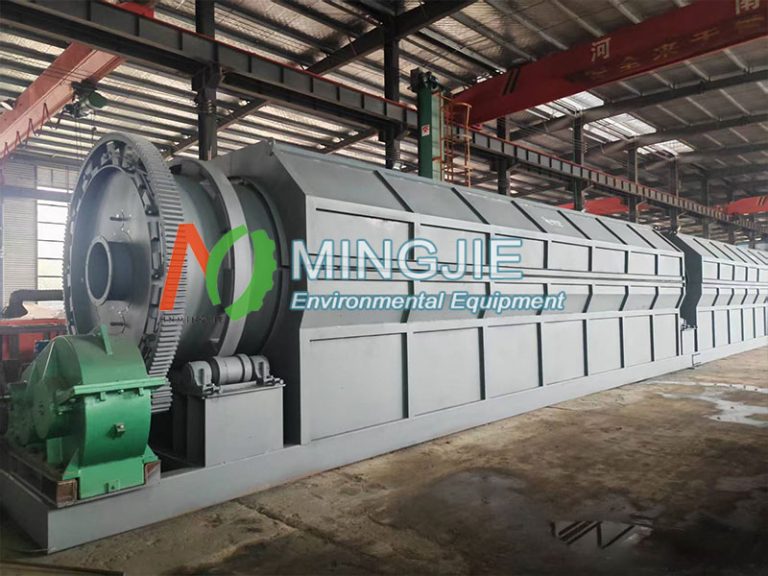
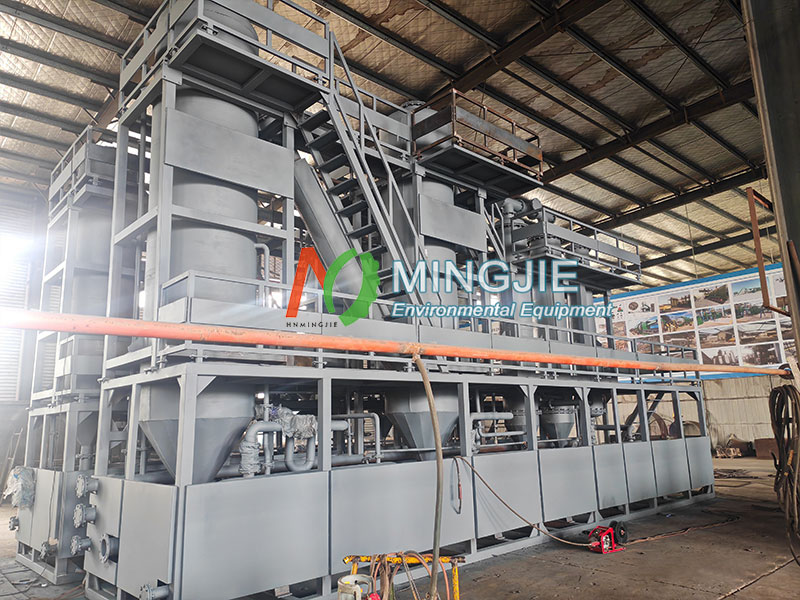
- Feeding System: Pre-treated material (tire rubber powder) is stably fed into the reactor through a sealing device.
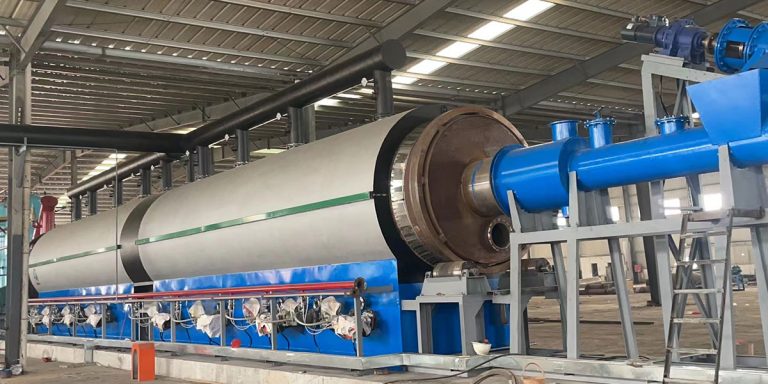
- Continuous Pyrolysis System: The pyrolysis reactor operates continuously, ensuring uniform heating of the material and continuous pyrolysis.
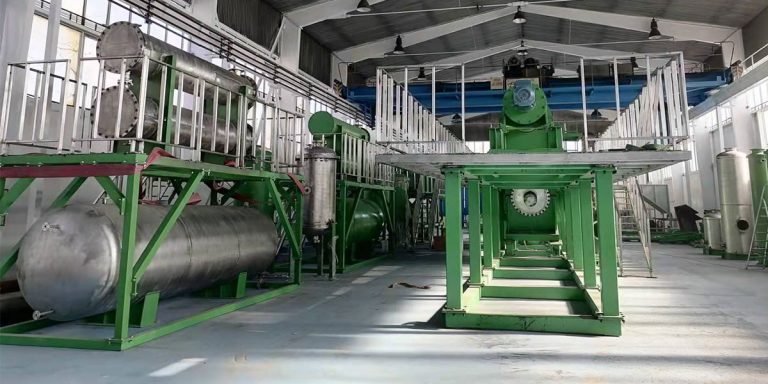
- Product Separation and Collection System: The oil and gas produced by pyrolysis are condensed to separate pyrolysis oil. Non-condensable combustible gases are purified.
- Energy Self-Sufficiency and Exhaust Gas Purification: Syngas is used to heat the reactor, achieving energy self-sufficiency. The flue gas after combustion undergoes multi-stage purification before being discharged.
- Fully Automated Control System: PLC control system ensures efficient and stable operation in the conversion of plastics into fuel oil.
Continuous Pyrolysis Process
- Pretreatment and Continuous Feeding: Raw materials undergo pretreatment to achieve the particle size and moisture content required for continuous pyrolysis. The material is fed continuously through a closed feeding system.
- Continuous Pyrolysis: The continuous pyrolysis furnace rotates to keep the material moving continuously within the furnace. The reactor undergoes gradient heating, causing the material to pyrolyze at high temperatures, transforming it into gaseous and solid states.
- Oil-Gas Separation and Condensation: The oil and gas produced during pyrolysis enter a condensation system for cooling and condensation. The condensed liquid oil enters an oil storage tank.
- Syngas Purification and Reuse: The remaining non-condensable gas after condensation is purified and reused as fuel for the pyrolysis reactor. It provides a continuous heat source for the system, achieving thermal self-sufficiency.
- Continuous Slag Discharge: Solid residue is continuously discharged through a closed spiral slag cooler. This achieves fully enclosed slag discharge, preventing oxidation and dust escape.
- Tail Gas Treatment: The flue gas generated during pyrolysis is purified to meet emission standards.