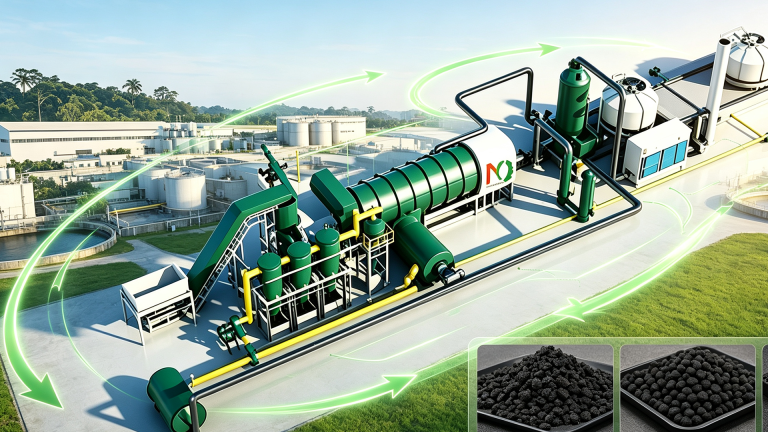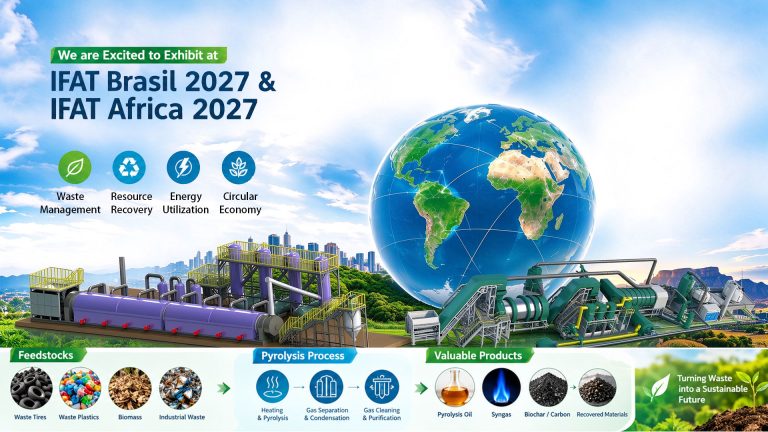
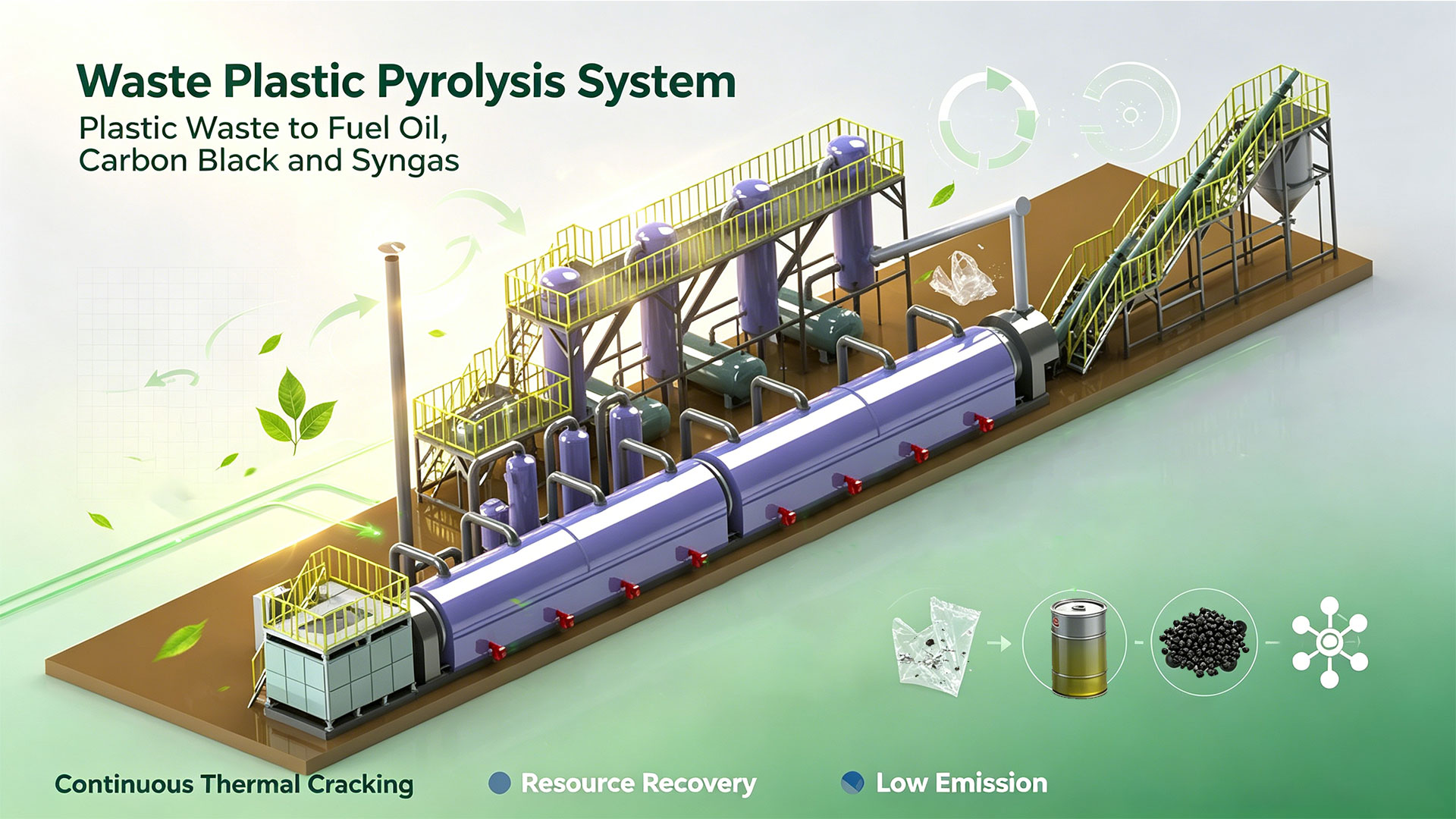
Waste plastic pyrolysis system offers a complete solution for converting waste plastics into high-value fuel oil, carbon black, and syngas. We offer two types of plastic pyrolysis systems: batch pyrolysis plants for small-scale processing and continuous pyrolysis plants for large-scale industrial recycling. These systems achieve complete resource recovery of waste plastics while meeting stringent global environmental emission standards. They bring environmental benefits and stable economic returns to investors.
The success of any plastic pyrolysis plant depends heavily on its core components. Each element plays a crucial role in determining operational efficiency and cost-effectiveness.
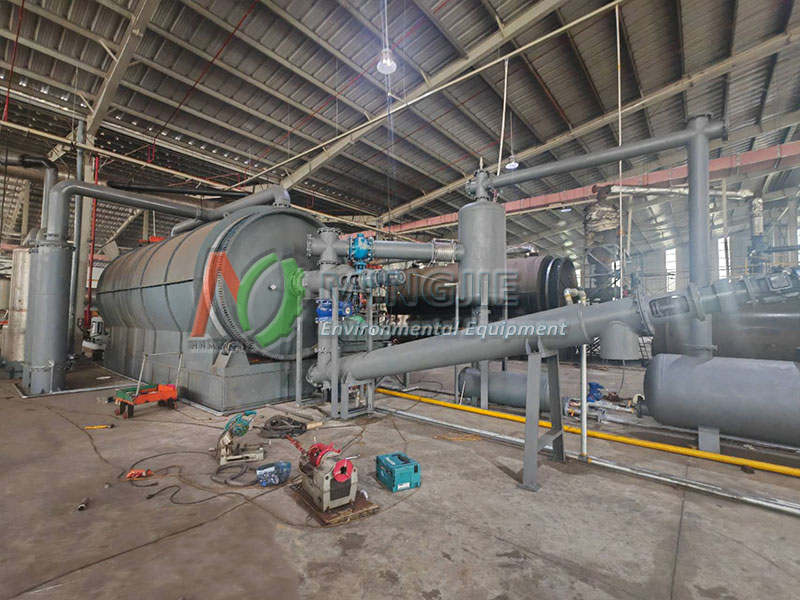
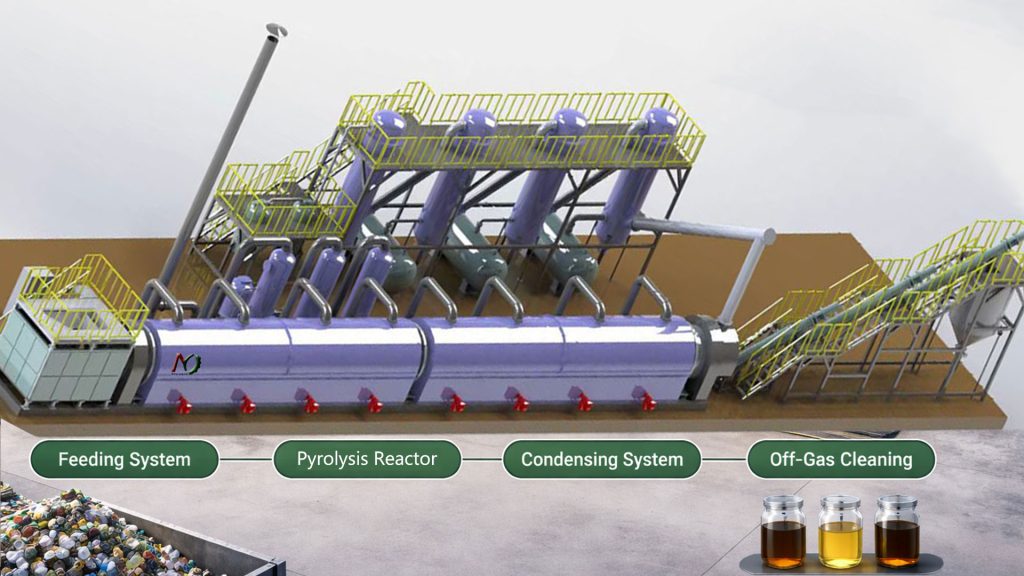
Complete Components of Waste Plastic Pyrolysis System
Raw Material Pretreatment Unit
Plastic crusher, spiral sealed feed conveyor, feed cylinder. Crushes large pieces of plastic waste into uniform fragments. Fully sealed feeding prevents gas leakage and dust escape.
Core Pyrolysis Reactor
Batch Type: Horizontal sealed pressure vessel with quick-opening furnace door, suitable for small-batch production.
Continuous Rotary Type: Double-layer insulated rotating cylinder, enabling uniform heating and supporting 24-hour uninterrupted production.
Oil-Gas Condensation and Separation System
Multiple tubular condensers, oil-water separator, crude oil storage tank. High oil recovery rate, separating impurities and water from crude oil, reducing subsequent refining costs.
Flue Gas Purification System
Multi-stage purification system eliminates acidic gases, tar, dust, and odors; emissions meet industrial waste gas emission standards.
Safe Slag Discharge and Intelligent Control System
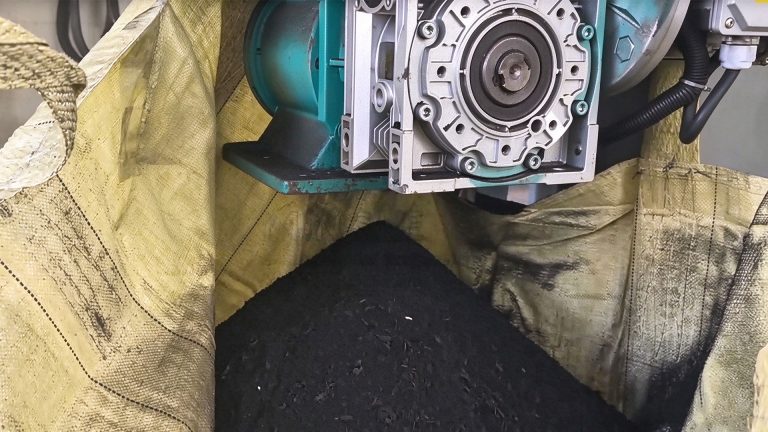
Water-cooled, airtight slag discharge port prevents carbon black oxidation loss. The PLC control cabinet monitors temperature, pressure, and negative pressure in real time and has an automatic interlock protection function.
Factors Affecting the Cost of Plastic Pyrolysis Plant
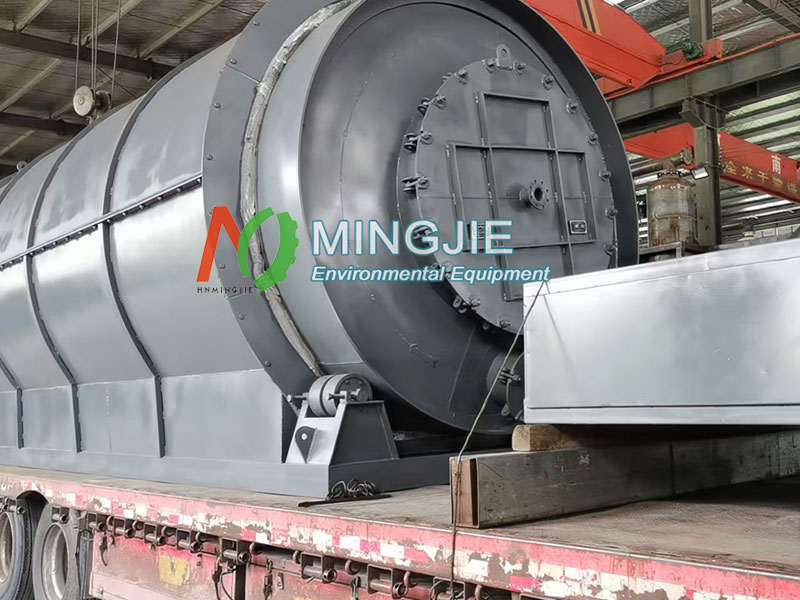
Reactor Design and Materials
The reactor is the core component of the Waste Plastic Pyrolysis System. Material selection significantly impacts initial investment and long-term durability. High-grade steel reactors offer superior heat resistance and service life. Carbon steel provides a cost-effective alternative for smaller installations. Reactor size directly affects processing capacity and energy consumption patterns.
Condensation System Efficiency
A high-efficiency condensation system maximizes the recovery of oil from pyrolysis vapors. Multi-stage condensers improve product separation and quality control. Advanced cooling mechanisms reduce energy consumption during condensation. The condensation system design significantly impacts product yield and operating costs. It is the most critical piece of equipment for pyrolysis oil collection in the entire Waste Plastic Pyrolysis System.
Feeding and Discharging Systems
Automated feeding systems reduce manual labor requirements and improve safety standards. Continuous feeding mechanisms ensure stable operation of modern plants. Discharging systems must handle high-temperature materials safely and efficiently. Well-designed systems significantly reduce downtime and maintenance needs.
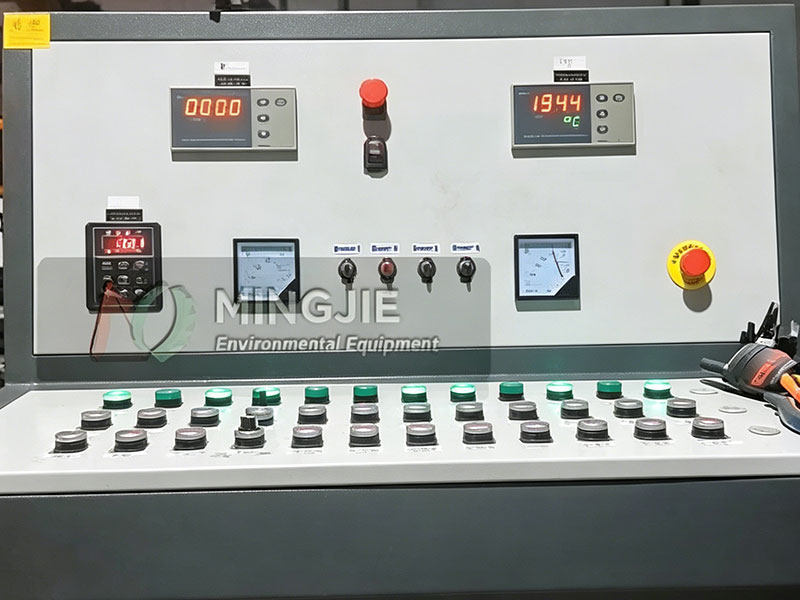
Control and Automation Technologies
Modern automation waste plastic pyrolysis systems optimize process parameters and reduce human error. Advanced sensors continuously monitor temperature, pressure, and gas composition. Automated controls improve product consistency and enhance operational safety. Integrated functions support remote monitoring and predictive maintenance planning.
Role of Technology in Cost Variations
Technology choices fundamentally influence both capital and operational expenses. Different approaches offer varying benefits depending on operational requirements.
Differences between batch and continuous pyrolysis processes
Batch Waste Plastic Pyrolysis systems require lower initial investment but higher labor costs. Continuous pyrolysis plant operations offer superior efficiency for large-scale production. Processing consistency improves significantly with continuous system implementations. Energy consumption per unit decreases substantially in continuous operations.
Impact of advanced automation on operational costs
Automation reduces staffing requirements and improves process consistency significantly. Initial investment in control systems pays dividends through reduced errors. Predictive maintenance capabilities minimize unexpected downtime and repair costs. Advanced monitoring systems optimize energy consumption and product quality. The plastic pyrolysis plant is the most needed equipment in the entire process.
Integration of emission control technologies
Environmental compliance requires sophisticated emission control systems installation. Advanced scrubbers and filters add substantial capital costs initially. Modern pollution control technologies reduce long-term regulatory risks. Integration complexity affects both installation costs and operational efficiency.
Scale of Production and Its Impact on Costs
Production scale decisions affect virtually every aspect of operations. Economies of scale provide significant advantages for larger facilities.
Cost implications of small-scale versus large-scale operations
Small-scale operations offer lower initial investment but higher per-unit costs. Large-scale facilities achieve better equipment utilization and efficiency rates. Fixed costs distribute more favorably across higher production volumes. Market flexibility differs significantly between various operational scales.
Economies of scale in equipment procurement and installation
Bulk equipment purchases reduce per-unit costs for major components. Installation efficiency improves with larger, integrated system designs. Vendor negotiations favor larger projects with better pricing terms. Specialized equipment becomes more cost-effective at higher capacities.