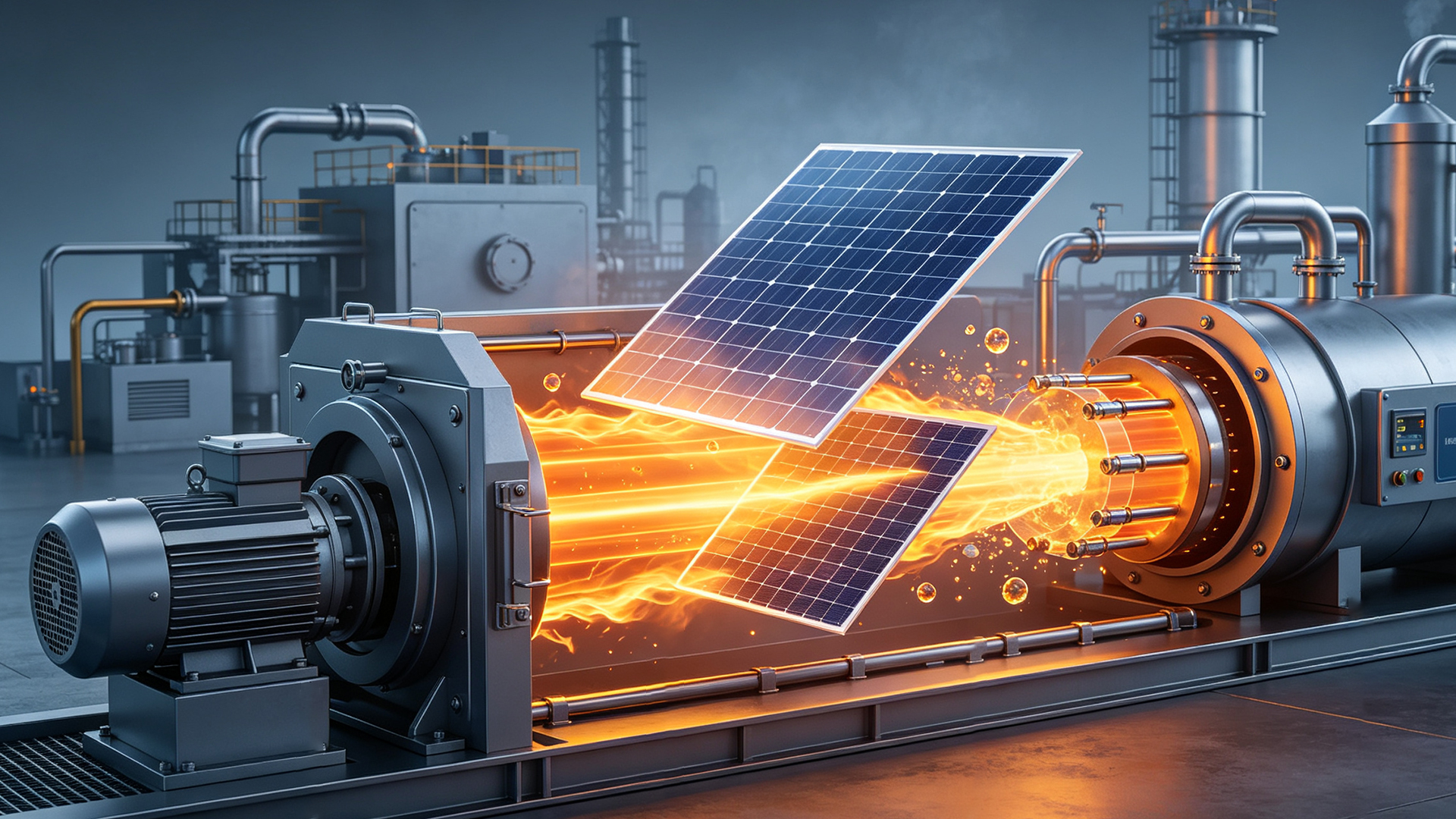
The waste EVA film pyrolysis provides an efficient, harmless, and resource-efficient method for the decommissioned photovoltaic modules disposal. With the large-scale development of the photovoltaic industry, a large number of waste photovoltaic modules are generated, making cross-linked EVA encapsulation film a core challenge in solid waste recycling. EVA undergoes cross-linking and solidification after long-term outdoor service, making it difficult to process using traditional melting and solvent recovery methods.
Pyrolysis plant can efficiently decompose EVA film, achieving the separation of valuable components such as glass, silicon wafers, and silver paste. Waste EVA film pyrolysis products include pyrolysis oil, syngas, and solid carbon black.
Why is EVA Film Suitable for Pyrolysis?
EVA film is made of ethylene-vinyl acetate copolymer. It is a thermoplastic polymer material formed by the co-polymerization of two monomers, ethylene and vinyl acetate. EVA pyrolysis involves a clear and controllable two-step chemical decomposition. It can not only efficiently convert into useful small molecule products, but also achieve complete decomposition.
EVA film pyrolysis has an extremely high conversion rate, with a mass loss rate exceeding 99%. This means that almost all EVA can be converted into gaseous or liquid products. This characteristic is crucial for handling waste such as decommissioned photovoltaic modules, achieving complete separation and recycling of materials.
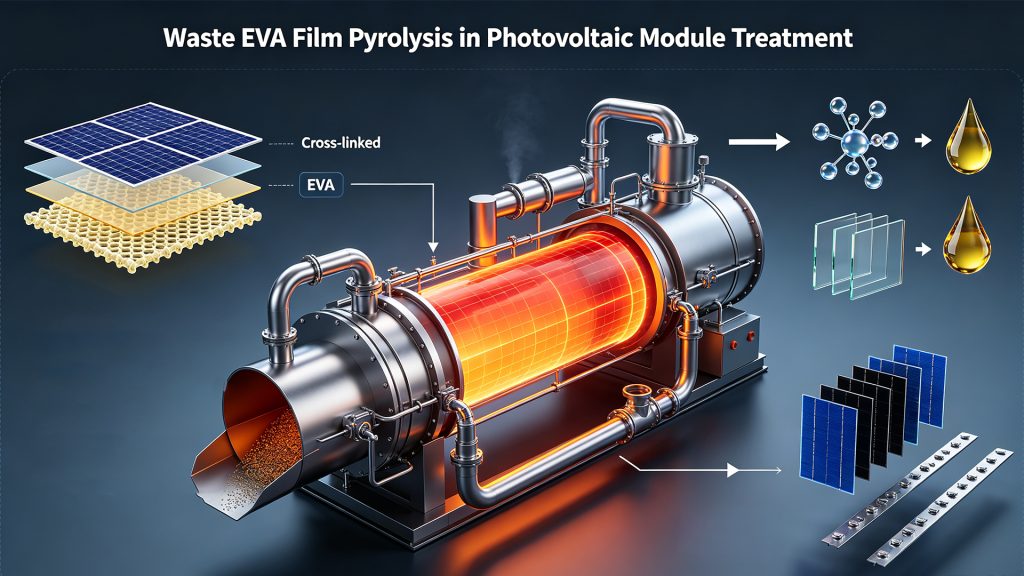
EVA Film Pyrolysis Stages
Stage 1: Approximately 300-400℃. The vinyl acetate side chains on the molecular chain break, releasing acetic acid. The remaining portion forms an unsaturated polymer backbone.
Stage 2: Approximately 400-510℃. The carbon chain backbone breaks, generating large amounts of short-chain hydrocarbons such as alkenes and alkanes.
Waste Photovoltaic Module Pyrolysis Process
After the aluminum frames and junction boxes of waste photovoltaic modules are removed, the photovoltaic laminates are fed into a closed pyrolysis equipment.
By precisely controlling the temperature between 450 and 500°C, the EVA film is thermally decomposed into volatile gases and a small amount of carbon residue. This completely separates the adhered glass, silicon wafers, and metal materials.
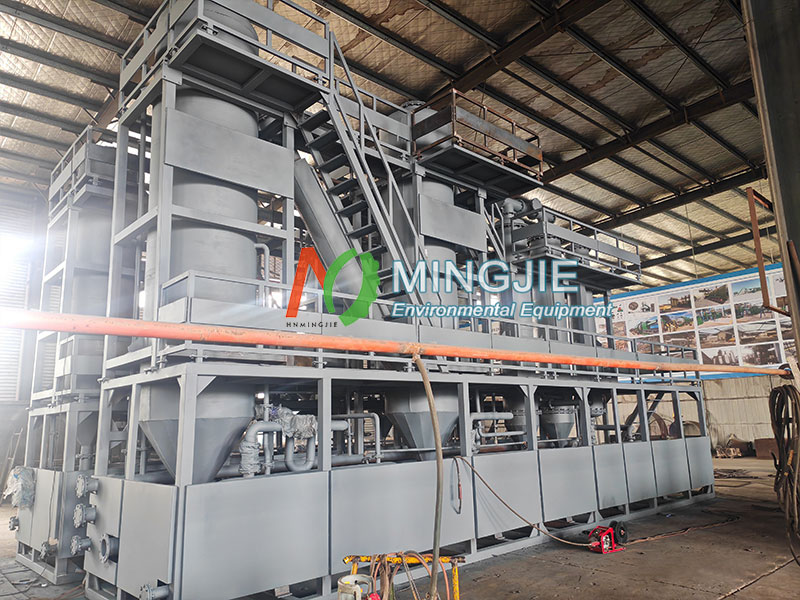
The pyrolysis material is then cooled by a cooling system. Next, it is separated from the glass, silicon wafers, and metals by a sorting device. The pyrolysis gas undergoes multi-stage purification treatment, and the exhaust gas is released only after meeting emission standards.
Pyrolysis Plant for Waste Photovoltaic Module Treatment
Using pyrolysis plant for waste photovoltaic modules treatment is currently a mainstream and highly promising recycling technology. By precisely heating the material, the EVA film is decomposed, thereby separating materials such as glass, silicon wafers, and metals.

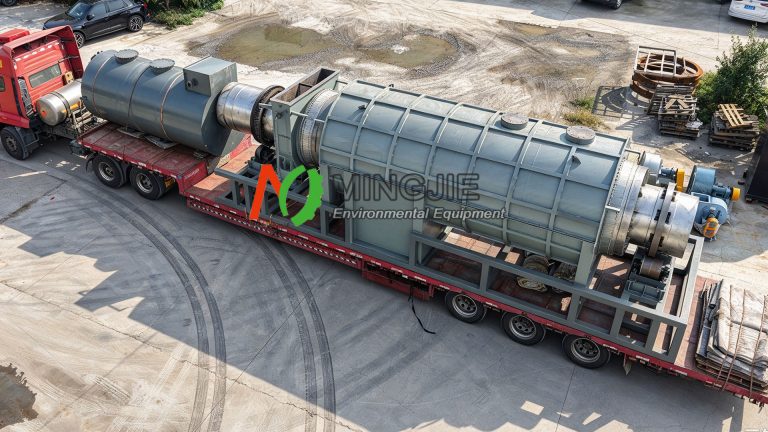
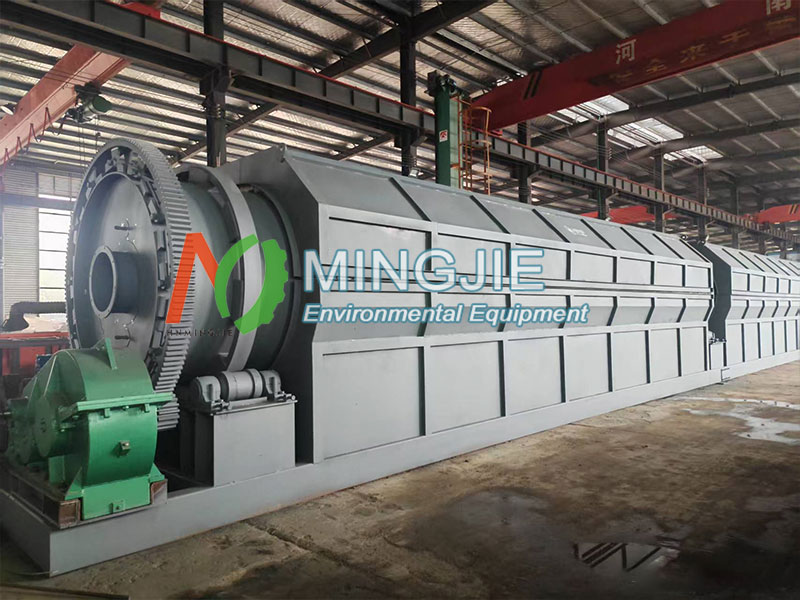
A complete pyrolysis system is not a single pyrolysis furnace, but an integrated system. It mainly includes a feeding system, a pyrolysis reactor, a discharge system, and a condensation and purification system. All components work together to ensure efficient and environmentally friendly operation.
For the recycling of waste photovoltaic modules, pyrolysis plants are divided into batch pyrolysis plant, semi-continuous and fully continuous pyrolysis plant, which are suitable for projects with different production capacities and material conditions.
Batch Pyrolysis Plant
The batch pyrolysis equipment uses a pyrolysis reactor with a large furnace door. Materials are fed into the furnace in batches, either whole plates or after coarse crushing. The reactor rotates at low speed to ensure uniform heating, completing a full batch cycle of heating-pyrolysis-cooling-discharging.
Batch pyrolysis plant is mature, requires relatively low investment, and has a daily processing capacity of 1-15 tons. It is highly compatible with mixed incoming materials and damaged components. It has low pretreatment requirements and can process both crushed materials and whole laminates.

Semi Continuous Pyrolysis Plant
Semi-continuous pyrolysis equipment represents a highly efficient compromise between batch and fully continuous pyrolysis equipment. It combines four core values: continuous production capacity, low investment, ease of operation, and stable environmental performance.
Fully Continuous Pyrolysis Plant
Fully continuous pyrolysis plant achieves uninterrupted operation from feeding to pyrolysis to discharging. The entire process is intelligently controlled by PLC, ensuring stable operation 24 hours a day.
The continuous pyrolysis plant adopts a modular design, making it highly adaptable. The continuous pyrolysis reactor is equipped with multi-temperature zone segmented temperature control, sequentially completing low-temperature deacetylation and high-temperature pyrolysis.
Summarize
Pyrolysis equipment has a wide range of applications, processing waste tires, plastics, oil sludge, biomass, waste wind turbine blades, and waste electronic products. It is also an ideal supporting equipment for photovoltaic recycling projects. It assists solid waste treatment companies in carrying out resource utilization of photovoltaic solid waste, turning solid waste into valuable resources.
Furthermore, the application of pyrolysis equipment can be extended to the treatment of electronic waste, composite materials, and other solid waste containing polymer binders. It contributes to the green and circular treatment of industrial solid waste.