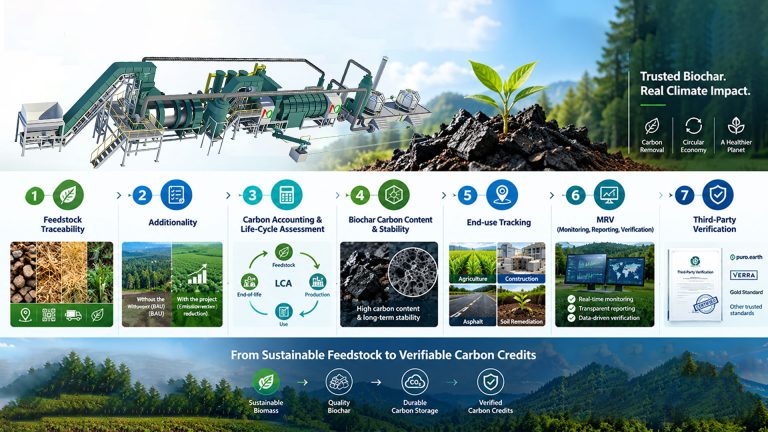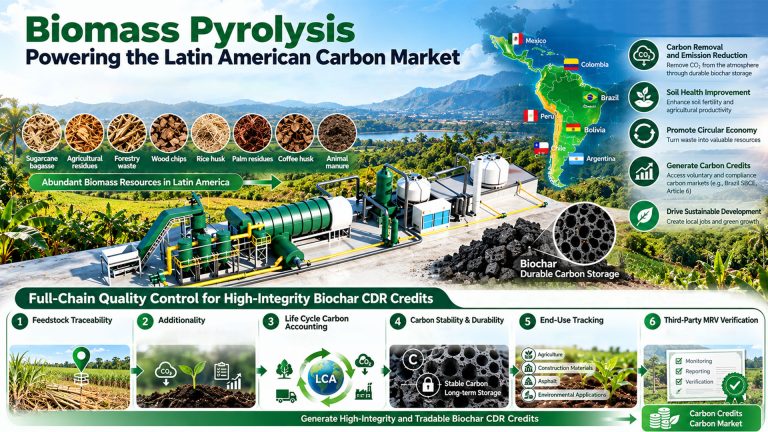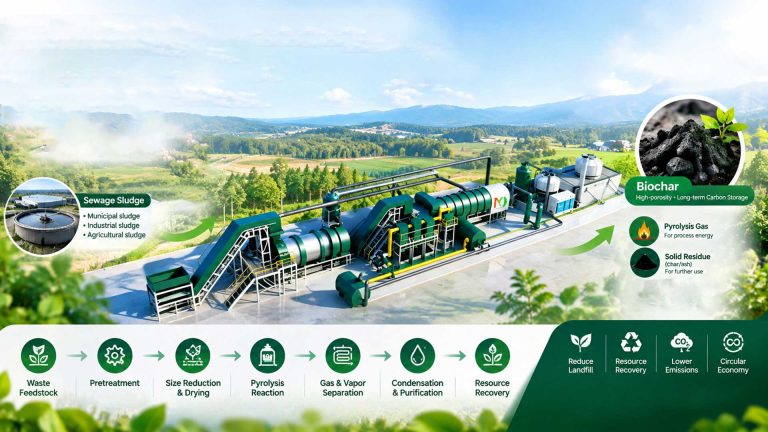
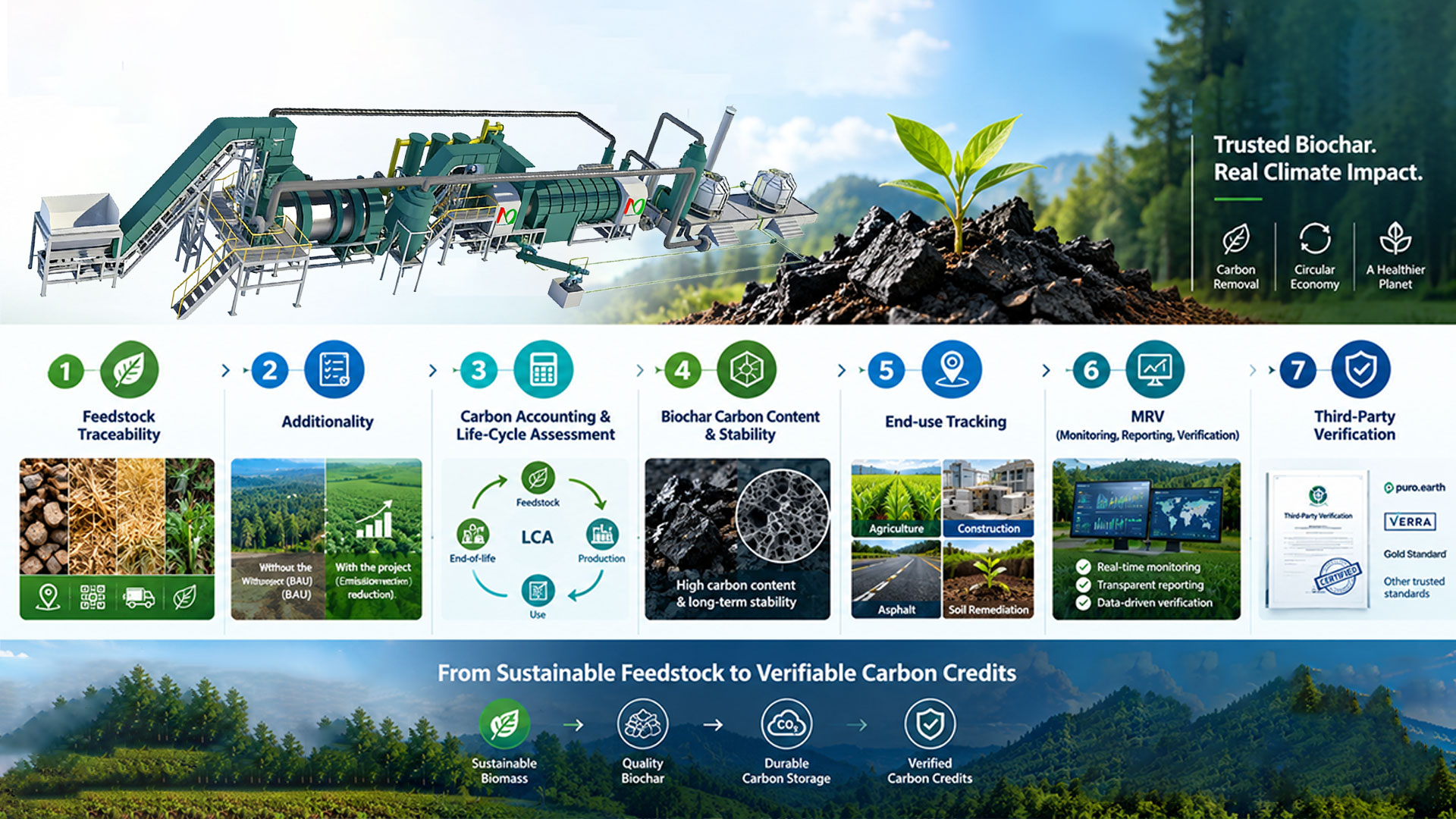
Continuous biomass pyrolysis equipment provides an industrial foundation for biochar carbon removal projects. Continuous biochar production lines ensure the repeatability of operating conditions, enable automated control of the biomass pyrolysis process, and facilitate the systematic collection of production data.
Key Features of Continuous Biomass Pyrolysis Equipment
- Continuous feeding and discharge: Supports a more stable material flow.
- Automatic temperature control: Helps maintain established operating conditions.
- Gas handling: Supports energy recovery from syngas and thermal energy.
- Production monitoring: Enables the collection of relevant operational parameters.
- Consistent product handling: Facilitates representative sampling and batch record-keeping.
- Data integration: Allows the equipment control system to connect with monitoring and digital MRV (Monitoring, Reporting, and Verification) systems.
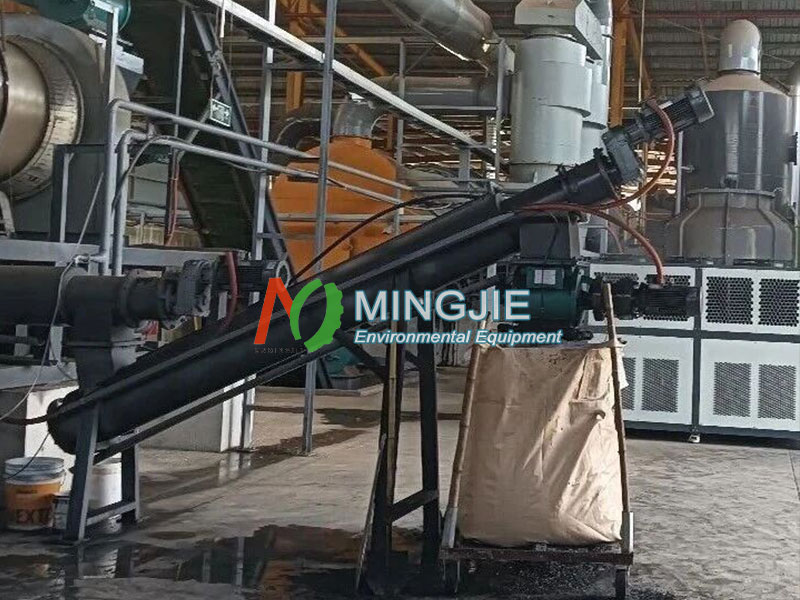
When selecting continuous biomass pyrolysis equipment, considerations include feedstock characteristics, moisture content, required throughput, biochar specifications, emissions control, energy requirements, and project economics.
Importantly, the automation of continuous biomass pyrolysis equipment alone does not guarantee certification for biochar carbon credits. The operation of the biochar production system must take place within a project framework that encompasses elements such as sustainable feedstock, net carbon removal, durable sequestration, product quality, and independent verification.
For biochar equipment manufacturers, demonstrating quantifiable operational performance and providing customers with traceable production data enhances their value proposition within carbon removal projects.
How Continuous Biomass Pyrolysis Equipment Ensures Carbon Integrity in CDR Projects
Continuous Pyrolysis: Reducing Uncertainty in Carbon Accounting
Continuous biochar production equipment utilizes a design featuring sealed, continuous feeding, pyrolysis, and discharge. Feedstock enters the oxygen-free (or low-oxygen) pyrolysis reactor at a constant rate, while temperature, pressure, and residence time are managed via an automated closed-loop control system.
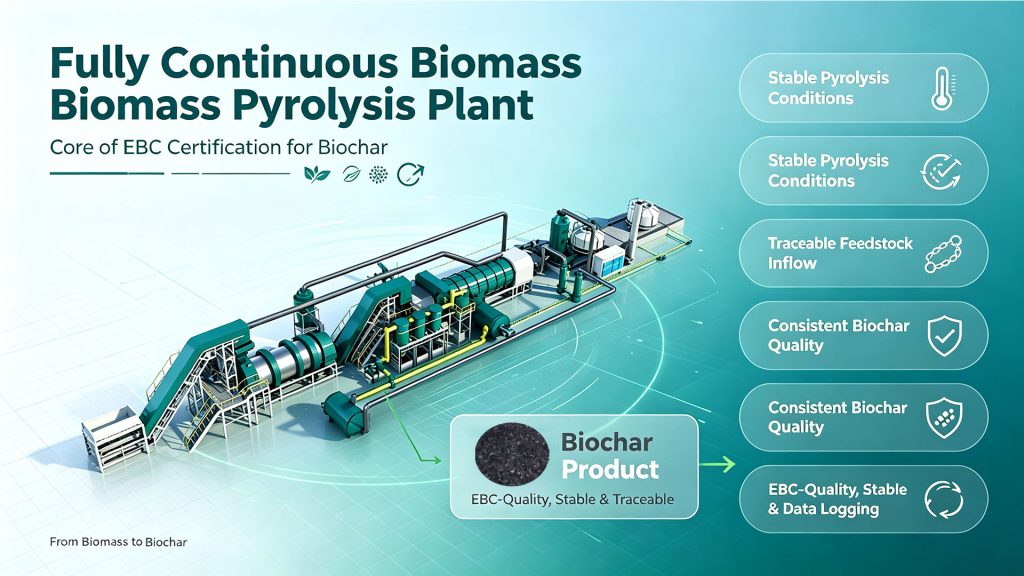
Long-term stability of pyrolysis operating conditions:
Fluctuations in fixed carbon content, H/C ratios, and aromatic carbon structures across batches of produced biochar are minimal. The H/C atomic ratio is a key indicator used in international biochar CDR standards to determine the durability of carbon sequestration. A stable biomass pyrolysis process keeps this indicator within standard thresholds, demonstrating that carbon can remain sequestered in the soil on a centennial timescale.
Stable carbon partitioning:
Carbon from the biomass entering the reactor is consistently partitioned into three streams: fixed carbon in biochar, carbon in combustible gases, and carbon in pyrolysis oil. Minimal fluctuation in carbon model input parameters significantly reduces uncertainty in life-cycle carbon footprint modeling—a fundamental requirement for high-integrity CDR carbon quantification.
Supporting dMRV: Real-time Raw Data Collection
High-integrity biochar CDR projects increasingly rely on digital Monitoring, Reporting, and Verification (dMRV). Continuous biomass pyrolysis equipment integrates online sensors to capture real-time data on biomass feed rates, reactor temperature and pressure, flue gas composition, and biochar discharge rates, automatically uploading this information to a data platform.
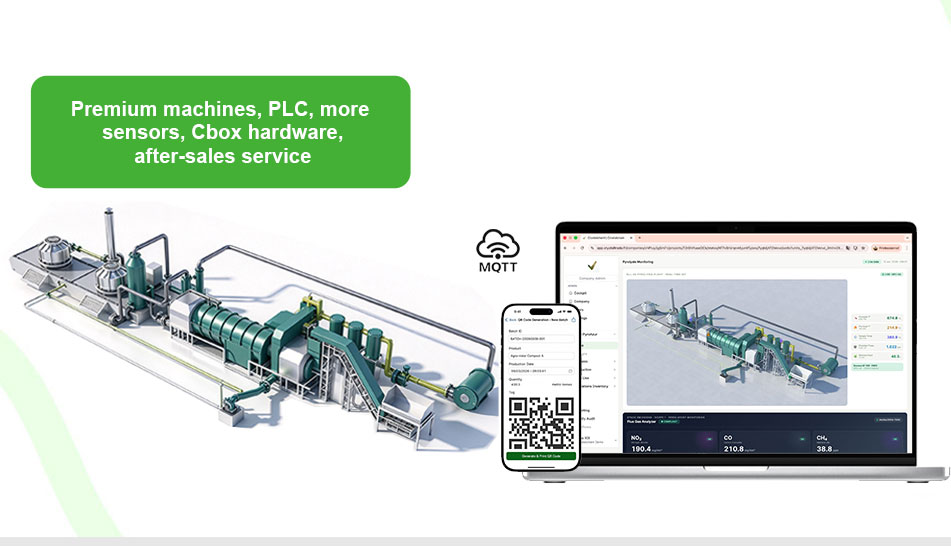
The continuous data stream allows for remote verification by third-party auditing bodies, aligning with the dMRV standards promoted by organizations like Puro and Verra, and significantly enhancing the credibility of carbon removal data.
Scalability and Feedstock Flexibility: Ensuring Project Additionality
High-integrity Carbon Dioxide Removal (CDR) requires that biomass feedstock does not induce land-use change. Continuous biomass pyrolysis equipment supports 24-hour uninterrupted operation, capable of processing residual biomass such as agricultural and forestry waste, crop stalks, wood chips, sludge, and livestock manure. These systems are equipped with pre-treatment units to reliably process dispersed agricultural and forestry residues.
Large scale biochar production equipment reduces energy consumption and the carbon footprint per unit of biochar, making it easier to achieve project additionality. Continuous biochar production lines can incorporate feedstock traceability systems to meet sustainability certification requirements, such as ISCC. By-products (syngas) can be recycled to the reactor as a heat source, displacing fossil fuels. This further reduces the project’s lifecycle carbon emissions and maximizes net carbon removal.
Consistent Biochar Quality Ensures Long-Term Carbon Sequestration Durability
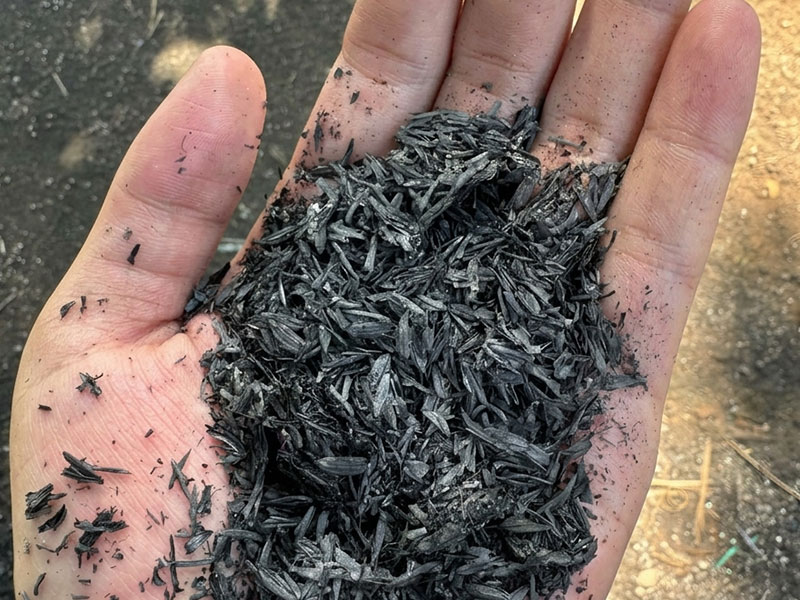
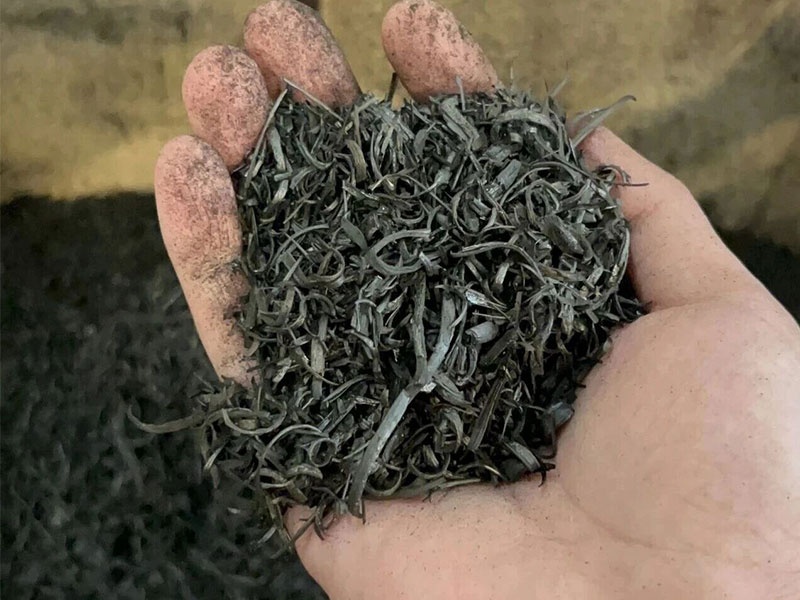
The core value of CDR (Carbon Dioxide Removal) credits lies in the commitment to permanent sequestration. If biochar quality is inconsistent—specifically, if it contains high levels of easily degradable components—it will decompose rapidly after application to the soil. Consequently, the claimed carbon removal volume becomes invalid, rendering the carbon credits void.
Continuous biomass pyrolysis processes allow for precise control over carbonization temperatures and residence times, enabling the consistent production of biochar characterized by high aromaticity and low levels of easily decomposable organic carbon.
Ensuring stable quality also facilitates long-term field monitoring, as standardized parameters regarding soil degradation rates can be reliably reused.
Closed-System Process Control Minimizes Leakage and Pollutant Risks
Continuous biomass pyrolysis equipment operates as fully enclosed, negative-pressure system. All gaseous pyrolysis products are collected for resource-recovery combustion or recycling, effectively controlling fugitive emissions. An integrated tail-gas purification unit manages tar and particulate matter, ensuring compliance with environmental emission regulations. This approach eliminates negative environmental externalities, aligning with the “Do No Significant Harm” principle essential for high-integrity CDR.