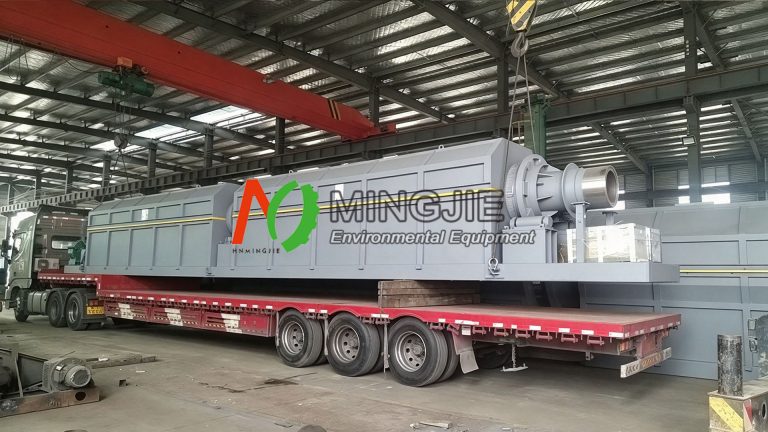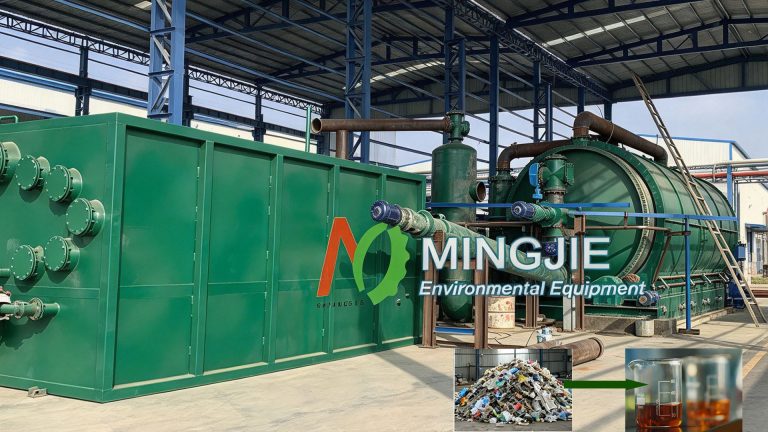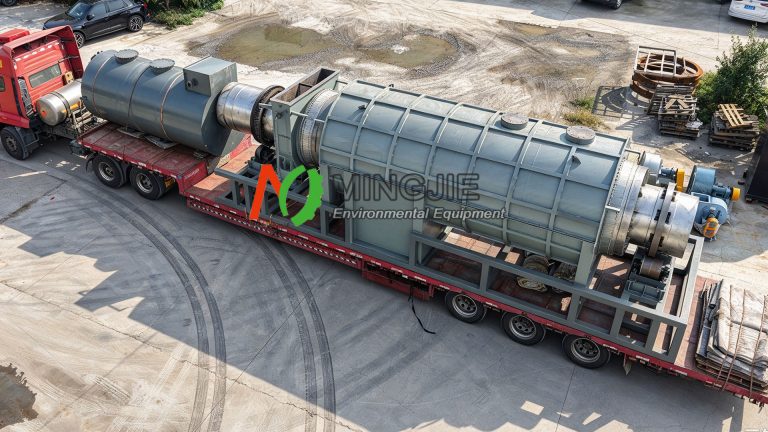
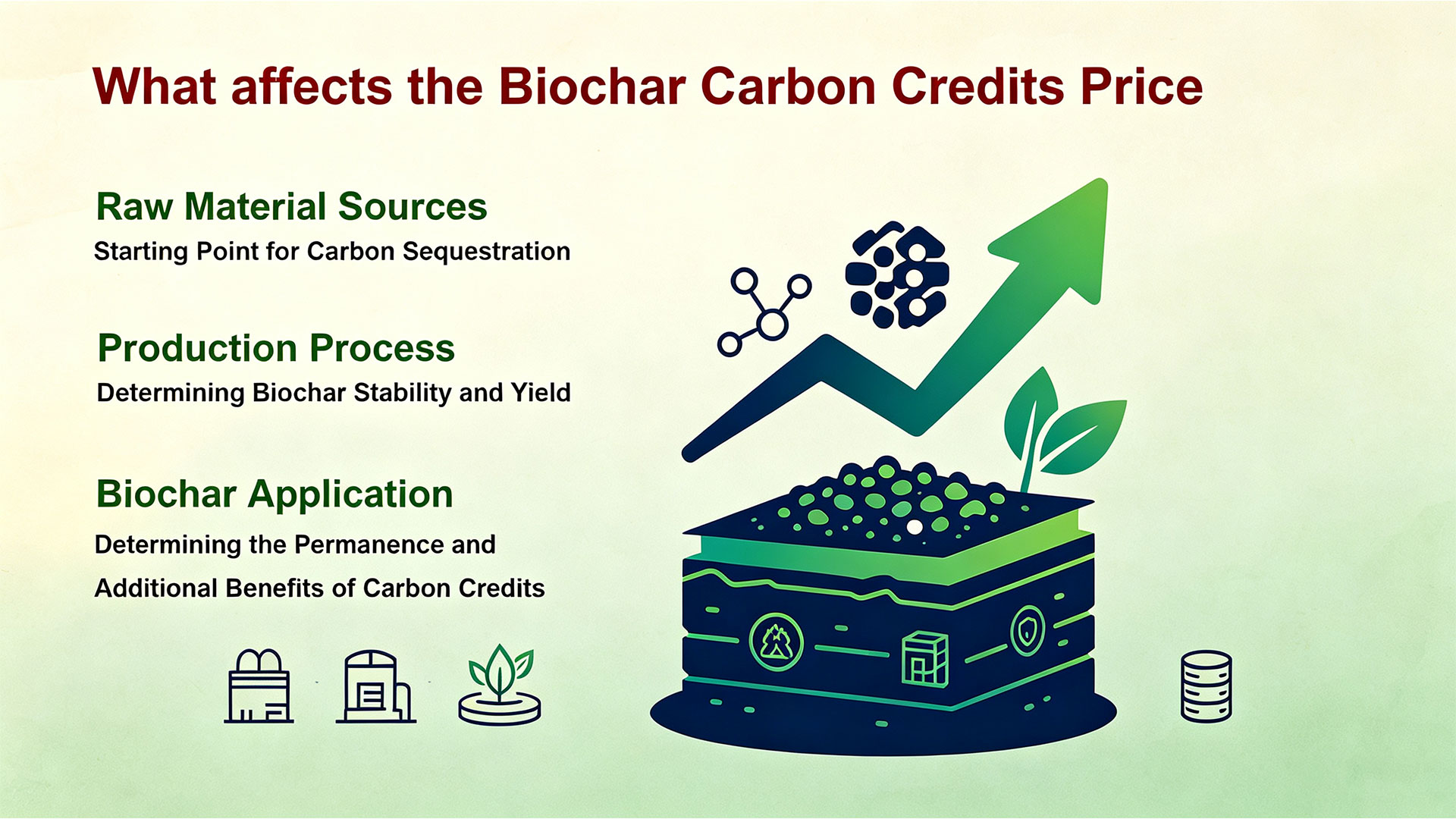
Biomass raw materials, production processes, and product applications collectively constitute the value foundation for biochar carbon credit development. Its value determines the biochar carbon credits price. These three dimensions are mutually constraining and corroborating, determining the authenticity, stability, and additionality of biochar carbon sequestration. They are also the core value basis for obtaining certification from mainstream international carbon platforms and achieving market-based trading.
How Do They Affect Biochar Carbon Credits Price?
High-quality, highly credible, and high-value-added biochar carbon credits have significant premium potential. Conversely, carbon credits from biochar projects with incomplete qualifications and weak carbon sequestration stability will see significantly lower prices, and may even fail to be traded. The source of raw materials, production process, and end-use directly determine the intrinsic value of biochar carbon credit and are the core foundation for pricing.
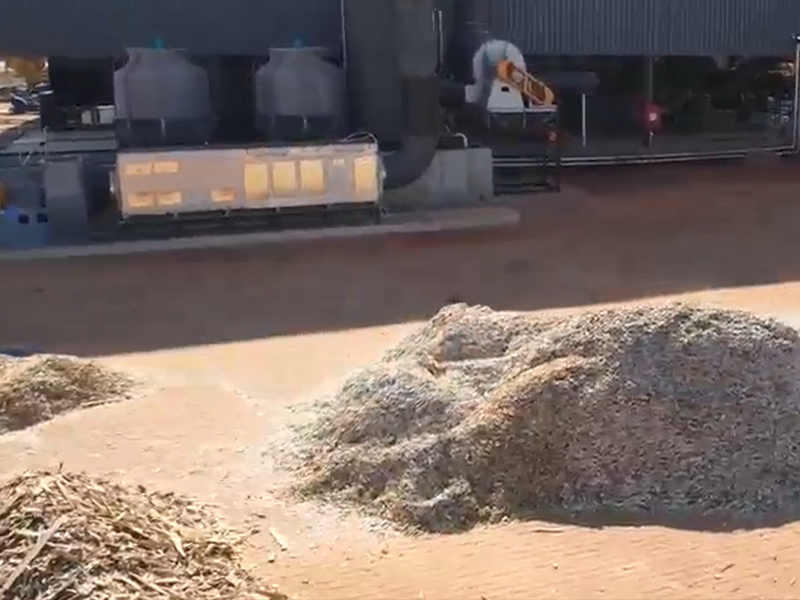
Raw Material Sources: Starting Point for Carbon Sequestration
The source of biomass raw materials is the most critical threshold. It directly relates to whether a biochar project meets the principles of extraneous emissions and sustainability.
High-Value Raw Materials: Agricultural and forestry waste, such as rice husks, straw, fruit shells, and logging residues. If these raw materials are not processed into biochar, they may be burned in the field or decompose naturally, releasing methane (CH₄) and nitrous oxide (N₂O). Utilizing these raw materials can generate dual climate benefits, avoiding emissions and forming a stable carbon sink. Therefore, agricultural and forestry waste is the preferred raw material in the carbon market, with high biochar carbon credits price.
Low-Value/Non-Value Raw Materials: Energy plants, such as Miscanthus sinensis. If planted specifically for biochar production, land use change (LUC) issues need to be considered, which may not meet the extraneous emissions requirement. While raw materials containing high levels of pollutants, such as sludge and animal manure, can be used for biochar production, they pose environmental risks. They require more stringent technical processing. Otherwise, their carbon credits are difficult to obtain recognition from mainstream international standards, and their market premium is lower.
Production Process: Determining Biochar Stability and Yield
The biomass pyrolysis carbonization process determines the physicochemical properties of biochar, which is the core of carbon certification.
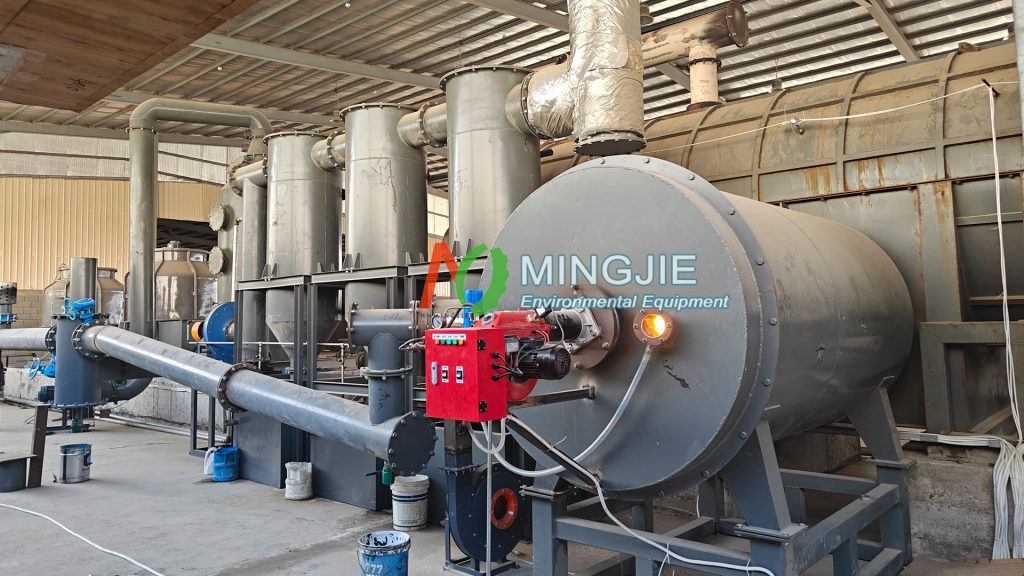
Pyrolysis Temperature and Residence Time: These are the two most important parameters. Mainstream standards (such as Puro.earth and the European Biochar Certificate, EBC) typically require pyrolysis temperatures above 450°C. Biochar produced by high-temperature, slow pyrolysis has a higher degree of aromaticity and a more stable carbon structure. It is expected to remain stable in soil for hundreds to thousands of years.
Carbon Yield and Energy Consumption: The carbon conversion efficiency of the biochar production process directly affects the number of carbon credits produced per ton of feedstock. Simultaneously, energy consumption during biochar production (such as the use of natural gas or biomass heating) is also included in the project’s carbon footprint, affecting the final certified carbon amount.
Production process parameters determine the permanence, stability, and quantifiable precision of biochar carbon sequestration. It is a core technological factor in the differentiation of biochar carbon credits price.
Furthermore, large scale biochar production processes with digital MRV monitoring and a complete low-carbon closed-loop system (waste heat and by-product recycling) offer traceable data and higher net carbon sequestration rates. Compared to small scale biochar production projects, biochar carbon credits price can command a premium of 10%–30%. The degree of process standardization, carbon conversion rate, and carbon emission intensity at the production end collectively determine the upper limit of the technical valuation of carbon credits.
End Uses: Determining the Permanence and Additional Benefits of Carbon Credits
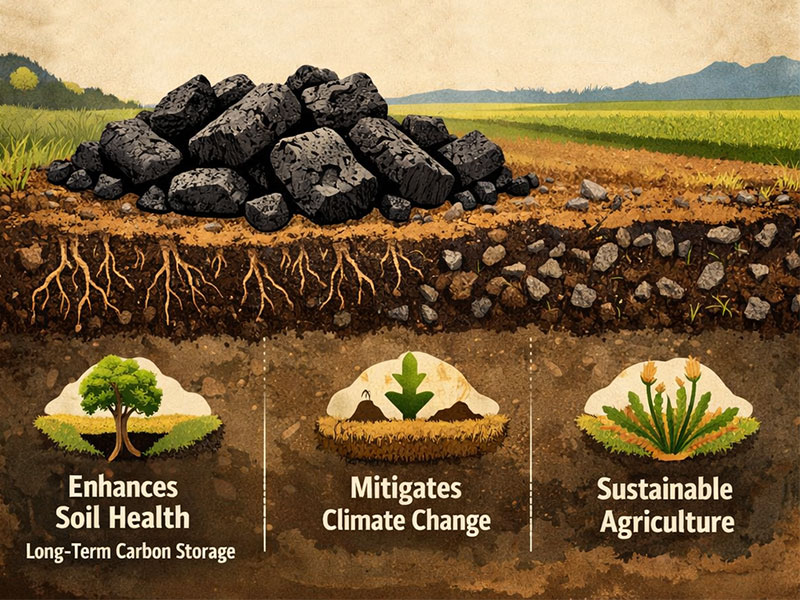
The use of biochar directly determines whether carbon can be sequestered long-term. It is the core of carbon credit value realization and the source of differentiation for biochar carbon credits price.
| Biochar Application | Carbon Sink Projects | Non-Carbon Sink Projects |
| Soil Improvement and Agricultural Applications | Environmental Remediation and Adsorption Applications | |
| Building Materials (Concrete, Asphalt) | Energy and Fuel Applications | |
| Plastic Polymer Composites | ||
| Permanent geological sequestration | Livestock Farming Applications |
Soil application is currently the most widely accepted end-use application in the carbon market. Applying biochar to soil not only achieves long-term carbon sequestration (permanent) but also improves soil structure and enhances water and fertilizer retention capacity. It even reduces fertilizer use and soil N₂O emissions (additional benefits). Some standards (such as Puro.earth) issue high-durability carbon removal credits for this application, commanding the highest biochar carbon credits price.
Non-soil applications include water filtration, building material additives, and asphalt modification. In these applications, the lifespan of the carbon-sequestered products may be shorter, or the carbon may eventually be released again. Therefore, the permanence of the carbon credits is significantly reduced, market acceptance is lower, and the certified carbon amount is correspondingly smaller.