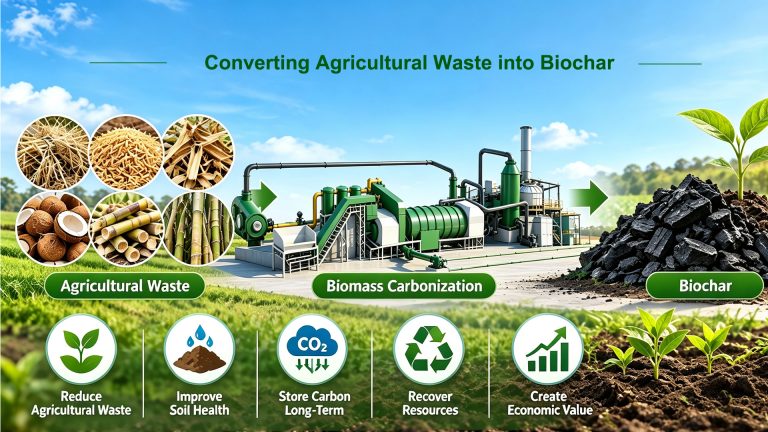
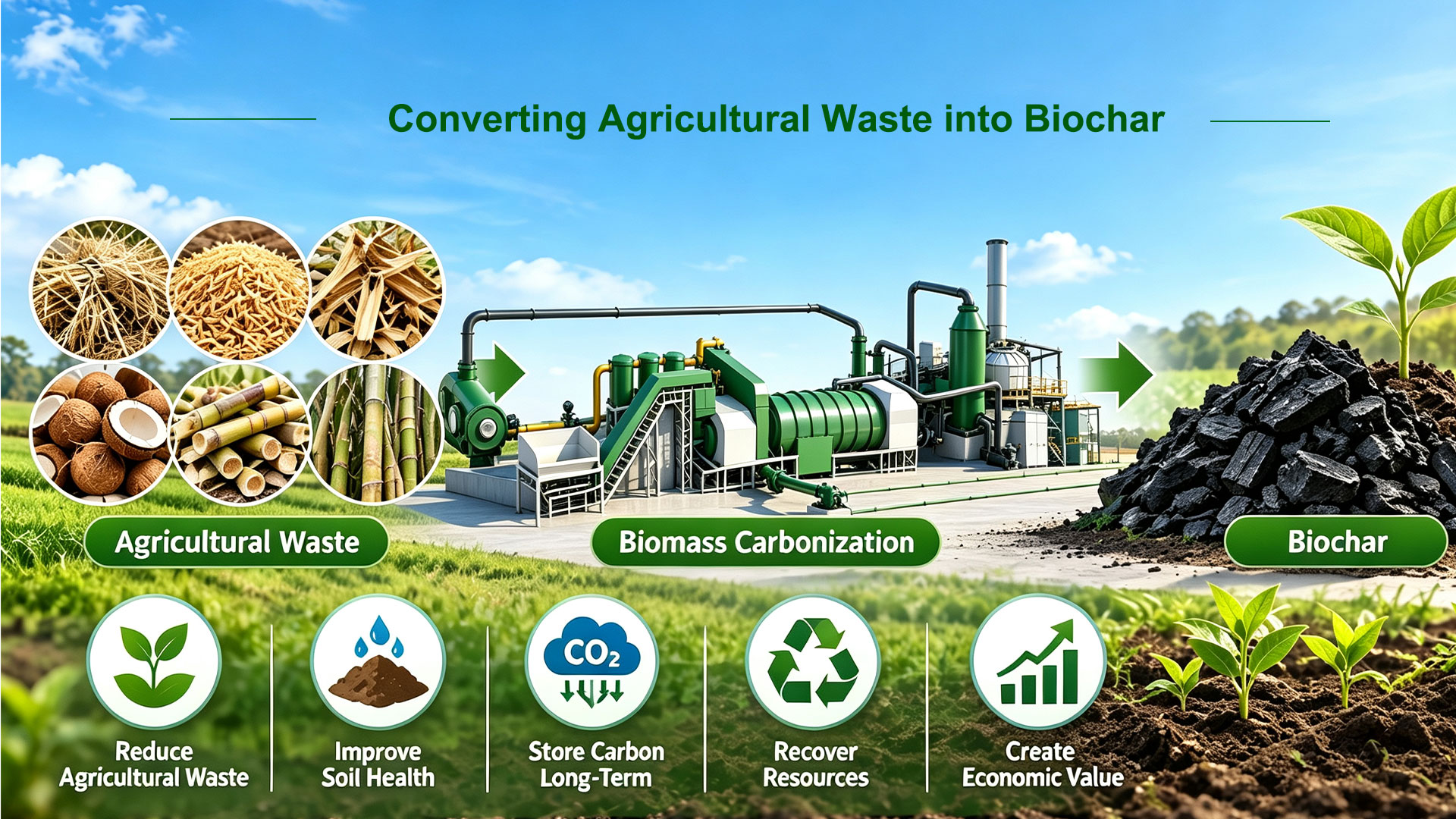
Converting agricultural waste into biochar via biomass pyrolysis offers a more sustainable alternative. Rather than viewing agricultural residues as mere waste, this biochar technology transforms them into a valuable, carbon-rich material that can be applied in agriculture, environmental remediation, construction, and carbon removal projects.
The impact of converting agricultural waste into biochar through biomass pyrolysis extends far beyond simple waste disposal. This technology creates opportunities for resource recovery, soil improvement, carbon sequestration, and the generation of new economic value.
Advantages of Converting Agricultural Waste into Biochar
Turning Agricultural Waste Disposal Costs into Product Value
Agricultural production generates vast quantities of organic waste every year, including rice husks, rice straw, wheat straw, corn stalks, coconut shells, sugarcane bagasse, bamboo residues, and other crop by-products. Traditionally, most of this agricultural waste has been discarded, burned in the open, or left to rot. One of the most immediate benefits of converting agricultural waste into biochar is the reduction of environmental pressure associated with biomass disposal.
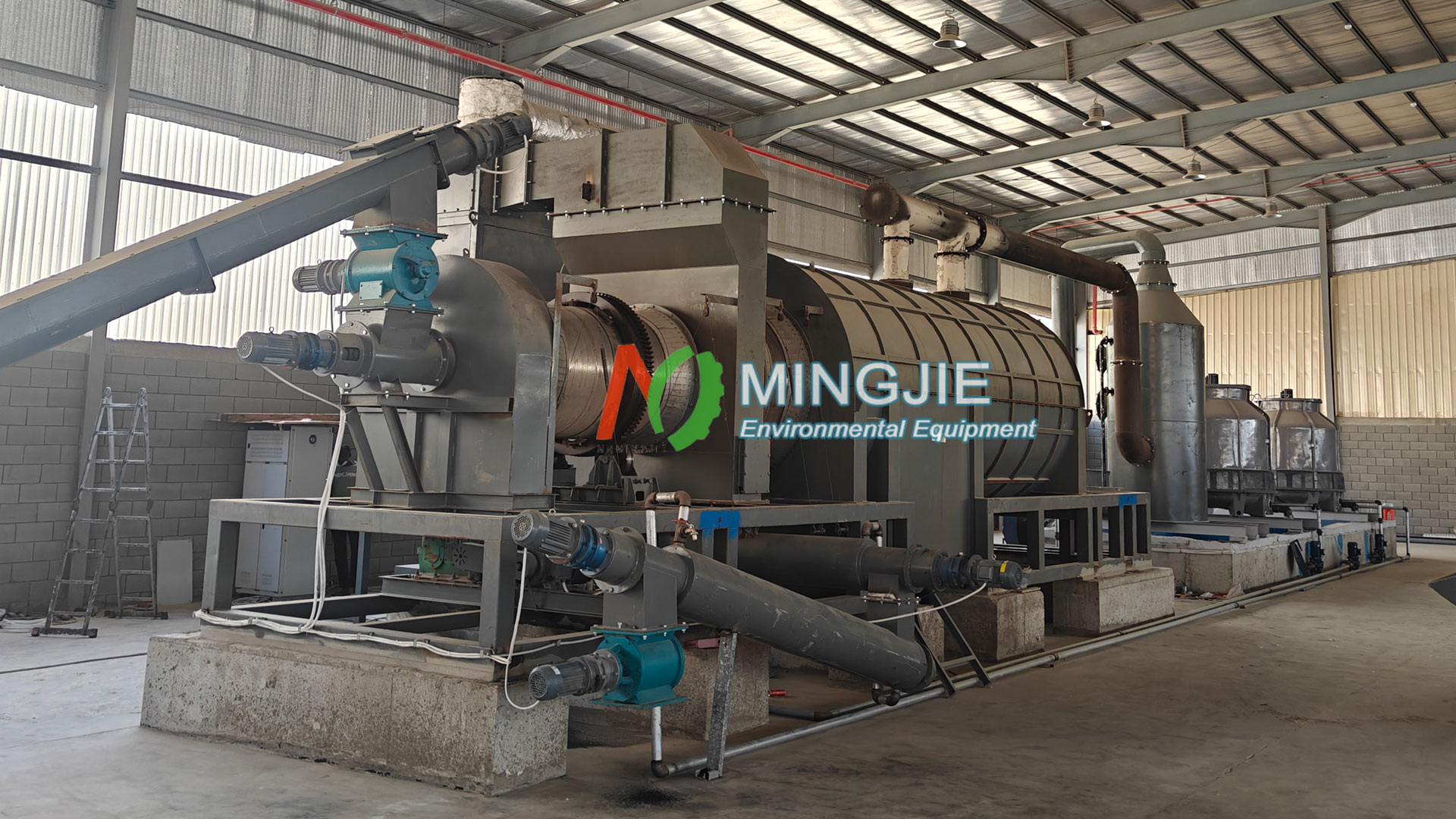
Biomass carbonization plant offers an alternative pathway for waste disposal and utilization. Through controlled biomass pyrolysis, agricultural waste is thermally decomposed and transformed into biochar and syngas. This approach facilitates the development of a more sustainable model for agricultural waste management.
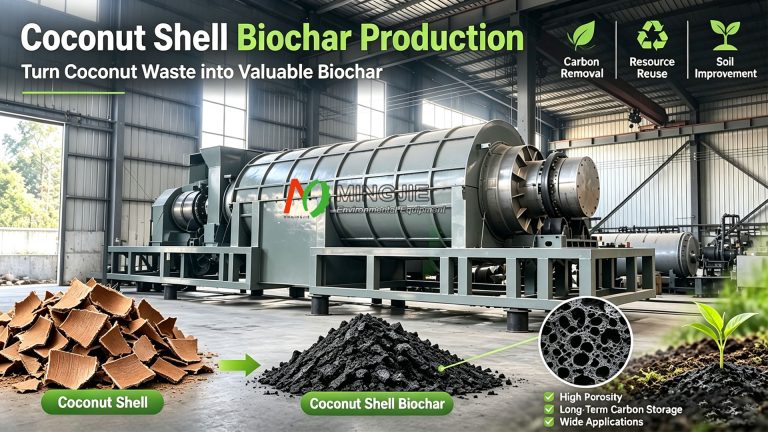
To realize the industrial potential of converting agricultural waste into biochar, a reliable Industrial Pyrolysis Manufacturer is essential. Mingjie continuous biomass pyrolysis equipment provides an industrial-scale solution for processing various types of agricultural and forestry residues.
Improving Soil Quality and Agricultural Productivity
Biochar has garnered significant attention for its potential to enhance soil properties and support sustainable agriculture. Its porous structure, relatively high specific surface area, and chemical characteristics contribute to a variety of soil-improving functions.
Biochar helps improve soil porosity, aeration, and water retention—with the specific effects depending on both soil conditions and the characteristics of the biochar itself. This is particularly beneficial for sandy or degraded soils. Biochar can retain certain nutrients and influence their availability, potentially reducing nutrient loss through leaching. Furthermore, its porous structure provides a habitat for soil microorganisms, thereby influencing soil biological activity.
Creating Long-Term Carbon Storage and Supporting Carbon Removal
Perhaps one of the most significant environmental impacts of the technology used to convert agricultural waste into biochar is its potential contribution to carbon dioxide removal.
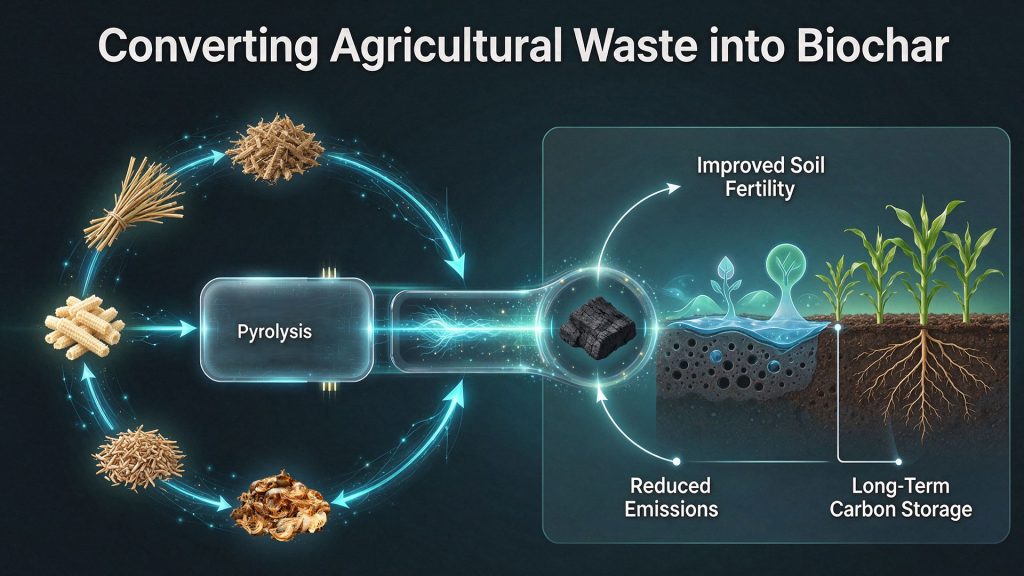
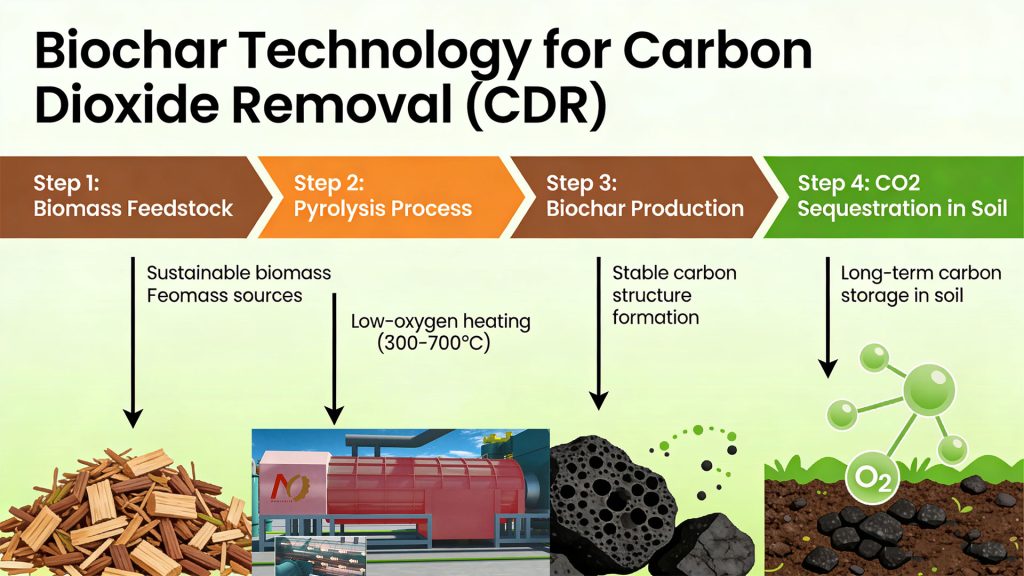
During plant growth, crops absorb carbon dioxide from the atmosphere through photosynthesis, storing the carbon within their biomass. When agricultural residues are converted into biochar via controlled pyrolysis, a portion of the biomass carbon is transformed into a more stable carbon structure.
When this biochar is applied to soil or incorporated into durable materials, a portion of that carbon can be stored for the long term. This presents an opportunity to transform agricultural residues into a resource for long-term carbon storage. This process can be summarized as follows:
Atmospheric carbon dioxide → Crop growth → Agricultural residues → Biomass pyrolysis → Biochar production → Long-term carbon storage
This pathway is closely related to Biochar Carbon Removal (BCR) and Biomass Carbon Removal and Storage (BiCRS).
Energy Recovery and Enhanced Resource Utilization Efficiency
Agricultural waste contains a significant amount of chemical energy. During the process of biomass pyrolysis, organic matter undergoes thermal decomposition in an oxygen-deprived environment, yielding biochar and combustible gases. In industrial-scale biomass carbonization systems, these combustible gases can be captured, purified, and reused as a source of process heat.
For agricultural regions with abundant biomass resources, energy recovery helps improve the economic viability of biochar production facilities.
Creating New Economic Opportunities for the Agricultural Sector
Technologies that convert agricultural waste into biochar create new economic opportunities for farmers, agricultural cooperatives, biomass processing enterprises, and environmental project developers. Agricultural residues—previously considered to have little value—can be transformed into raw materials for industrial-scale biochar production, with the resulting biochar serving various market segments.
A well-designed project for producing biochar from agricultural waste can establish a comprehensive value chain, encompassing biomass collection, pre-treatment, carbonization, biochar processing, product sales, and carbon removal certification. This facilitates a shift in agricultural waste management: moving away from a model defined by the costs of waste disposal toward a business model centered on resource utilization.
Supporting the Development of a Circular Agricultural Economy
Converting agricultural waste into biochar is a key step toward a circular economy. Biochar production replaces the traditional linear model with a resource-cycling system. In biomass pyrolysis systems, agricultural residues are transformed into valuable biochar and syngas.
This approach helps to effectively integrate agricultural development, environmental protection, the utilization of renewable resources, and carbon emission reduction.