Current waste rubber tire recycling processes mainly consist of two processes: physical crushing and chemical pyrolysis. These two processes work together to form a complete closed loop for the resource utilization of waste tires.
Physical recycling only produces low-value-added rubber powder, and a single pyrolysis line without pre-treatment will significantly damage equipment and reduce product purity. The industry mainstream adopts an integrated industrial park model combining crushing pretreatment and continuous pyrolysis.
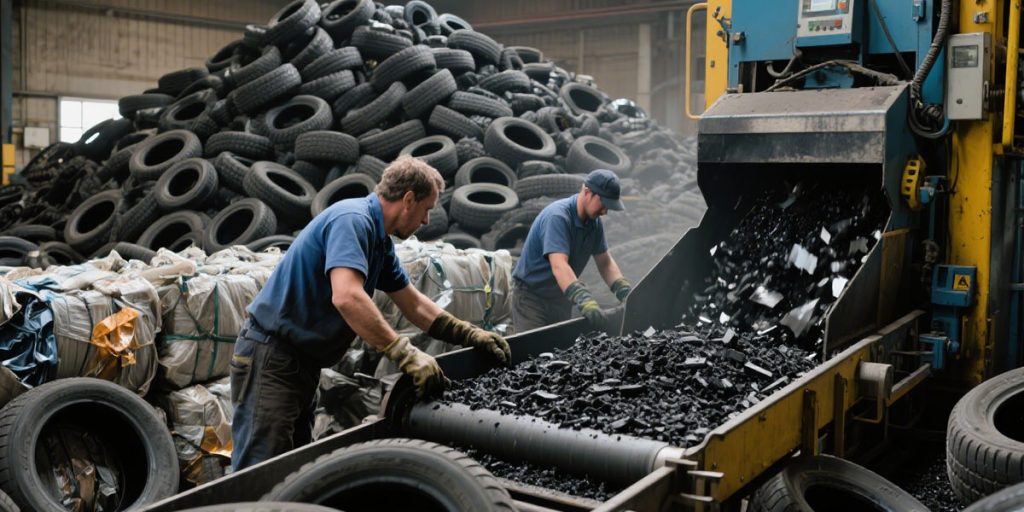
Waste tires produced in the end-of-life vehicle dismantling workshop are sent to a fully automated crushing and sorting line to separate steel wires and fibers. Rubber granules are then uniformly transported to a supporting continuous pyrolysis plant, realizing the conversion of all rubber components into pyrolysis oil and recycled carbon black. The steel wires and recycled carbon black are supplied to automotive parts and tire manufacturers, forming a closed-loop cycle.
Rubber Tire Recycling Production Lines
Rubber tire recycling production lines are key industrial facilities for transforming waste tires into high-value reusable resources. They have developed into highly intelligent and large-scale mature models.
The rubber tire physical recycling production lines are technologically mature and suitable for producing rubber powder for various rubber products. Pyrolysis recycling of tires represents a direction towards deep resource utilization, producing high-value-added energy and material products.
Waste Rubber Tire Physical Recycling Production
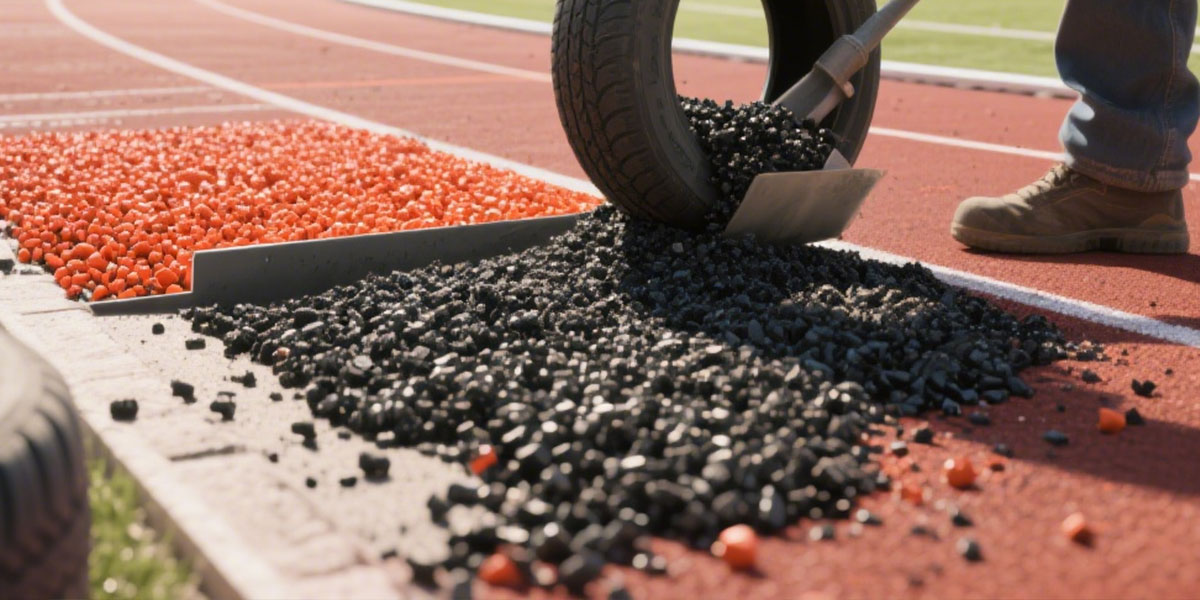
Physical crushing and powdering primarily involves crushing and grinding tires into rubber granules or powder, while simultaneously separating steel wires and fibers. The rubber granules or powder can be directly used in the production of new tires, running tracks, floor mats, etc.
Physical Recycling Process of Waste Tires
Pre-treatment: A tire bead cutter is used to remove the tire bead, followed by a tire shredder to break the entire tire into rubber blocks of approximately 50 mm.
Coarse Crushing and Magnetic Separation: A rubber intermediate crusher further crushes the rubber blocks into 6-12 mm particles, and a magnetic separator separates the steel wires.
Fine Crushing and Sorting: A rubber fine crusher and grinder are used to grind the rubber particles into fine rubber powder of 40 to 120 mesh at room temperature. Finally, an air classifier separates the fibers, and the powder is graded and bagged according to particle size.
Chemical Pyrolysis Recycling: Waste Tire to Oil Production Line
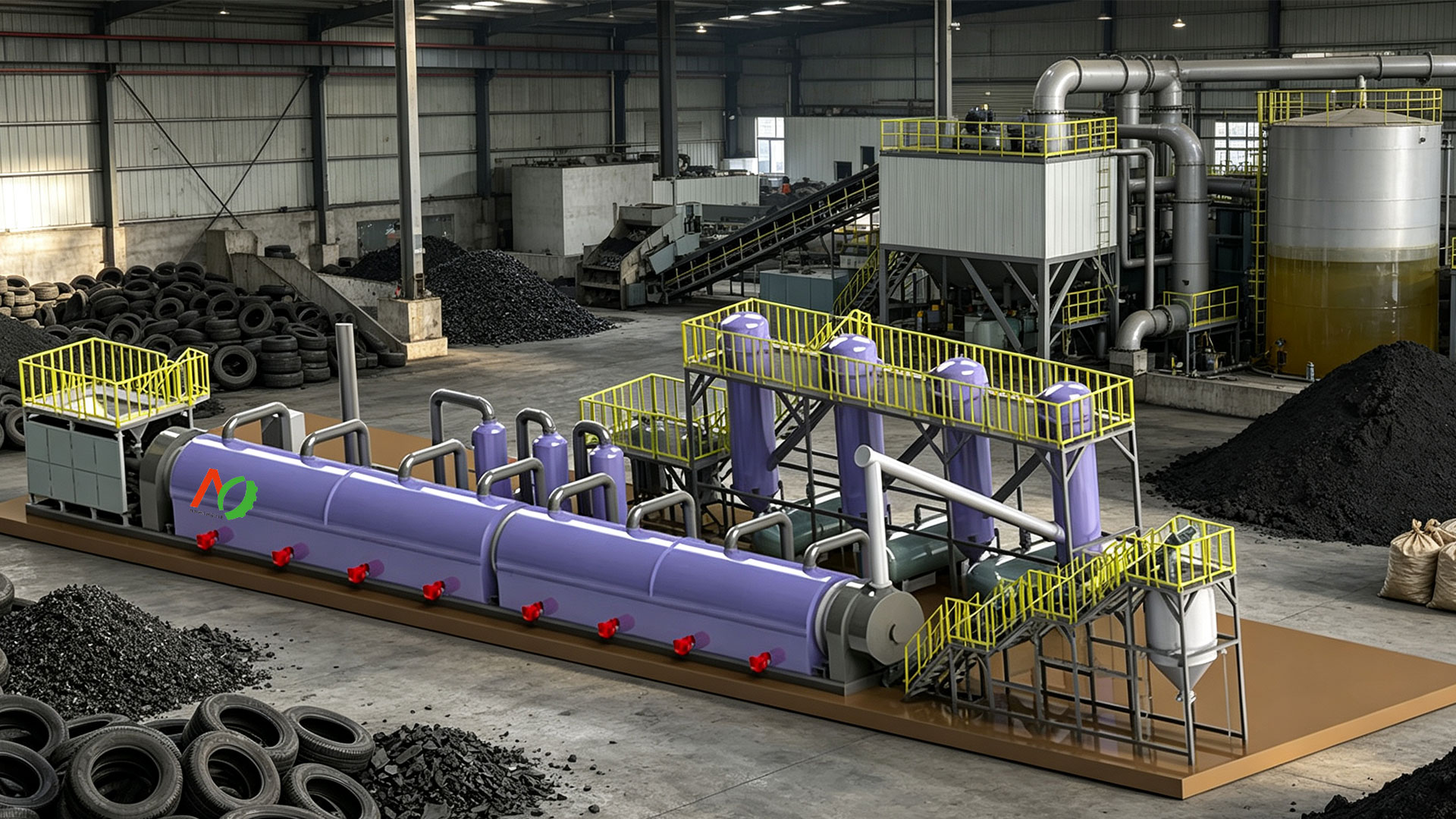
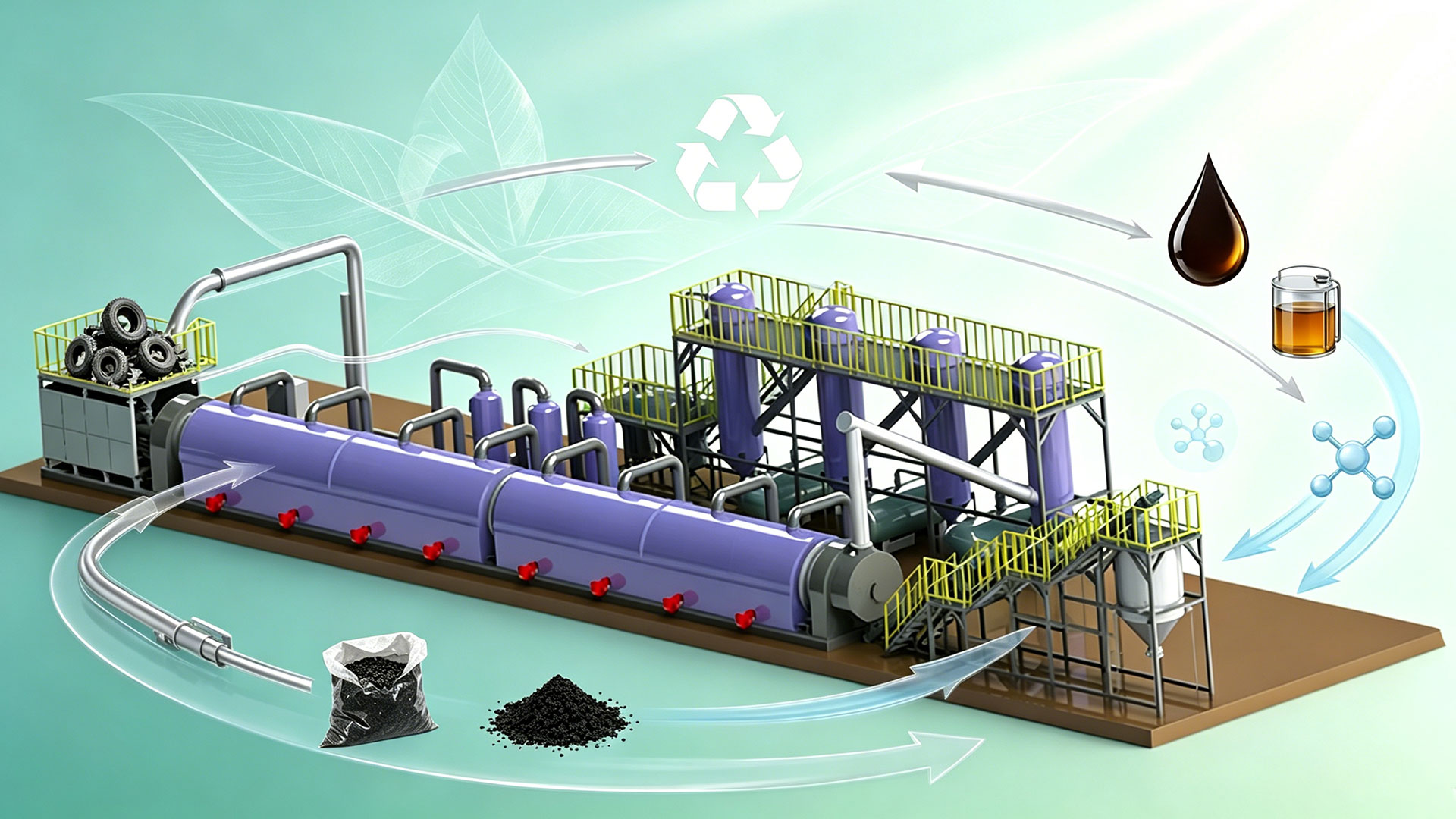
Tire pyrolysis involves heating tires under anaerobic conditions to convert them into pyrolysis oil, carbon black, steel wire, and syngas. Pyrolysis oil can be sold as fuel oil, off-road diesel or as a feedstock for blending with crude oil.
Core Process of Rubber Tire Chemical Recycling
After pretreatment such as cutting, crushing, and screening, waste tires are sent to a continuous pyrolysis plant. The products are separated and further processed to obtain the final product.
Continuous pyrolysis is the mainstream technological development direction in the waste rubber tire recycling industry. It aims to achieve large-scale, high-efficiency, and low-cost operation.
Modern continuous pyrolysis production lines generally adopt PLC intelligent control systems, which can precisely control key parameters. Simultaneously, they are equipped with comprehensive exhaust gas treatment systems to ensure emissions meet standards.
Deep Processing of Tire Pyrolysis Products
The primary products obtained from the pyrolysis of waste tires are complex in composition, and generally cannot be directly used in high-end applications. The deep processing of tire pyrolysis products is to transform them into high-value-added industrial raw materials. This includes refining and upgrading pyrolysis oil, and modifying and granulating pyrolysis carbon black.
Pyrolysis oil distillation plant can purify tire pyrolysis oil, converting it into non-standard diesel or gasoline. Refined pyrolysis oil can be used as clean fuel or as a high-quality feedstock for oil refineries.
Pyrolysis carbon black modification is key to overcoming the low-value bottleneck. Crude carbon black discharged directly from the pyrolysis reactor contains approximately 14%-21% ash and a rubber layer, resulting in significantly lower reinforcing performance compared to virgin carbon black.
Deep processing of tire pyrolysis carbon black involves four stages of upgrading: physical refining, chemical acid washing and deashing, surface modification, and high-end functionalization.