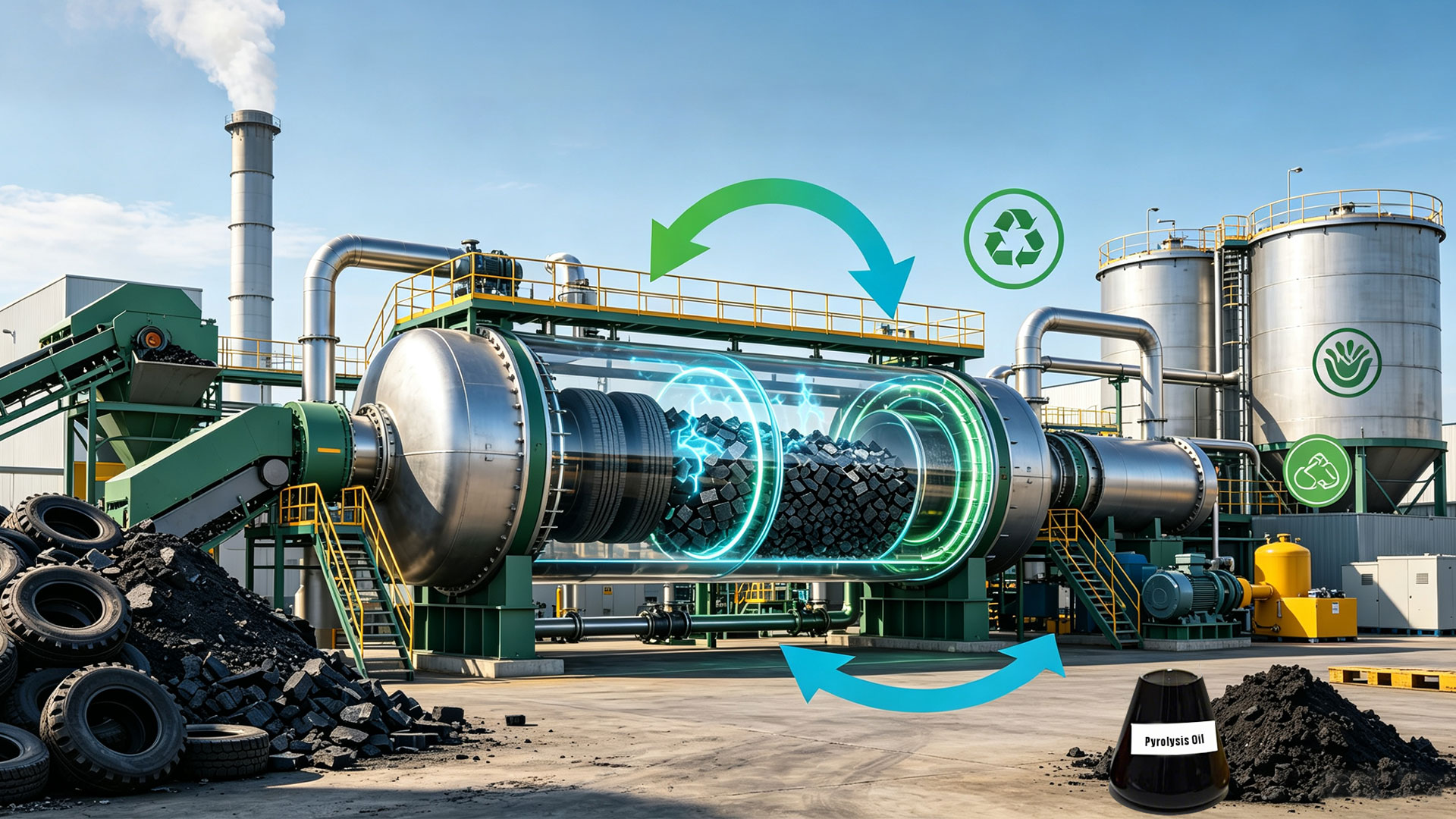
The tire to oil pyrolysis plant provides a chemical recycling solution. Under anaerobic conditions, the pyrolysis plant decomposes rubber into a hydrocarbon-oil-gas mixture through heating, simultaneously separating oil, carbon black, and steel wire. The tires to oil recycling pyrolysis plant transforms waste into valuable raw materials, enabling the recycling of waste tires. The pyrolysis products—pyrolysis oil, carbon black, and syngas—can replace fossil fuels.
Pyrolysis oil recovers significant amounts of carbon from the rubber components of tires. After refining in a distillation plant, it can be converted into non-standard diesel or gasoline. Syngas can be used to power the pyrolysis system itself, making the pyrolysis plant virtually energy self-sufficient.

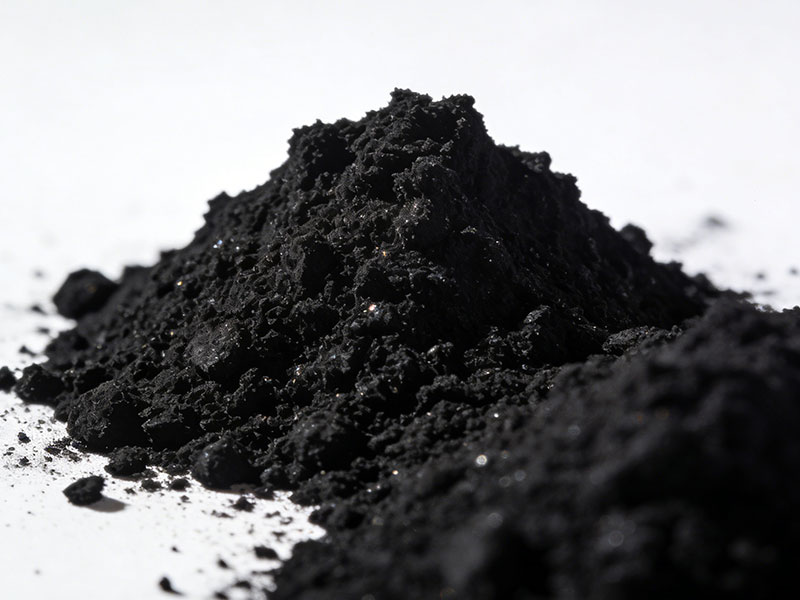
Recycled carbon black (rCB) is industrial carbon black recovered from the tire to oil pyrolysis plant. It is finely ground, homogenized, and made into granular material, widely used in various rubber products. The rCB can also replace traditional fossil fuel-based carbon black.
More and more companies are using pyrolysis oil and carbon black to reduce their reliance on fossil resources and decrease harmful carbon dioxide emissions. These materials are a powerful driving force for the shift towards sustainable production and a circular economy.
Pyrolysis Plant for Tires to Oil Recycling
As one of the most promising chemical recycling methods, tires to oil recycling pyrolysis technology can achieve a resource utilization rate of nearly 95%. With the increasing maturity of pyrolysis techcnology and the widespread application of international certification systems ISCC-PLUS, tires to oil recycling plants are developing from small scale batch pyrolysis plant to large scale fully continuous pyrolysis plant.
Batch Pyrolysis Plant
Batch pyrolysis plant completes the feeding-heating-pyrolysis-cooling-slag discharge cycle in batches. It has low initial investment costs, are easy to operate, and is suitable for small scale tires to oil recycling projects.
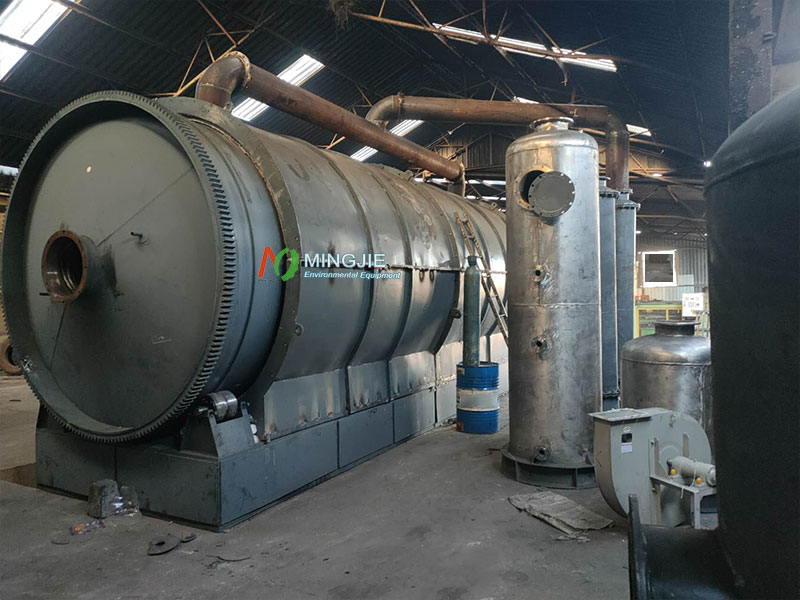
Limitations: Discontinuous temperature and pressure fluctuations lead to unstable TPO quality, high labor intensity, and low capacity utilization. It is difficult to achieve the full traceability required by ISCC-PLUS and is not suitable for large-scale tire to oil recycling projects.
Fully Continuous Pyrolysis Plant
Fully continuous pyrolysis plant is the mainstream commercial tires-to-oil recycling solution by 2026. It enables continuous sealed feeding, continuous pyrolysis, and product collection.
Advantages of continuous pyrolysis system: High degree of automation, stable TPO and rCB quality, self-supplied syngas, and reduced energy costs. A comprehensive material flow traceability system and hardware meeting ISCC-PLUS certification requirements allow access to the global high-end market. Fully continuous pyrolysis plant has higher upfront capital expenditures.
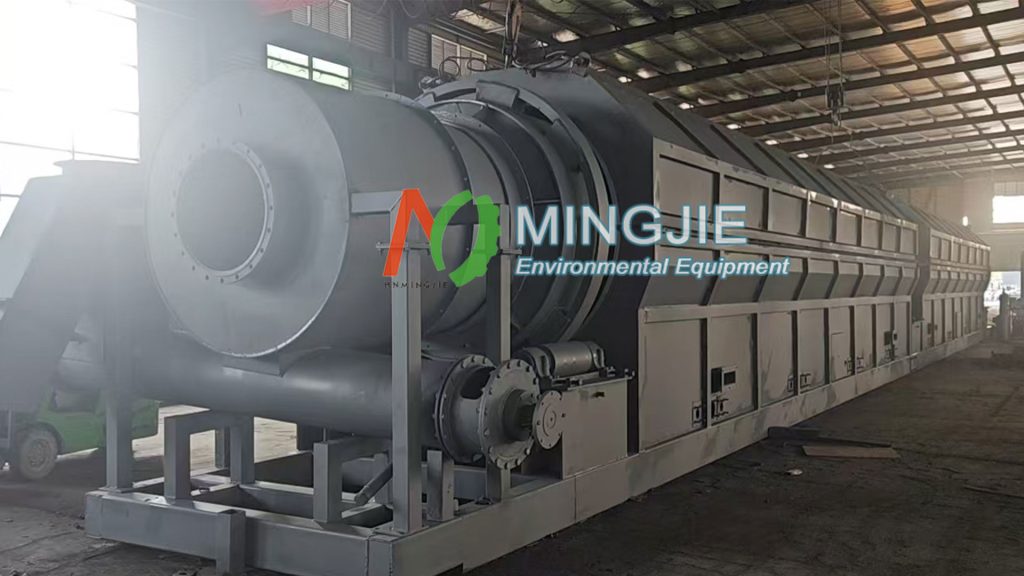
Semi continuous pyrolysis plant falls between batch and fully continuous systems. Some processes operate continuously, and they are commonly used in medium-sized tires to oil recycling projects.
Key Challenges in the Tire to Oil Recycling Industry
Despite the commercialization of tire-to-oil pyrolysis technology, several bottlenecks limit its large-scale global adoption.
Unstable Raw Material Supply: The sheer volume of waste tires leads to high logistical costs. Decentralized collection systems result in fluctuating feedstock impurity levels, impacting pyrolysis stability and product consistency.
Unstable Product Quality: Tire-to-oil (TPO) contains sulfur, nitrogen, and heavy component impurities. Recycled carbon black (rCB) feedstock has high ash content. Deep refining increases capital and operating expenditures significantly. Many tire-to-oil recycling projects only sell low-value crude pyrolysis oil with limited profit margins.
Economic Pressures: Fully continuous pyrolysis plants have high capital expenditures. Return on investment for tire pyrolysis projects faces pressure during periods of low crude oil prices. In recent years, several waste tire pyrolysis recycling projects have experienced cost overruns or delayed investment decisions.
Environmental Compliance Burden: Tire pyrolysis projects must strictly control emissions of waste gas, volatile organic compounds (VOCs), and wastewater. Compliant end-of-pipe treatment increases operating costs.
Conclusions and Outlook
The purpose of waste tire pyrolysis is not simply to dispose of waste. More importantly, it is to transform them into recyclable energy and materials, achieving a leap from linear consumption to a closed-loop cycle. The carbon emission reduction benefits of tires to oil recycling pyrolysis plants are also significant. For every ton of waste tires utilized in pyrolysis, carbon dioxide emissions can be reduced by approximately 1.1 tons compared to the original production process.