Biochar production from forestry biomass waste pyrolysis is one of the few negative carbon technologies. It combines four key benefits: waste management, ecological restoration, permanent carbon removal, and market-based income generation. Pyrolysis of forestry biomass waste to biochar perfectly aligns with global trends in ecological governance and carbon-neutral industry development.
Waste forestry biomass represents a vast, long-overdue, and often wasted renewable resource globally. Traditionally, this woody waste is disposed of through on-site incineration, natural decomposition, or landfill. This not only wastes forestry resources but also releases large amounts of greenhouse gases such as carbon dioxide and methane, exacerbating carbon emissions and fire hazards in forest areas.
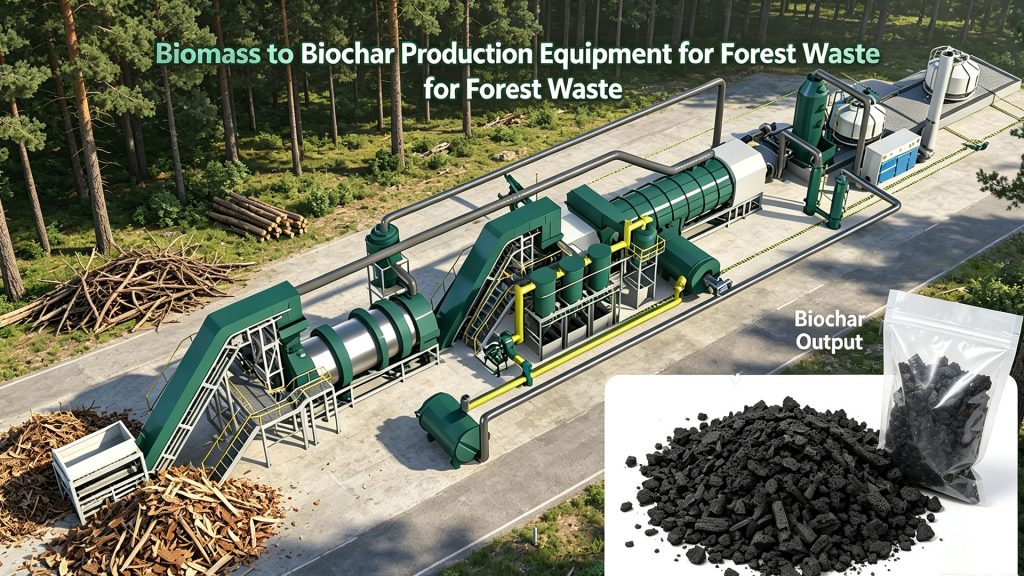
Against the backdrop of global carbon neutrality and the industrialization of negative carbon technologies, biochar production from waste forestry biomass pyrolysis achieves the triple benefits of harmless disposal, resource utilization, and permanent carbon removal of waste woody resources. Biochar carbon removal credits, formed through standardized accounting and third-party certification systems, have become high-quality negative carbon assets with high recognition in the international carbon market. This opens up a new avenue for green transformation, ecological restoration, and low-carbon income generation in forestry.
Pyrolysis of Forestry Biomass Waste: A Core Technology for Negative Carbon Conversion
Unlike lightweight biomass agricultural straw, waste forestry biomass is primarily composed of lignocellulose, boasting high lignin content, dense structure, and stable calorific value. This makes it an excellent raw material for producing highly stable biochar, better suited for long-term carbon sequestration.
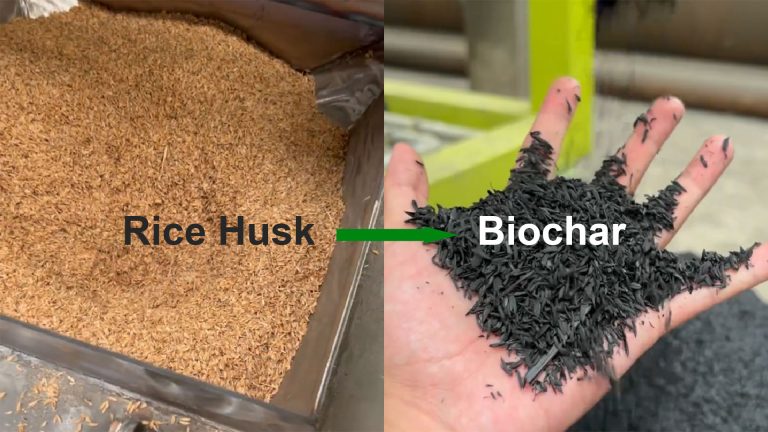
The core process for biochar production is oxygen-limited pyrolysis. In an oxygen-free or low-oxygen closed environment, waste forestry biomass is heated to 350–900℃. Through pyrolysis, the biomass molecular structure is broken down, separating combustible syngas, wood tar, and other byproducts, ultimately leaving behind high-carbon, porous, and corrosion-resistant solid biochar.
The core advantage of this technology lies in achieving true carbon removal, rather than simple carbon reduction. During tree growth, carbon dioxide is fixed from the atmosphere through photosynthesis, and carbon is stored in lignocellulosic biomass. If forestry waste is allowed to decompose naturally or be incinerated, the fixed carbon quickly returns to the atmosphere, forming a closed carbon cycle with no emission reduction value.
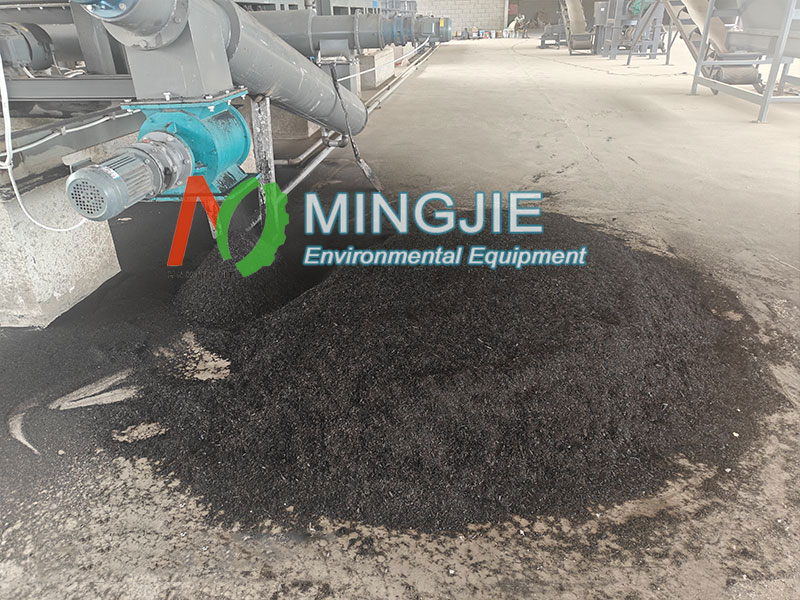
However, the pyrolysis process can solidify 30%–40% of the carbon in biomass into a stable aromatic carbon structure. This carbon structure is resistant to microbial decomposition and chemical erosion, and can be stably stored in soil and forest substrates for hundreds to thousands of years, achieving permanent removal of atmospheric carbon and possessing natural negative carbon properties.
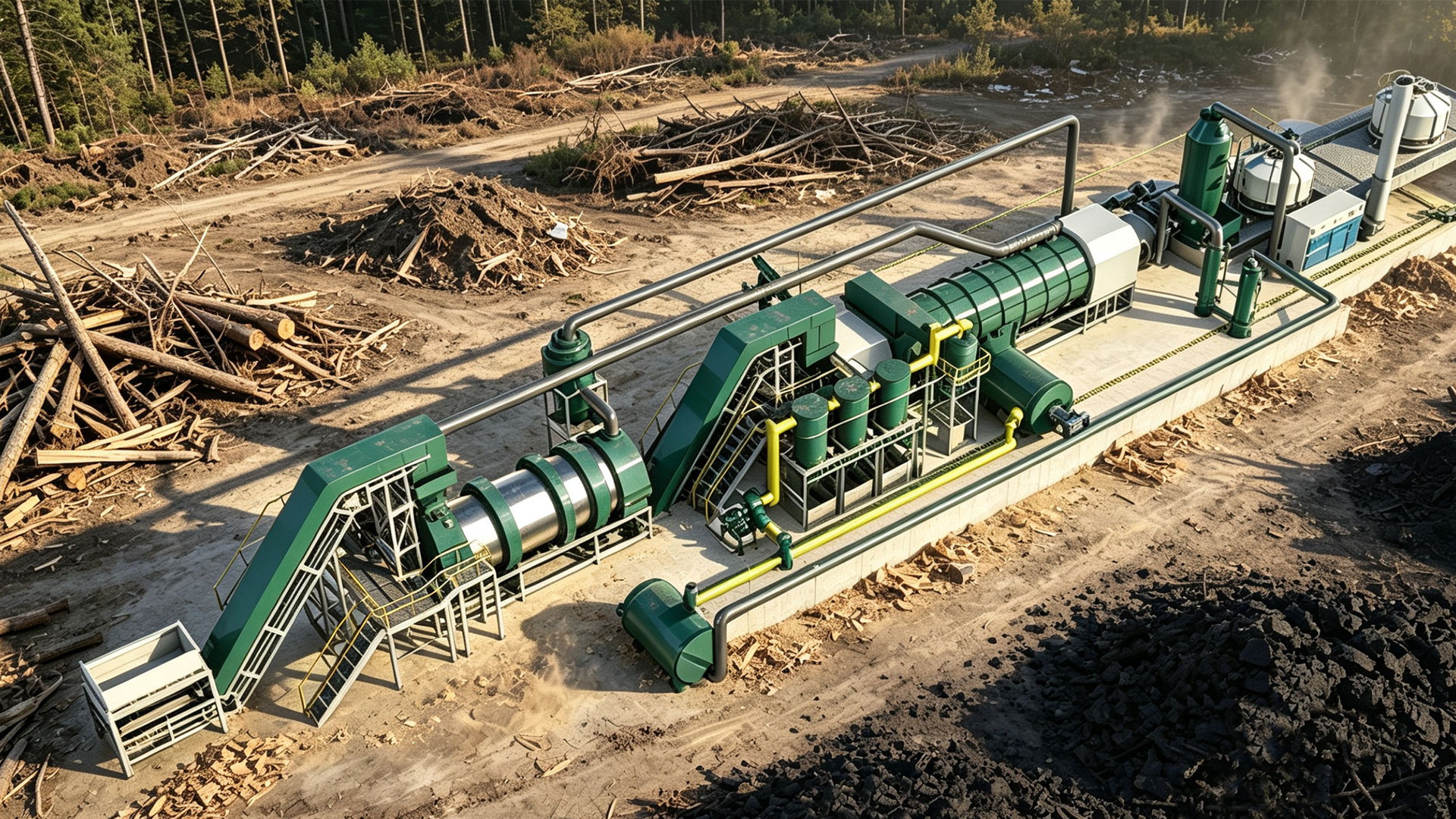
Modern continuous biomass pyrolysis plant further optimizes conversion efficiency and carbon accounting accuracy, enabling precise temperature and oxygen control to ensure stable fixed carbon content in biochar. Simultaneously, the syngas produced during pyrolysis can be recycled as production heat, achieving energy self-sufficiency. This significantly reduces the life-cycle carbon emissions of forestry biomass waste pyrolysis projects and improves the purity of carbon credits.
Biochar carbon removal credits are internationally recognized high-quality permanent carbon credits. Their core definition is: through compliant pyrolysis processes to dispose of waste biomass, and after calculation, verification, and registration by a third-party institution, one tradable carbon credit is awarded for every 1 ton of carbon dioxide equivalent (CO₂e) permanently removed. Biochar carbon credits belong to the Carbon Dioxide Removal (CDR) category and are currently the scarcest and most widely accepted negative carbon credentials for corporate carbon neutrality and mandatory carbon compliance.
Standardized Process for Waste Forestry Biochar Carbon Credit Projects
Biochar carbon removal projects based on forestry waste resources have established a standardized implementation system.
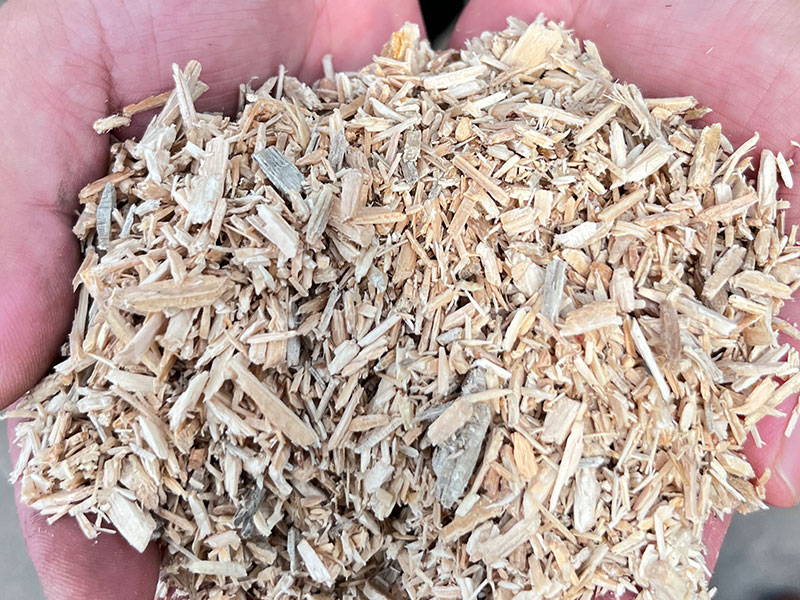
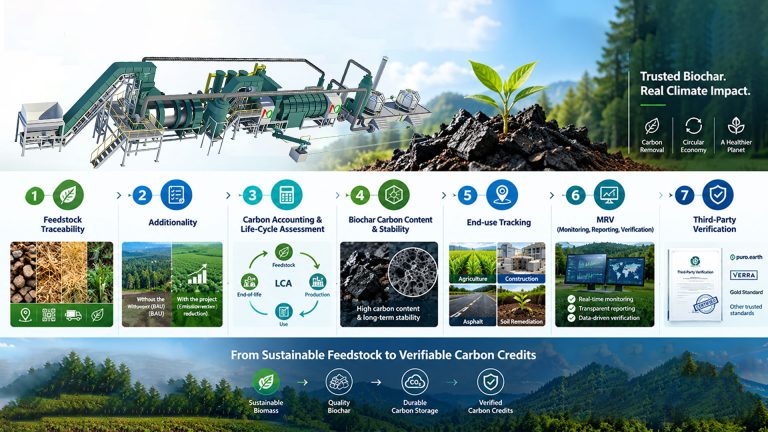
First, Raw Material Compliance and Rights Confirmation. Waste wood waste is clearly identified as waste resources and non-commercial timber, eliminating the consumption of primary forest timber. Completing raw material source registration and compliance review is the primary prerequisite for carbon credit issuance.
Second, Standardized Pyrolysis Production. Continuous pyrolysis equipment strictly controls carbonization temperature and process parameters to ensure the fixed carbon content and stability of biochar meet standards. It simultaneously recovers and utilizes by-products, reducing production energy consumption and carbon emissions, and retaining complete production and operation data.
Third, Carbon Quantification and Accounting. Based on internationally recognized carbon accounting methodologies, baseline emissions, project emissions, and net carbon removal are calculated. A complete set of compliance documents, including project design documents, life cycle assessment reports, and traceability ledgers, are prepared.
Fourth, Third-Party Verification and Certification. Authoritative institutions conduct on-site verification of raw material sources, production processes, char quality, and storage scenarios. After verification, a verification report will be issued to confirm the authenticity and effectiveness of the project’s carbon removal benefits.
Fifth, platform registration and credit trading. Project registration will be completed on international carbon registries such as Puro.earth and Vera. Tradeable and revocable biochar carbon removal credits will be issued, which can be directly linked to corporate carbon neutrality procurement, carbon fund trading, and voluntary carbon market compliance.