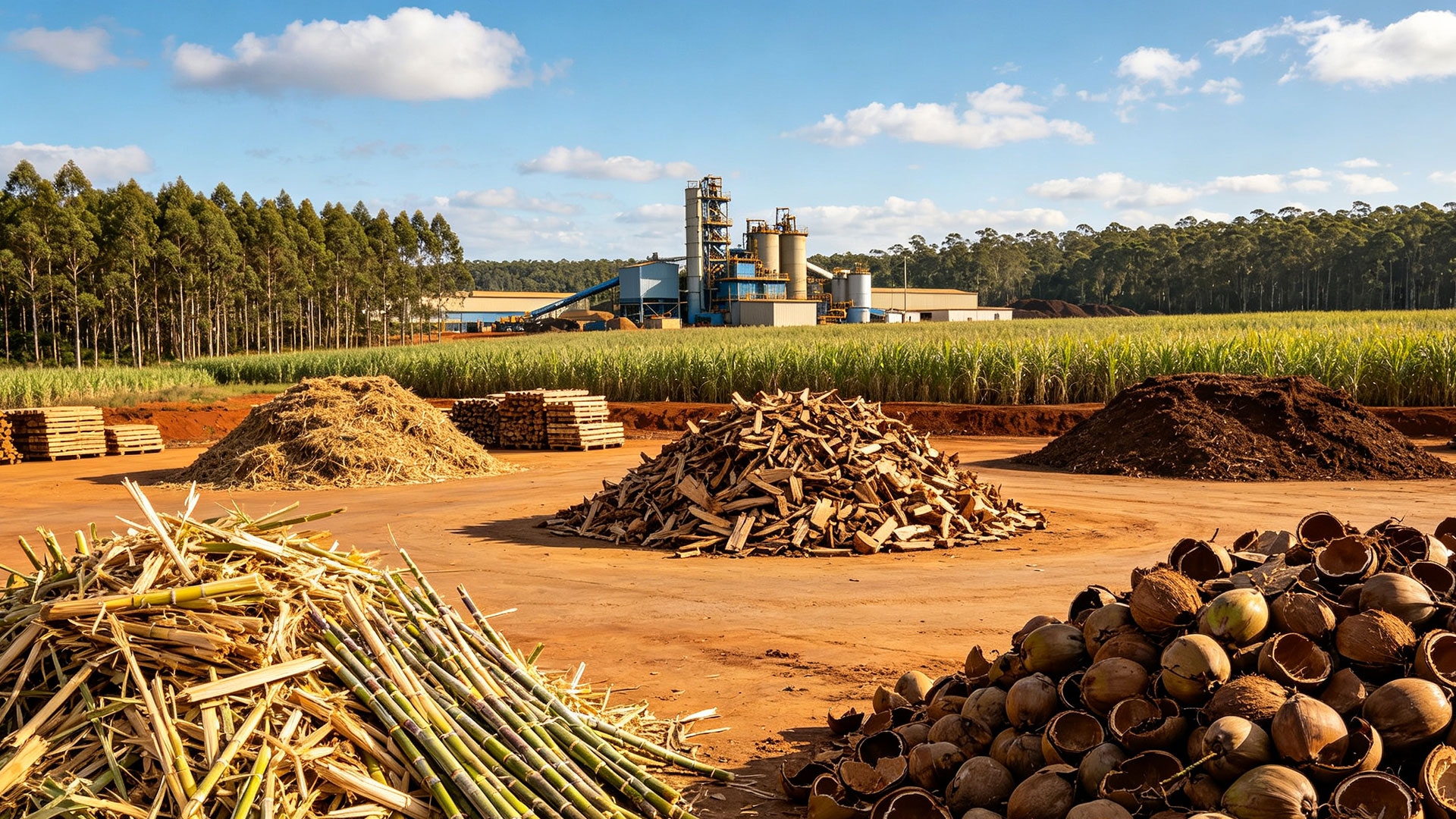
Brazil possesses abundant and diverse biomass resources, making it an ideal location for biomass pyrolysis plants. The large amounts of seasonal and perennial organic waste generated by the sugarcane, coffee, fruit, forestry, and palm industries provide ideal biomass feedstocks for pyrolysis plants. These feedstocks are characterized by low ash content, high lignin concentration, and wide distribution. They are highly suitable for biochar production.
For biochar plants in Brazil, selecting suitable biomass feedstocks for pyrolysis is crucial. This helps optimize biomass pyrolysis efficiency and reduce biochar production costs.
Sugarcane Bagasse Biomass Feedstocks for Pyrolysis
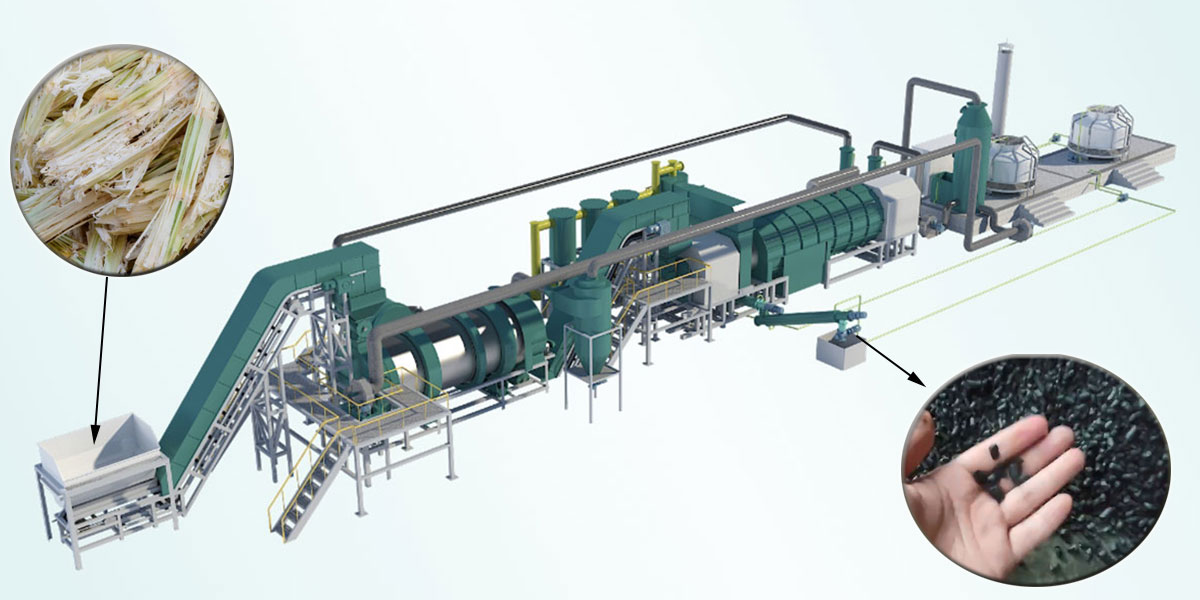
As the world’s largest sugarcane producer, Brazil generates billions of tons of sugarcane bagasse annually. This includes bagasse, dried leaves and stem tips, and filter cake. These raw materials are highly compatible with industrial continuous biomass carbonization plant.
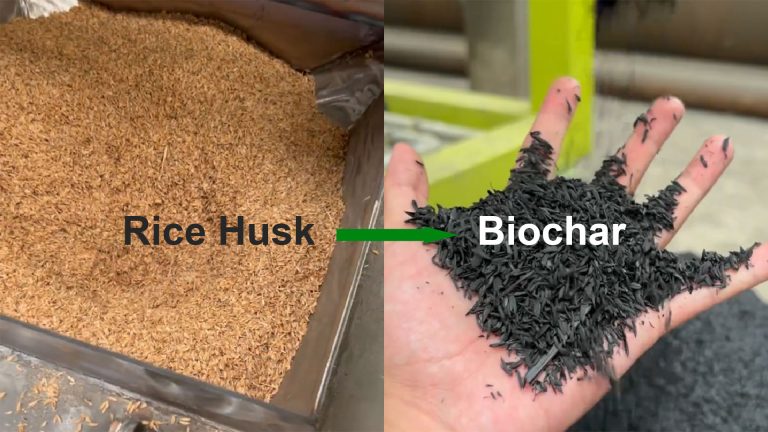
Sugarcane bagasse is the fibrous residue after juicing, characterized by moderate lignin content, uniform texture, and low impurity content. It requires only simple crushing and drying pretreatment before use in continuous pyrolysis systems. Biomass pyrolysis plant can convert sugarcane bagasse into biochar and syngas.
Coffee Husks and Coffee Grounds
Brazil dominates global coffee production, generating substantial amounts of coffee husks and waste. This waste has become a high-quality regional feedstock for small and large scale biochar production plant. Coffee grounds are characterized by low ash content, high cellulose content, and rich organic nutrients. After pyrolysis and carbonization, they can be processed into porous biochar with strong adsorption capacity.
Coffee husks are lightweight, easy to dry and crush, and suitable for biochar production in biomass carbonization plant. Coffee husk biochar has excellent water retention, weight retention, and heavy metal adsorption properties. It is ideal for soil improvement and ecological restoration in local coffee plantations.
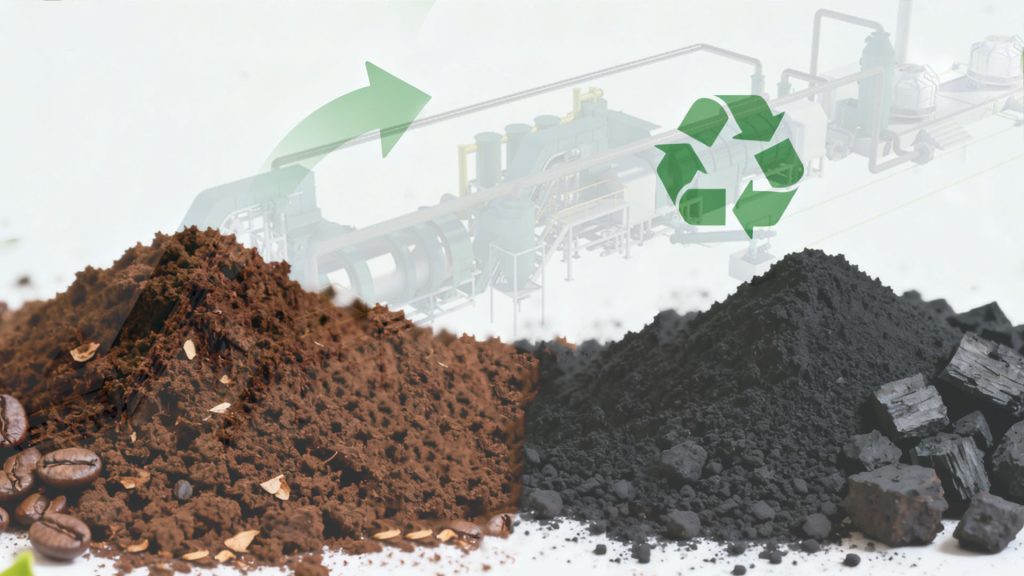
Biomass pyrolysis plant can achieve the harmless treatment of waste while effectively reducing fertilizer input costs for farmers.
Waste Seeds and Coconut Shells
The Amazon basin in northern Brazil possesses unique native biomass resources, which are emerging as high-value raw materials for pyrolysis equipment. Acai berry processing generates a large amount of waste seeds, accounting for over 80% of the fruit’s weight. These seeds have high lignin density and stable thermal stability. Biochar yields are as high as 41% to 54%, far exceeding many common agricultural wastes.
Tucuma bark, a byproduct of Amazonian palm fruit processing, has a porous fibrous structure. Through precisely temperature-controlled pyrolysis, it can produce high-performance porous carbon material biochar.
Coconut shells are a large and underutilized agricultural industrial residue in Brazil. They have high volatile matter and low ash content, and when pyrolyzed at specific temperatures, they produce biochar with high fixed carbon content and high calorific value.
Waste Wood and Sawdust Residue
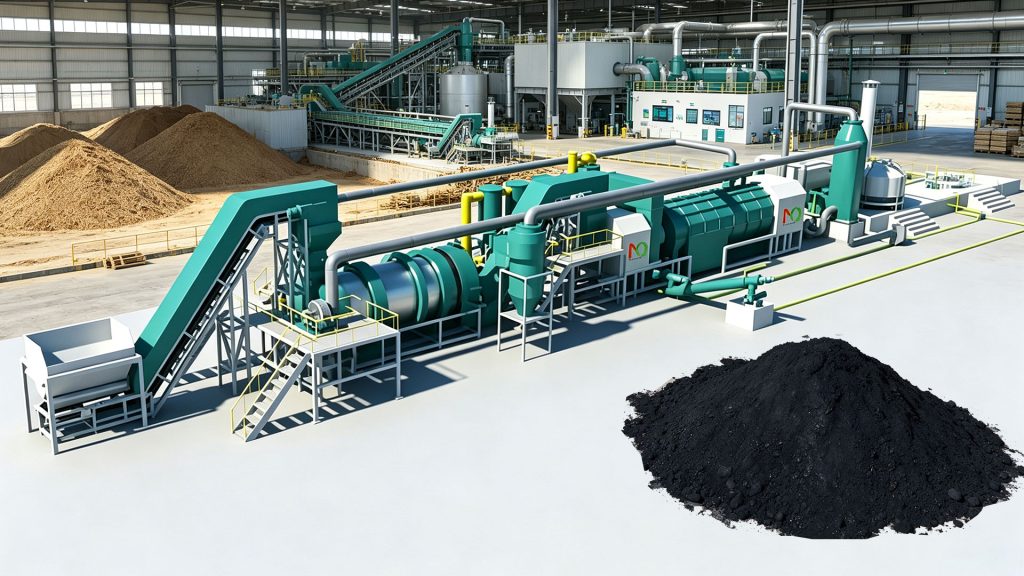
Brazil developed forestry and timber processing industry produces abundant eucalyptus sawdust, wood chips, and hardwood residues, providing a stable and high-quality feedstocks for pyrolysis. This woody biomass is perfectly suited for fully continuous industrial pyrolysis production lines.
Eucalyptus waste has uniform particle size, low moisture content, and high calorific value, resulting in extremely stable pyrolysis. It is the preferred feedstock for producing high-standard biochar.
Hardwood residue has high lignin content and low ash content, enabling the production of high-carbon, highly stable biochar. It is ideal for carbon dioxide removal CDR projects.
Conclusion
Brazil’s diverse waste biomass resources constitute a complete feedstock system suitable for all types of pyrolysis and biochar production equipment. These local feedstocks offer advantages such as abundant supply, low cost, stable pyrolysis performance, and high added value in biochar production.
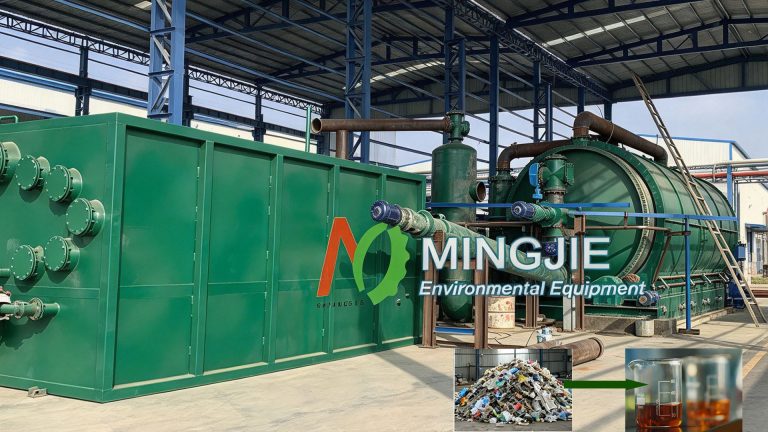
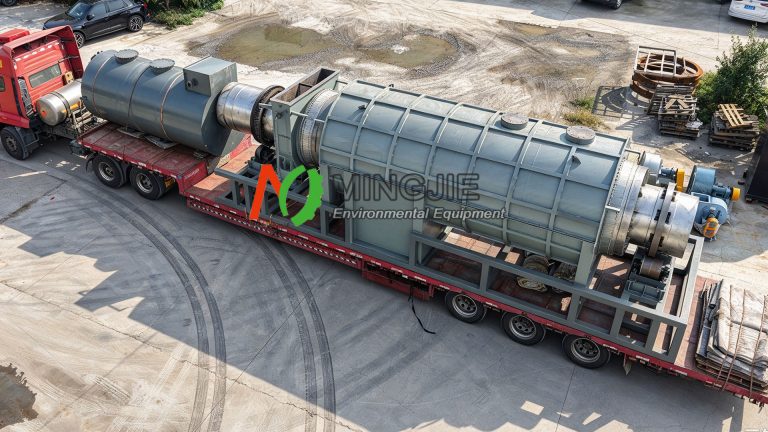
To maximize production efficiency and product value in the Brazilian market, biochar equipment manufacturers need to adopt targeted equipment configurations based on the characteristics of regional feedstocks. Mingjie Group offers a variety of biomass pyrolysis plants suitable for different scales of biochar production: MJT-100, MJT-500, MJT-1000, MJT-2000, MJT-3000, and MJT-5000.