Looking for a smarter way to utilize rice husk waste? Our Rice Husk Carbonization Equipment converts agricultural residues into valuable biochar through advanced biomass pyrolysis carbonization technology.
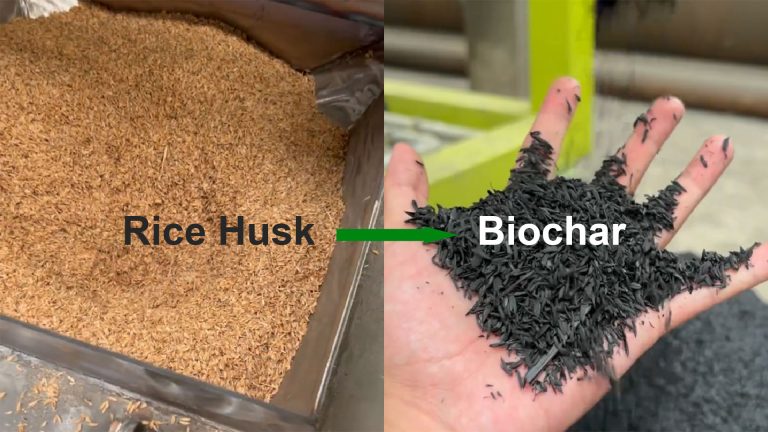
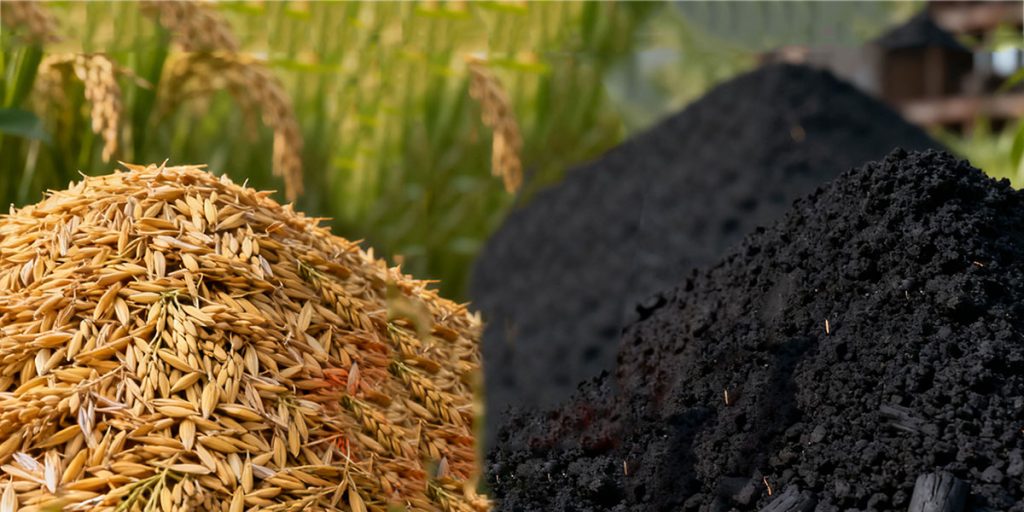
Rice husk is one of the most abundant agricultural residues worldwide. Every year, rice harvesting generates hundreds of millions of tons of husks. Traditionally, most rice husks are either openly burned or dumped in fields, releasing greenhouse gases, particulate pollutants, and wasting valuable biomass potential. Converting rice husk into biochar through controlled pyrolysis offers a practical circular economy solution. Rice Husk Carbonization Equipment turns a troublesome waste into a multi-functional carbon material, locks carbon away for centuries, and delivers benefits for soil, water and climate action.
What Is Rice Husk Biochar?
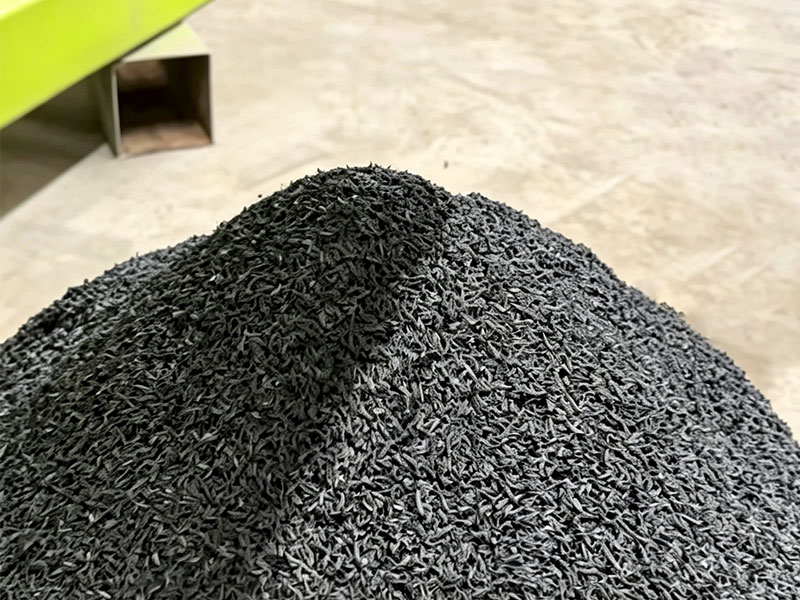
Biochar is a black, porous, carbon-rich solid produced by heating biomass under limited oxygen conditions. Rice husk biochar stands out from other biochar types because rice husk naturally contains high silica content. The silica forms a rigid porous skeleton during carbonization, giving the final biochar abundant micro-pores and a large specific surface area. These structural features make rice husk biochar excellent for retaining nutrients, adsorbing heavy metals and organic contaminants, and hosting beneficial soil microbes.
Key Applications of Rice Husk Biochar
Soil amendment for sustainable farming
When mixed into farmland soil, rice husk biochar improves soil structure, especially for degraded sandy or compacted soil. It holds water and plant nutrients, reducing leaching of nitrogen, phosphorus and potassium. It also raises soil pH for acidic farmland, supports beneficial microbial communities, and boosts crop yield over long-term application. Unlike quick-release fertilizers, biochar remains stable in soil for hundreds of years, sequestering carbon permanently.
Water and soil remediation
Thanks to its porous silica-carbon framework, rice husk biochar adsorbs heavy metals, as well as organic pollutants from wastewater and contaminated soil. It serves as a low-cost filter medium for farm runoff, industrial wastewater and aquaculture water purification.
Advanced industrial materials
Activated rice husk biochar can be used as catalyst support, electrode material for energy storage, and filler for composite materials. This expands the value chain beyond agriculture, turning farm waste into high-value green materials.
Climate and Circular Economy Benefits
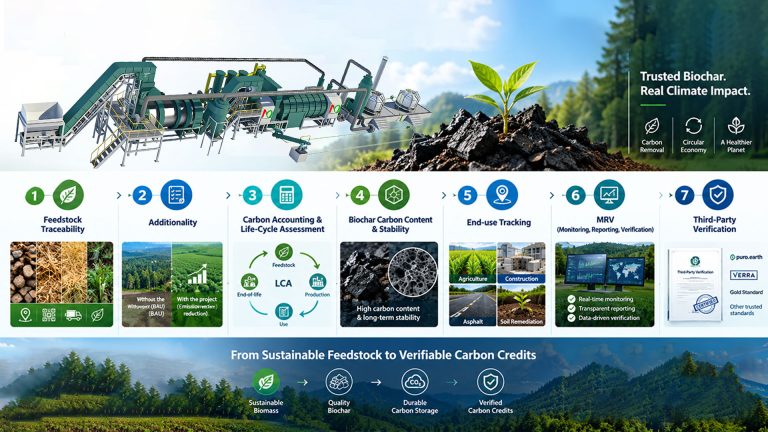
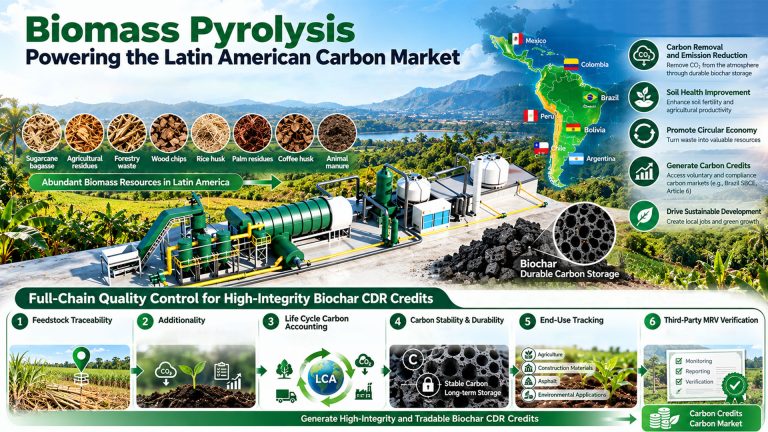
Open burning of rice husks releases CO₂ and smoke pollutants. Rice Husk Carbonization Equipment converts unstable biomass carbon into inert biochar, realizing long-term carbon removal. Each ton of rice husk biochar stores carbon that would otherwise return rapidly to the atmosphere. This process qualifies for carbon credit mechanisms under many carbon accounting frameworks.
Core Process: Pyrolysis of Rice Husk
Rice Husk Carbonization Equipment is the most widely adopted route for rice husk biochar production. The whole workflow follows three simple stages:
- Raw material preparation: Fresh rice husks are dried to reduce moisture. High moisture will consume extra heat and lower biochar yield. In industrial systems, husks can be crushed to uniform particle size for consistent heating.
- Oxygen-limited heating: Dry rice husks are fed into a pyrolysis reactor. The reactor is sealed to restrict oxygen supply. Typical operating temperatures range from 400 °C to 600 °C. At this temperature range, volatile components (water, tar, methane and other gases) are driven out, while stable aromatic carbon structures remain.
- Solid biochar collection: After holding for a set residence time, the solid carbon fraction is cooled quickly to stop oxidation. The syngas can be captured and reused as fuel to power the biomass pyrolysis system, improving overall energy self-sufficiency.
Temperature is the key control parameter. Lower pyrolysis temperatures produce higher biochar yield but smaller surface area. Higher temperatures create more pores and stronger adsorption capacity, yet reduce solid yield.
Why Choose Mingjie Rice Husk Carbonization Equipment?
✅ Waste-to-Resource Conversion: Transform rice husks into valuable biochar instead of letting agricultural residues go to waste.
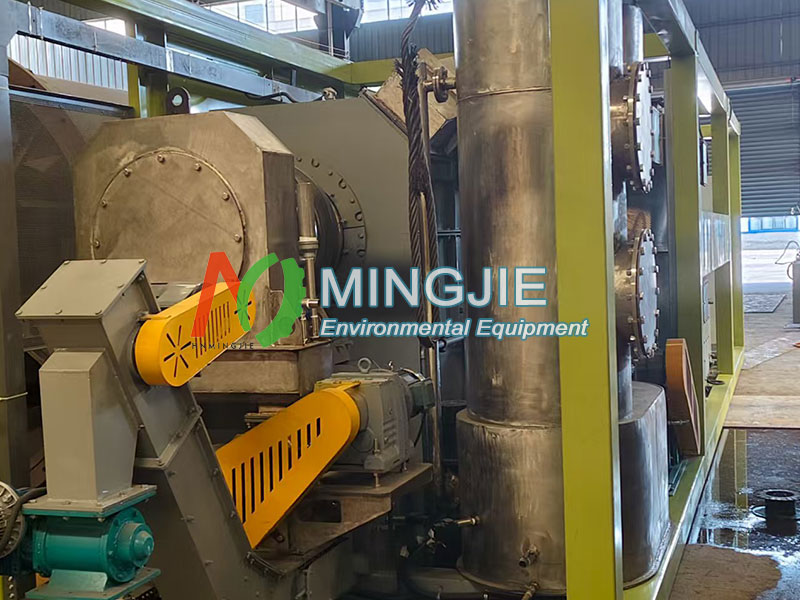
🔥 Continuous & Efficient Production: Designed for industrial-scale biochar production with automated operation and stable processing performance.
🌱 Environmental Benefits: Support resource recycling, improve soil management, and contribute to carbon dioxide removal when biochar production and end use meet appropriate carbon removal requirements.
💎 Multiple Applications: Biochar can be used in soil improvement, agricultural applications, environmental remediation, and selected construction materials, subject to product quality and applicable standards.
🌍 Unlock Carbon Removal Potential: With sustainable feedstock sourcing, reliable carbon accounting, and verified carbon storage, rice husk biochar projects may create additional value through carbon removal credits.
From rice husk waste to high-value biochar, Mingjie rice husk carbonization equipment helps turn agricultural waste into new business opportunities.