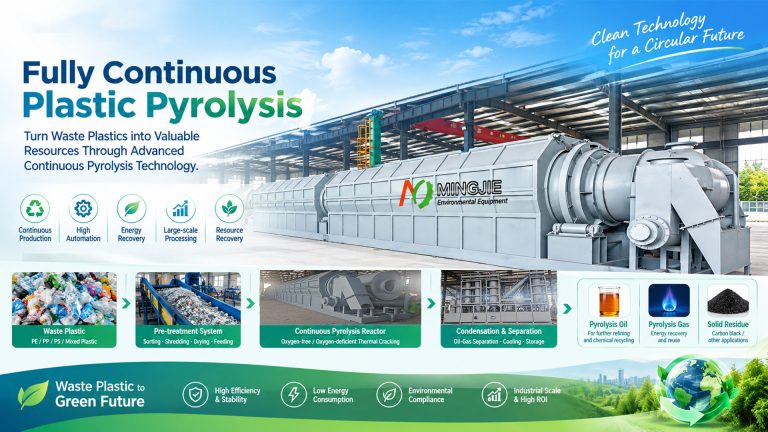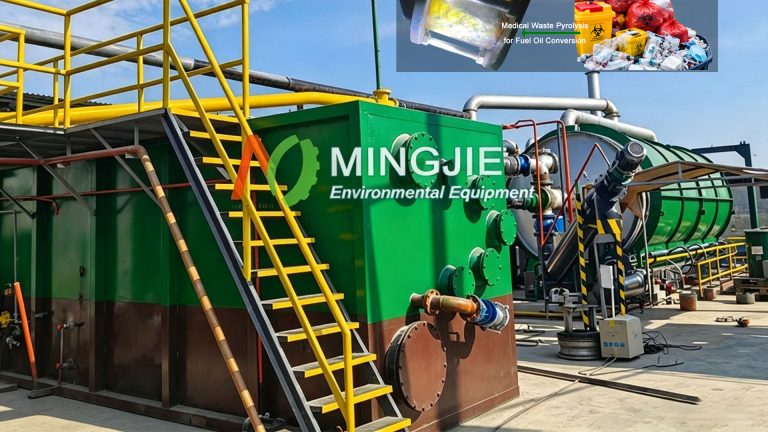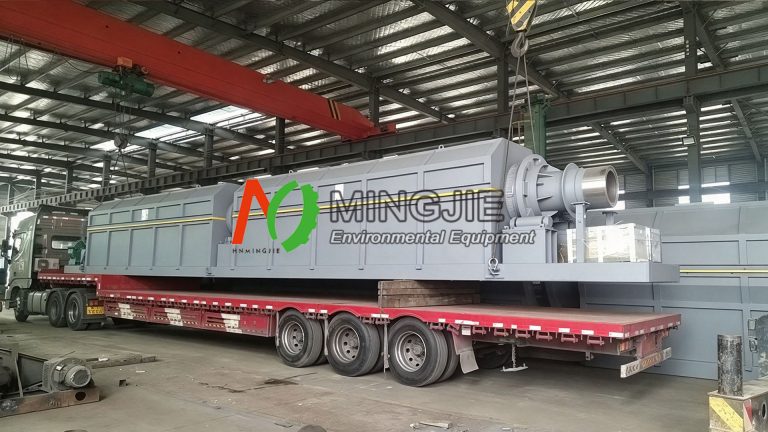
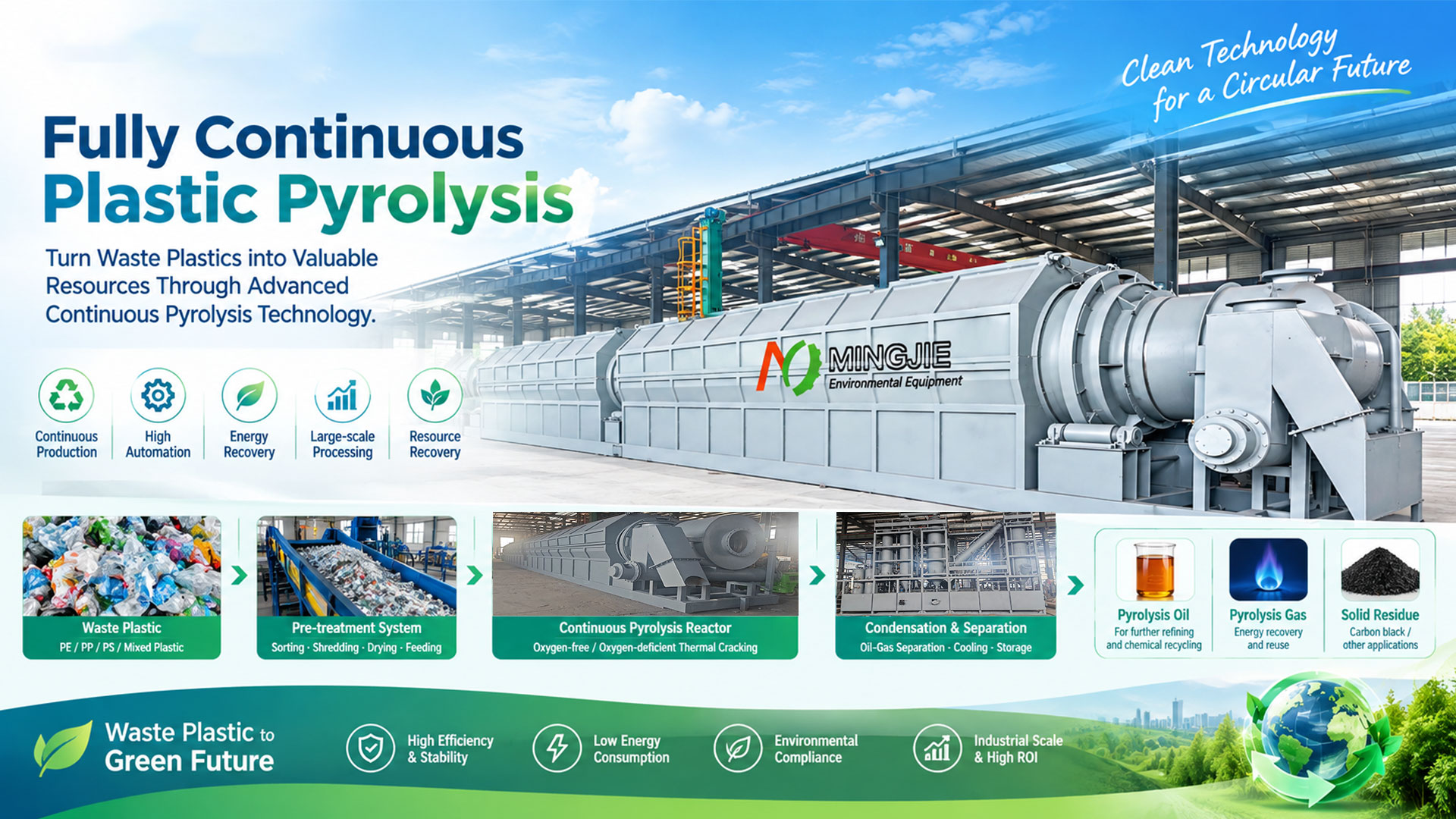
Fully continuous plastic pyrolysis refers to an industrial-scale pyrolysis process in which the entire operation runs on a continuous basis. This process encompasses the feeding of waste plastics, the pyrolysis reaction, the recovery and utilization of syngas, the collection of pyrolysis oil, and the discharge of solid residues.
Fully continuous pyrolysis plant utilizes a thermochemical conversion process that operates around the clock under oxygen-free conditions and strictly controlled temperature and pressure. Waste plastic, having undergone shredding and pretreatment, is continuously fed into a sealed reactor. Inside this reactor, long-chain polymer molecules are thermally cracked into smaller hydrocarbon chains. The resulting volatile substances are then directed to condensation and separation units, yielding pyrolysis oil and syngas, while solid residues are continuously discharged during the reactor’s operation.
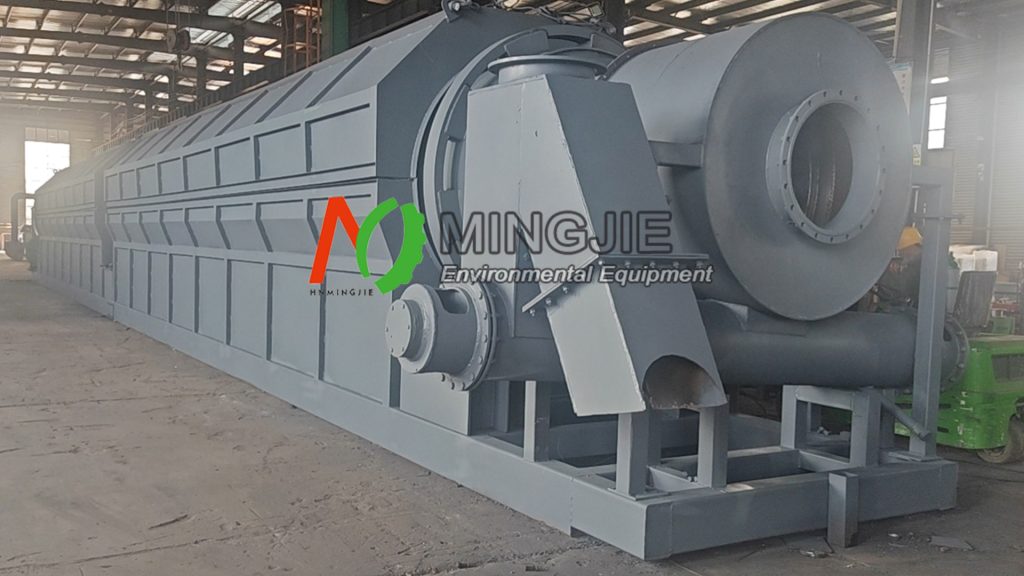
Pyrolysis oil can be further refined into naphtha or diesel-grade fuel, or used to produce new plastics equivalent to virgin plastics. Syngas is typically recycled as an internal heat source, enabling energy self-sufficiency and reducing the need for external fuel. Depending on the quality of the feedstock, solid carbon can be processed into carbon black or other high-value-added materials.
Key Differences Between Batch and Continuous Pyrolysis
Batch pyrolysis units operate in cycles, consisting of stages such as loading, heating, maintaining temperature, cooling, discharging, and restarting. This mode often leads to temperature fluctuations, inconsistent product quality, a higher risk of seal failure, limited throughput, and a high demand for manual labor. It is generally suited for small-scale pilot projects or decentralized waste treatment scenarios. However, it struggles to meet the requirements of chemical manufacturing enterprises and sustainability certification systems, which demand product consistency, traceability, and scalability.
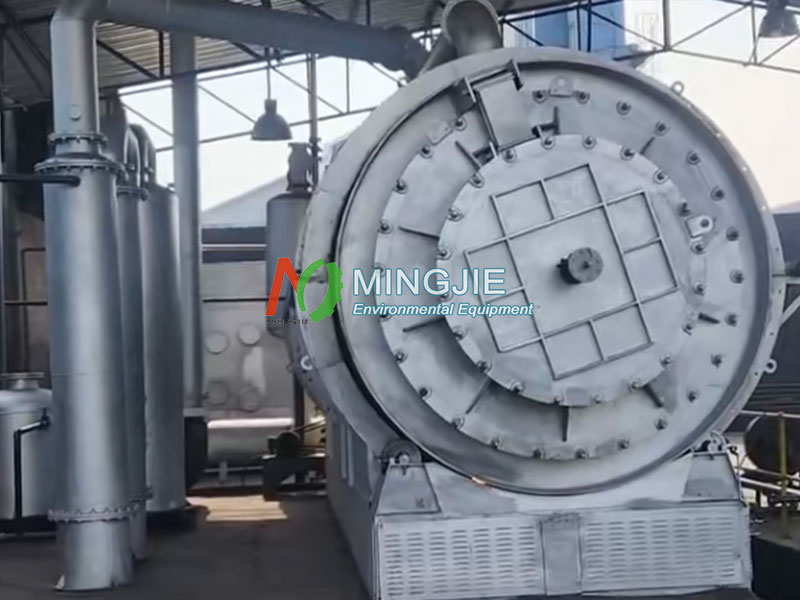
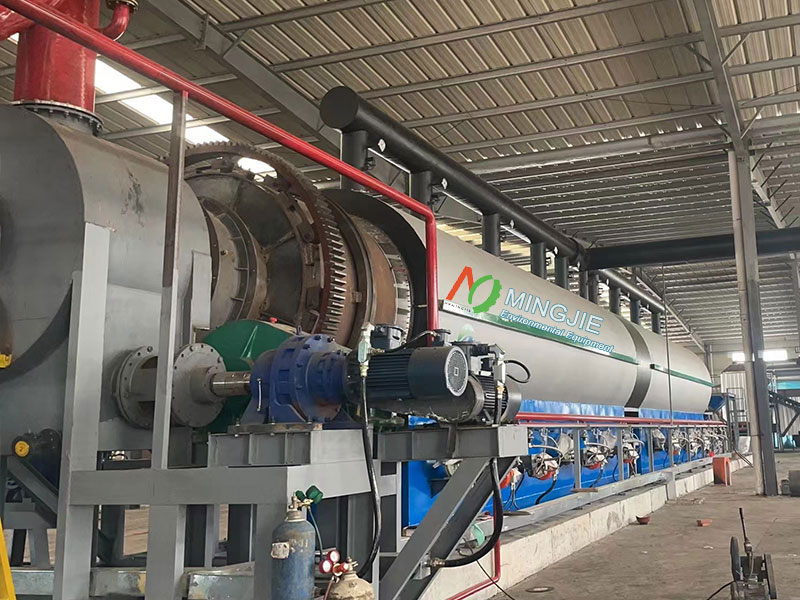
Advantages of Fully Continuous Plastic Pyrolysis Plant
The continuous pyrolysis plant for sale overcomes these limitations. Once a fully continuous plastic pyrolysis unit reaches a steady state, the thermal parameters, material residence time, and pressure within the reactor remain stable. Its primary advantages include:
- High Throughput: Fully continuous plastic pyrolysis plant is designed for industrial-scale production lines with annual processing capacities reaching the tens of thousands of tons. It is well-aligned with the scale of waste collection operations and the requirements of the petrochemical industry.
- Consistent Product Quality: The resulting fully continuous plastic pyrolysis oil maintains uniformity in both yield and composition—a critical factor for downstream refining and for obtaining ISCC/ISCC PLUS certifications.
- Superior Energy Efficiency: Eliminates the need for repeated heating and cooling cycles. Maintaining a constant temperature reduces energy consumption per ton of plastic processed.
- Low Labor Intensity: Automated processes—including feeding, sealing, residue discharge, and off-gas treatment—are managed via PLC, requiring only minimal personnel for monitoring.
- Minimal Emission Fluctuations: Stable loads of flue gas and acidic gases simplify processes such as dechlorination, scrubbing, and continuous environmental monitoring.
It should be noted that fully continuous plastic pyrolysis imposes stricter requirements on feedstock pretreatment, including shredding, metal removal, sorting, and dechlorination. Inadequate pretreatment can accelerate coking, fouling, and corrosion within the reactor, thereby shortening the duration of continuous operation between maintenance shutdowns.
The direct benefits of fully continuous plastic pyrolysis include increased single-line production capacity and improved product consistency. Batch pyrolysis systems are difficult to scale up, as they are constrained by the time required for residue removal and temperature cycling (heating and cooling). In contrast, once a continuous system reaches a steady state, parameters such as temperature, residence time, and feedstock composition can be precisely controlled, significantly narrowing the variability in pyrolysis oil quality.
Fully continuous plastic pyrolysis plant is more than just a simple plastic to oil equipment, it serves as an industrial bridge. It enables a closed-loop cycle for even the most challenging-to-process plastic waste fractions. Through stable continuous operation, it offers a scalable technological pathway. Fully continuous plastic pyrolysis technology helps mitigate plastic pollution, reduces reliance on fossil-based feedstocks for the global circular economy.