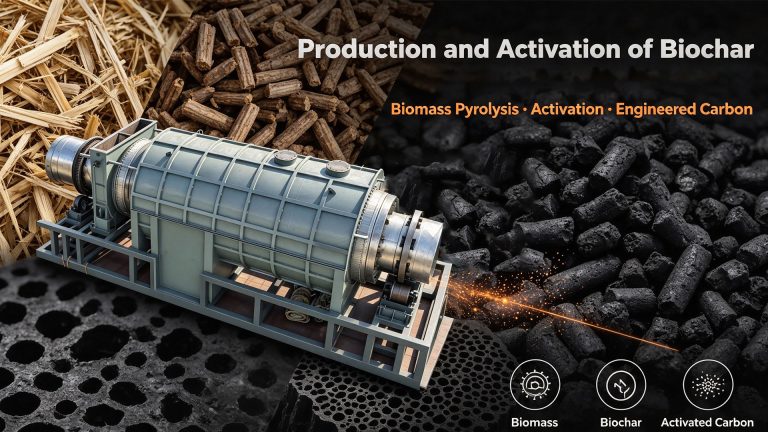
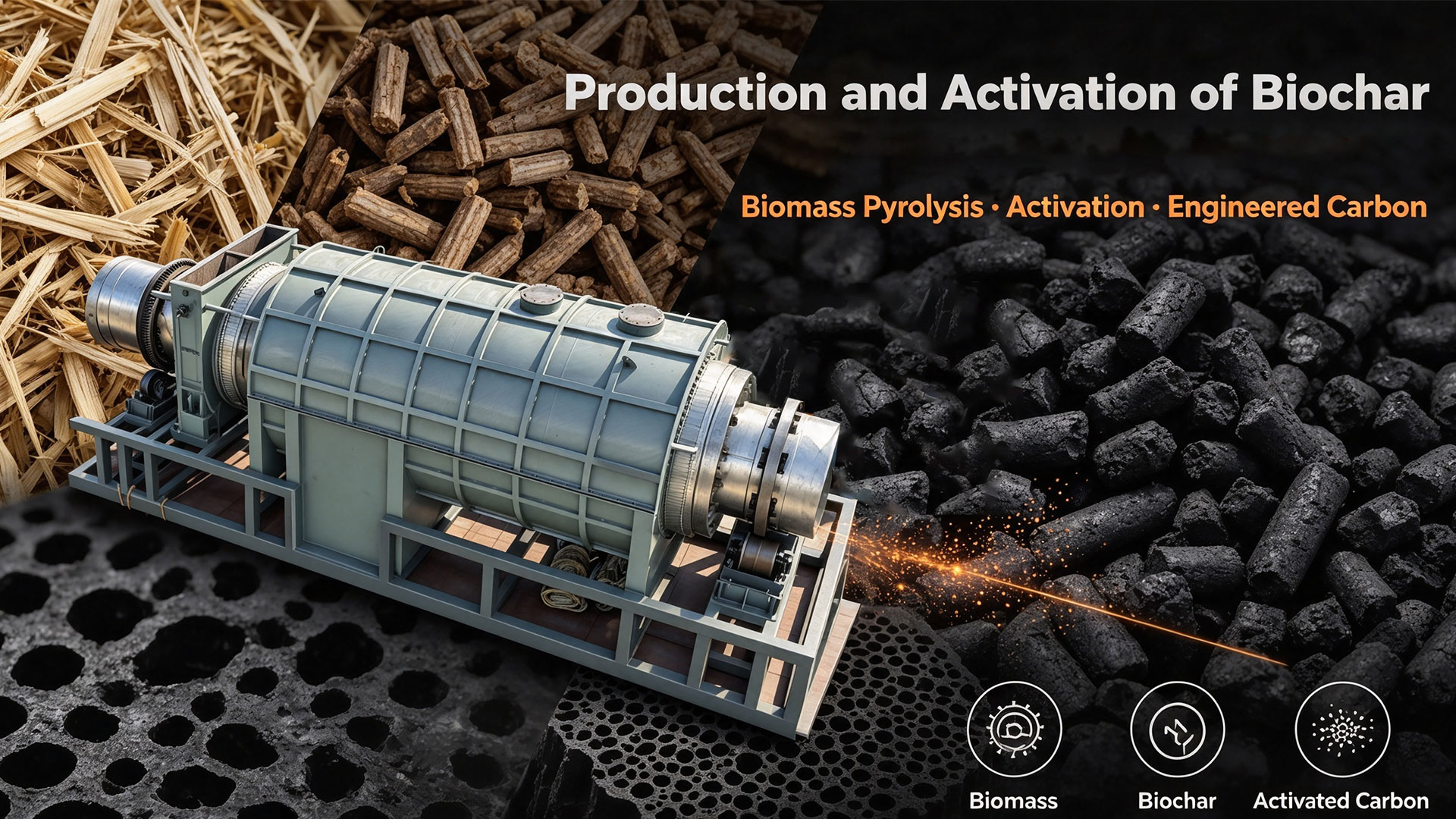
The production and activation of biochar are two closely related yet distinct stages. Biochar is a carbon-rich solid material derived from biomass feedstock through pyrolysis and carbonization. Due to its limited porosity and insufficient active sites, biochar often fails to meet the characteristics required of activated carbon. The activation of biochar is a critical process for purposefully modifying its pore structure, enriching its surface functional groups, and enhancing both its specific surface area and chemical reactivity. This article provides a systematic overview of the complete technical pathways for the production and activation of biochar.
Methods for Biochar Production
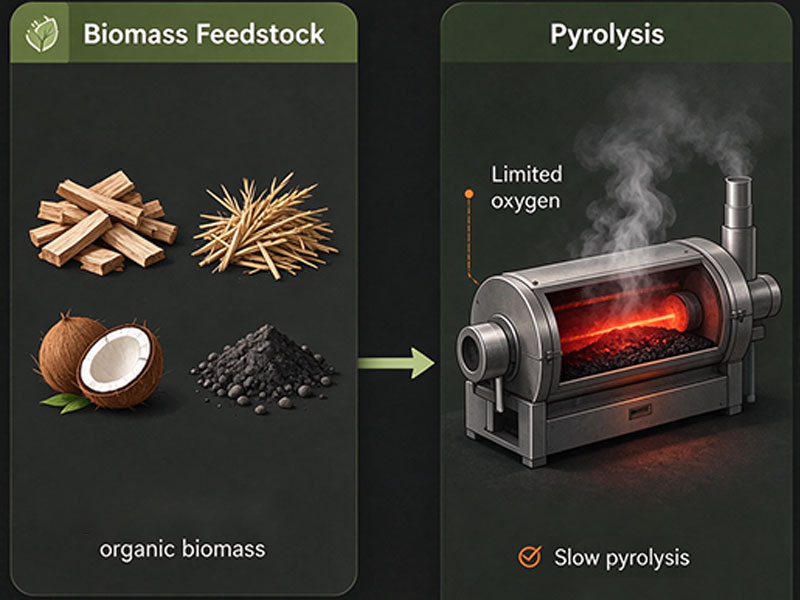
The essence of biochar production lies in the thermochemical conversion of biomass under oxygen-limited or inert atmospheric conditions. A wide array of feedstocks can be used, including woody residues, agricultural straw, fruit shells, livestock and poultry manure, and even sewage sludge. Biochar produced via different pathways exhibits significant variations in pore development and surface chemistry, which directly dictate the strategies and level of difficulty for subsequent activation.
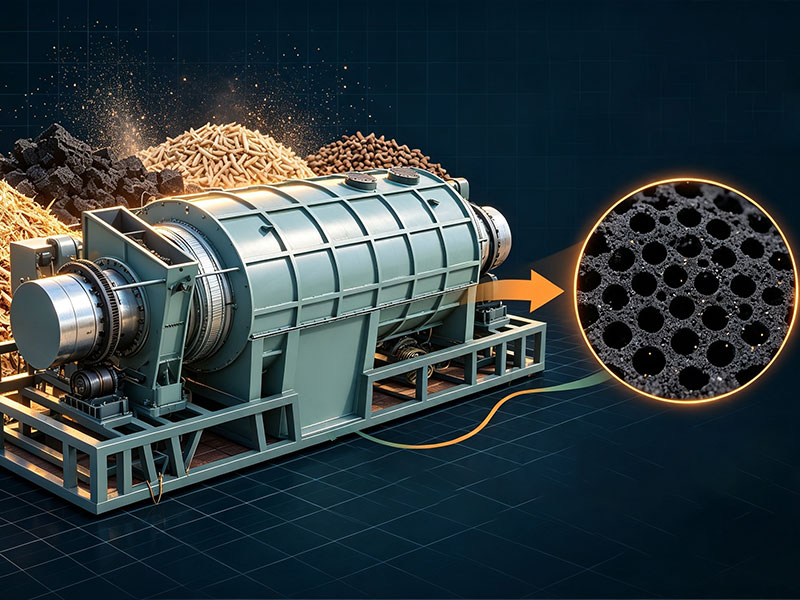
Slow pyrolysis is the most traditional method for biochar production. In the biochar production equipment, biomass decomposes at temperatures between 300–700 °C over a relatively long residence time, resulting in a high char yield. The resulting biochar retains a portion of its original pore structure and oxygen-containing functional groups. This method is well-suited for applications such as soil amendment or adsorption. However, because the specific surface area is typically limited, further activation is often required.
Fast pyrolysis focuses on the production of bio-oil. It operates at temperatures of 450–650 °C, with heating rates exceeding 100 °C/min and residence times ranging from a few seconds to several tens of seconds. The biochar yield is relatively low (15%–25%), and the resulting char structure is highly brittle. Consequently, it is rarely used directly as an adsorbent, serving instead primarily as a feedstock for subsequent activation.
Hydrothermal carbonization (HTC) offers an alternative route specifically designed for feedstocks with high moisture content. Biomass can be converted into Hydrochar in a pressurized, aqueous, closed-system environment at temperatures between 180–250 °C, eliminating the need for pre-drying. Compared to pyrolytic biochar, hydrochar generally contains lower levels of fixed carbon and ash, along with a smaller pore volume. Nevertheless, it possesses a higher energy density, and its surface is rich in oxygen-containing functional groups, which provide abundant reactive sites for subsequent chemical modification.
Gasification involves the partial oxidation of biomass at temperatures ranging from 700–1300 °C to produce syngas, the yield of Solid Char is relatively low. However, the carbon framework exhibits a more ordered structure, making it a suitable precursor for physical activation.
Compared to raw biomass, biochar possesses a higher content of oxygen-containing surface functional groups and fixed carbon. Consequently, it can be utilized in various applications, such as a catalyst, adsorbent, carbon electrode, or as a component in electrochemical capacitors and supercapacitors. Through the process of activation, biochar can be transformed into functional materials tailored for specific purposes.
How to Achieve the Activation of Biochar
The specific surface area of unactivated biochar is often insufficient to meet the requirements for high-efficiency adsorption or catalysis. Activation focuses on two key aspects:
- Pore creation refers to the process of opening up blocked pores within biochar, as well as generating new micropores and mesopores.
- Surface modification involves the introduction of oxygen- or nitrogen-containing functional groups to alter properties such as hydrophilicity, polarity, or catalytic activity.
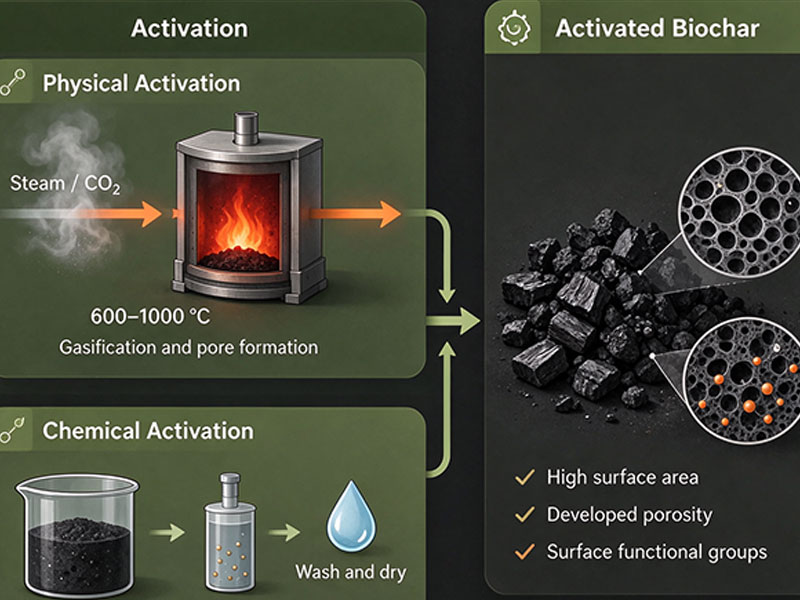
The process of increasing specific surface area and pore density is generally referred to as biochar activation. This process enhances the physical properties and adsorption capacity of the biochar. Broadly speaking, there are two types of biochar activation processes: physical activation and chemical activation.
Physical Activation of Biochar
Physical activation of biochar involves the reaction of a carbon framework with oxidizing gases at high temperatures. This process removes a portion of the carbon from the surface—released as CO or CO₂—thereby creating pores. Steam activation is a well-established industrial method.
Reaction Mechanism: The carbon undergoes a gasification reaction with oxidizing gases, which etches the carbon framework, opens closed pores, and generates micropores. Water vapor molecules are smaller and possess a greater capacity to diffuse into micropores compared to CO₂ molecules, resulting in higher pore-formation efficiency.
Chemical Activation of Biochar
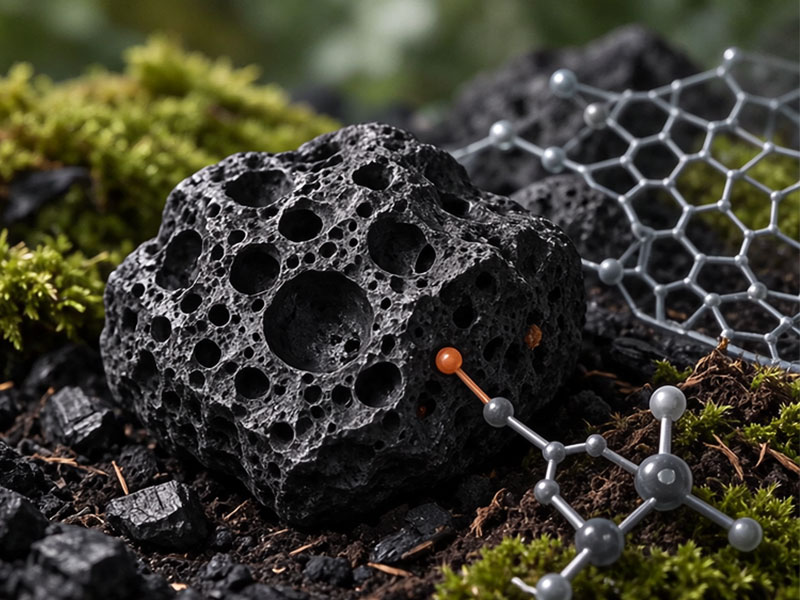
Chemical activation is a thermal treatment process in which biochar reacts with chemical activating agents at temperatures ranging from 450°C to 900°C. During this process, dehydration and oxidation reactions facilitate the development of a porous structure within the biochar.
Compared to physical activation, chemical activation offers several advantages:
- Lower temperature requirements.
- Higher biochar yield.
- Greater specific surface area.
- The ability to generate micropores in a controllable and quantifiable manner.
- Higher production efficiency.
However, chemical activation of biochar can be detrimental to equipment due to the corrosive nature of the chemicals involved.
Treating biochar with acids, bases, or oxidizing agents can enhance its physicochemical properties. Acids commonly used for biochar activation include HCl, ZnCl₂, MgCl₂, HNO₃, H₂SO₄, and H₃PO₄. Bases such as KOH, NaOH, and K₂CO₃ are also frequently employed, as are oxidizing agents like H₂O₂ and KMnO₄.
In general, chemical activation of biochar is more efficient than physical activation. Nevertheless, its efficiency is influenced by factors, such as activation temperature, the type and concentration of the activating agent, and the nature of the raw material. All of which also affect the physical characteristics of the resulting biochar structure.
The effectiveness of chemical activation depends on the type of activating agent, the intensity of mixing, the temperature, and the duration of the activation process. At high chemical concentrations, the carbon structure may undergo physical collapse, leading to a contraction of the pore network. Following chemical activation, the biochar must be washed to remove residual activating agents from its surface before it can be recovered and used. Consequently, the necessity for a washing step in industrial-scale chemical activation increases overall production costs.
Summary
The production and activation of biochar form a cohesive value chain. Choices made during the production phase determine the suitability of the feedstock and the fundamental quality of the resulting char, while the design of the activation phase dictates the final material’s pore structure and surface chemistry.
At the core of biochar production lies controlled, oxygen-limited pyrolysis. Activation is the critical step that transforms standard solid-waste-derived char into high-performance functional carbon materials. Physical activation offers a clean process with minimal residues, whereas chemical activation yields a highly developed pore structure and superior performance potential. Combined activation strategies offer a balance between performance, environmental impact, and cost.