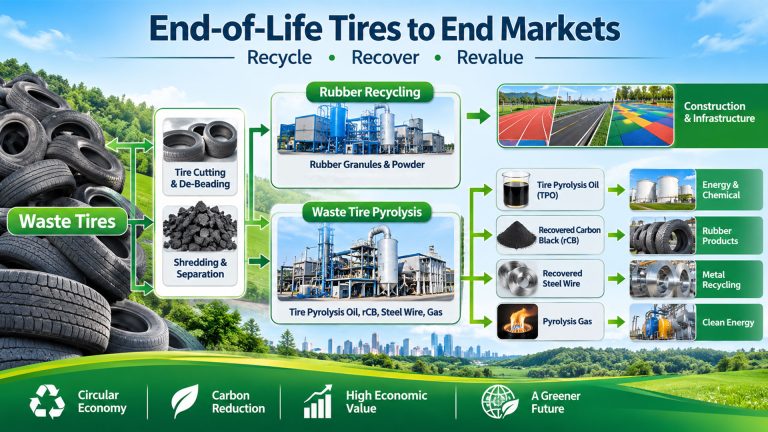

Compared to traditional batch pyrolysis, fully continuous pyrolysis of waste tires lines offer 24/7 uninterrupted operation, stable oil yields, and higher-quality carbon black, making them the preferred choice for large-scale tire recycling projects. While the underlying principle of continuous waste tire pyrolysis is straightforward, the integrated system requires rigorous engineering and extensive automation, making it significantly more complex than batch-type processes. Sourcing pre-processed, steel-free rubber granules can substantially simplify the pre-treatment stage.
Batch pyrolysis plant is highly tolerant of feedstock, allowing for the direct input of whole tires or large tire segments. Pre-treatment is limited to simple bead removal, requiring minimal investment and offering a low barrier to entry. In contrast, continuous pyrolysis plant utilizes a sealed, screw-fed mechanism, which strictly prohibits the entry of whole tires or large tire chunks. Because the system imposes specific requirements on particle size uniformity and moisture content, a dedicated rubber granule preparation stage is necessary.
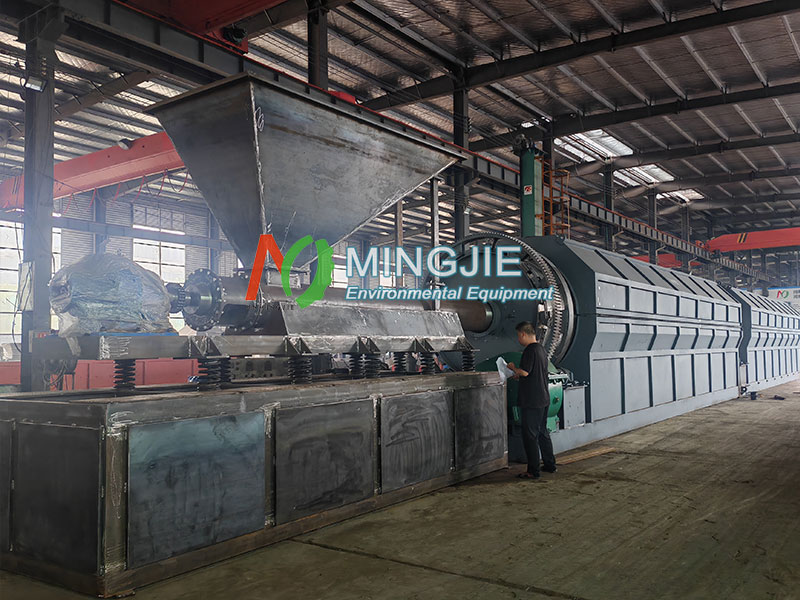
Complete Pre-treatment Process for Continuous Pyrolysis of Waste Tires
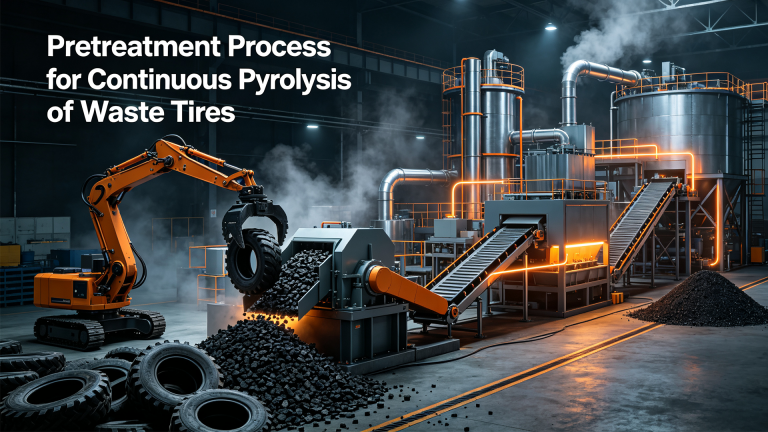
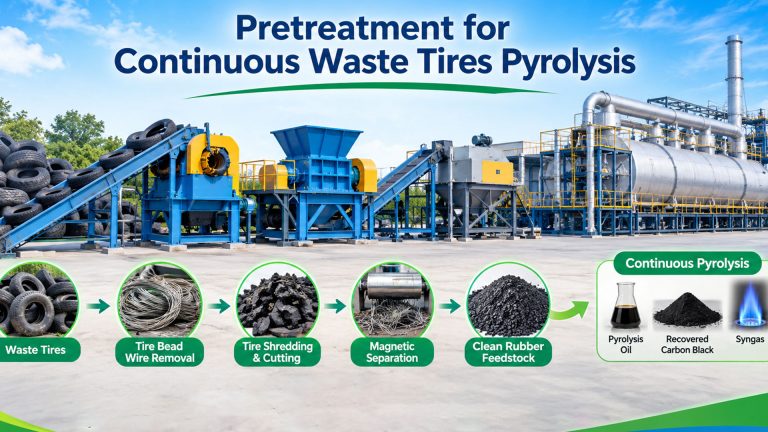
A standard pre-treatment line for continuous waste tire pyrolysis consists of several stages: raw material sorting, bead removal and primary shredding, fine shredding and granulation, multi-stage impurity removal, and screening.
Raw Material Sorting
Tires are categorized, such as passenger car tires, truck tires, or off-the-road (OTR) tires. Since rubber content varies by tire type, directly affecting oil yield and carbon black quality—maintaining a consistent feedstock category is fundamental to stable, long-term production.
Bead Removal and Primary Shredding
The steel beads are first separated, after which the tires are shredded into 10–20 cm rubber chunks, with large steel wires removed during this phase. OTR tires, characterized by thicker casings and higher steel content, place a greater load on the shredding equipment.
Fine Shredding and Granulation
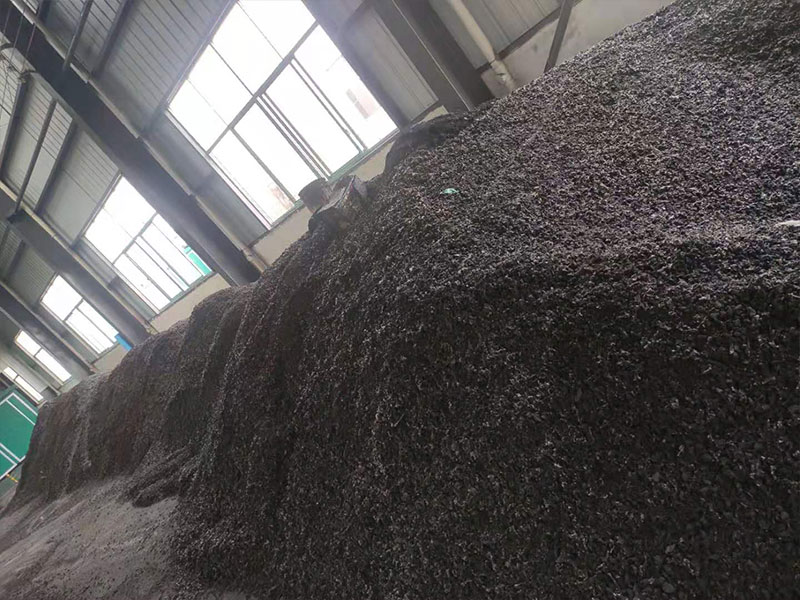
The rubber chunks are further processed into 5–8 mm granules, a critical requirement for the feed systems of continuous pyrolysis plant. If particles are too large, they can cause the screw feeder to jam; if they are too fine, it leads to excessive dust, higher dust-removal costs, and an increased burden on air-based separation systems.
Multi-Stage Impurity Removal
Magnetic separation is used to remove fine steel wire fragments left over from the shredding/crushing process, while air classification (wind sifting) removes tire cord fibers. Residual steel wire is a primary cause of wear and tear, damaging the screw conveyor and the inner walls of the reactor. Fibers, if left in, will contaminate the recovered carbon black (rCB) after pyrolysis, significantly degrading its quality.
Screening
Screening removes oversized particles and fine dust, ensuring a uniform material particle size. It is also essential to keep the moisture content of the raw material at or below 5%. Excessive moisture entering the pyrolysis furnace increases energy consumption and generates large volumes of water vapor, which hinders the condensation of oil and gas and leads to higher water content in the final oil product.
The complete processing line includes: a shredder, a crusher, a magnetic separator, an air classifier, a vibrating screen, sealed storage silos, a dust collection system, and an electrical control system.
How to Choose Between Two Project Options for Continuous Pyrolysis of Waste Tires?
Option A: In-house Pre-processing (Shredding and Granulation)
A fully continuous tire pyrolysis system features a distinct pre-treatment section with a larger array of equipment, requiring a higher initial investment. This option is suitable for projects with a stable, long-term local supply of waste tires and a high daily processing capacity. By controlling the quality of the raw material, you can achieve better long-term overall returns. However, this approach requires a larger footprint and a larger operations and maintenance (O&M) team.
Option B: Direct Feeding of Pre-processed, Steel-free Rubber Granules
This option eliminates the need for shredding and steel-wire removal stages, requiring only screening and a sealed feeding system for pre-processing. It offers a shorter project construction cycle, simpler O&M, and lower initial investment. The potential risks include an unstable supply of rubber granules, price volatility, and the possibility that incoming material may contain excessive residual steel wire.