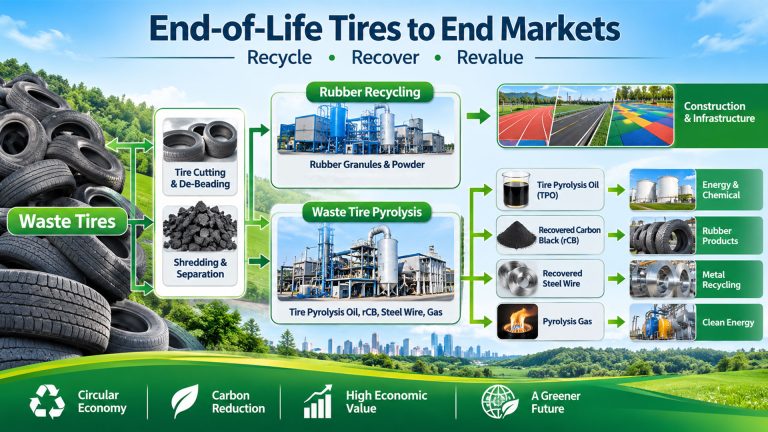
In waste tire pyrolysis projects, batch pyrolysis equipment can process whole tires, with the steel wire discharged alongside the pyrolysis residue. In contrast, continuous waste tires pyrolysis systems require the steel wire to be separated during the pre-treatment stage. This is a key design principle essential for ensuring the long-term, stable operation of the continuous reactor, maintaining the quality of the pyrolysis oil and recovered carbon black (rCB), and meeting project compliance and certification requirements.
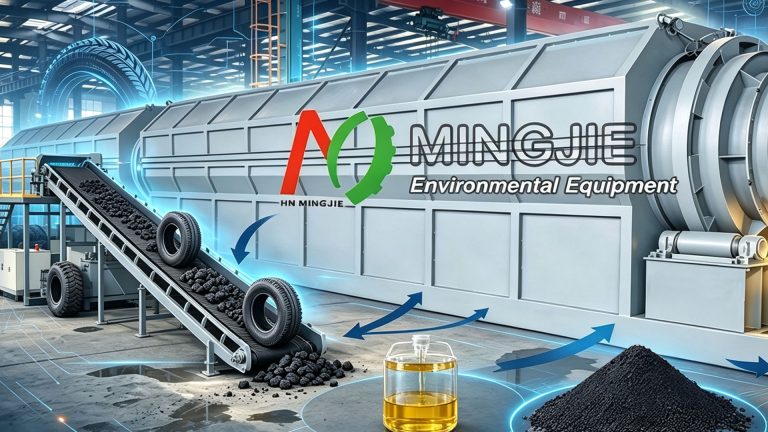
The core characteristics of continuous waste tires pyrolysis are the constant feeding of raw materials and the continuous discharge of residue. The reactor is equipped with internal agitation and conveying mechanisms, maintaining a stable, oxygen-free, slightly negative-pressure environment. The structure, material transport dynamics, and control logic of continuous pyrolysis equipment differ entirely from those of batch pyrolysis reactors.
The fully automatic tire pyrolysis plant has high requirements regarding feedstock size, material uniformity, and the stability of continuous feeding. If the steel wire within the tires is not removed beforehand, it poses significant operational risks to the entire production line.

In a continuous waste tires pyrolysis production line, it is strongly recommended to remove steel wires from the tires before they enter the continuous pyrolysis reactor. The primary reasons for this are to reduce equipment wear, prevent mechanical failures, enhance the stability of continuous operations, and improve the quality of the pyrolysis products.
Impact of Steel Wire Entering Continuous Waste Tires Pyrolysis System
Equipment Wear, Jamming, and Downtime Risks
Continuous pyrolysis reactors typically utilize screw conveyors or pushing mechanisms to move material at a steady rate through the high-temperature reaction zone. At high temperatures, tire steel wires retain their metallic ductility, making them highly prone to tangling around mixing shafts, paddles, and screw flights. Such accumulation can lead to spikes in mechanical load and trigger motor overload alarms; in more severe cases, it can completely jam the feeding or pushing mechanisms, forcing a system shutdown.
Unlike batch pyrolysis system, continuous waste tires pyrolysis line requires a significant amount of time to return to a stable operating state once a shutdown occurs. Frequent start-stop cycles also induce thermal shock, which accelerates the degradation of furnace linings and seals, thereby substantially increasing maintenance costs. Furthermore, the continuous friction between the steel wires and the reactor body causes rapid erosion and wear of the inner walls, shortening the equipment’s service life.

Significant Impairment of Recovered Carbon Black (rCB) Quality
Recovered carbon black (rCB) is one of the primary high-value-added products derived from tire pyrolysis. If steel wires enter the pyrolysis zone, the carbon black generated from the thermal decomposition of rubber will tightly coat the surface of the wires, forming carbon black-metal composite residues.
Because the carbon black adheres firmly to the steel wires, it is difficult to remove through simple magnetic separation. Some carbon black is carried away along with the steel wires—treated as scrap metal—resulting in a direct loss of carbon black yield. Meanwhile, fine rust particles and metallic debris can become mixed into the carbon black powder, acting as inorganic impurities. Excessive impurity levels cause the carbon black to fail to meet required standards for ash content and metal concentration.
Disruption of the Residue Discharge System
Continuous pyrolysis plant relys on sealed discharge mechanisms to ensure the steady and smooth removal of solid residues. Pyrolysis residues containing steel wires exhibit poor flowability, and the sharp, rigid wires can easily cause blockages.
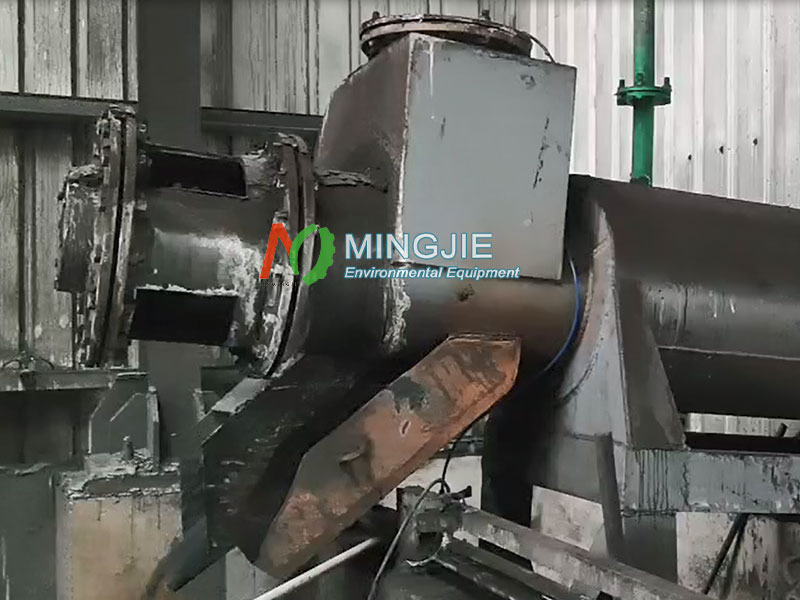
Once the discharge process is obstructed, material accumulates within the reactor, causing the residence time to become uncontrollable. This destabilizes the continuous waste tires pyrolysis process and leads to fluctuations in the composition of the pyrolysis oil and syngas products. More dangerously, such blockages can compromise the integrity of the material-based seal, potentially allowing external air to infiltrate the high-temperature reactor. In less severe cases, this leads to the oxidation of oil and gas, causing a deterioration in product quality. In more serious cases, it can trigger flash explosions or the escape of fumes, posing risks to both the environment and operational safety.
Is it possible to separate the steel wire only after the tire pyrolysis process is complete? While this approach works for batch pyrolysis reactors, it is unsuitable for continuous waste tires pyrolysis processes. Batch reactors lack continuous stirring or conveying mechanisms, meaning there is no risk of steel wire becoming entangled in moving parts. In such systems, materials are discharged in batches and then screened. Even if the steel wire remains coated in carbon black, the impact of the necessary cleanup is limited. In contrast, continuous waste tires pyrolysis systems operate 24 hours a day without interruption, meaning that any negative effects caused by impurities would accumulate over time.
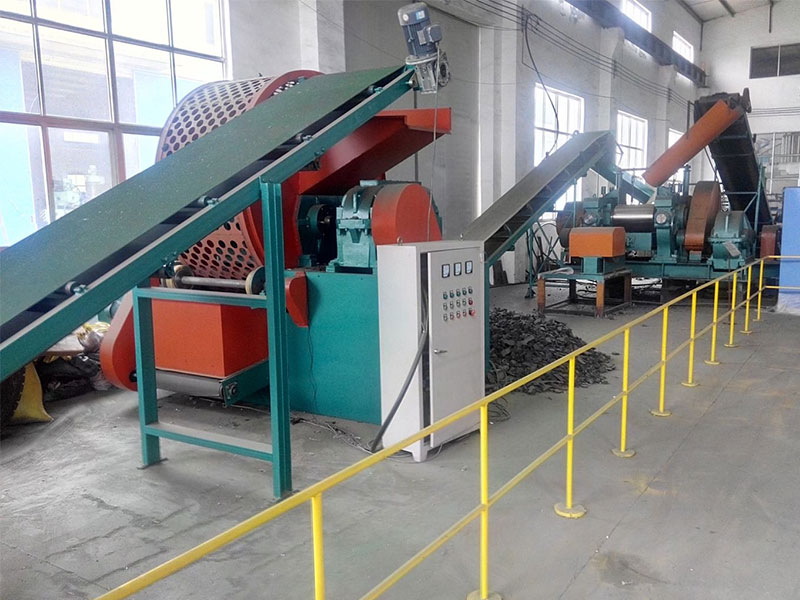
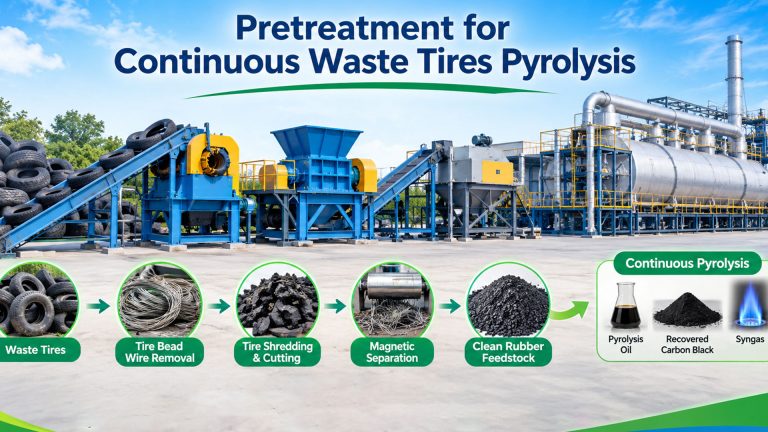
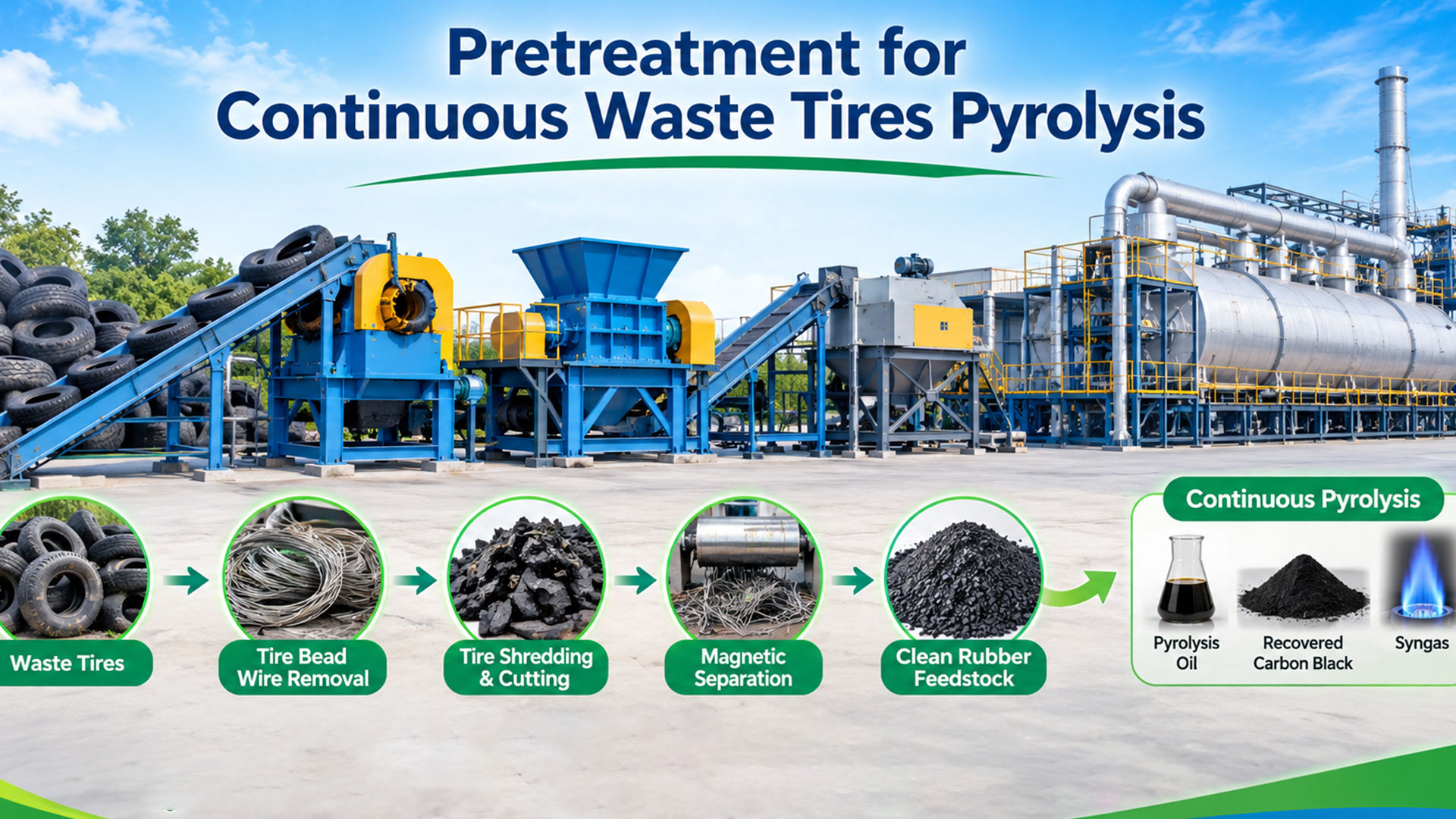
In continuous waste tires pyrolysis project, the pretreatment phase involves recovering the vast majority of the steel wire before the rubber enters the pyrolysis reactor. This is achieved through processes such as bead cutting, coarse shredding, and multi-stage magnetic separation. By controlling the metal content of the rubber particles fed into the pyrolysis reactor, issues like entanglement, mechanical wear, and contamination by impurities are avoided at the source. Combined with subsequent screening, this ensures that the feedstock supplied to the continuous pyrolysis reactor meets the required specifications. Consequently, the residence time, temperature, and pressure within the reactor remain stable and controllable, which in turn ensures consistent yields of pyrolysis oil and high-quality carbon black.