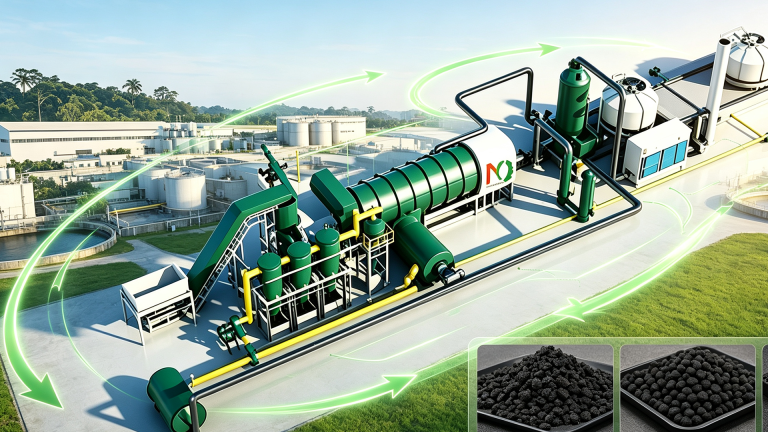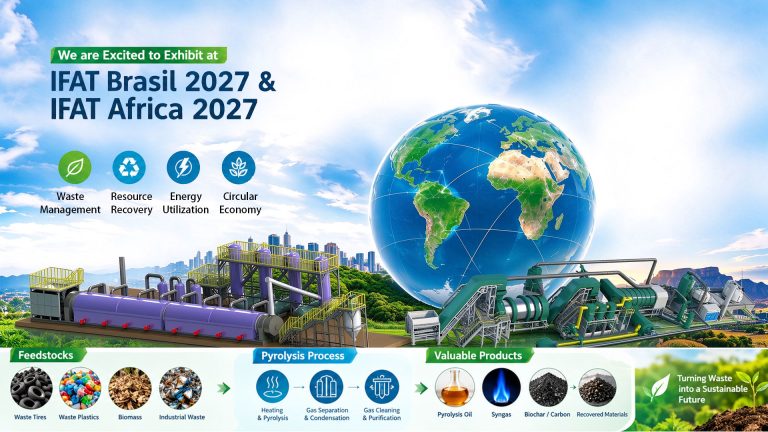
Central Asian nations face immense energy hurdles due to their landlocked positions. These states rely on fragile fuel supply chains for daily industry. Transport costs often spike during seasonal shifts or geopolitical changes. A Waste Tire Pyrolysis Equipment provides a localized solution for immediate energy recovery.
This tire pyrolysis technology views scrap rubber as a strategic urban mine. Localized fuel production reduces the heavy burden on foreign energy suppliers. It stabilizes regional economies by creating necessary energy buffers. Municipalities gain total control over their own local waste resources. This approach turns environmental liabilities into permanent economic assets.
Addressing the Logistics of Inland Energy Scarcity
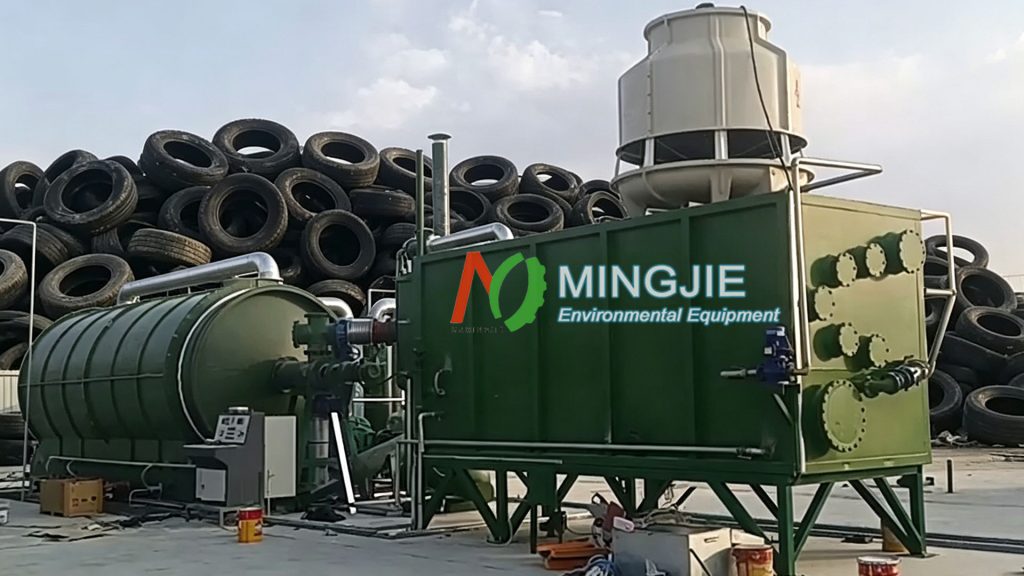
Geographical isolation inflates the cost of every liter of imported fossil fuel. Industrial plants and remote heating hubs pay a premium for energy. Meanwhile, massive piles of waste tires sit in local landfills and dumps. These tire piles create severe risks like uncontrollable fires and toxic leaching. A Waste Tire Pyrolysis Plant turns these hazards into high-value fuel. Local production eliminates the need for expensive, long-distance oil transport. This creates a functional circular economy for diverse regional industries. Managers produce fuel exactly where they collect the waste tires. This strategy secures the energy future for isolated industrial communities.
The Science of Converting Rubber to High-Purity Fuel
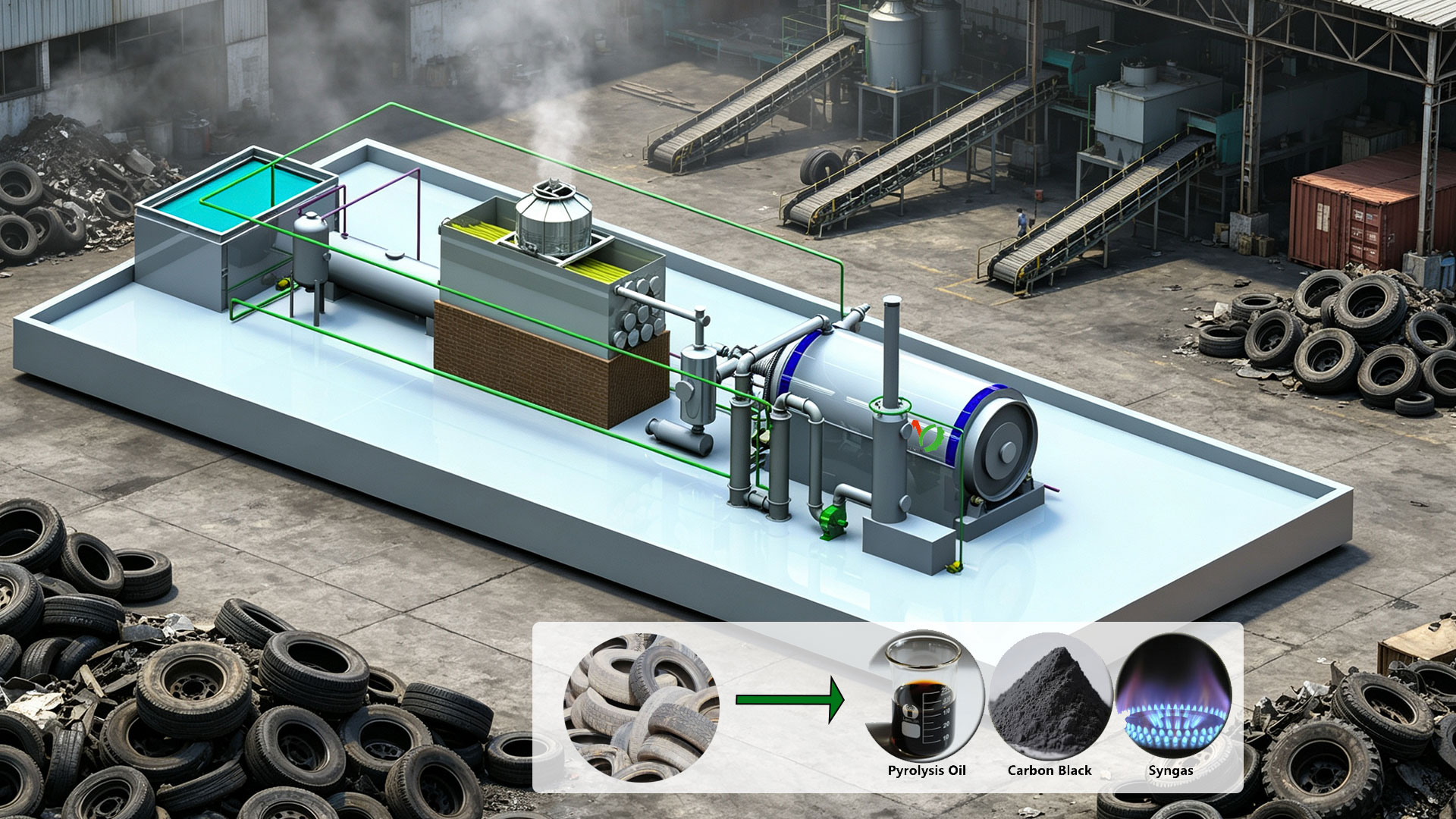
The Waste Tire Pyrolysis Equipment uses a precise thermochemical decomposition process. Operators maintain a low-oxygen environment within the sealed reactor to prevent burning. They heat the system to a peak temperature of approximately 420℃.
The MJ-2 pyrolysis system requires a specific five-hour pyrolysis period for maximum efficiency. A four-hour cooling period follows to maximize the recovery of liquid oil. This thermal cracking breaks solid rubber into high-purity vapors. The plant then condenses these vapors into high-grade liquid fuel. Modern systems achieve yields of 70% to 80% for materials like PP and PE. High-quality condensers ensure the maximum conversion of gases into usable liquid oil.
Strategic Fuel Applications for Regional Industry
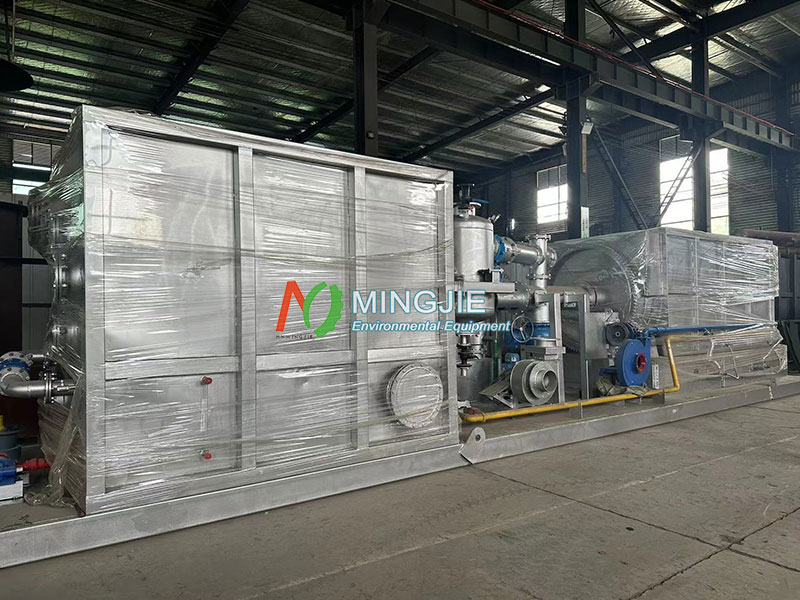
The resulting pyrolysis oil powers industrial boilers and regional heating systems. This fuel has a high calorific value similar to heavy furnace oils. It offers a cheaper alternative to expensive imported natural gas. A Waste Tire Pyrolysis Equipment creates a steady supply for local factory operations. Some users choose to further refine the raw pyrolysis oil. A distillation plant purifies this oil into bright non-standard diesel. Heavy-load engines and generators run efficiently on this refined product. Ships and low-speed industrial motors also benefit from this reliable fuel source. This versatility ensures that every liter of oil finds a high-value market.
Selecting the Optimal Plant Configuration for Central Asian Markets
Investors select from several scales of a Waste Tire Pyrolysis Equipment. Batch pyrolysis system handles between 2 and 15 tons of waste per day. This scale fits smaller towns or specialized industrial zones perfectly.
Semi-continuous plants process up to 16 tons of tires every day. These units use automatic feeding systems to improve daily workflow. Fully Automatic Waste Tire Pyrolysis Equipment serves large hubs with 35 to 40-ton capacities. These full contiuous systems operate 24 hours a day with constant feeding. Enclosed designs keep the working environment clean and safe for all staff. Water-cooled slag discharge systems allow for efficient high-temperature operation.
Economic Returns from Carbon Black and Syngas Recovery
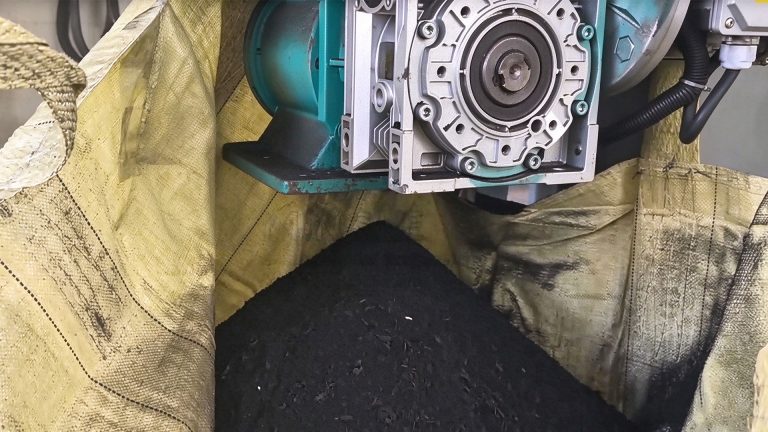
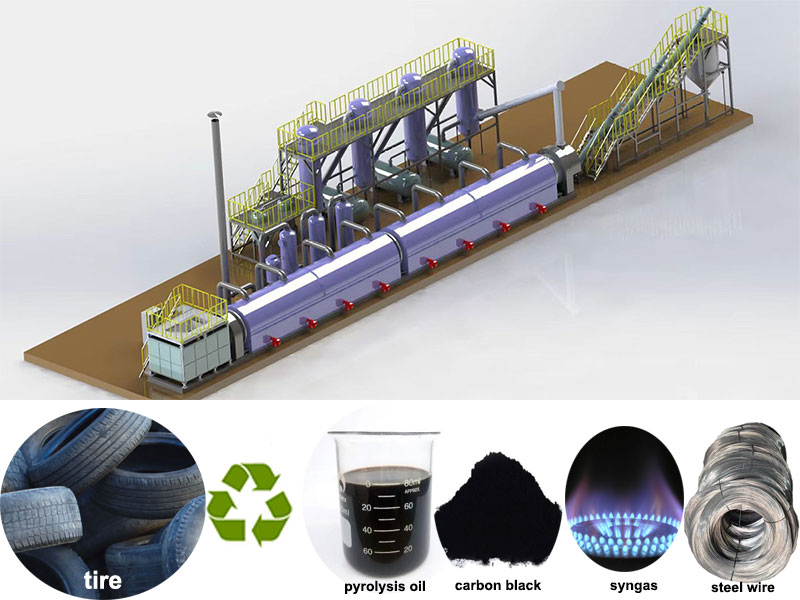
A Waste Tire Pyrolysis Equipment generates revenue beyond just liquid fuel oil. It produces carbon black, a valuable material for the global industrial market. Operators press this into briquettes for use as high-energy solid fuel. Some companies use it as a filler for new rubber products. The pyrolysis plant also produces syngas to heat its own reactor. This self-sustaining loop lowers daily operational energy costs significantly. Regional oil producers can also process oil sludge within these versatile units.
Environmental Stewardship and Carbon Sequestration
This technology lowers carbon emissions compared to traditional tire incineration. The oxygen-deficient reactor prevents the formation of harmful dioxins and oxides. Advanced purification systems scrub the flue gas before any atmospheric release. A Waste Tire Pyrolysis Equipment uses water-cooled discharge to stop fly ash. This closed-loop system recycles every single component of the tire. It removes the heavy environmental burden from regional landfills. Communities enjoy cleaner air and more sustainable waste management strategies. These environmental gains foster long-term public trust in regional industrial growth.
Global Expertise for Local Energy Solutions
Manufacturers like Henan Mingjie offer CE and ISO-certified equipment for global markets. They bring technical mastery to remote sites in over 30 countries. Their 12,000 square meter factory ensures high-quality reactor fabrication for every project. Each Waste Tire Pyrolysis Plant includes a 12-month quality guarantee. Specialized engineers provide customized solutions for harsh regional climate conditions. Proven machinery builds total confidence in the reliability of local energy production. Expert teams train local operators to manage the systems safely and efficiently. This global experience ensures the long-term success of every new installation. Reliable support keeps the regional energy production steady for years.
Operational Excellence and System Maintenance
Maintaining a Waste Tire Pyrolysis Equipment requires a strict and disciplined schedule. Operators check wearing parts and lubricants every single week without fail. A full day of maintenance once a month keeps the reactor clean. This prevents carbon buildup and maintains high heat transfer rates. Continuous plants need twice-monthly checks when processing specific waste plastics. Washing raw materials before loading improves the final oil purity and quality. This extra step ensures a higher market price for the resulting fuel. Proper care extends the lifespan of the heavy equipment significantly. Consistent maintenance ensures the facility remains profitable for many decades.
Maximizing Resource Recovery from Diverse Waste Streams
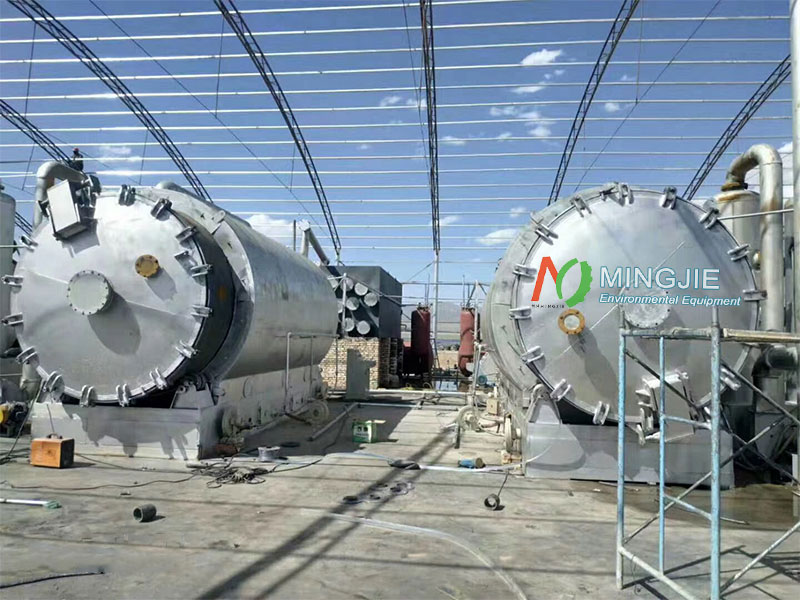
The versatility of a Waste Tire Pyrolysis Equipment is its greatest strategic strength. It processes vehicle tires, mining tires, and diverse industrial rubber scraps. Operators shred larger tires to under 1200mm before feeding the reactor. The Waste Tire Pyrolysis Equipment also accepts municipal solid waste and medical waste. Pre-sorting removes glass and metal to protect the internal machinery. This flexibility turns the facility into a total waste-to-energy hub. It solves multiple ecological problems while creating valuable fuel streams. This adaptability makes it perfect for diverse and changing industrial landscapes. Regional leaders can address various waste types with one single system.
Investing in a Waste Tire Pyrolysis Equipment secures energy sovereignty by converting regional rubber waste into high-purity fuel.
Landlocked nations gain immense strategic value by installing a Waste Tire Pyrolysis Equipment. This technology converts dangerous waste into industrial oil, syngas, and carbon black. By operating at 420℃, the pyrolysis system ensures high oil yields and low emissions. It reduces reliance on expensive, long-distance supply chains for essential energy. Investors benefit from multiple revenue streams and a self-sustaining energy loop.
This circular model supports environmental goals while providing a reliable energy buffer. Deploying proven, certified machinery ensures long-term operational success and energy independence. This strategy transforms local waste into a permanent energy asset for the region. It empowers local industries to thrive without depending on external fuel imports. Modern pyrolysis technology represents the future of sustainable energy in Central Asia.