Traditional methods of treating waste sawdust generally suffer from problems such as high pollution, low utilization rate, low added value, and secondary waste. However, making biochar from sawdust through pyrolysis carbonization is a superior waste biomass treatment process.
What is Sawdust Biochar?
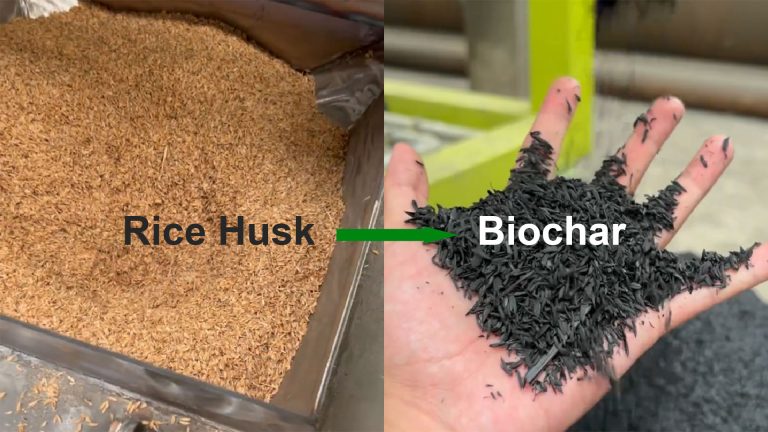
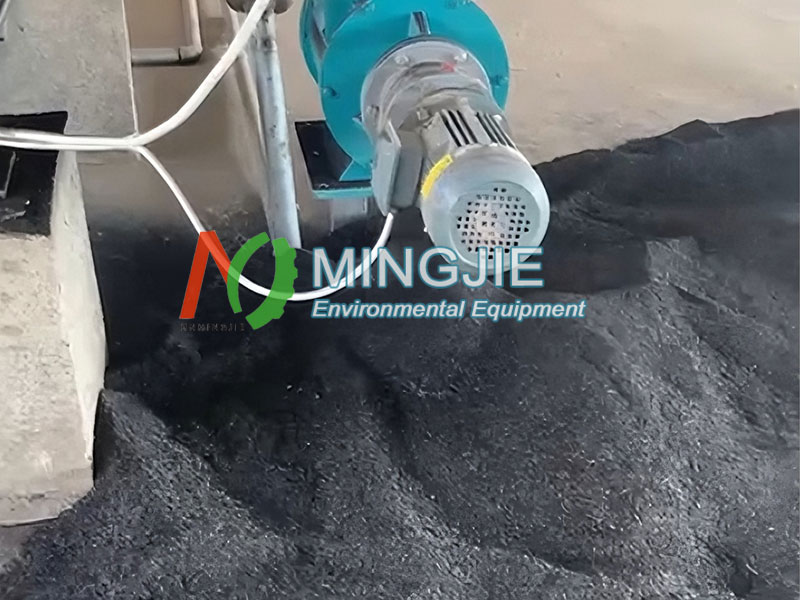
Sawdust biochar is a carbon-rich solid product obtained by heating sawdust under anaerobic or oxygen-limited conditions. Sawdust contains a large amount of plant secondary metabolites, such as cellulose and lignin, making it an ideal raw material for biochar. Unlike direct combustion, the biomass pyrolysis process retains most of the carbon, converting it into a stable solid form rather than releasing it into the atmosphere.
Sawdust biochar is produced through biomass carbonization plant, thereby achieving carbon sequestration, emission reduction, and resource reuse. Sawdust biochar can also be widely used in soil improvement, wastewater treatment, horticulture, and clean energy. It possesses both ecological and economic value.
Core Principle of Making Biochar from Sawdust
The core of sawdust biochar making lies in pyrolysis carbonization technology, which differs from complete combustion. Sawdust undergoes a pyrolysis reaction in an air-isolated or low-oxygen, high-temperature environment, where moisture, volatile organic compounds, and lignin-related groups gradually decompose and volatilize. The final stable aromatic carbon skeleton structure remaining is biochar.
Compared to straw and branches biomass raw materials, sawdust has more uniform particle size, fewer impurities, and greater pyrolysis stability. The biochar from sawdust exhibits a well-developed pore structure, large specific surface area, strong adsorption capacity, and higher carbon stability.
Production Process for Biochar from Sawdust
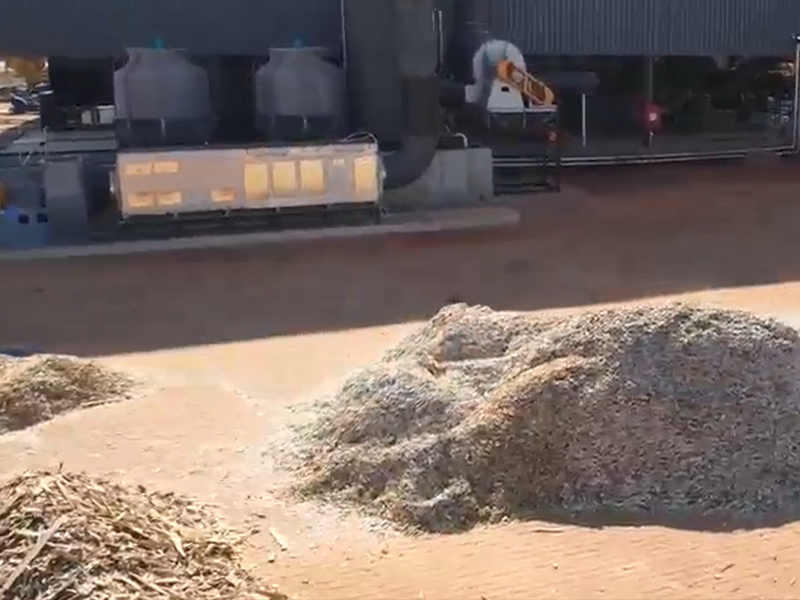
Raw Material Pretreatment: Screening and Drying
Screening removes stones, sand, metal scraps, and plastic impurities from the sawdust to ensure raw material purity. Moisture content is a key factor affecting carbonization efficiency; the moisture content of the raw material must be controlled below 15%. Drying can be achieved through two methods: natural air-drying and artificial drying.

Pyrolysis and Carbonization
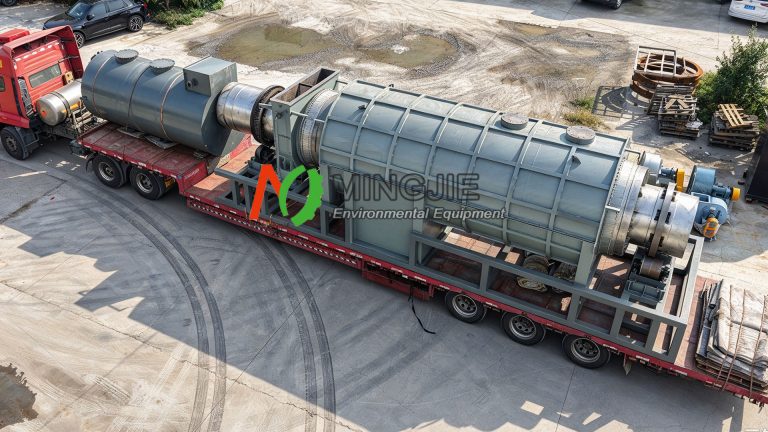
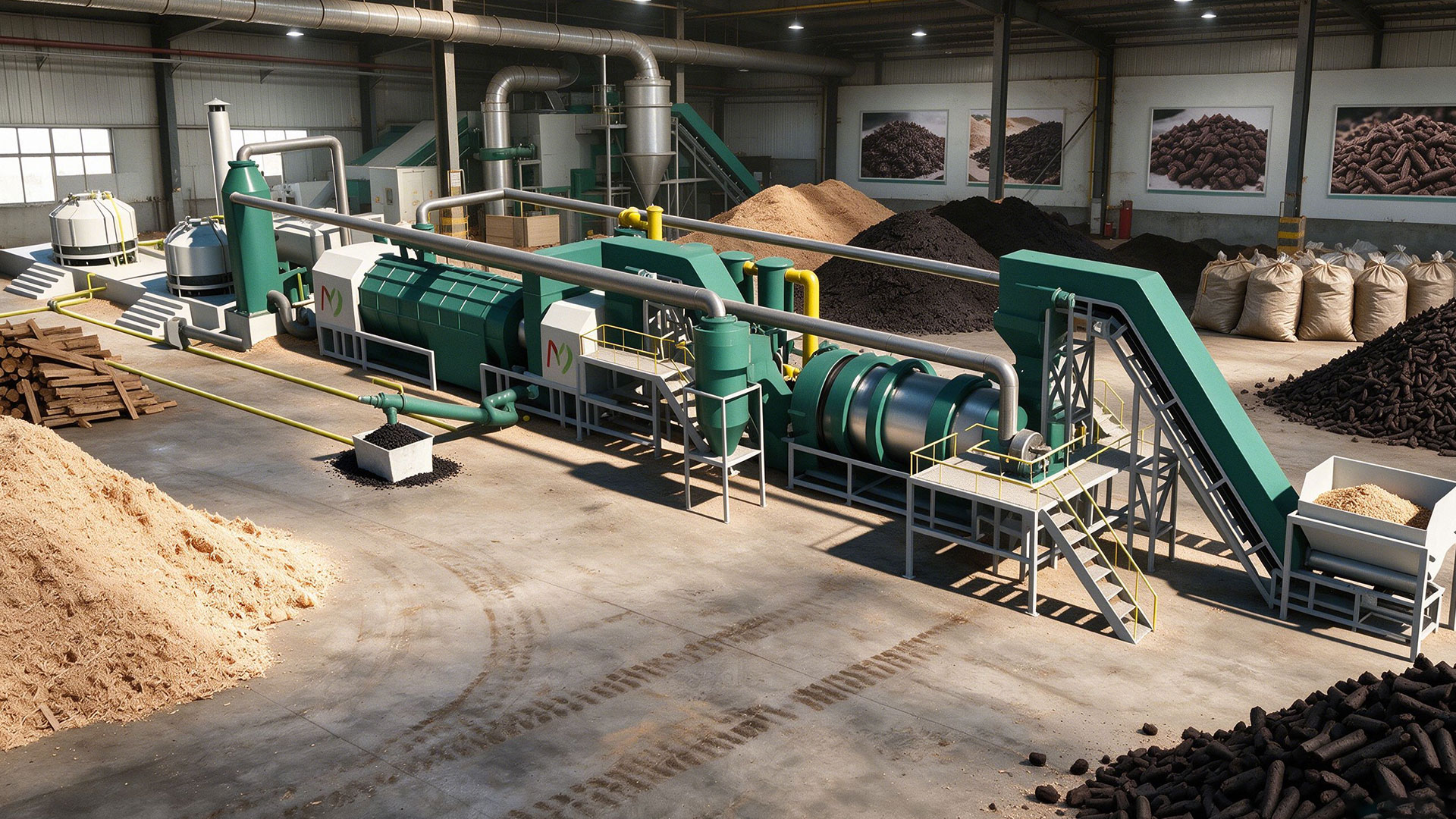
Mingjie biomass pyrolysis equipment enables precise temperature and time control, ensuring uniform sawdust pyrolysis and carbonization without smoke or dust pollution. It can continuously produce high-adsorption, high-stability, high-quality biochar. Mingjie Group provides skid-mounted small biomass pyrolysis machine and large scale biochar production equipment.
Biochar Collection and Syngas Recovery
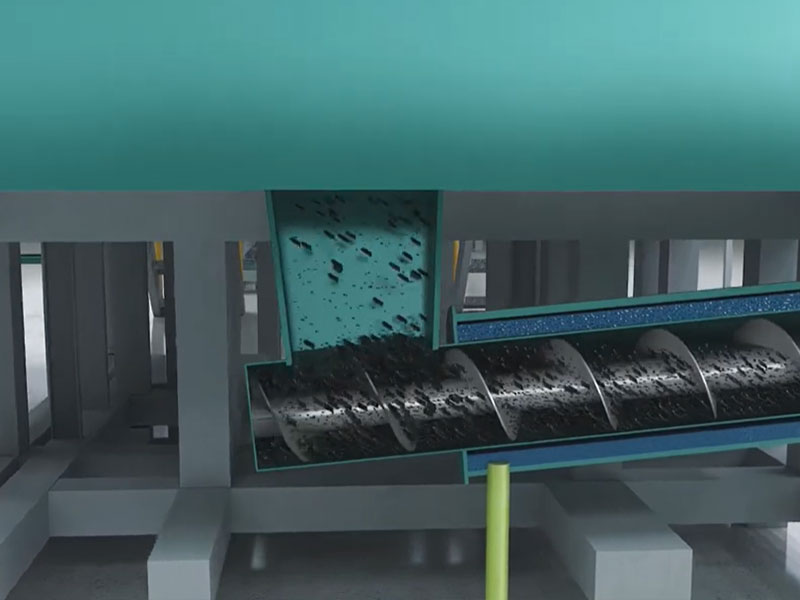
Biochar is discharged via a spiral water-cooling device to prevent oxidation from contact with air at high temperatures. The purified syngas can be fed back into the carbonization furnace for heating, avoiding pollution and improving energy efficiency.
Exhaust Gas Treatment
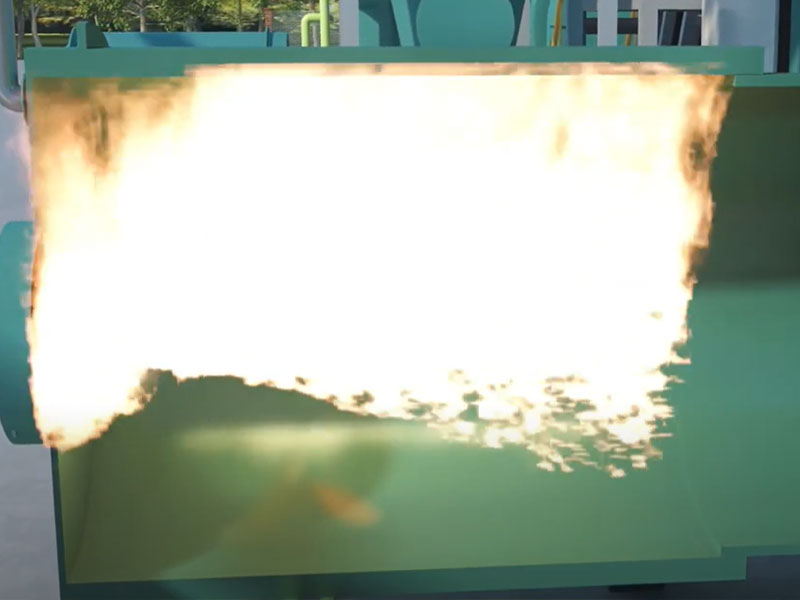
The flue gas generated by the entire biomass carbonization plant is purified by a purification system before being discharged.
Advantages of Pyrolysis Sawdust to Biochar
Traditional sawdust processing methods only achieve waste disposal, while biochar from sawdust pyrolysis can add value to waste. The organic matter in waste sawdust undergoes high-temperature pyrolysis and recombination, forming a stable, porous carbon structure. This results in an environmentally friendly material with multiple functions including adsorption, modification, and carbon fixation. Pyrolysis Sawdust to Biochar perfectly meets the current industrial development needs for solid waste resource utilization and low-carbon environmental protection.
- Environmental Protection: The sawdust pyrolysis process uniquely achieves the dual effects of pollution control and carbon sequestration and emission reduction. It solves the problems of mold, pollution, and waste of waste sawdust at the source.
- Resource Utilization: The pyrolysis process can convert ineffective waste sawdust into functional carbon materials. The resource utilization rate is close to 95%, with no secondary waste.
- Added Economic Value: Biochar from sawdust can be used in soil remediation, wastewater purification, horticulture, and other applications. The benefits of sawdust biochar far exceed those of traditional low-value utilization methods.
- Waste Material Compatibility: The sawdust pyrolysis process has the strongest compatibility with low-quality waste sawdust, requiring no fine pretreatment. Moldy, damp, and slightly impurity-containing waste materials can all be used in production. In contrast, fermentation, fuel production, and industrial reprocessing all have high requirements for raw material quality, making low-quality waste unusable.