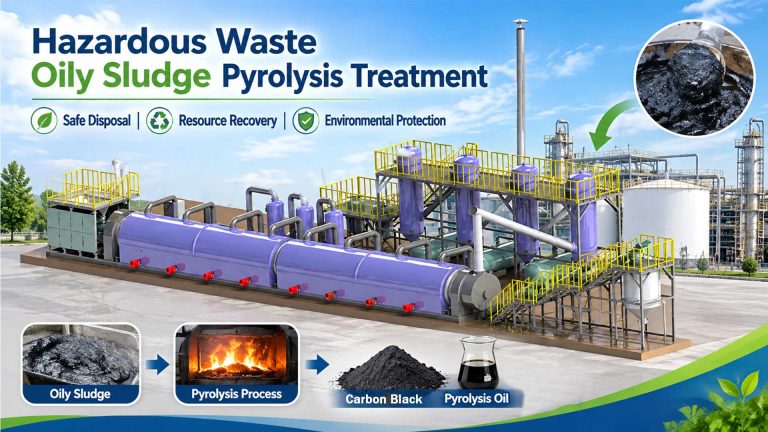
Unlike incineration, which completely destroys the resource value, oily sludge pyrolysis achieves both harmless treatment and resource recovery. Hazardous oily sludge presents a dual challenge: it is environmentally hazardous, yet rich in recoverable hydrocarbons. Pyrolysis technology has emerged as a viable hazardous waste treatment method. Operating in an oxygen-free environment, it converts the organic components of the sludge into recoverable oil and gas, while the resulting solid residue meets stringent disposal standards.
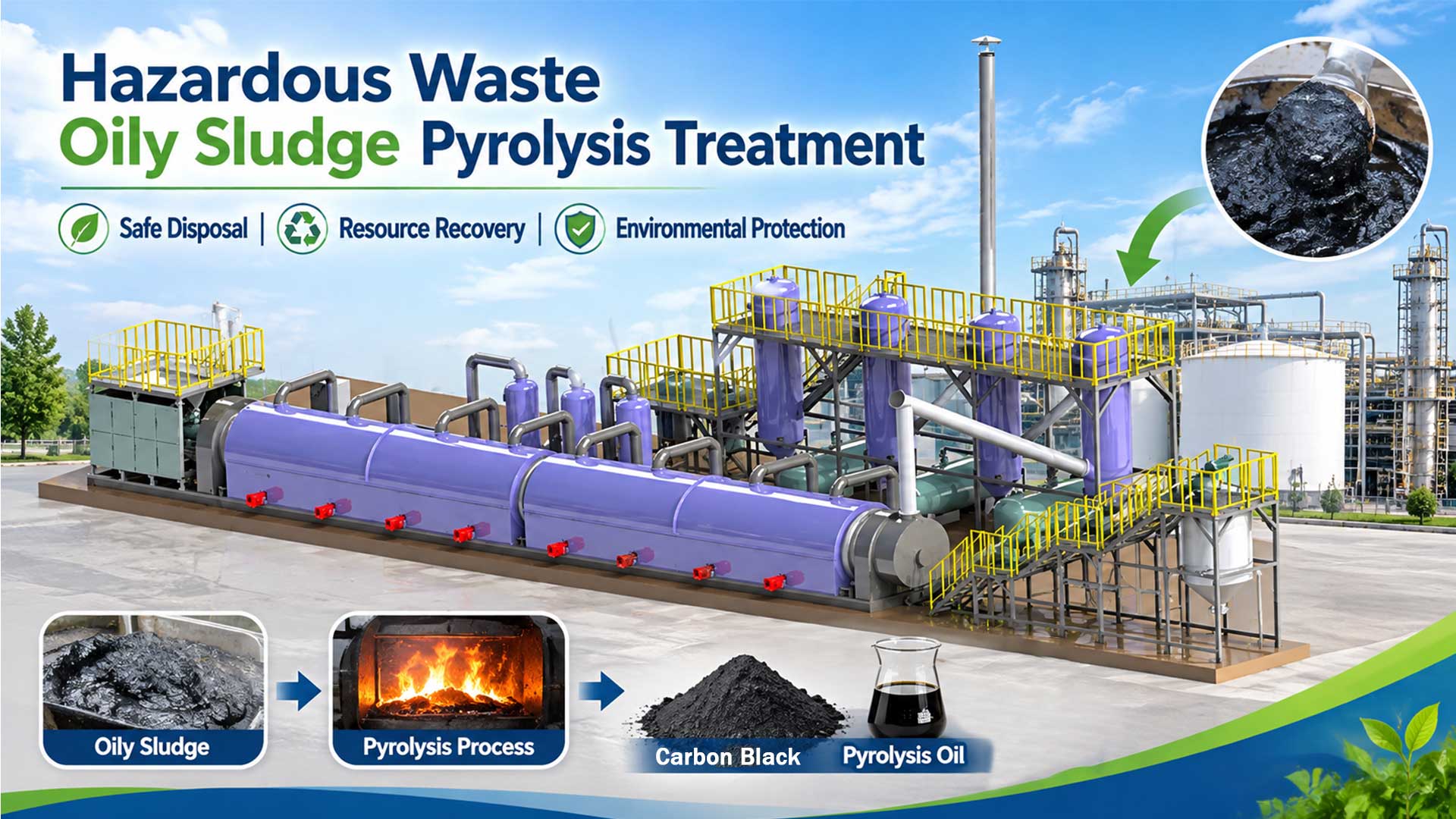
Hazardous Waste Oily Sludge Pyrolysis Treatment
Oily sludge is a complex emulsion consisting of water, oil, and solids. Depending on its source, its typical composition generally includes 30%–50% water, 30%–80% oil, and 10%–20% solid residue. This composition makes the sludge difficult to treat via biological methods, especially when it contains polycyclic aromatic hydrocarbons (PAHs) or other persistent organic pollutants. Oil sludge pyrolysis plant effectively addresses this by thermally cracking the hydrocarbons in the absence of oxygen. The final products of the oil slduge pyrolysis process include pyrolysis oil, syngas, and solid carbonaceous residue.

How Does Continuous Pyrolysis Plant Work?
Continuous pyrolysis plant designed for oily sludge typically consists of several integrated subsystems. Including a feed system, a pyrolysis reactor, a gas purification system, a condensation system, and a residue discharge system. The core continuous oily sludge pyrolysis reactor operates under slight negative pressure to prevent air ingress and ensure an oxygen-free environment.
The oily sludge is fed into the reactor, where it undergoes indirect heating. As the temperature rises, moisture and light hydrocarbons vaporize first, followed by the thermal cracking of heavier organic components. The resulting vapor stream enters the condensation system, where condensable components are converted into pyrolysis oil. Meanwhile, the non-condensable syngas is purified and can be recycled as fuel for the heating system. This energy integration is crucial to the economic viability of large-scale oily sludge pyrolysis projects. Once the unit reaches steady-state operation, the need for external fuel supply can be significantly reduced or even entirely eliminated.
Solid residues are discharged through a sealed system to prevent contact with the atmosphere. The quality of these residues is a key metric for determining compliance with regulatory standards. In modern continuous oily sludge pyrolysis plant, the residual oil content in the solid product can typically be kept below 0.3%, with some systems achieving levels as low as 0.05%. Once this threshold is met, the residue is generally classified as non-hazardous solid waste and can be utilized as backfill material or as a raw material for construction products.
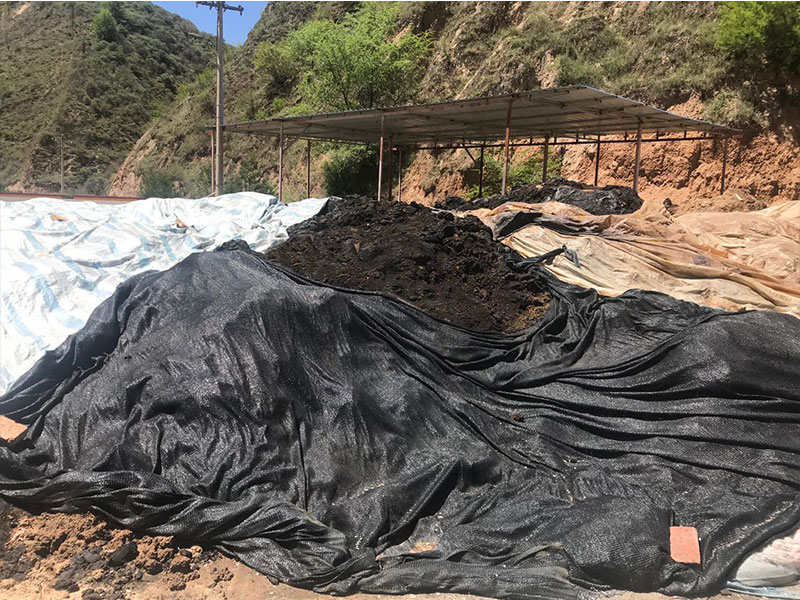
Key Control Points for Oily Sludge Process
Oily sludge pyrolysis is more than just simple heating, stable operation relies on several critical control points.
Pretreatment is a prerequisite: Feeding high-moisture oily sludge directly into the furnace significantly increases energy consumption and reduces oil recovery efficiency. Stable drying and conditioning are the foundations for continuous production.
Strict oxygen control: This requires a well-sealed furnace and real-time online monitoring of oxygen levels. The ingress of oxygen into the oily sludge pyrolysis reactor not only lowers oil yield but also increases the risk of dioxin formation.
Balancing temperature and residence time: If the temperature is too low, oily slduge pyrolysis will be incomplete, leading to excessive residual oil. Conversely, if the temperature is too high, the oil will undergo excessive cracking into small-molecule gases, thereby reducing oil yield.
Integrated downstream treatment: Purification units must be provided for condensed wastewater, dust-laden exhaust gases, and acidic gases. Compliance cannot be determined by the main reaction equipment alone, the entire system must meet regulatory standards.
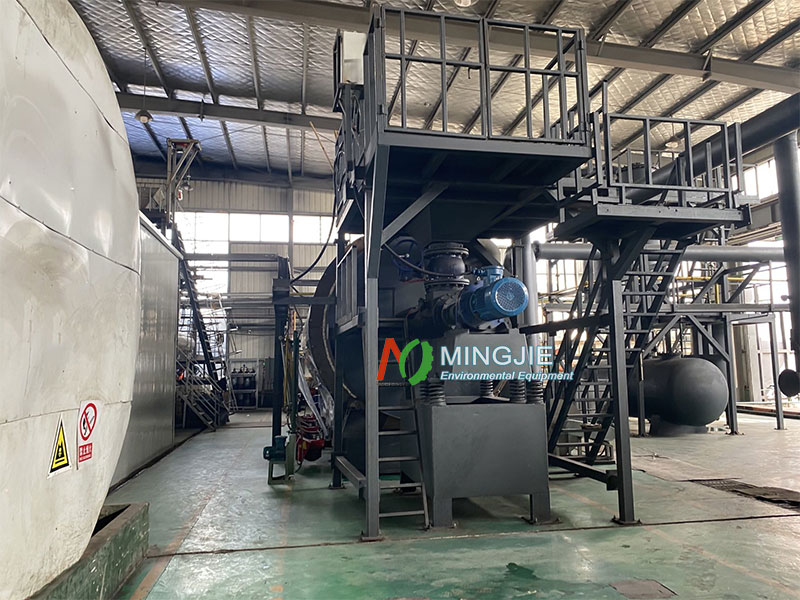
Pyrolysis Equipment Solutions for Oily Sludge
No single pyrolysis plant serves as a universal solution for all types of oily sludge. In practice, pilot testing with representative samples is essential, as sludge from different sources—such as storage tank bottoms, refinery wastewater treatment sludge, or offshore drilling waste—behaves differently within a pyrolysis reactor. Factors such as coking tendencies, the degree of oily sludge pyrolysis equipment corrosion, and the quality of the resulting residue are all dictated by the specific mineral and chemical composition of the feedstock.
Furthermore, it is crucial to secure prior approval from regulatory authorities regarding the disposal or handling of the residual material. Even if a system can reduce the residual oil content to 0.3% under laboratory or pilot-scale conditions, local environmental agencies must still verify that the resulting residue meets the criteria for “Harmless Disposal” or “Resource Recovery”. Without such official recognition, the residue cannot be classified as a marketable product; instead, it may become a bottleneck that hinders project operations.