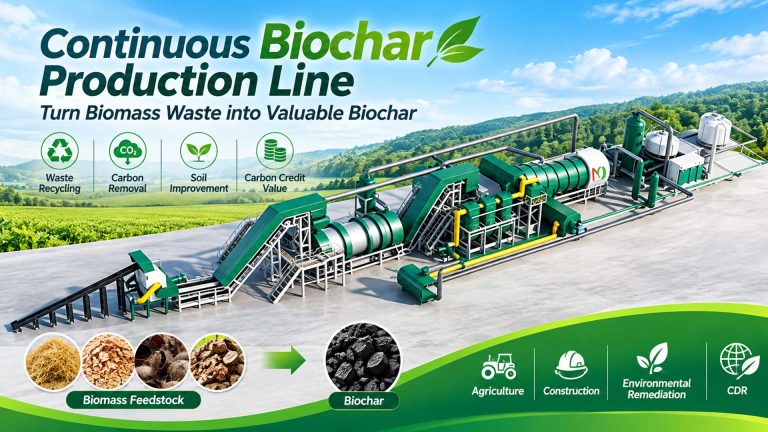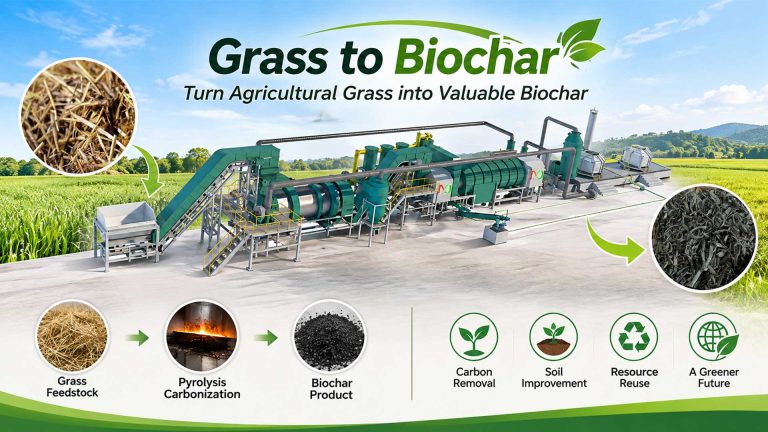
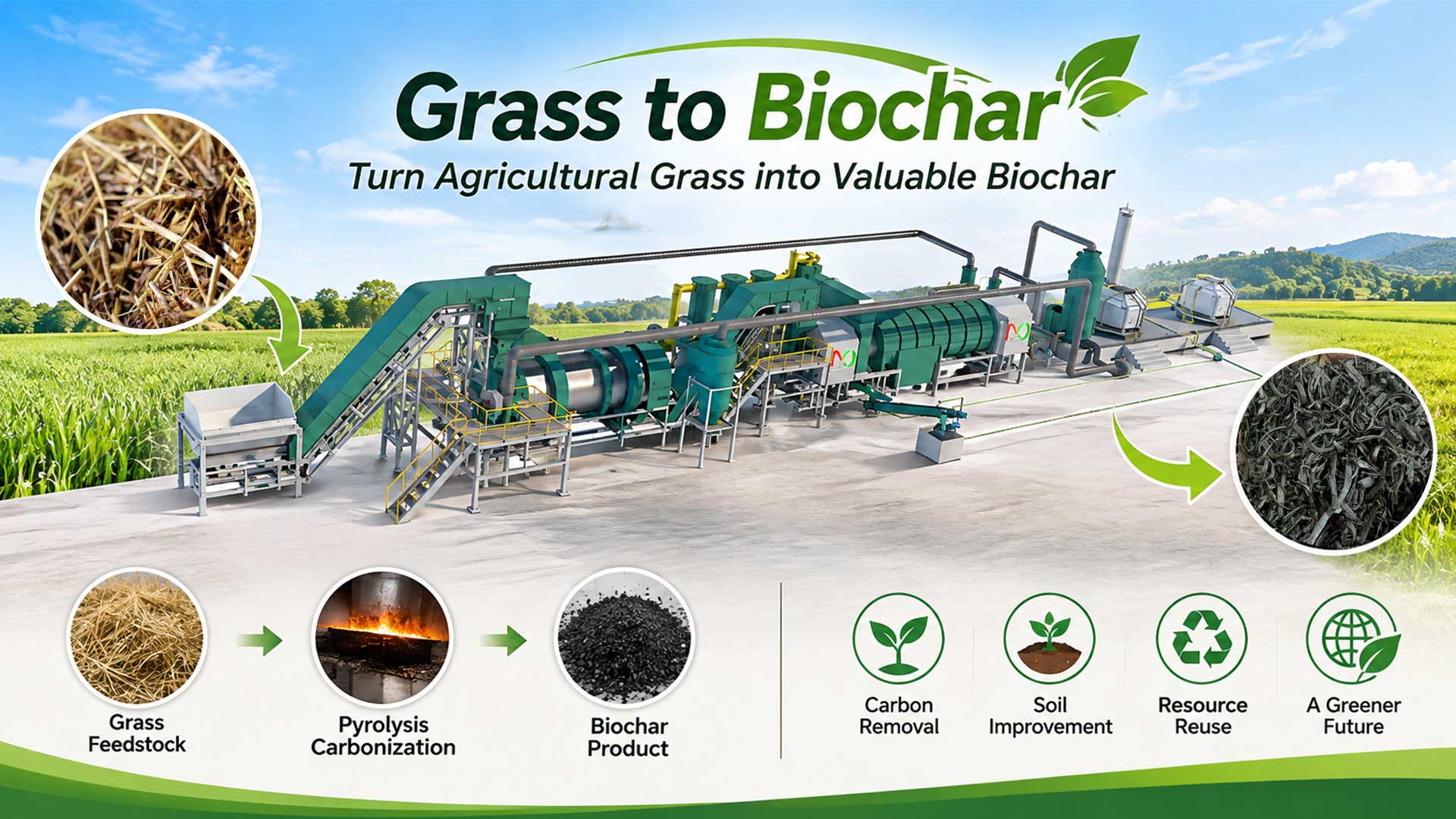
Many people wonder whether herbaceous biomass, such as crop straw, weeds, and forage grasses, can be turned into biochar. The answer is Yes. Grass is an excellent feedstock for biochar production through a process known as controlled-oxygen pyrolysis. Materials like weeds, rice straw, wheat straw, reeds, and forage grasses can be converted into biochar. Furthermore, the grass for biochar production process allows for the recovery and utilization of combustible syngas, making this an accessible, low-cost, and circular raw material.
Principles of Grass for Biochar Production
The core method of Grass for Biochar Production is limited-oxygen pyrolysis, which is distinct from open-air burning. Dried grass feedstocks are fed into carbonization equipment, where oxygen is either excluded or strictly controlled, and the material is heated continuously within a temperature range of 300–700°C.
- The cellulose, hemicellulose, and lignin within the grass decompose gradually.
- Volatile substances are converted into pyrolysis gas, wood vinegar, and tar.
- The remaining stable, carbon-rich solid product is what we call grass biochar.
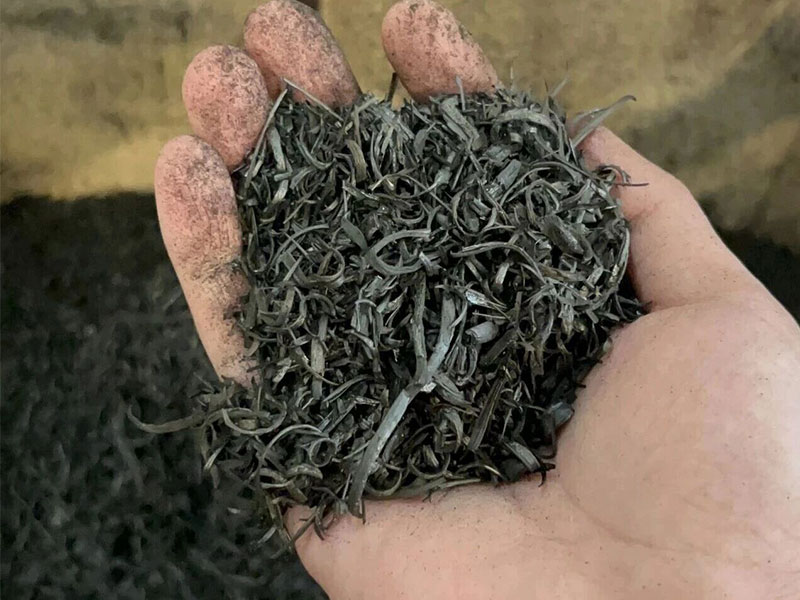
An Important Distinction: “Grass ash” obtained from open-air burning is not the same as Grass Biochar. Grass ash is the residue left after complete combustion—the carbon has been burned away, leaving behind primarily potassium salts and other minerals. Grass Biochar, by contrast, is a carbon-rich solid produced through oxygen-deprived carbonization. Their properties are entirely different.
Feasibility of Using Grass Feedstock for Biochar Production
From both a technical and practical standpoint, grass biomass is well-suited for carbonization. Research indicates that when grass biomass—such as Miscanthus, reeds, Pennisetum (fountain grass), or rice straw—is heated in the absence of air, it undergoes drying, pyrolysis, and carbonization, resulting in a solid residue known as biochar.
Practical Applications and Data References
While industrial-scale data specifically for Wild Grasses is limited, grasses and agricultural straw share highly similar chemical compositions. Data from established, industrial scale straw to biochar production plant provide a clear indication of the carbonization potential of such biomass.
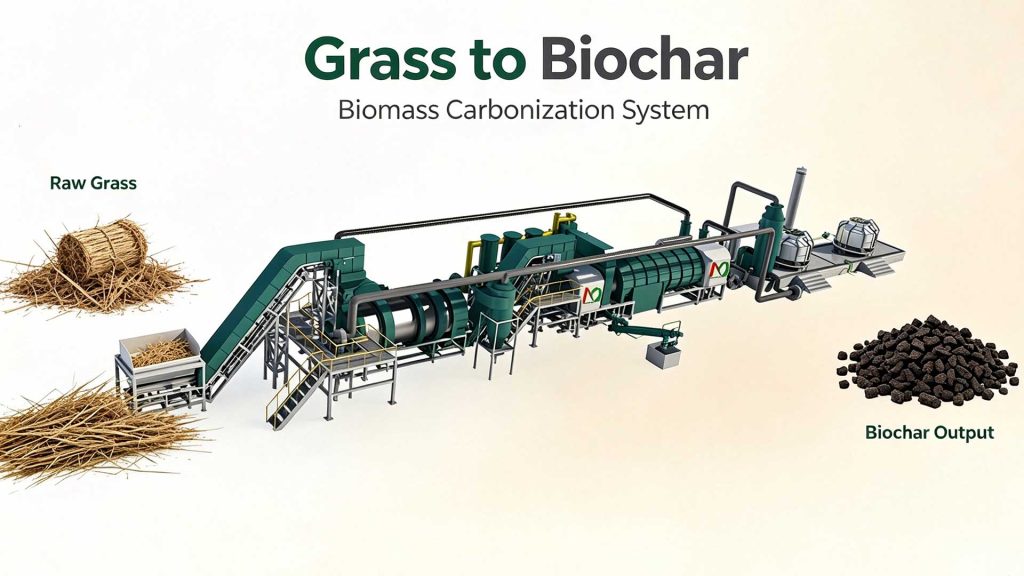
Significant Biochar Yield: Data from a demonstration project in Henan Province, which utilized straw for continuous pyrolysis carbonization, showed a biochar yield of 33.8%, with a fixed carbon content exceeding 70%.
Field-Scale Validation: In field trials conducted in Beijing, the use of specialized in-situ straw carbonization equipment to process wheat straw achieved a biochar yield of 27.3%.
Diverse Applications: Biochar derived from grass feedstocks offers significant potential for soil amendment, fertility enhancement, and carbon sequestration. It can even be utilized as a functional material.
⚠️Important Considerations
Grass feedstocks typically have high ash, potassium, and sodium content. If the pyrolysis process is not carefully controlled, slagging (the formation of solid residues) is likely to occur.
These feedstocks are bulky and have low density, leading to high transportation costs. It is generally recommended to carbonize them on-site, or to shred and densify (briquette/pelletize) them before feeding them into the carbonization furnace.
Characteristics vary significantly between different types of grass: rice straw, wheat straw, and reeds yield a stable quality of biochar. Fresh (green) grass has a high moisture content and requires drying. Otherwise, it will lead to increased energy consumption and a lower biochar yield.
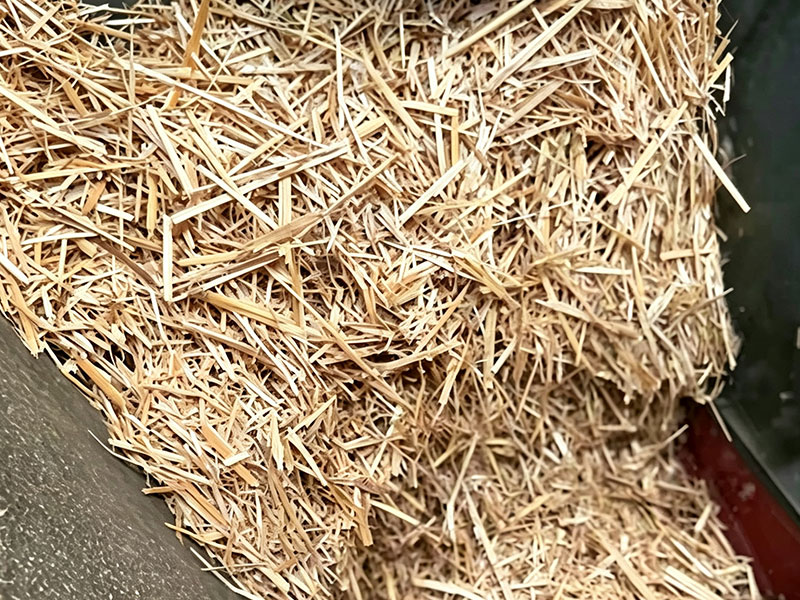
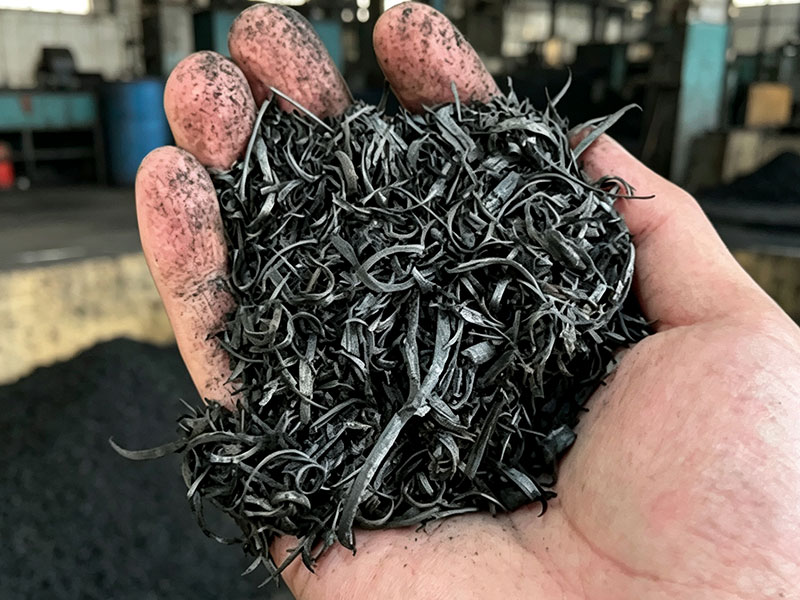
What are the Characteristics of Biochar from Grass?
Easily accessible raw materials and low cost: Agricultural residues (such as straw), wild grasses, forage grasses, and reeds are available in large quantities. In many regions, these materials—which otherwise require removal or are subject to burning bans—can be converted into biochar, effectively turning waste into a valuable resource while helping to address the challenges associated with straw-burning bans.
Highly porous: Due to the loose fibrous structure of herbaceous plants, the resulting grass biochar features a well-developed pore system. This provides strong adsorption capacity, making it highly effective for retaining water and nitrogen, as well as sequestering heavy metals and pollutants.
Beneficial for soil amendment: With a moderate carbon-to-nitrogen (C:N) ratio, this grass biochar can be applied to farmlands, orchards, and nurseries to improve compacted soil, lock in moisture and nutrients, facilitate the slow release of nutrients, and reduce fertilizer runoff. It is also well-suited for the remediation of saline-alkali soils.
High carbon sequestration potential: Herbaceous plants grow rapidly and have short life cycles. Converting the carbon contained in these plants into stable biochar and sequestering it in the soil for the long term aligns with the objectives of Carbon Dioxide Removal (CDR) and carbon credit initiatives.