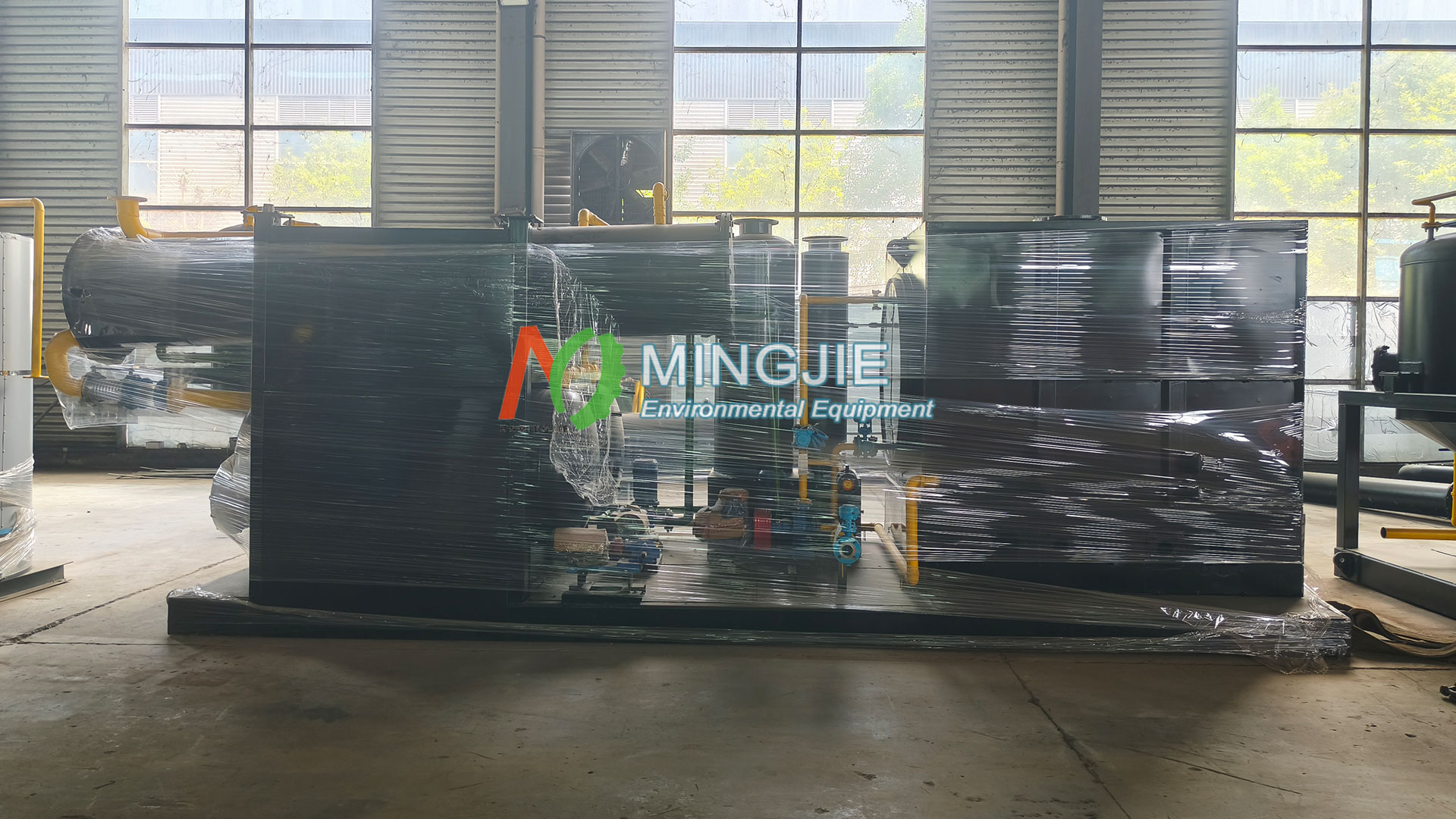
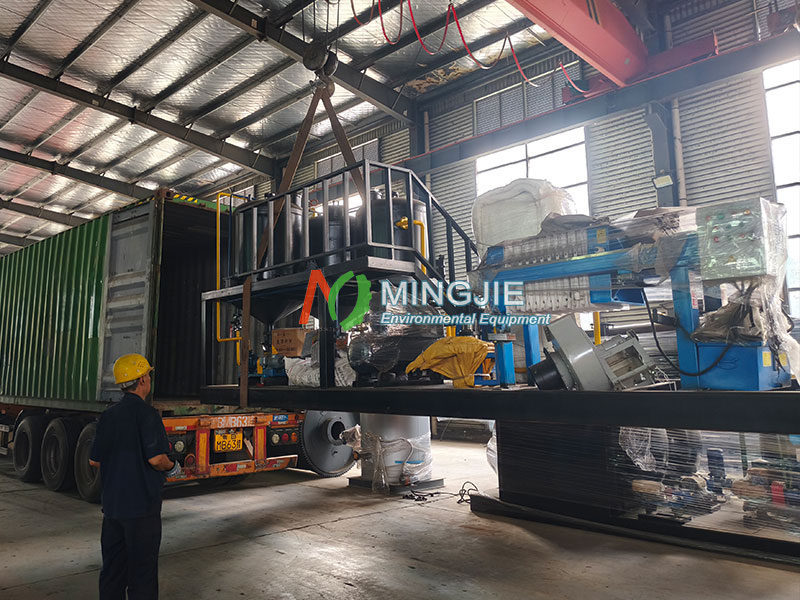
On July 8, 2026, Mingjie Group completed the shipment of the MJZ-2 Small Pyrolysis Oil Distillation Plant for Sale to Bolivia from the factory. It consists of pyrolysis oil distillation system, gasoline-diesel separation system, and diesel acid-base washing system. From crude pyrolysis oil to qualified diesel, the distillation, separation and refining system provides a complete waste oil upgrading solution.

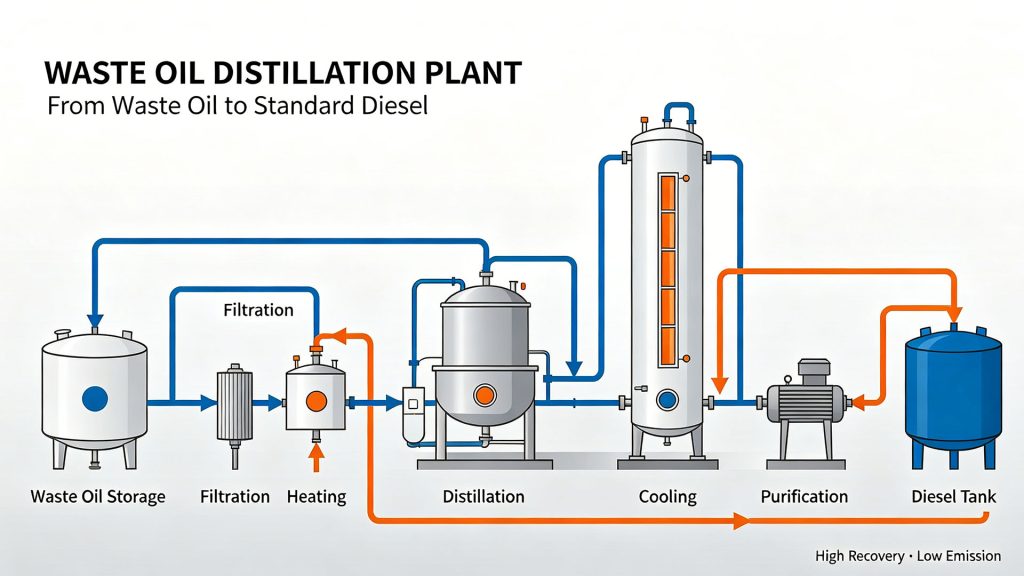
How a Distillation Plant Converts Pyrolysis Oil into Diesel Fuel
Pyrolysis oil is a liquid product obtained by waste tire plastic pyrolysis under anaerobic conditions. Crude pyrolysis oil has a complex composition, dark color, and pungent odor. It contains a large amount of unsaturated hydrocarbons, sulfides, nitrogen compounds, organic acids, gums, and asphaltenes, making it unsuitable for direct use as vehicle fuel.
The distillation plant for sale converts pyrolysis oil into qualified diesel fuel, typically involving two core processes: distillation separation and refining. Distillation equipment can separate gasoline and diesel fractions, while acid-base washing refining system can remove impurities and improves the quality of the diesel fuel.
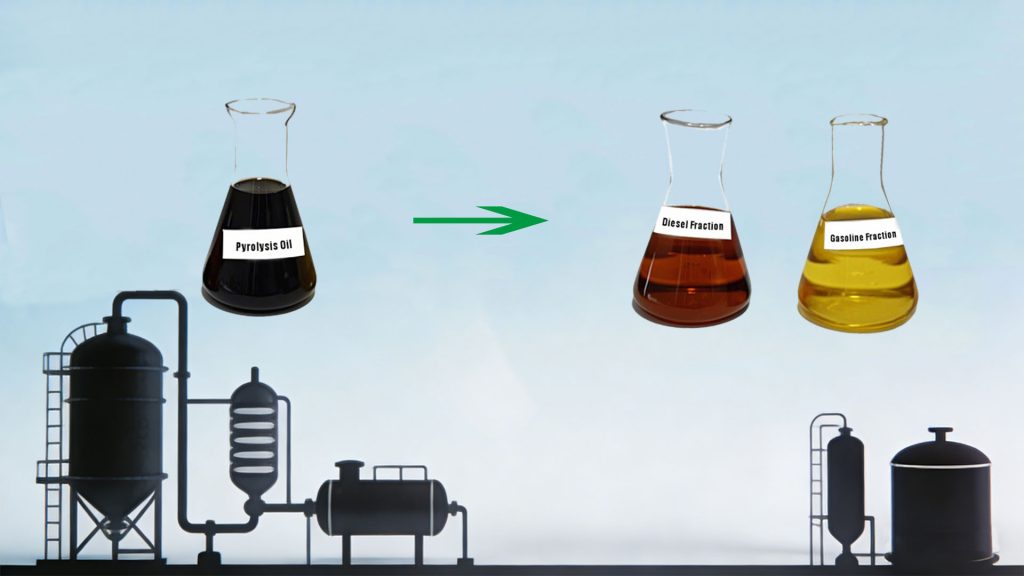
Distillation: Separation of Gasoline and Diesel
The MJZ-2 pyrolysis oil distillation plant for sale adopts negative pressure distillation. Negative pressure distillation is currently the mainstream upgrading process for refining pyrolysis oil. It relies on a vacuum pump to create a sealed vacuum negative pressure environment, significantly reducing the boiling points of various hydrocarbon fractions. This allows for the separation of gasoline, diesel, and heavy tar at low temperatures.
Why Choose Negative Pressure Distillation?
For pyrolysis oils with complex compositions and high heat sensitivity, negative pressure distillation offers several advantages.
Avoids High-Temperature Coking: This is its greatest value. Pyrolysis oils contain large amounts of gums and asphaltenes, which readily coke and carbonize on the inner walls of the equipment at high temperatures. Negative pressure distillation lowers the operating temperature. This significantly reduces the risk of coking, ensuring the long-term stable operation of the distillation equipment.
Improved Product Quality and Yield: The low-temperature environment prevents secondary cracking and polymerization of unsaturated hydrocarbons in the oil, protecting the molecular structure of diesel components. Simultaneously, the high separation efficiency effectively increases the yield of diesel and gasoline components.
Reduced Energy Consumption and Operating Costs: A lower boiling point means less heat is required for heating, thus reducing energy consumption.
Enhanced Operational Safety: The entire system operates under negative pressure and low oxygen conditions, reducing the risk of oil oxidation and combustion.
Effective Deodorization and Decolorization: The negative pressure environment facilitates the vaporization and separation of low-molecular-weight substances that produce odors. This improves the color and odor of the oil.
Acid-Base Washing: Diesel Oil Refining and Purification
Acid-base washing is the most traditional and widely used chemical refining method in pyrolysis oil refining. Its core principle is to remove impurities through acid washing, followed by neutralization of acidic substances through alkali washing. Ultimately, qualified diesel oil is obtained.
Acid Washing
Acid washing is the first step in the refining of pyrolysis oil. The distillate oil obtained after pyrolysis oil distillation is pumped into an acid washing tank, where a certain proportion of concentrated sulfuric acid is added and the mixture is thoroughly stirred. The sulfuric acid reacts with impurities in the oil, producing acid sludge and other substances. This acid sludge has a high density and separates from the oil layer. It is removed by sedimentation.
Water Washing and Alkali Washing
The acid-washed oil contains residual sulfuric acid and water-soluble impurities generated from the reaction. It needs to be washed with a large amount of water, and then enters the alkaline washing process. The acidified oil is placed into an alkaline washing tank, where a certain proportion of NaOH solution is added and stirred.
The core functions of alkaline washing include neutralizing acidic substances, removing thiols, and improving color and odor.
Decolorization and Filtration
Crude oil may still contain some impurities and pigments after acid and alkali washing, requiring decolorization treatment. The crude oil is pumped into a decolorization tank, and activated clay is added and thoroughly stirred. The adsorption properties of the activated clay remove pigments and other impurities. The mixture is then sent to a filter to remove the waste activated clay, followed by fine filtration. Finally, clean, bright-colored non-standard diesel oil is obtained.
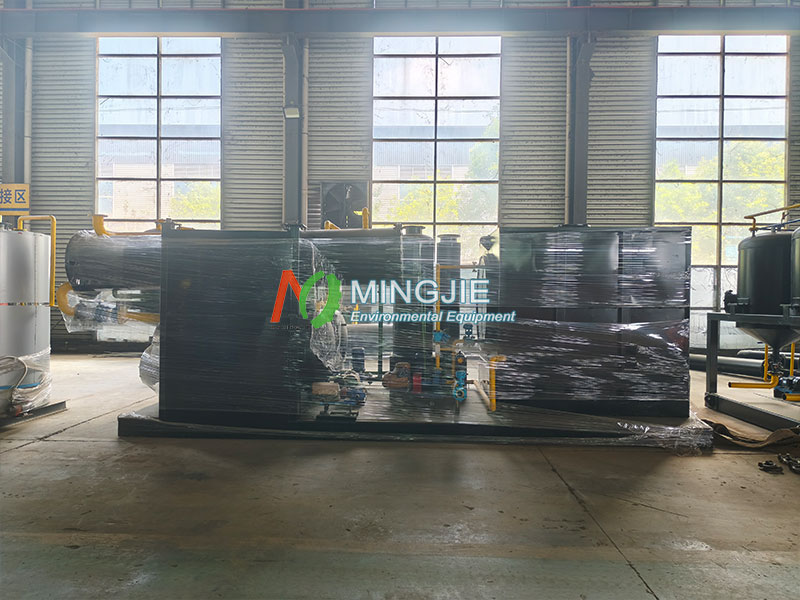
Pyrolysis Oil Distillation Plant for Sale
Mingjie Group offers various models of Distillation Plants for Sale: MJZ-2, MJZ-3, MJZ-6, MJZ-10, and MJZ-20. These form a complete closed-loop resource utilization industrial chain with the pyrolysis plant.
The pyrolysis plant produces crude pyrolysis oil, which is used as feedstock for the distillation plant. Distillation Plant for Sale enables the conversion of waste tires, plastics, and engine oil into fuel oil. It achieves the resource utilization of waste. Distillation fractionates gasoline, crude diesel, and heavy tar. The crude diesel is upgraded to finished diesel fuel through acid and alkali washing, which can be sold externally.
Advantages of the MJZ-2 Pyrolysis Oil Distillation Plant
- Low Investment Cost: Skid-mounted design for MJZ-2 pyrolysis oil distillation plant minimizes footprint and reduces energy consumption.
- Simple Operation: Fully automated temperature control, stirring, and stratified settling processes require only 1-2 operators daily.
- High Impurity Removal Depth: The combined fractionation and chemical washing process significantly improves purification compared to physical filtration alone.
- Wide Raw Material Compatibility: Processes pyrolysis oil from plastics, tires, and sludge, as well as waste engine oil, waste transformer oil, and waste lubricating oil.
- High Economic Benefits: Converts low-value-added crude pyrolysis oil into diesel fuel, significantly increasing project profitability.