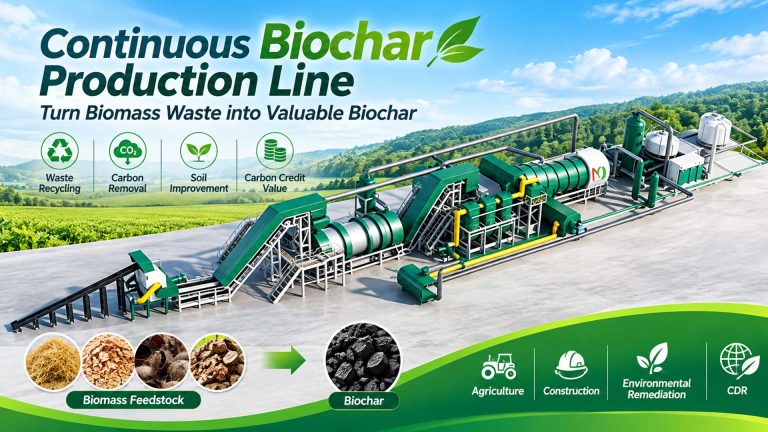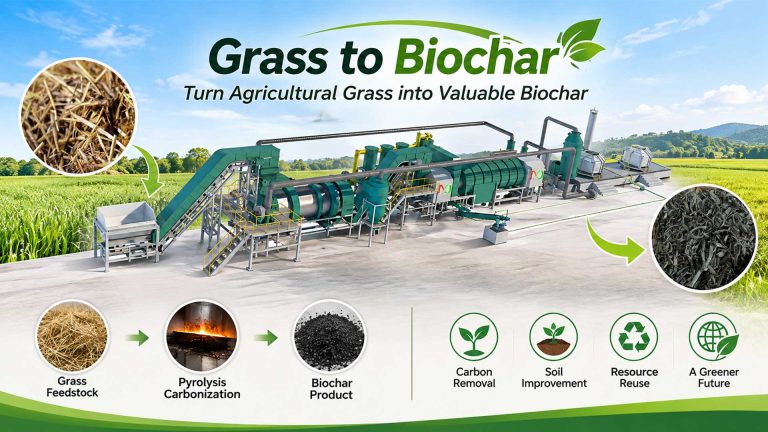
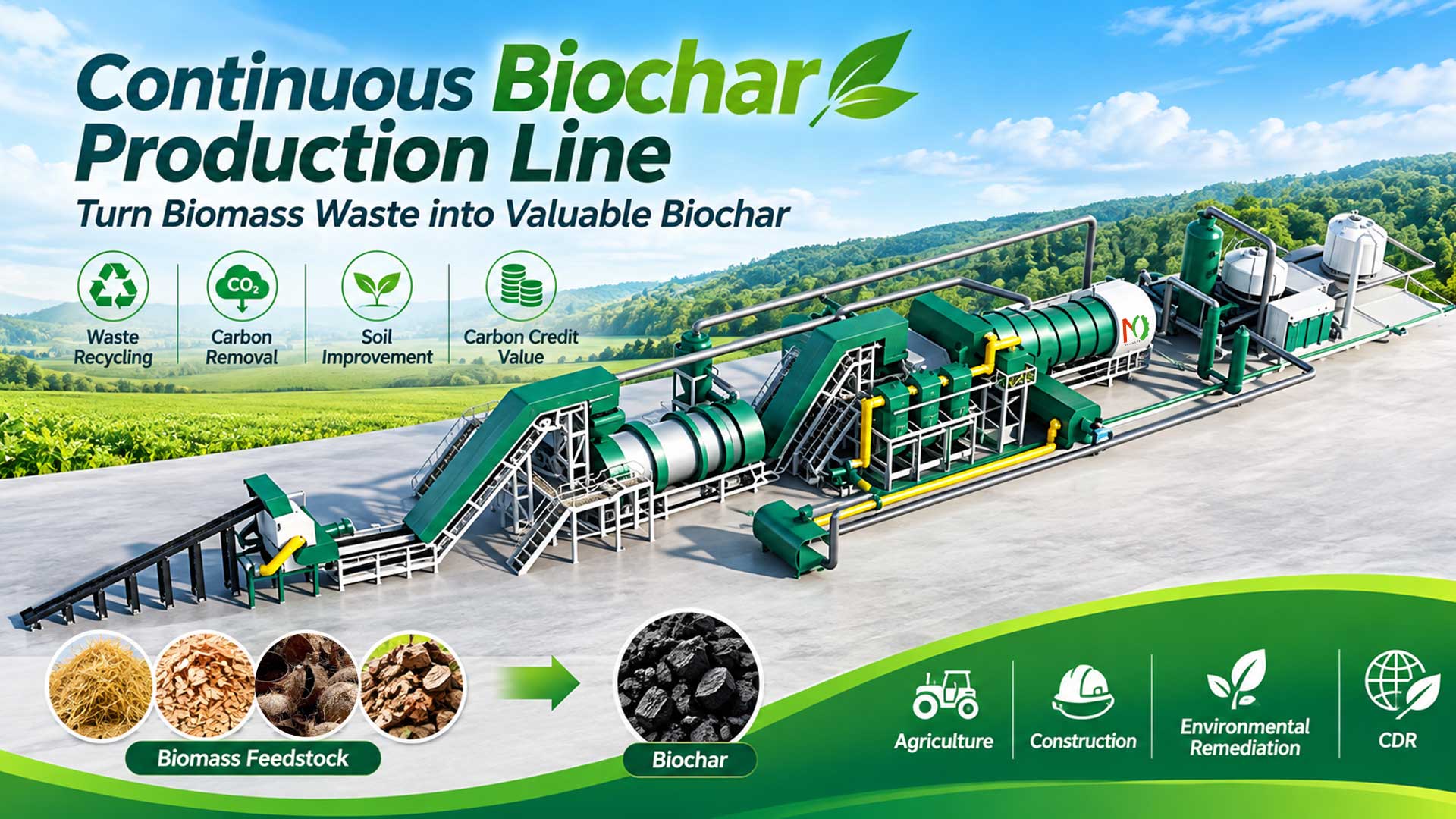
A mature continuous biochar production line must possess six core capabilities: stable feedstock intake, thorough carbonization, energy recycling, continuous discharge, environmental compliance, and intelligent control. These six modules are critical focal points for project evaluation, equipment selection, operational management, and carbon certification verification.
Key Aspects of a Mature Continuous Biochar Production Line
Feedstock Compatibility and Pre-processing Systems
In continuous biochar production line, the greatest risks are interruptions in feedstock supply or fluctuations in material quality. Front-end design must be tailored to the specific, inherent characteristics of the raw materials.
Continuous biochar production line is design based on volume, not just weight. Lightweight materials (straw and rice husk) have low bulk density, meaning they occupy significantly more volume than wood chips for the same mass. The capacity of storage silos and the specifications of conveying equipment must account for both mass flow and volumetric flow.

Core Pyrolysis Carbonization System
Atmosphere control: Pyrolysis must occur in an oxygen-depleted environment or under slight negative pressure. Precise oxygen control within a continuous furnace is the primary factor determining yield, biochar quality, and operational safety.
Controllable thermal profiles and residence time: Parameters such as the rotational speed and inclination of a rotary kiln, along with zoned heating and heat-exchange configurations, must be adjustable. Since different feedstocks exhibit varying pyrolysis rates, the continuous biochar production line must support zoned temperature control to prevent incomplete carbonization or over-burning.
Self-sustaining energy loop: Combustible gases generated during pyrolysis are recovered and burned to provide heat for drying and the pyrolysis process itself. A mature continuous biochar production line should be primarily energy self-sufficient, requiring only minimal auxiliary fuel.
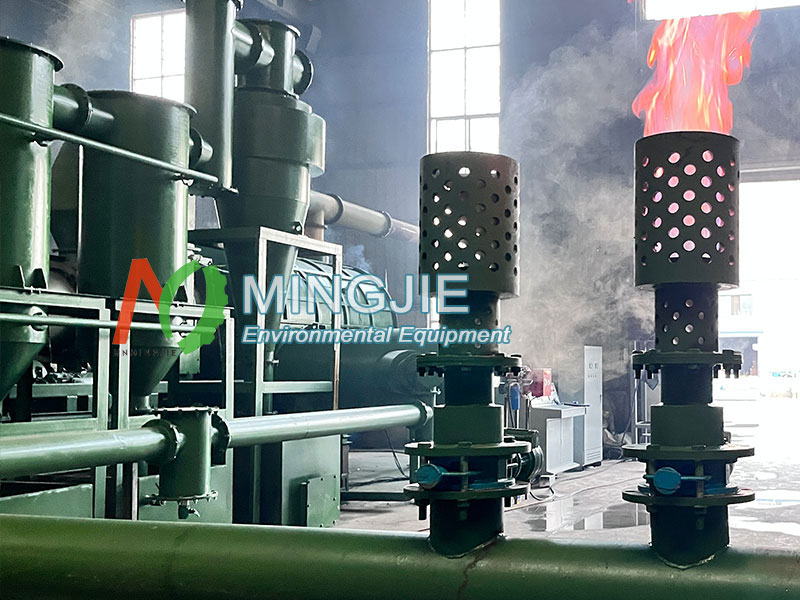
Material-specific construction: When processing feedstocks with high potassium or chlorine content, components must be constructed from materials resistant to chlorine-induced corrosion. This prevents issues such as alkali-metal slagging, high-temperature corrosion, and the perforation of pipes or conduits.
Post-Processing: Cooling, Quality Enhancement
High-temperature biochar discharged continuously is highly susceptible to re-ignition, making it a frequent source of accidents.
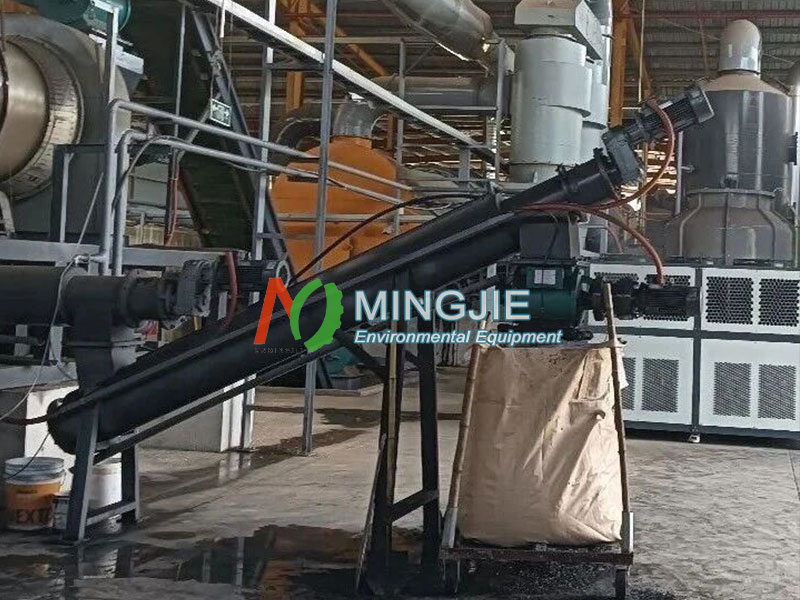
Isolated, Hermetic Cooling: Water-cooled screw conveyors ensure complete isolation from the atmosphere. Biochar must be cooled to a safe temperature before being discharged.
Enclosed Conveying: Prevents dust emissions, secondary oxidation, and contamination of the finished biochar.
Grading, Milling, and Modification: Optional modules for screening, grinding, and chemical/physical modification can be integrated based on specific product positioning.
Flue Gas Purification System
Continuous pyrolysis carbonization processes generate a steady flow of off-gases, with tar, acidic gases, and particulate matter posing the primary challenges.
Tar Management: Feedstocks such as grasses produce higher volumes of tar, necessitating rapid cooling and tar removal. If tar condenses and accumulates within pipelines or heat exchangers, it can quickly cause blockages and force system shutdowns.
Advanced Tail-Gas Treatment: Includes secondary combustion chambers, denitrification (DeNOx), and dust removal to ensure emissions meet regulatory standards.
Gas Pipeline Design: Engineered to prevent the accumulation of combustible gases, flashback, and explosions.
Safety Systems
A mature continuous biochar production line incorporates a comprehensive safety interlock system rather than just a collection of individual components. This includes multi-point, real-time online monitoring of combustible gas concentrations, oxygen levels, furnace pressure, and temperature.
Automation and Data Traceability
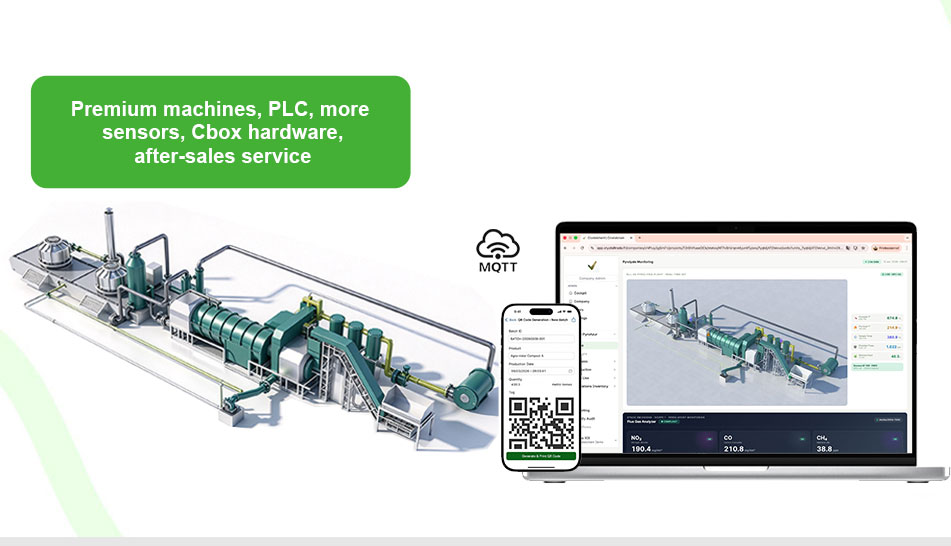
This is the key differentiator between a standard continuous biochar production line and one capable of generating carbon credits or meeting international export certification requirements. A centralized PLC-based automation system coordinates the feeding process, furnace temperature, rotational speed, draft control, cooling, and purification.
Biochar production equipment can be equipped with a dMRV system to support Life Cycle Assessment (LCA), carbon verification, and traceability standards such as ISCC.
Manufacturer of Continuous Biochar Production Equipment
Henan Mingjie Environmental Equipment Co., Ltd. provides equipment for continuous biochar production lines. The continuous carbonization furnace features a dual-cylinder main furnace design. The inner cylinder is primarily used for the deep drying of raw materials, preparing them for the subsequent carbonization process. While the outer cylinder handles the pyrolysis, carbonization, and heat exchange.
The continuous biomass carbonization plant utilizes an indirect heating method, ensuring that the heating flames do not come into direct contact with the raw materials. Furthermore, the combustible gases generated during pyrolysis are recovered and burned to harness their thermal energy.
In terms of automation, the production line is equipped with a PLC control system, allowing for centralized management of operational processes. Additionally, depending on project-specific requirements, the equipment can be integrated with auxiliary systems such as flue gas purification and biochar cooling units.