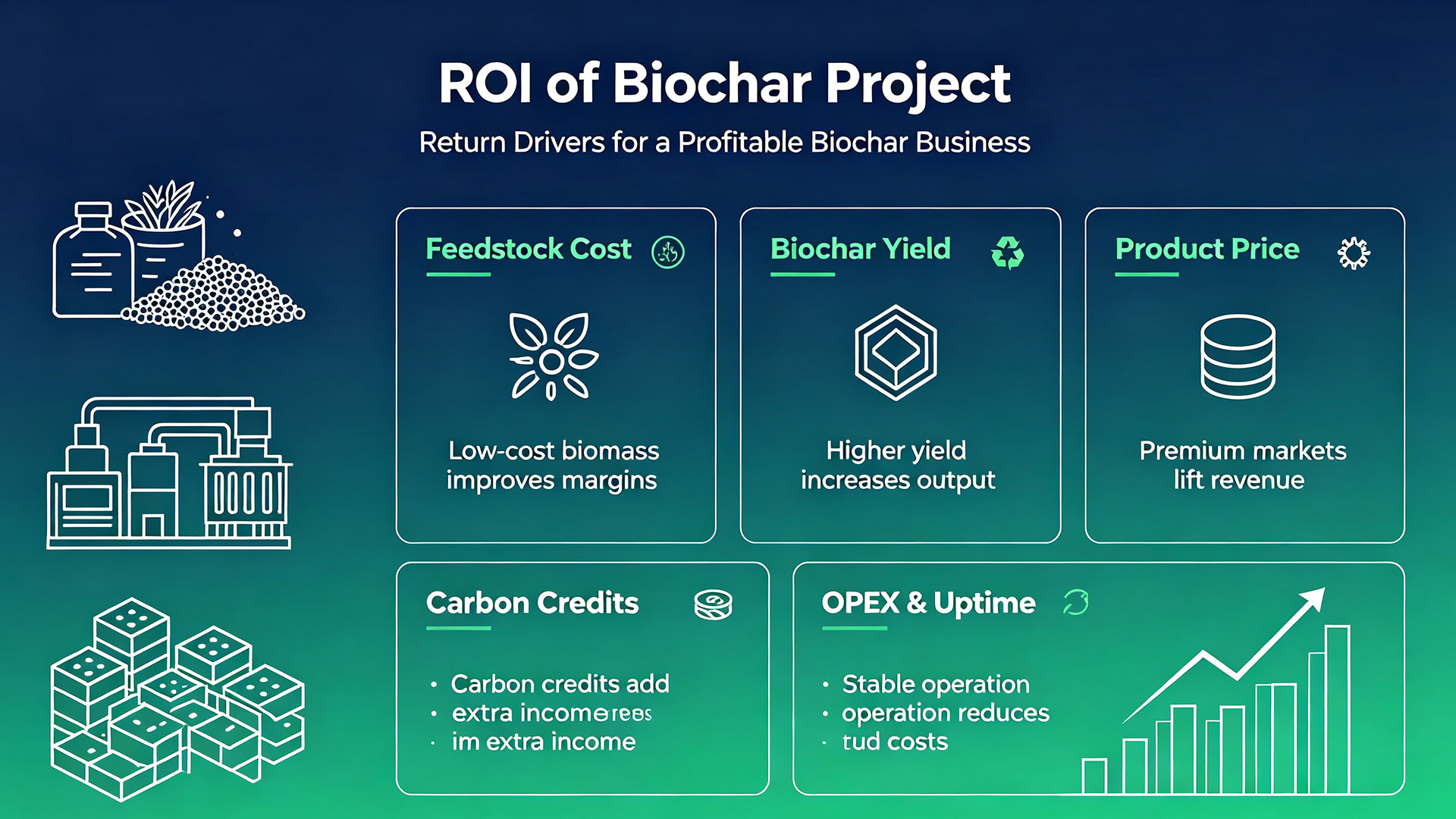
The ROI of a biochar project is not determined by the biochar production equipment alone. It is the result of a complex interplay of multiple dimensions: raw material supply, equipment technology, product market, carbon asset development, operation and management.
Raw Material Costs in Biochar Project
Raw material costs are often the largest variable cost in a biochar project, directly determining the break-even point.
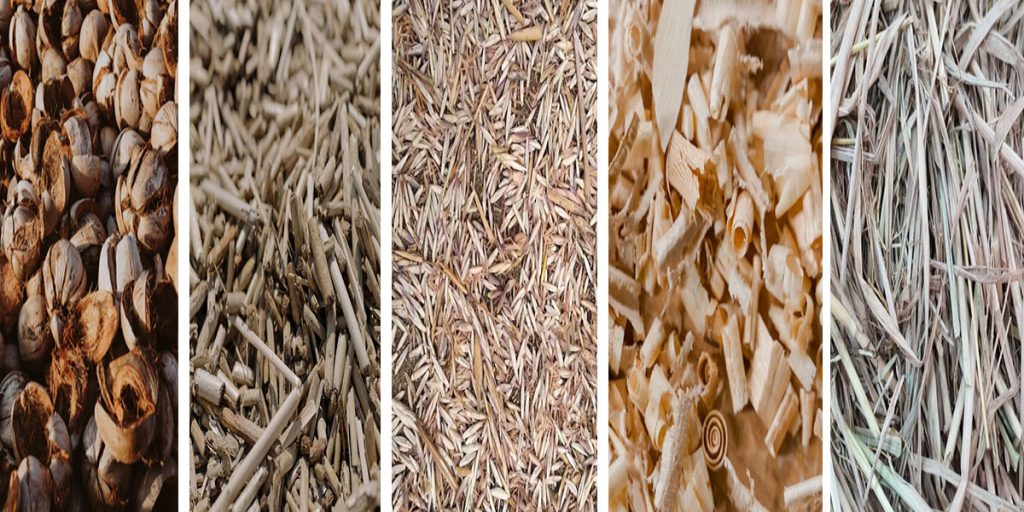
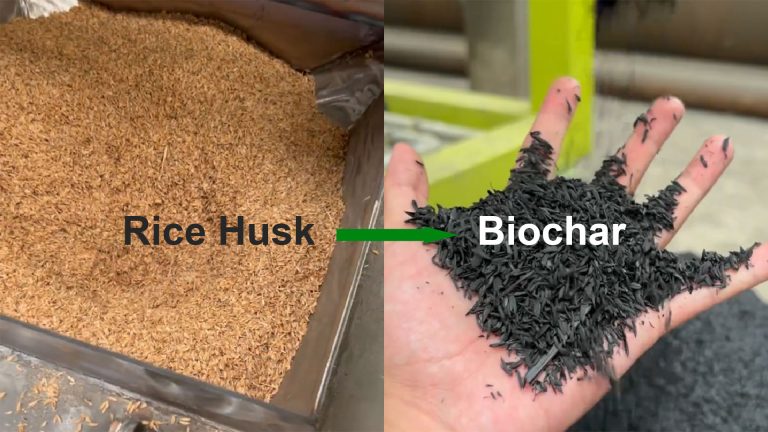
Raw materials are generally agricultural and forestry waste, such as sawdust, rice husks, and fruit shells. If high-priced external purchases of biomass raw materials are required, the project will struggle to be profitable from the outset.
Excessively high moisture content in raw materials significantly increases drying energy consumption. High ash and high salinity raw materials reduce biochar quality, accelerate reactor corrosion, and decrease char yield. Large fluctuations in raw material prices lead to unstable pyrolysis conditions and inconsistent biochar output.
Biochar Production Equipment Selection: Capital Investment and Life Cycle Operating Costs
Many investors only compare the purchase price of biochar production equipment, ignoring long-term operating costs. For carbon credit projects, biomass carbonization plant must have complete online data collection capabilities for temperature, pressure, oxygen content, and material flow. Simple carbonization equipment can hardly meet the data verification requirements of CDR (Carbon Dioxide Removal) projects.
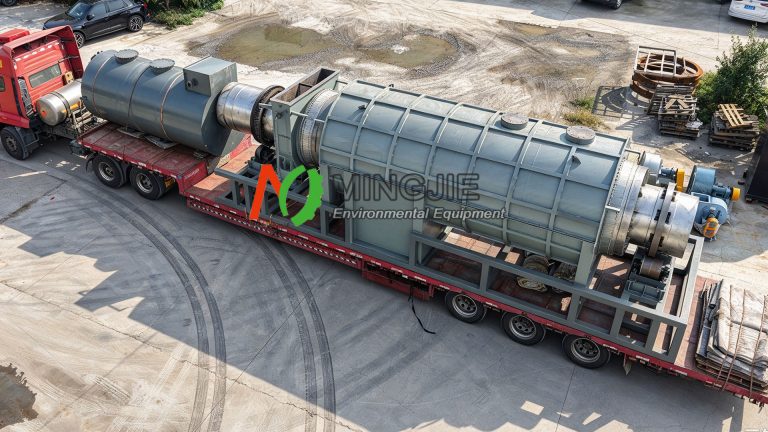
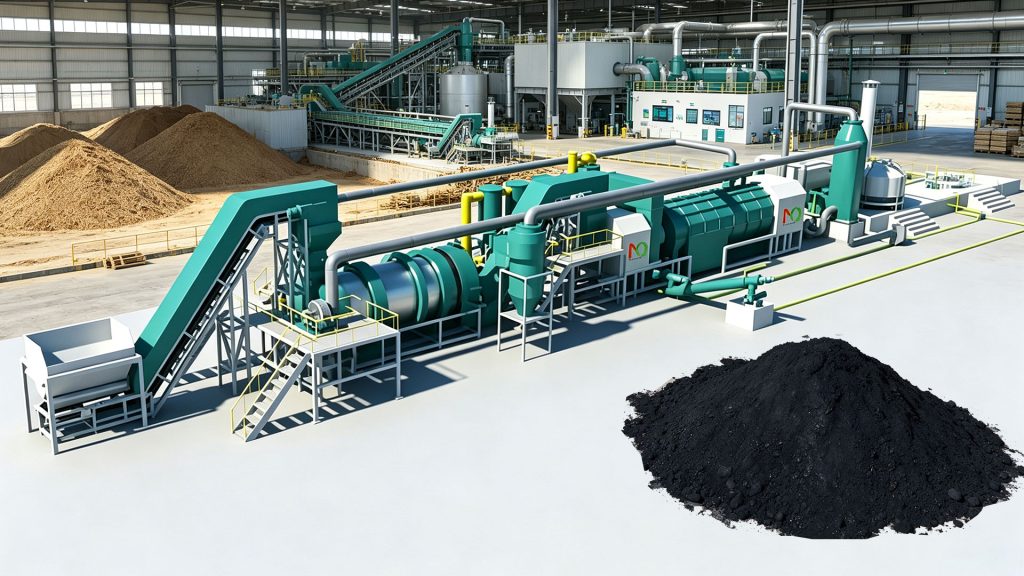
Large scale biochar production equipment uses continuous pyrolysis technology to convert biomass waste into biochar, while simultaneously recovering syngas and waste heat. It achieves both waste resource recovery and long-term carbon sequestration.
Product Revenue Structure
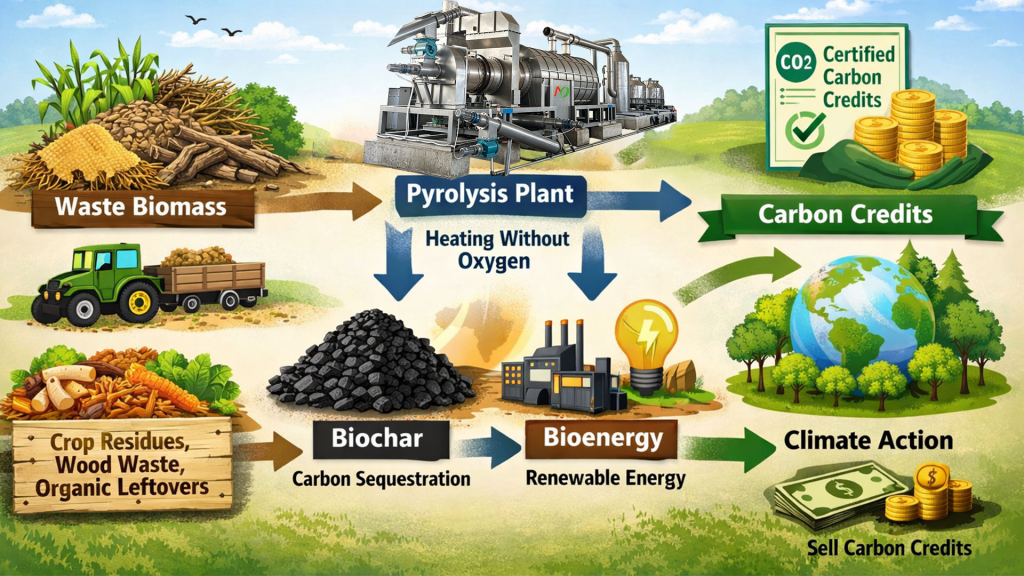
Most biochar projects only sell biochar, making it difficult to achieve ideal returns. Biochar project revenue comes from a combination of biochar and carbon credits.
Biochar prices are highly stratified: ordinary agricultural soil amendment biochar is relatively inexpensive. EBC-certified biochar can fetch significantly higher prices.
Added value: Advanced biomass pyrolysis system can capture the syngas produced during pyrolysis as an energy source, reducing operating costs and creating new revenue. Meanwhile, biochar used for soil improvement can increase crop yields by 15% to 25%, and this agricultural benefit is also an important hidden return.
Carbon credits change biochar project revenue: Biochar can achieve carbon sequestration for hundreds of years, with each ton of qualified biochar sequestering approximately 2.5-3 tons of CO₂e.
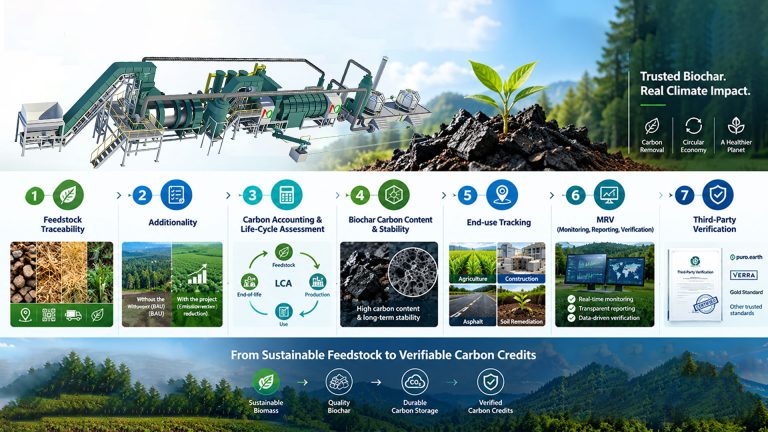
Carbon revenue can increase biochar project revenue several times over. However, carbon credit is not automatically obtained simply by purchasing biochar equipment. It requires compliant pyrolysis processes, complete online monitoring data, third-party verification, and platform registration (Verra, Puro.earth), incurring additional costs for certification, verification, and monitoring systems.
Market and Sales Channels
Market conditions and sales determine whether biochar products can realize their value.
Downstream customers include individual farmers, agricultural input dealers, large fertilizer plants, environmental adsorption companies, and metallurgical enterprises. Due to its bulky nature, transportation costs account for a significant portion of biochar costs. Biochar projects should be located as close as possible to raw material production areas and consumer markets.
Operations Management and Costs
Operations management and compliance costs are often underestimated hidden costs.
Environmental compliance costs: Flue gas, dust, and wastewater treatment must meet standards. The environmental upgrades are a continuous investment.
Personnel management: Biomass pyrolysis projects are not simply a matter of purchasing biochar equipment and starting it up immediately. Inadequate understanding of the process by operators can lead to incomplete pyrolysis, fluctuating char quality, and equipment malfunctions. Automated production lines can reduce reliance on frontline workers, but require technically competent management personnel with process knowledge.
Depreciation and financial costs: Loan interest and fixed asset depreciation for biochar projects significantly impact the payback period. High debt levels directly lengthen the payback period.
Summarize
The scale and processing mode of a biochar project directly impact unit costs and overall returns. Large-scale biochar projects, while requiring higher absolute investments, offer higher returns. The return on investment ROI for biochar projects is not a fixed figure. Successful biochar projects typically begin with control over low-cost raw materials and active integration into the carbon market. They also leverage policy support and ultimately achieve substantial commercial returns through economies of scale.