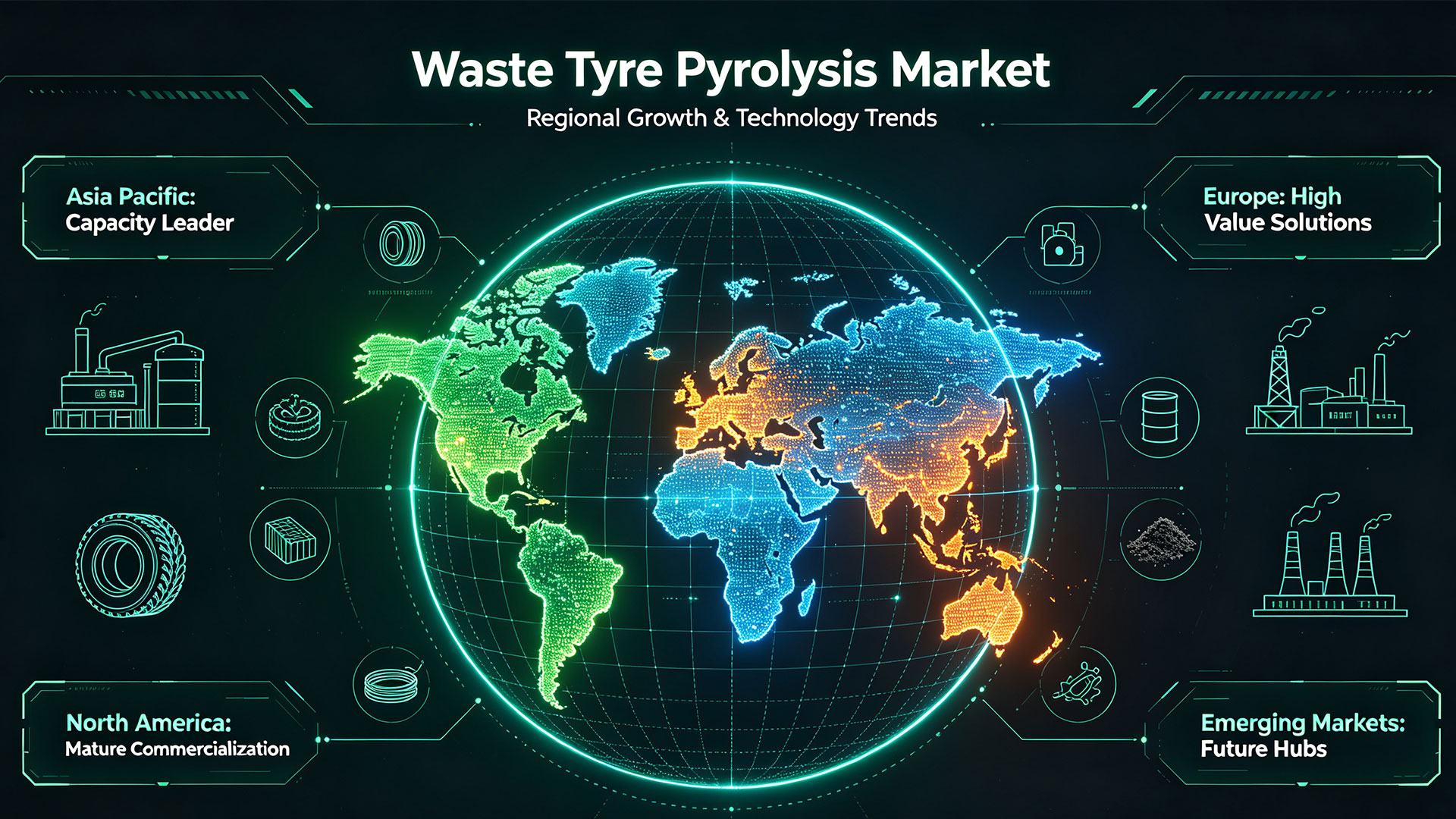
The current global waste tyre pyrolysis market exhibits a differentiated regional pattern, dominated by the Asia-Pacific region, with mature markets in Europe and America, and emerging regions gaining momentum. Each region, based on differences in raw material resources, policies and regulations, industrial foundation, and market demand, has developed distinctly different trends. Regional competition and industrial differentiation continue to intensify.
According to global industry data from 2026, the global waste tyre pyrolysis plant and application market shows a clear regional hierarchy: the Asia-Pacific region firmly holds the top position globally with a 45.14% share, followed by Europe at 23.92% and North America at 17.91%. These three mature markets together account for nearly 87% of the global market share. Latin America, the Middle East, and Africa combined account for less than 14%, representing potential emerging markets.
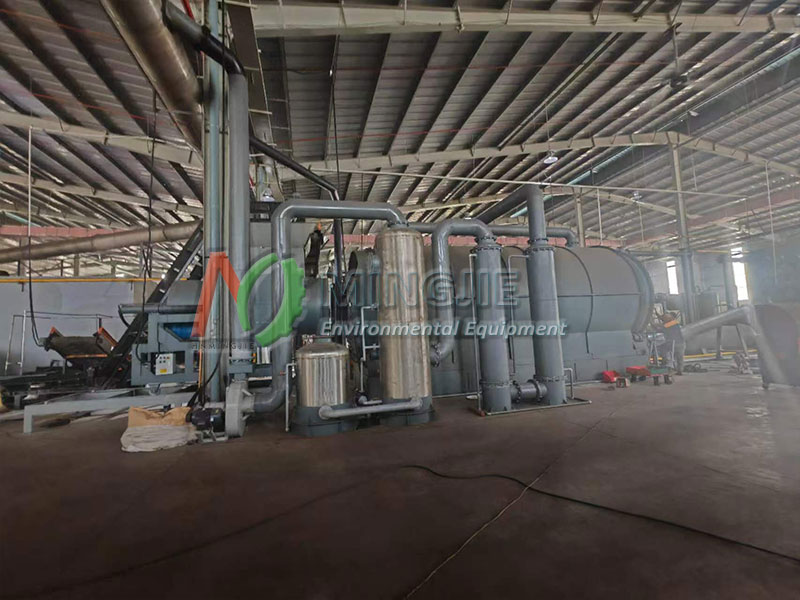
Asia Pacific: The Core Dominant Force in the Global Waste Tyre Pyrolysis Market
The Asia Pacific region is the world’s largest producer of waste tires and has the largest waste tyre pyrolysis market. China, India, and Southeast Asian countries combined produce over 150 million tons of waste tires annually. They provide ample raw material security for the pyrolysis industry, maintaining the region’s largest waste tyre pyrolysis market share globally.
Leveraging its massive tire manufacturing industrial clusters, low construction and operating costs, and continuously improving environmental policies, the Asia Pacific region has become the core battleground for global waste tire pyrolysis capacity expansion, accounting for nearly 46% of global pyrolysis equipment installations and serving as a core engine for global industry growth.
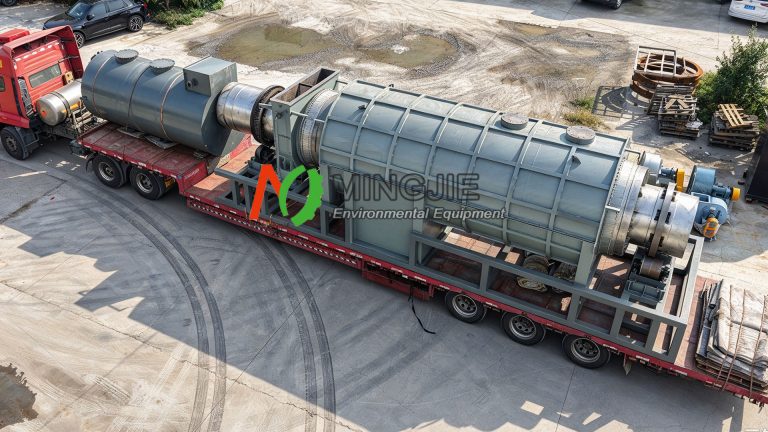
China is the core pillar of the Asia Pacific market, possessing the world’s largest number of small and medium-sized and continuous pyrolysis production lines. Mingjie Group, as a professional tyre pyrolysis plant manufacturer in China, provides customized pyrolysis solutions, equipment manufacturing, installation, and commissioning services—a one-stop solution. Its pyrolysis equipment is used in waste pyrolysis projects in over 30 countries, including South Korea, the Philippines, Thailand, Vietnam, Malaysia, South Africa, Poland, Greece, Brazil, Peru, Chile, etc.
India and Southeast Asia are emerging growth drivers in the region. India strictly restricts the import of waste tires and vigorously supports the construction of domestic pyrolysis capacity. Southeast Asian countries such as Thailand, Vietnam, and Indonesia have ample reserves of waste tire raw materials and have gradually promoted the pyrolysis recycling of waste tires in recent years. Japan and South Korea focus on high-end technology fields, primarily developing and exporting high-performance recycled carbon black.
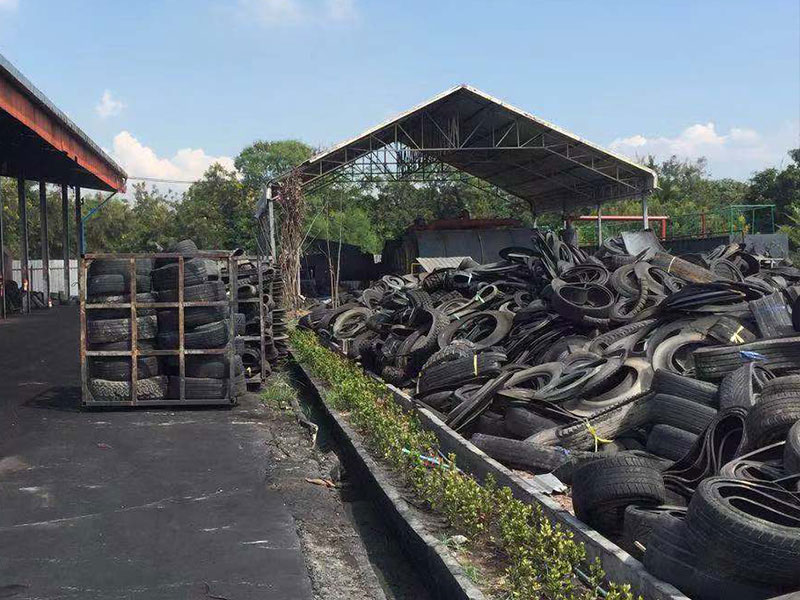
Overall, the core advantages of Asia-Pacific waste tyre pyrolysis market lie in its large-scale production capacity, high cost-effectiveness, and complete industrial chain support. However, regional development is uneven, with mid-to-high-end pyrolysis technology and refined product processing capabilities still lagging behind those in Europe and the United States.
Europe: High-End and Standardized Development of the Waste Tyre Pyrolysis Market
Europe has the strictest regulations, the most mature industrialization, and the most advanced technology in the global waste pyrolysis industry. The Waste Tyre Pyrolysis Market accounts for 23.92%, ranking second globally.
The EU has long implemented strict circular economy regulations and environmental policies, issuing a series of policies that clearly define indicators for the resource utilization rate of waste tires. This has forced pyrolysis technology to comprehensively replace traditional processing methods, resulting in a regional comprehensive waste tire recycling rate as high as 79%.
Germany, the UK, and France are the core of the European Waste Tyre Pyrolysis market, gathering the world’s leading pyrolysis technology companies and high-end demonstration projects. The European Waste Tyre Pyrolysis market has abandoned low-end, extensive processing models, focusing on high-value-added resource utilization. It is primarily focused on high-end applications of recycled carbon black, producing high-quality recycled carbon black widely used in the production of automotive tires and high-end rubber products. Simultaneously, the pyrolysis oil strictly adheres to EU environmental standards and is mainly used in clean energy power generation and as a substitute fuel in cement kilns, with product added value far exceeding that of the Asia-Pacific market.
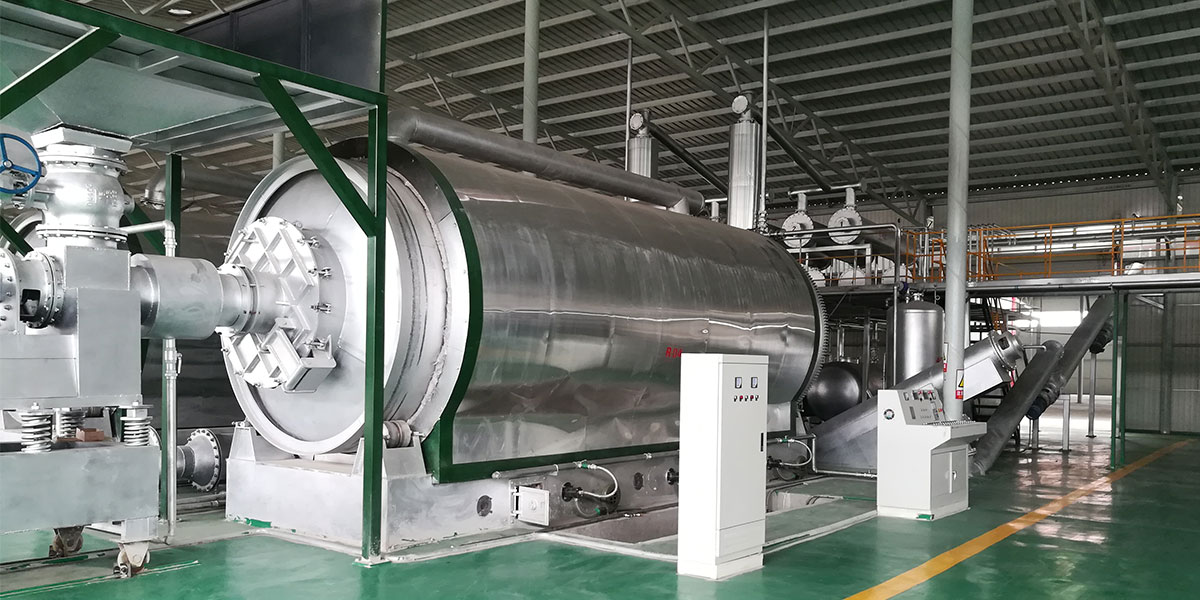
Leveraging the implementation of the EU’s Carbon Border Adjustment Mechanism (CBAM), European pyrolysis products possess strong market competitiveness. Enterprises primarily utilize large-scale continuous pyrolysis equipment, has high levels of automation, environmental emission standards, and energy efficiency. Compared to the Asia-Pacific region, the European industry’s weaknesses lie in higher construction and operating costs, slower capacity expansion, and relatively moderate industry growth.
North America: Mature Commercialization System for Waste Tire Recycling
North America accounts for 17.91% of the market, ranking among the top globally in terms of production capacity, technological level, and market maturity. The US and Canada have well-developed waste tyre pyrolysis recycling systems. North America boasts a large-scale deployment of pyrolysis equipment and a mature commercial operation model.
At the policy level, various North American states have introduced specific incentive policies and environmental subsidies for waste tire recycling, providing stable policy support for the implementation and operation of pyrolysis projects. At the same time, strict environmental standards regulate industry development, preventing disorderly and extensive production.
On the demand side, the North American industrial sector has a very high acceptance of sustainable fuels and green carbon black. Pyrolysis oil is widely used in power generation, industrial heating, and oil sands processing. Regenerated carbon black and steel wire products have achieved full-category market circulation, with a clear profit model across the industry chain.


The core characteristics of the North American Waste Tyre Pyrolysis Market are market-driven, large-scale operation, and high standardization. The Tyre Pyrolysis industry has a high concentration, with leading companies controlling core regional production capacity and channel resources. Compared to Europe, North America has relatively relaxed policy constraints, resulting in greater industry flexibility. Compared to the Asia-Pacific region, North America has more advanced pyrolysis technology and higher product added value. However, tire pyrolysis plants have higher operating costs, resulting in a moderate pace of capacity expansion.
Latin America: Waste Tyre Pyrolysis Market with Significant Growth Potential
The Latin American Waste Tyre Pyrolysis Market accounts for 6.98% of the total market. Leveraging its abundant waste tire resources, it possesses significant growth potential. The core markets in the region are concentrated in countries such as Brazil, Chile, and Peru. Brazil, as the largest economy in Latin America, generates a massive amount of waste tires. However, it has long faced challenges due to an underdeveloped recycling system and low resource utilization rates.
In recent years, Latin American countries have gradually emphasized the resource utilization of solid waste, successively introducing policies to manage waste tires and promoting the localization of pyrolysis technology. Chile and Peru have stable demand for pyrolysis-derived carbon black and industrial fuel oil, providing strong downstream market support for pyrolysis projects. Currently, there are few mature pyrolysis companies in Latin America, and most projects rely on imported complete sets of equipment from the Asia-Pacific region and Europe.
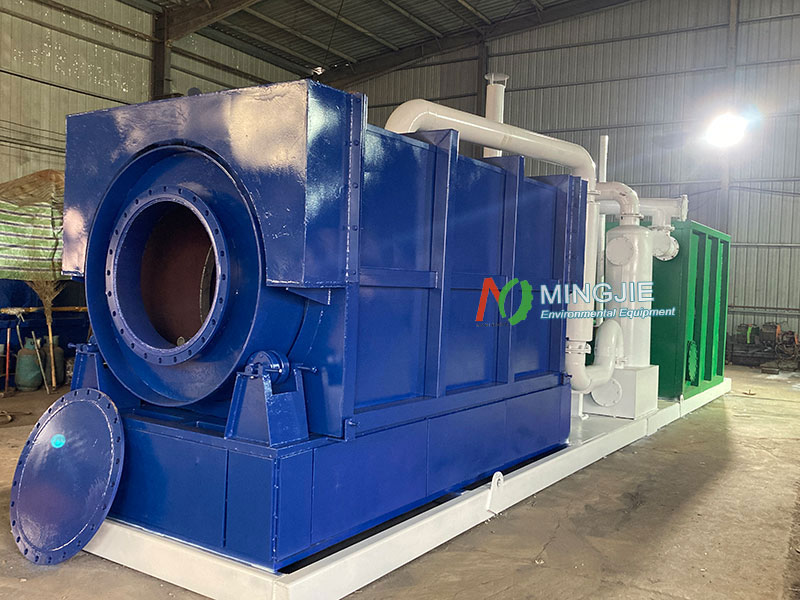
Middle East and Africa: The Waste Tyre Pyrolysis Market Shows Significant Differentiation
The Middle East and Africa sector accounts for 6.06% of the Waste Tyre Pyrolysis market, representing the weakest industrial base. Overall, there is a shortage of waste tire recycling and processing equipment, with a comprehensive recycling rate of less than 40%.
The Gulf countries in the Middle East have developed energy industries and strong demand for industrial fuels. However, local waste tire production is limited, resulting in a mismatch between raw materials and demand, hindering the industry’s development.
The African market is centered on South Africa and Nigeria, both countries with large stockpiles of waste tires and severe pollution problems. In recent years, with policy intervention and the support of international environmental organizations, they have begun to promote the construction of local pyrolysis capacity and have implemented small and medium-sized demonstration projects.
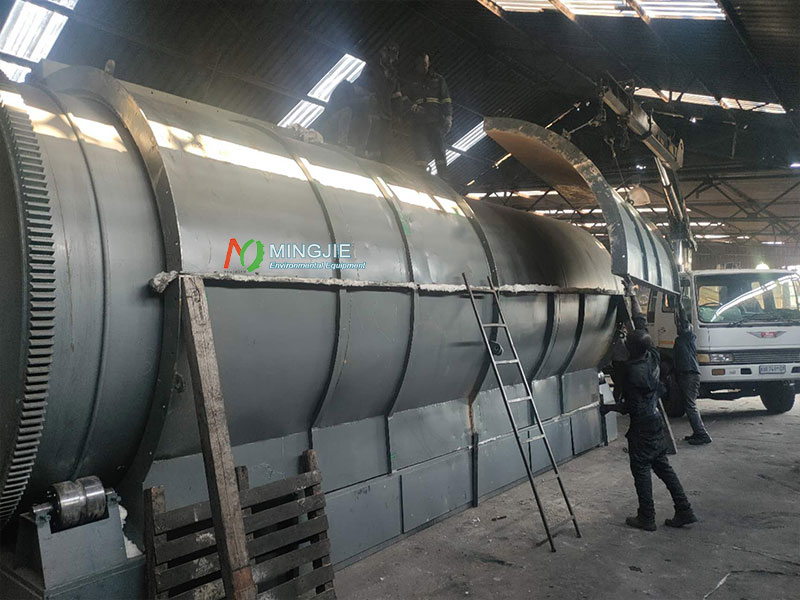
Currently, the Middle East and Africa market is still in the early stages of the Waste Tyre Pyrolysis industry. The core constraints are an imperfect policy system, funding shortages, a lack of technical personnel, and underdeveloped infrastructure. However, with the advancement of regional industrialization and the global shift of low-carbon industries, it will become a core region for growth in the global waste tyre pyrolysis market in the future.