Waste tyre pyrolysis recycling is evolving from a waste disposal method into a strategic industry with both environmental and economic value. The waste tyre pyrolysis recycling industry chain consists of three core links: collection of waste tires, pyrolysis treatment, and tyre pyrolysis products deep processing application.
From the perspective of the waste tire life cycle, its tiered utilization follows a priority from best to worst quality. High-quality tires are prioritized for retreading, medium-quality tires are used to produce recycled rubber and rubber powder, and only low-quality tires enter the pyrolysis recycling stage. This means that the raw materials obtained by pyrolysis companies are at the end of the waste tyre value chain, and the supply of raw materials is constrained by the interception at the upstream stages.
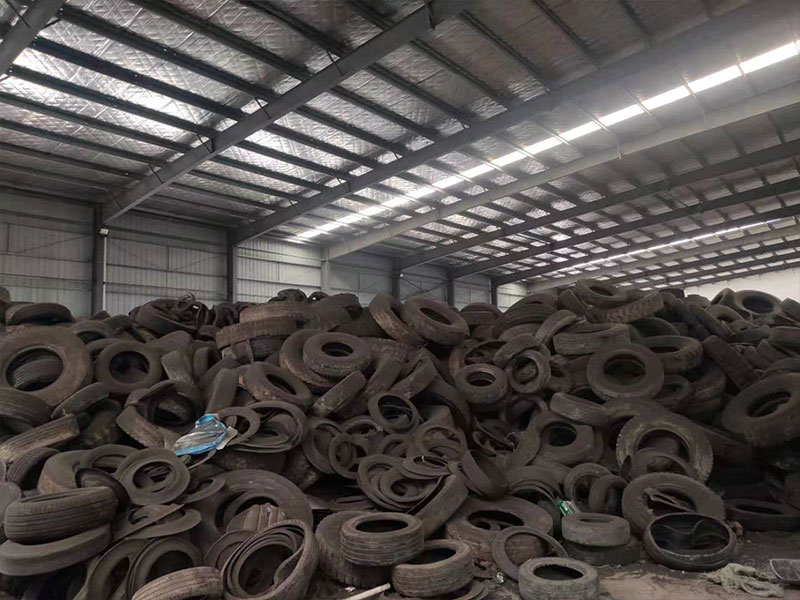
Waste tires originate from the replacement market, vehicle scrapping and dismantling, fleets, and airports, among other concentrated generation points. In 2025, the global annual production of waste tires exceeded 18 million to 31 million tons. The proportion of waste tyre pyrolysis recycling rose from less than 12% in 2020 to approximately 21%.
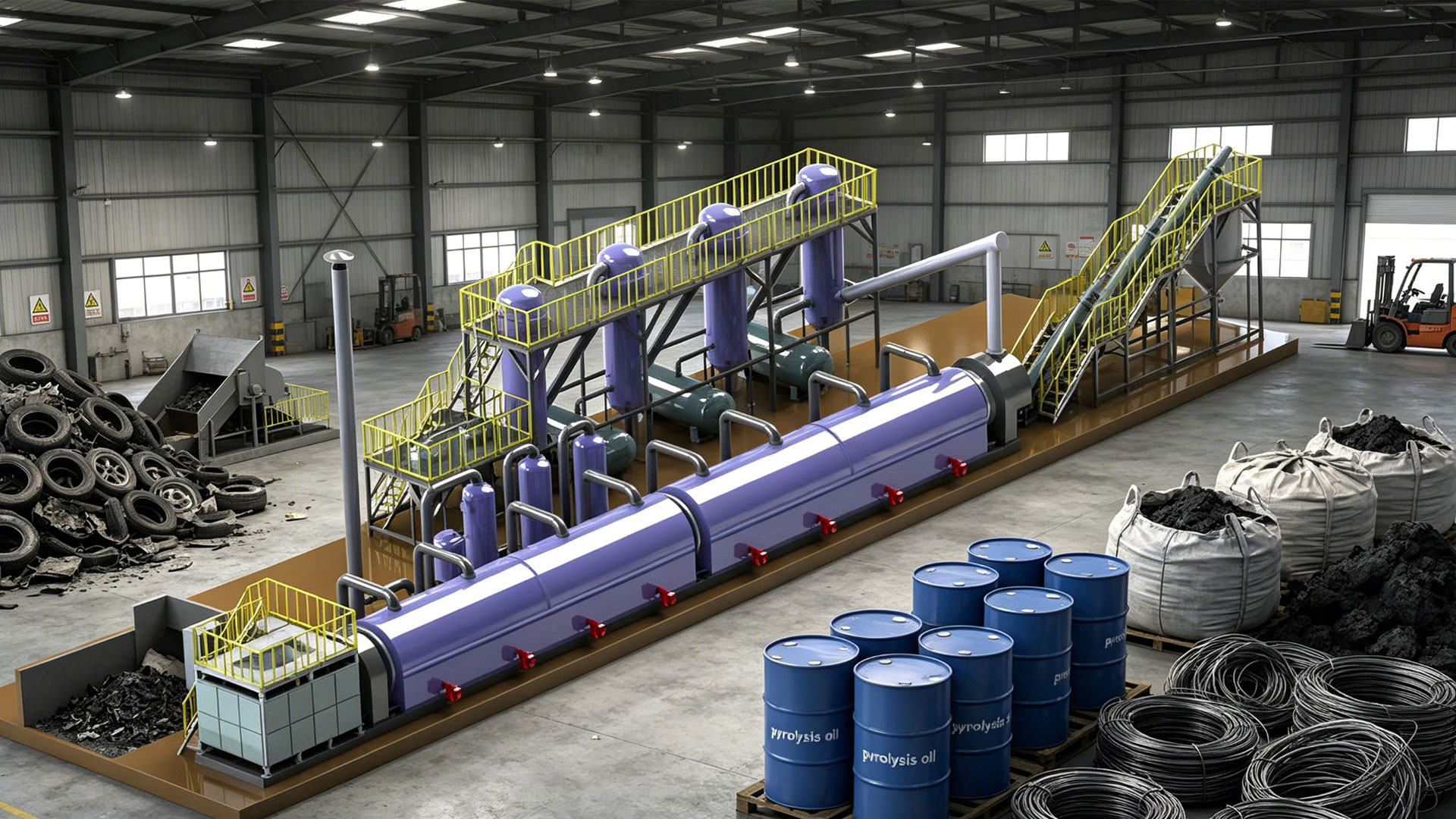
Pyrolysis plants thermochemically decompose waste tires under anaerobic conditions, producing pyrolysis oil, carbon black, steel wire, and combustible gases.
There is a significant value differentiation in the flow of tire products. Pyrolysis oil mainly flows to the industrial fuel market. Most carbon black is still sold in a low-value-added form, with only a portion entering the tire and rubber product sector after further processing.
Waste Tyre Pyrolysis Recycling Industry Structure
The waste tyre pyrolysis recycling industry chain can be clearly divided into three segments: upstream raw material supply, midstream pyrolysis conversion, and downstream product application.
Upstream: Waste Tires Collection and Transportation System
The core task of the upstream segment is to obtain qualified raw materials stably and at low cost. Due to the large volume and high transportation costs of waste tires, the collection radius is usually limited to within 150-300 kilometers. This results in a highly regionalized and fragmented upstream sector. The top ten global recycling companies collectively account for only about 23% of the market share.
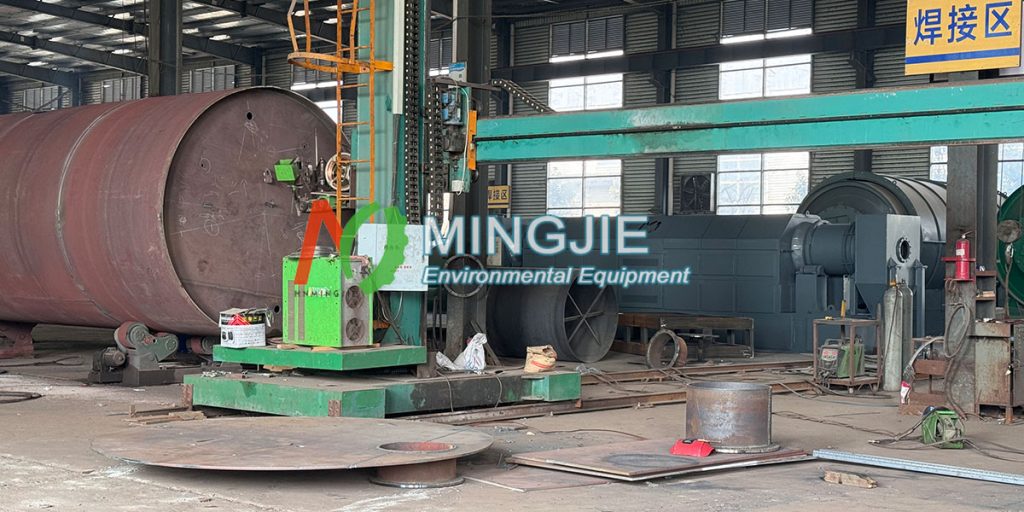
Midstream: Pyrolysis Equipment Manufacturing and Operation Services
In recent years, a clear trend of vertical integration has emerged in the midstream sector. Leading tyre pyrolysis plant manufacturers are extending downstream, binding customers with Equipment + Operation + Exclusive Sales model. Large operators, on the other hand, are reducing their reliance on external suppliers by mastering core equipment technologies.
Solid waste pyrolysis is undergoing a technological leap from batch pyrolysis to continuous pyrolysis. Batch pyrolysis equipment has a low investment threshold and mature technology, but it has high energy consumption and poor product quality consistency. Continuous pyrolysis plant can achieve 24/7 uninterrupted operation and a high degree of automation. However, it requires a large initial investment and higher technical and operational capabilities.
Downstream: Four Major Products and Applications
The application of downstream products is crucial to achieving a closed-loop value chain in the tyre pyrolysis recycling industry.
Tyre Pyrolysis Oil (TPO): From Fuel Substitute to High-End Raw Material
Pyrolysis oil is the product with the largest output, and its calorific value is comparable to diesel. It is one of the main sources of revenue in the tyre pyrolysis recycling industry chain.
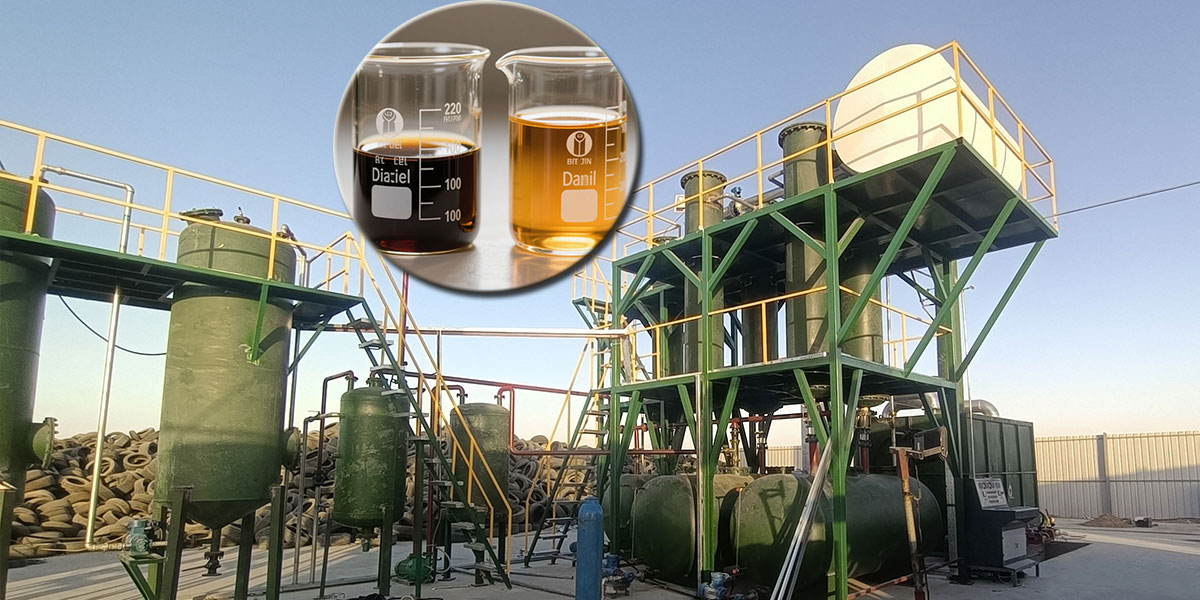
Tyre Pyrolysis Oil as Industrial Fuel: It is directly used as boiler fuel in cement plants, glass factories, ceramic factories, power plants, and steel plants, or for generating electricity with heavy oil generators.
Tyre Pyrolysis Oil as Chemical Raw Material: After pyrolysis oil distillation and refining, it yields fuel oil close to national standard gasoline/diesel, or as feedstock for oil refineries.
Tyre Pyrolysis Oil as Sustainable Aviation Fuel (SAF): This is currently the most promising direction. This means that when TPO is used in aviation and shipping, its commercial value will increase significantly.
Recycled Carbon Black (rCB): Highest Value Density
Most primary carbon black is sold as a low-value product, mainly used for heating combustion. Some crude carbon black is further processed into industrial-grade fine carbon black, significantly increasing its added value.
Recycled carbon black (rCB) is the product with the highest value density and the greatest growth potential in the tyre pyrolysis recycling industry chain. rCB is rapidly penetrating from low-end fillers to high-end applications. A Tire-to-Tire closed loop is the ultimate goal of rCB.
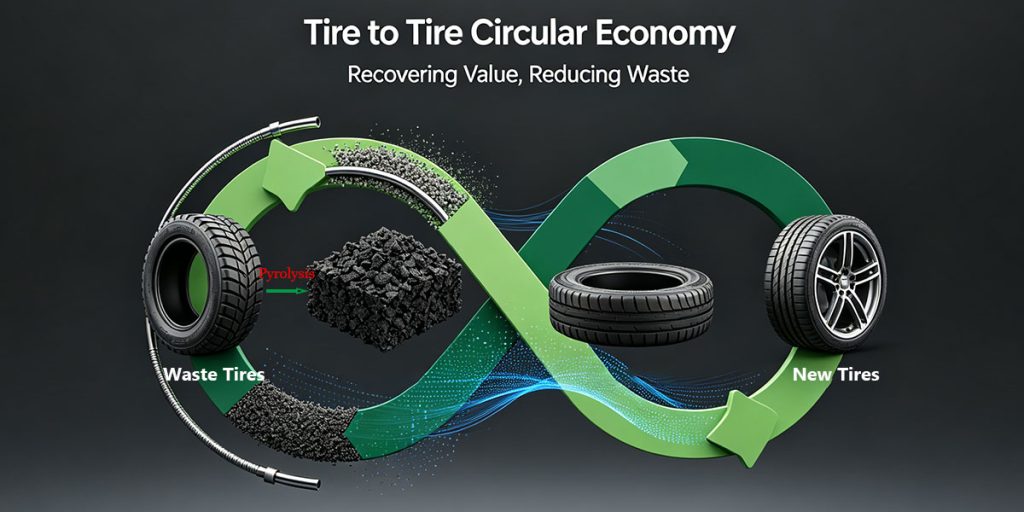
Currently, less than 1% of the carbon black used in global new tire production comes from recycled waste tires. The core bottleneck is that the reinforcing properties of rCB are still weaker than those of virgin carbon black. Tyre giants lock in rCB supply through long-term off-take agreements. This has transformed the rCB market from a spot commodity to a strategic supply chain.
Syngas: Self-Circulating Energy
The non-condensable gases produced by tyre pyrolysis recycling mainly consist of methane, ethane, and hydrogen, and have a high calorific value. They can cover approximately 30%–50% of the energy needs of a pyrolysis plant, significantly reducing operating costs.
Steel Wire Recycling
Steel wire recycling is the most mature technology, with a recovery rate exceeding 95%. Its main output goes to the steel smelting industry.