Biochar and charcoal look similar, both being black, carbon-rich, porous materials. They are both made from biomass through anaerobic pyrolysis. The most reliable way to distinguish between biochar and charcoal is through five core dimensions: production positioning, raw material processing, physicochemical properties, uses, and environmental value.
Different Production Purposes of Biochar and Charcoal
Biochar: An eco-functional material primarily used for soil improvement, carbon sequestration, and environmental remediation. The purpose of biochar production is to utilize its specific physicochemical properties, not for combustion as fuel. Biochar is a highly stable, highly absorbent carbon-rich material with a stable structure and porous, enriched functional groups.
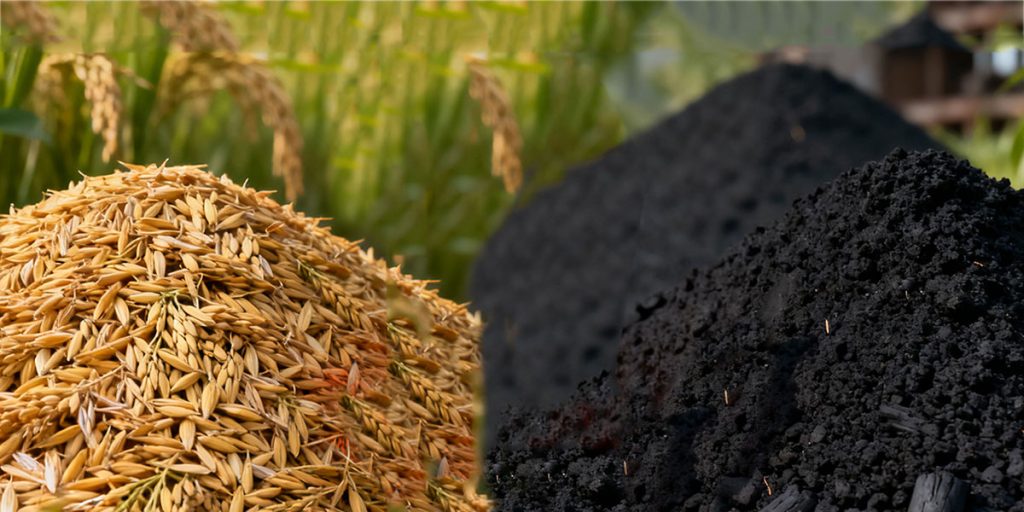
Charcoal: A solid fuel primarily used for cooking, heating, and industrial heating. Charcoal is an energy-generating product, and its production goal is to maximize fuel output. It prioritizes combustibility, long-lasting burning, and high calorific value to meet energy needs, without any ecological design features.
Biomass Pyrolysis Processes between Charcoal and Biochar
Charcoal Production: Uses a single, high-quality raw material, such as logs, hardwoods, and branches. Charcoal relies on wood-based raw materials, and does not use waste biomass.
Charcoal production equipment is mostly open, simple kilns. The production process is rudimentary and lacks standards, with low oxygen control precision. It employs rapid pyrolysis at 300–500℃ with short-term heat preservation. Charcoal retains a large amount of combustible volatile components, only completing basic carbonization and shaping, without subsequent modification treatment.
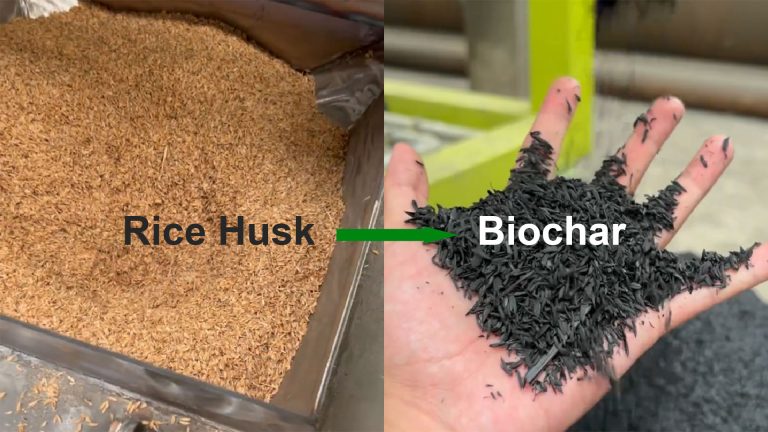
Biochar Production: Uses a wide range of raw materials, utilizing various agricultural and forestry organic wastes, including straw, rice husks, fruit shells, sawdust, livestock manure, and garden branches. Biochar production equipment enables resource utilization of waste, achieving low-carbon recycling.
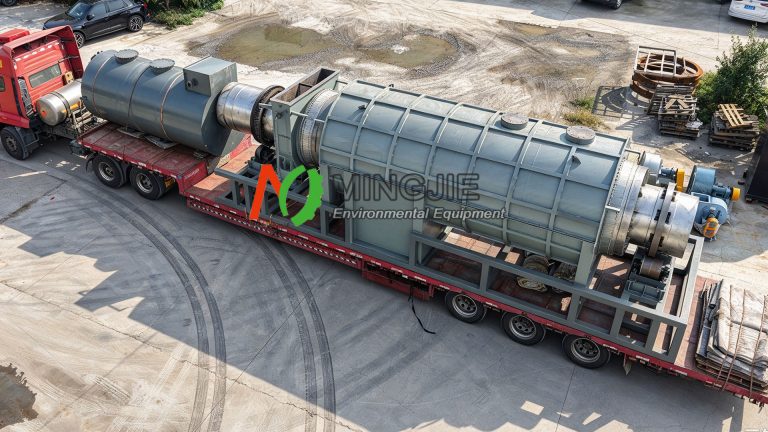
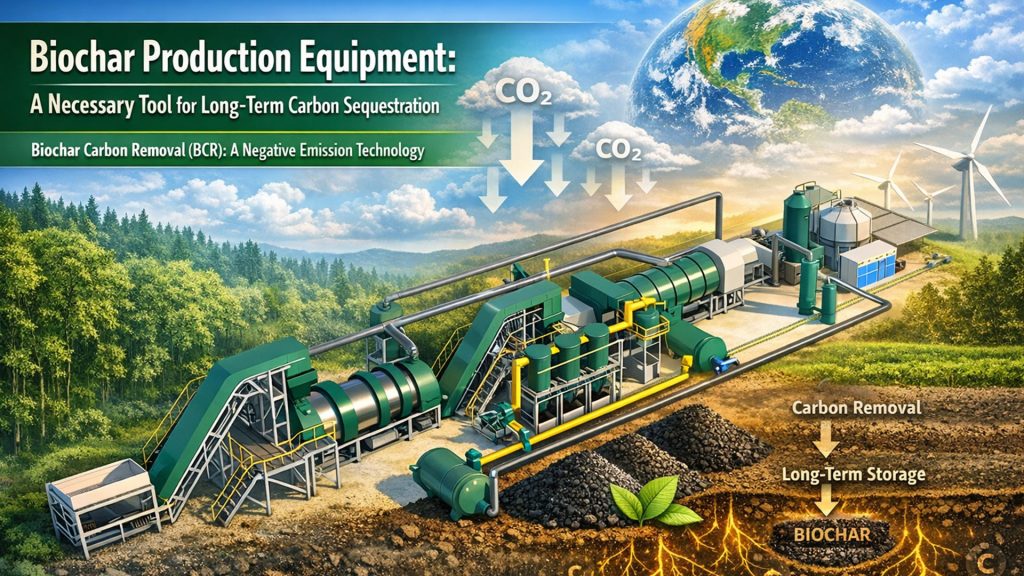
Biomass carbonization plant utilizes specialized pyrolysis reactors in a strictly controlled anaerobic environment. Slow pyrolysis ensures a more complete reaction. It enhances biochar quality through precise control of parameters such as temperature, heating rate, and residence time.
Distinguishing Biochar and Charcoal by Physicochemical Properties
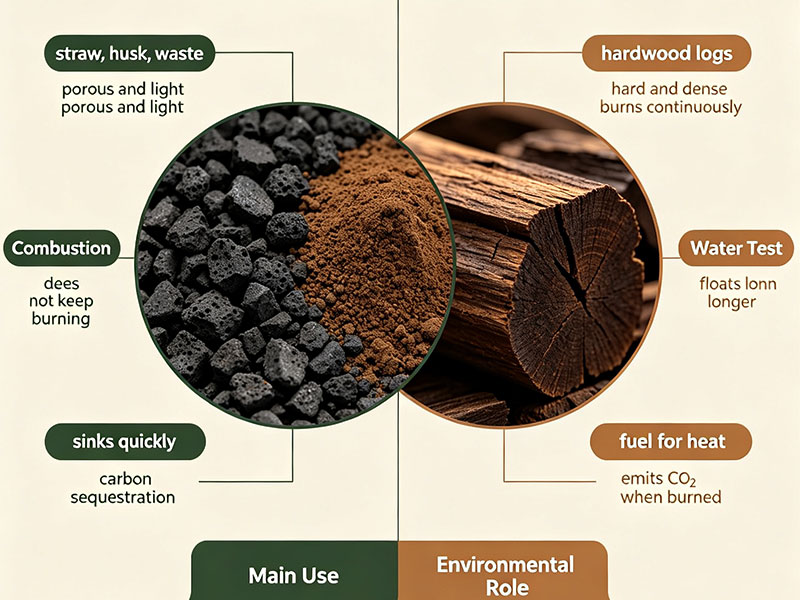
Combustibility: Biochar is completely non-combustible and has no combustion activity. Charcoal is easily combustible, has a high calorific value, and can burn continuously when exposed to an open flame.
Adsorption Capacity: Biochar is rich in micropores and mesopores, has a large specific surface area, and is rich in functional groups, resulting in extremely strong adsorption performance. Charcoal has large pores and a small specific surface area.
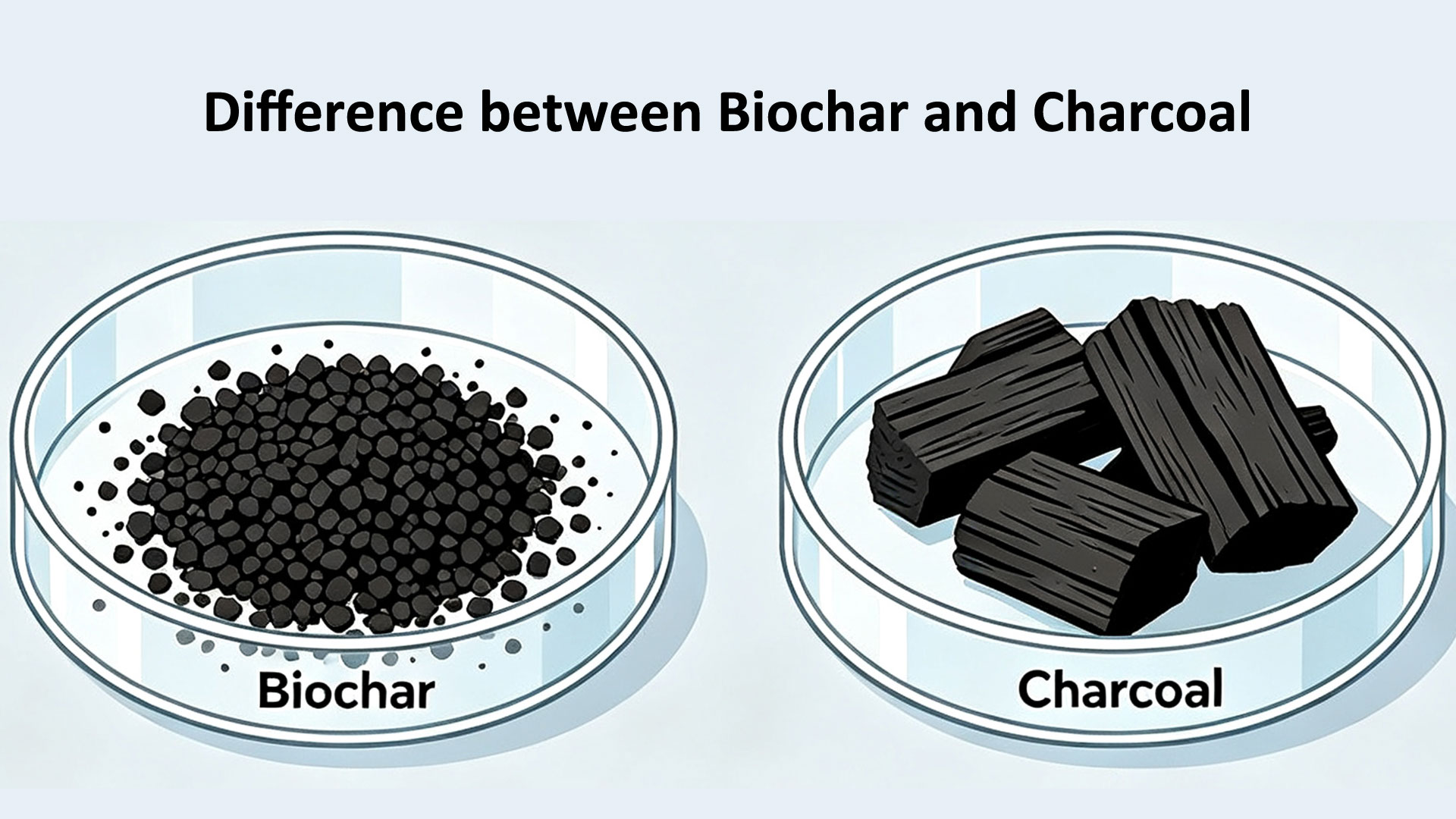
Hardness and Texture: Biochar often retains the original microporous structure of plants. Its texture is relatively loose and brittle, easily crumbling into powder when rubbed by hand. Charcoal is usually calcined at high temperatures for combustion. Its structure is dense and hard, producing a clear metallic sound when struck.
Carbon Stability: Biochar has a highly stable carbon structure, resists microbial decomposition, and can remain in soil for hundreds to thousands of years. Charcoal has a more active carbon structure, is easily oxidized and decomposed, and has a shorter shelf life.
Different Applications between Biochar and Charcoal
Charcoal: Used solely as fuel and industrial raw material, primarily for grilling, heating, cooking, metal smelting, and chemical reduction. Charcoal is not used in agriculture or environmental remediation.
Biochar: Used solely as an ecological agriculture and environmental protection material. It is primarily used for soil improvement, land remediation, and greenhouse gas carbon sequestration.
Distinguishing by Environmental Value
Charcoal: Has no positive environmental value, increasing carbon emissions and air pollution. Logging to produce charcoal damages vegetation, and burning it releases pollutants such as carbon dioxide and soot.
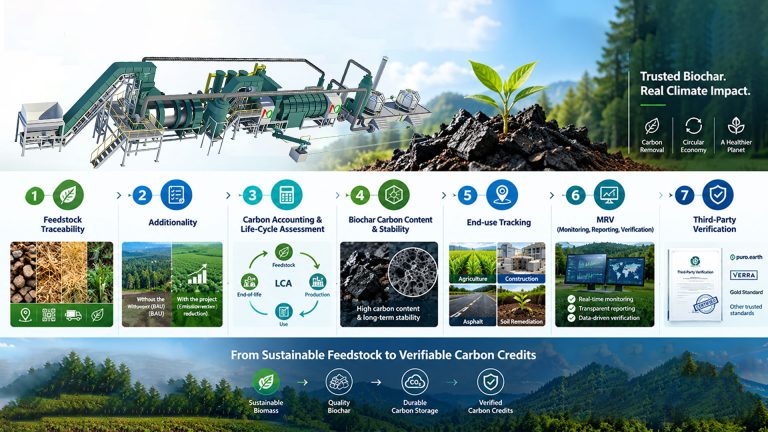
Biochar: A negative carbon environmentally friendly material, possessing both ecological restoration and carbon neutrality value. It can sequester carbon long-term, reduce agricultural greenhouse gas emissions, remediate polluted water and soil, and improve degraded soil.
The most authoritative distinction between biochar and charcoal is made based on test data.
According to the International Biochar Initiative (IBI) standards, the H/Corg (hydrogen/carbon organic ratio) of biochar must be less than 0.7. This represents the long-term stability of carbon, allowing it to remain in the ground for centuries.
Charcoal, however, is not required to adhere to this stringent chemical standard. Its testing reports only consider calorific value and fixed carbon content.