In 2026, the global waste tire pyrolysis recycling industry exhibited significant characteristics of accelerated commercialization, large-scale production, and deepened supply chain integration. Several large-scale waste tire pyrolysis plants entered the substantive construction phase.
Industrialization of Waste Tire Pyrolysis Recycling Projects
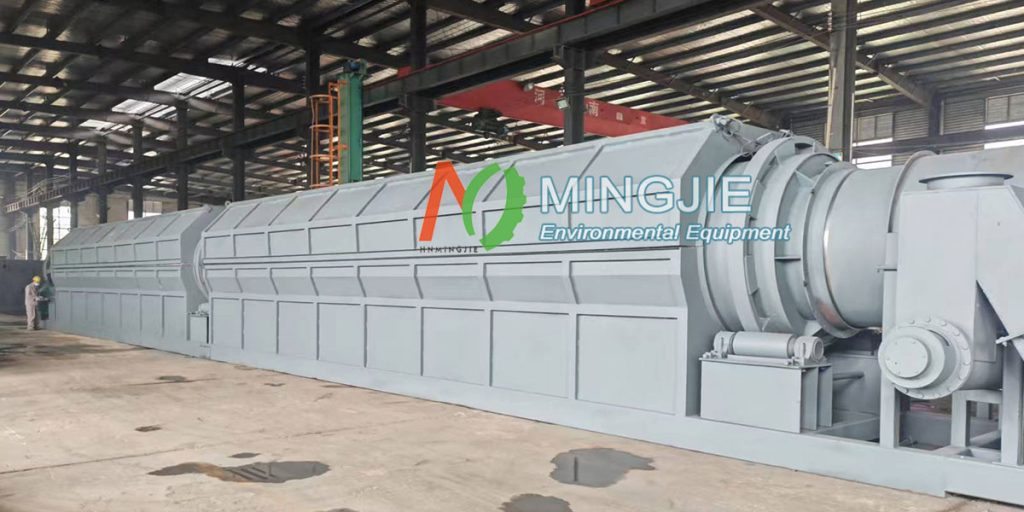
In 2026, most waste tire pyrolysis recycling projects will move away from batch pyrolysis plants and adopt continuous pyrolysis plants with high processing capacity. Continuous operation of pyrolysis equipment signifies a move towards more efficient and lower-cost industrialized operation in the waste tire pyrolysis recycling industry.
Globally, 68% of newly built pyrolysis projects opt for fully continuous processes. New projects in Europe and North America are 100% continuous. In Asia, existing batch reactors are undergoing centralized technical upgrades and replacements with continuous pyrolysis systems. The waste tire pyrolysis recycling industry is entering a period of equipment replacement.
Promotion of Continuous Pyrolysis Technology
Lummus Technologies announced a strategic investment in Innovate Renewable Energy. This aims to accelerate the global adoption of continuous tyre pyrolysis technology.
In 2026, pyrolysis technology became the main technological support for newly built tire pyrolysis recycling plants worldwide. The main technological direction revolves around five major areas of iteration: efficient continuous reactors, high-value products, low-carbon carbon assets, intelligent complete sets of equipment, and global compliance.
In 2026, dual-carbon policies became the strongest driving force for continuous pyrolysis technologies.
Environmental Advantages of Waste Tires Continuous Pyrolysis
Full-process emission reduction advantages: Continuous pyrolysis plant can achieve cascaded waste heat recovery and self-sufficiency in fuel gas, reducing greenhouse gas emissions by 84% compared to traditional processes. Recycled carbon black and recycled fuel oil replace fossil fuels, generating tradable carbon emission reduction credits.
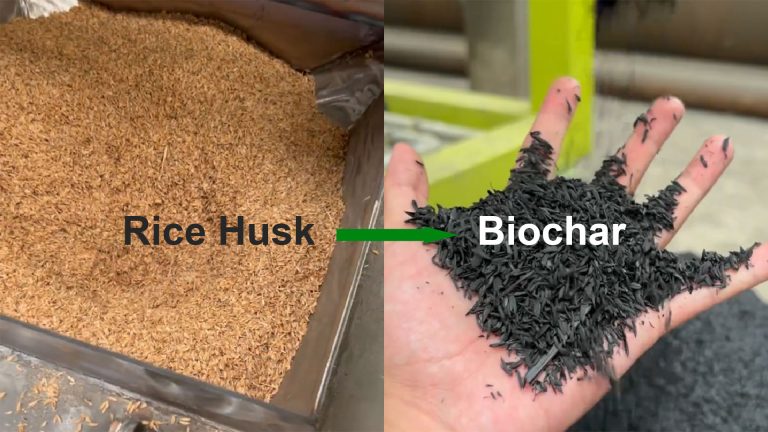
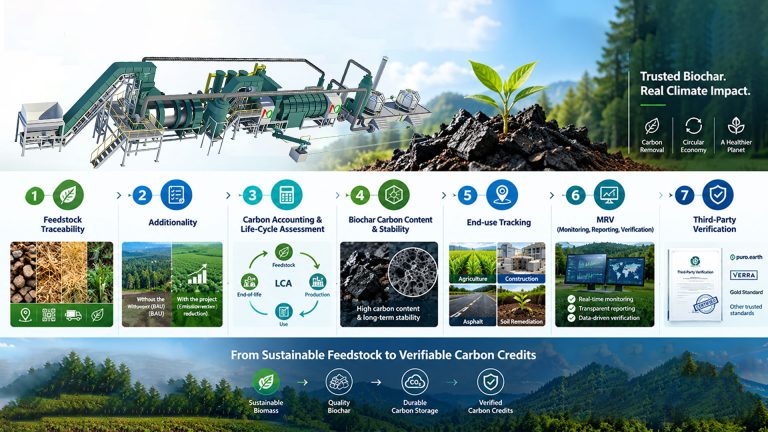
Biochar-based carbon sink (CDR): Modified pyrolysis carbon black stably sequesters soil carbon and is included in the carbon dioxide removal (CDR) accounting system.

Policy support accelerates substitution: Domestic circular economy policies prioritize the approval of continuous projects, which enjoy green credit. The EU’s mandatory tire recycling rate of 95% by 2030 requires large scale continuous pyrolysis to meet the requirements for large-scale closed-loop systems.
Circular Economy Closed Loop
Waste tire pyrolysis recycling projects not only focus on capacity building but also emphasize the commercialization of downstream products. For example, Bolder’s recycled carbon black (rCB) is claimed to reduce carbon emissions by up to 85%. Dunlop and Cabot are also jointly developing the use of rCB in new tire manufacturing in 2026. This opens the door to high-value applications for pyrolysis products.
High-Value Tire Pyrolysis Products
By 2026, continuous technology will enable a comprehensive upgrade in the added value of waste tire pyrolysis recycled products.
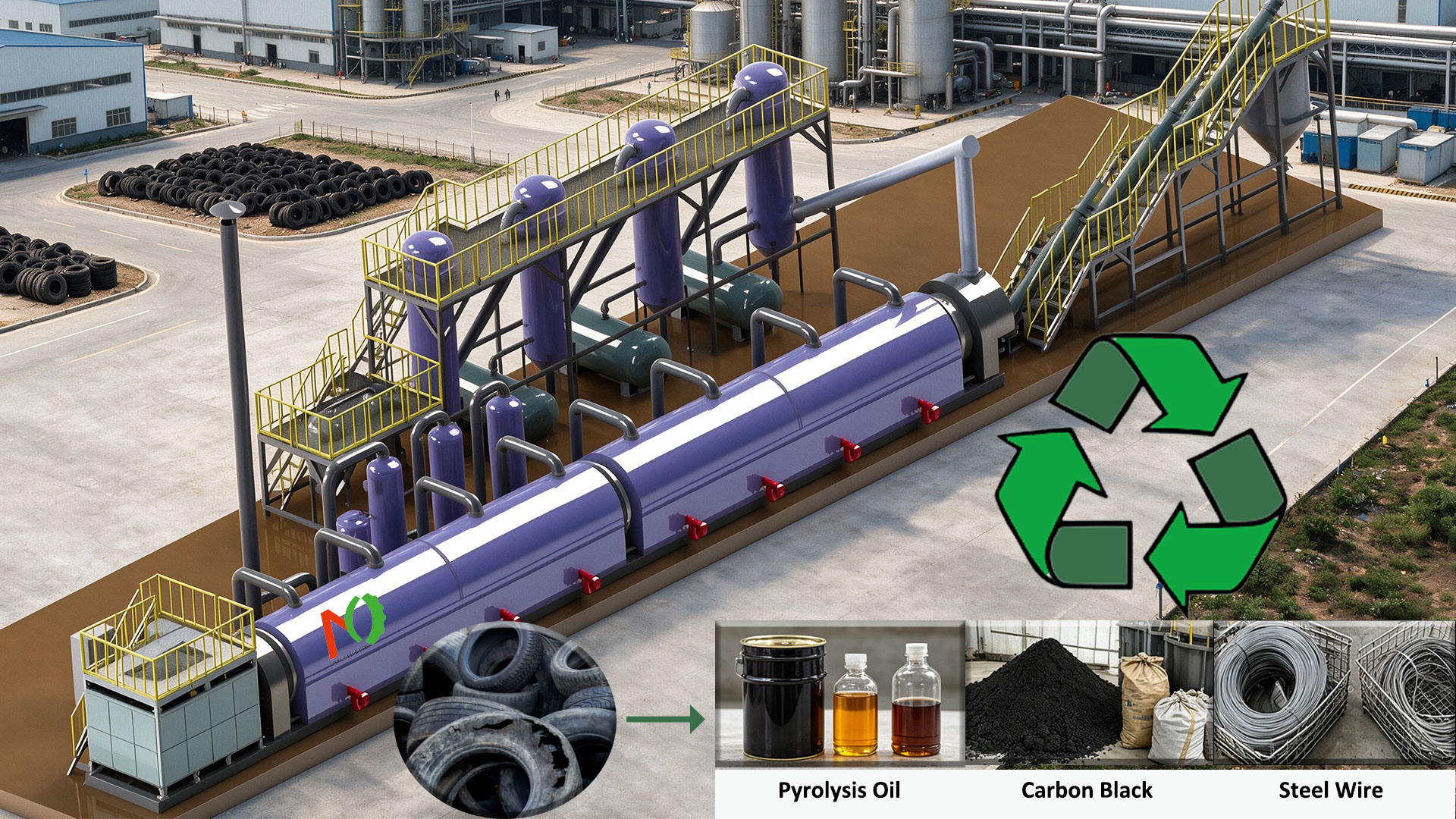
Pyrolysis Oil (TPO): Mass production through hydrorefining, entering the sustainable aviation fuel (SAF) market.
The EU RED Directive promotes ISCC EU certification for tire pyrolysis oil, meeting the 65% carbon reduction standard throughout its life cycle, serving as a sustainable feedstock for SAF. The continuous pyrolysis system’s stable production of high-quality tire pyrolysis oil is a core advantage for supplying SAF hydrogenation units.
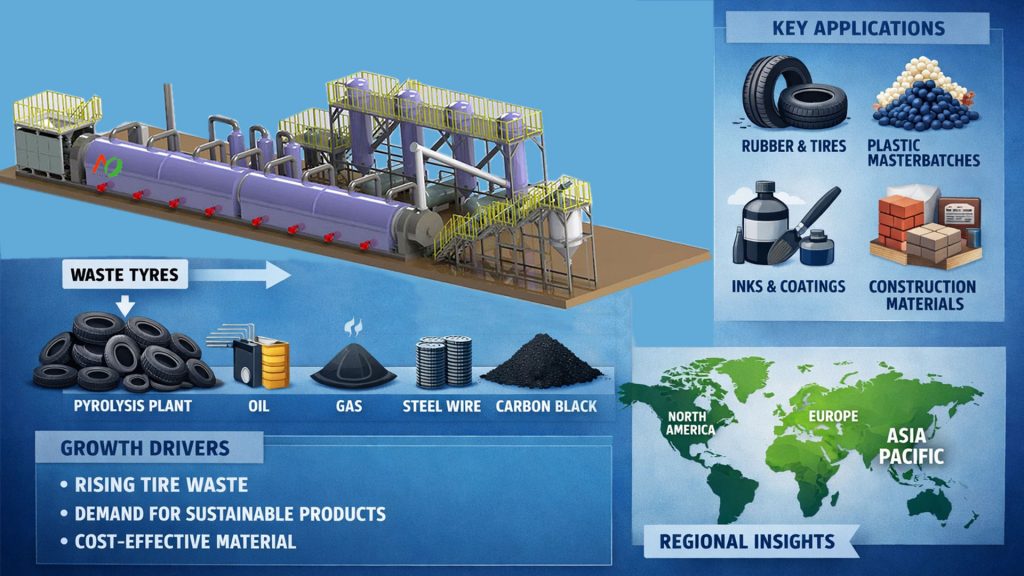
Recycled Carbon Black (rCB): Modified carbon black capacity exceeds 50%, returning to the original tire formulation.
Continuous tire pyrolysis process produces carbon black particles with uniformity and stable impurities, supporting carbon black modification production lines. Modified rCB has a specific surface area and oil absorption value comparable to N550/N660 new carbon black. High-purity carbon black extends to high-value-added applications such as conductive materials and lithium battery anode fillers.
Non-condensable Combustible Syngas: Energy self-sufficiency
All pyrolysis gas is recovered and burned for heating, achieving an energy self-sufficiency rate of over 60%.
Steel Wire: High-temperature clean separation, directly recycled into steelmaking furnaces
Continuous closed-loop pyrolysis of non-oxidized steel wire eliminates the need for secondary pickling, achieving a metal recovery rate close to 100%.