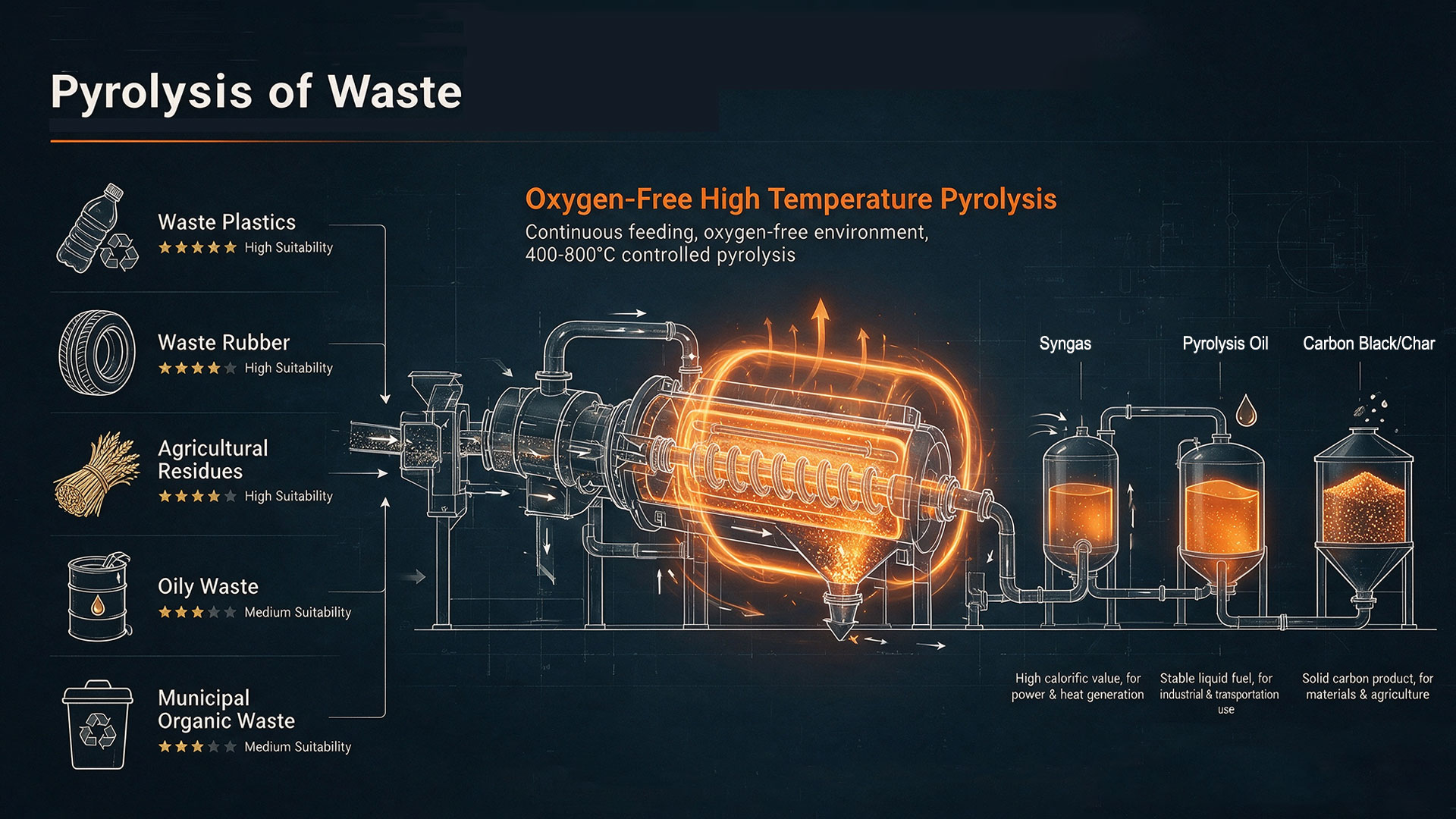
Not all waste is suitable for pyrolysis. Pyrolysis plant is particularly effective for organic and carbon-based solid waste that are difficult to recycle traditionally. In industrial practical applications, waste materials with high organic content, low ash content, low moisture and no strong corrosive impurities are the most suitable feedstocks for pyrolysis. Typical raw materials for pyrolysis of waste include waste plastics, end-of-life tires, oil sludge, and waste biomass.
Based on current research and industrial applications, pyrolysis of waste types share a common characteristic: they are rich in organic polymers, which can be broken down into valuable products.
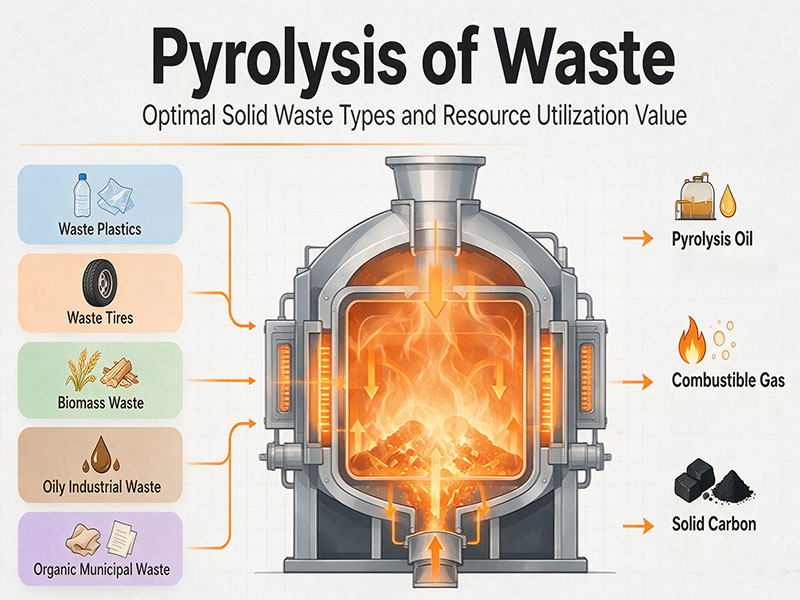
Pyrolysis of Waste Plastic: Optimal Feedstock for High-Yield Fuel Oil
Waste plastics are the most widely used and economically valuable raw material in industrial pyrolysis. They possess extremely high hydrocarbon content and very low ash content. The pyrolysis of waste plastic conversion rate is far higher than other solid wastes, and they rank first in fuel oil production.
General-purpose plastics, polyethylene (PE), polypropylene (PP), polystyrene (PS), and ABS are the most suitable types for pyrolysis. This includes plastic films, disposable food containers, industrial plastic waste, and mixed packaging plastics. These plastics have stable molecular structures and do not contain any inherently harmful components. After pyrolysis of waste plastic, it can produce high-purity pyrolysis oil, carbon balck and syngas.
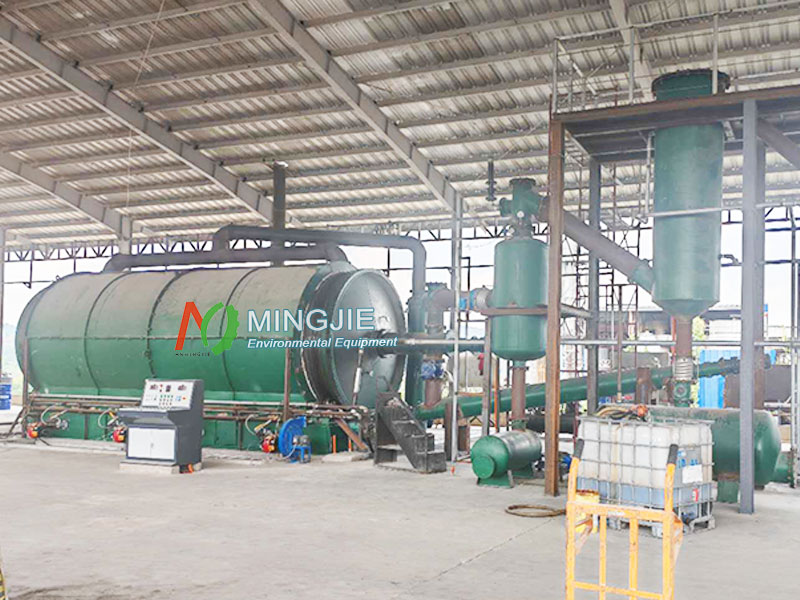
Pyrolysis machine is particularly effective at processing waste plastics that are difficult to recycle using traditional methods. Aluminum-plastic composite packaging and mixed waste plastics can be completely recycled through plastic pyrolysis plant.
It is worth noting that polyvinyl chloride (PVC) and polyethylene terephthalate (PET) plastics with high impurity content are not suitable for pyrolysis. During thermal decomposition, they release corrosive hydrogen chloride gas. This can lead to equipment corrosion, the production of toxic byproducts, and a significant increase in exhaust gas treatment costs.
Waste Rubber and Tires: Stable and Mature Pyrolysis Raw Materials
Waste tires and industrial rubber waste are core raw materials for large-scale commercial solid waste pyrolysis projects. They possess significant advantages such as ultra-low moisture content, high calorific value, uniform texture, and stable pyrolysis reaction conditions. They are suitable for mature batch and continuous pyrolysis plant.
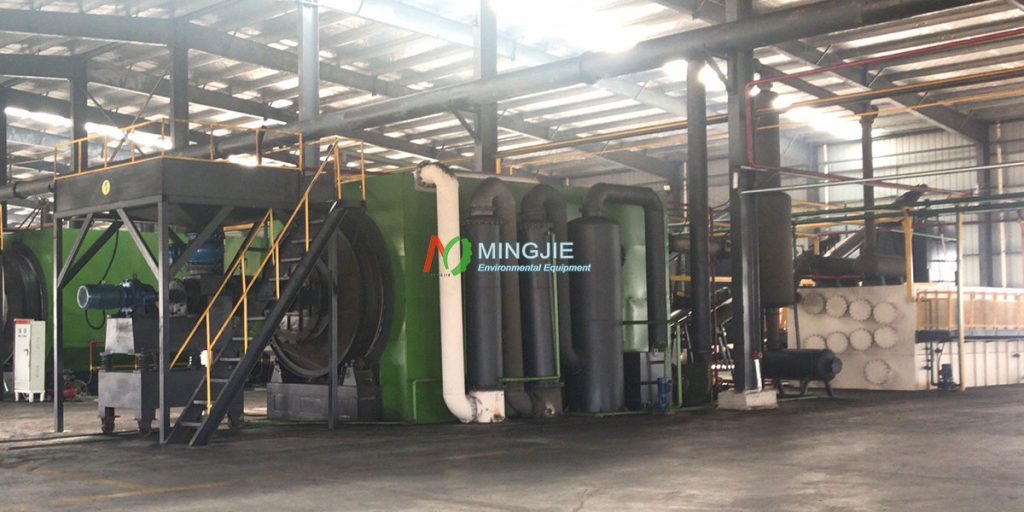
As a pure hydrocarbon organic polymer, waste rubber has low ash and impurity content, ensuring a high degree of controllability in the pyrolysis reaction. High-temperature pyrolysis of waste can separate waste tires into four high-value products: pyrolysis oil, carbon black, steel wire, and syngas.
Tire pyrolysis oil has a high and stable calorific value and can be widely used in industrial fields. Recovered carbon black can be used in rubber manufacturing and the building materials industry. Steel wire can be directly recycled. The resource utilization rate of waste tires is close to 100%.
Compared to plastic pyrolysis, tire pyrolysis produces more stable products, fewer byproducts, and does not emit complex pollutants.
Oily Sludge: Hazardous Industrial Waste Disposal
Oily industrial hazardous waste is difficult to treat using traditional methods and is a valuable raw material specifically for pyrolysis technology. Pyrolysis plants can simultaneously achieve harmless disposal and resource recovery, filling a technological gap in industrial solid waste treatment. Typical applicable wastes include oil-based drill cuttings, coal tar residue, oily sludge, and waste oil residue.
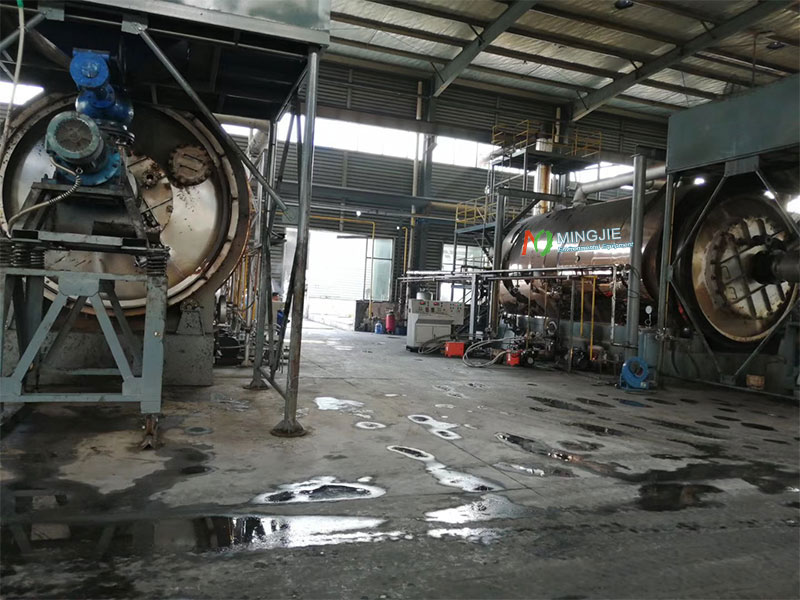
These wastes are rich in high-molecular-weight organic hydrocarbons. Traditional disposal methods such as incineration and landfill cause serious soil and water pollution. Pyrolysis machine can break down high-molecular-weight organic matter into pyrolysis oil and combustible gases, achieving oil residue separation and sludge purification.
The recovered high-quality industrial oil can be reused, while the remaining solid residue can meet environmental emission standards after treatment. Oil-based drill cuttings with an oil content of 8%-25% and low moisture content can maintain a stable oil yield, making them a high-value pyrolysis raw material among industrial hazardous wastes.
Biomass Waste: Environmentally Friendly Low-Carbon Pyrolysis Raw Material
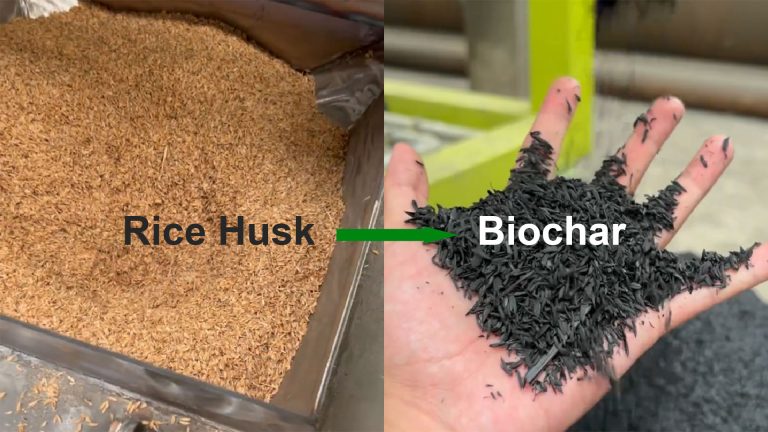
Agricultural and forestry biomass waste is the core green raw material for low-carbon pyrolysis. Biomass pyrolysis does not cause secondary pollution, complies with carbon neutrality policies, and is suitable for large scale biochar production. Common biomass raw materials include forestry residues (sawdust, bark, branches) and agricultural waste (crop straw, rice husks, corn cobs, peanut shells).
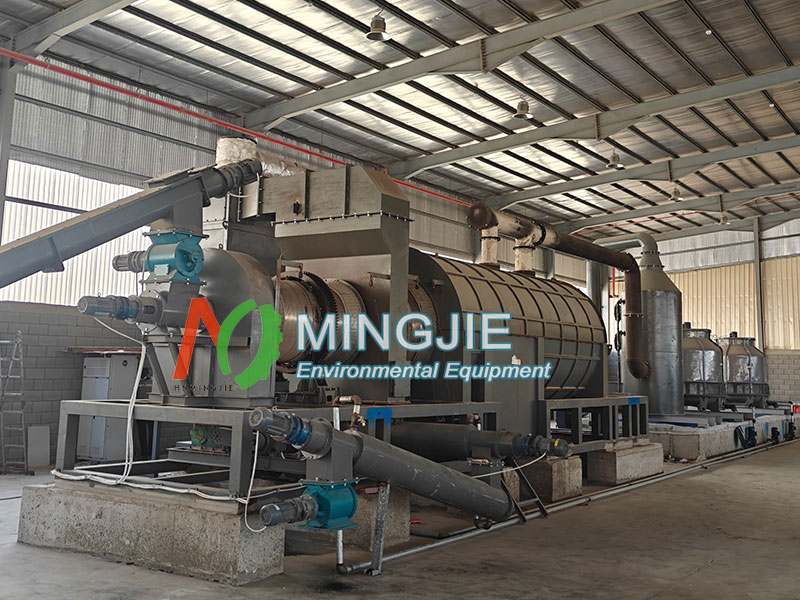
High-quality biomass waste is characterized by low ash content, high carbon density, and few impurities. After drying and dehydration pretreatment, it can be adapted to medium- and low-temperature pyrolysis processes. The main biomass pyrolysis products are biochar and syngas. Biochar can be used for soil improvement, organic fertilizer production, and adsorbent materials. Syngas can be used for heating the biomass pyrolysis equipment itself.
Biomass pyrolysis has significant advantages such as environmental friendliness, wide availability of raw materials, and low cost.
Special and Complex Waste Pyrolysis
Pyrolysis machine can handle more complex and challenging wastes that are impractical or polluting to process using other methods.
Electronic Waste: Pyrolysis technology is crucial for the safe decomposition of complex organic resins in circuit boards and chips. Pyrolysis Of E-Waste not only releases precious metals for recycling but also safely disposes of hazardous components.
Wind Turbine Blades: With the retirement of first-generation wind turbines, a new waste problem has emerged. The fiber-reinforced composites in the blades are difficult to recycle. Pyrolysis equipment can thermally decompose the resin matrix into oil and gas, thereby recovering reusable reinforcing fibers (such as glass fiber or carbon fiber). While economically challenging, it is far superior to landfill or incineration.
Summarize
Pyrolysis of waste has become an effective solution to the growing global waste crisis. It can process a wide range of raw materials, from everyday plastics to complex industrial composites, transforming them into valuable fuels, chemicals, and materials. This makes it a cornerstone for achieving a circular economy and reducing our dependence on fossil fuels.
The core value of pyrolysis technology lies in its precise adaptation to the resource utilization of various difficult-to-dispose-of, high-value organic solid wastes. Accurate matching of raw materials and pyrolysis processes can maximize the value of solid waste resources while achieving harmless and reduced-volume disposal.