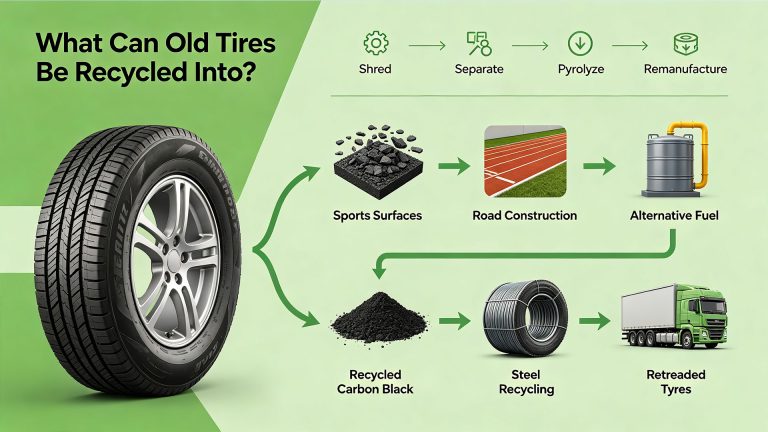
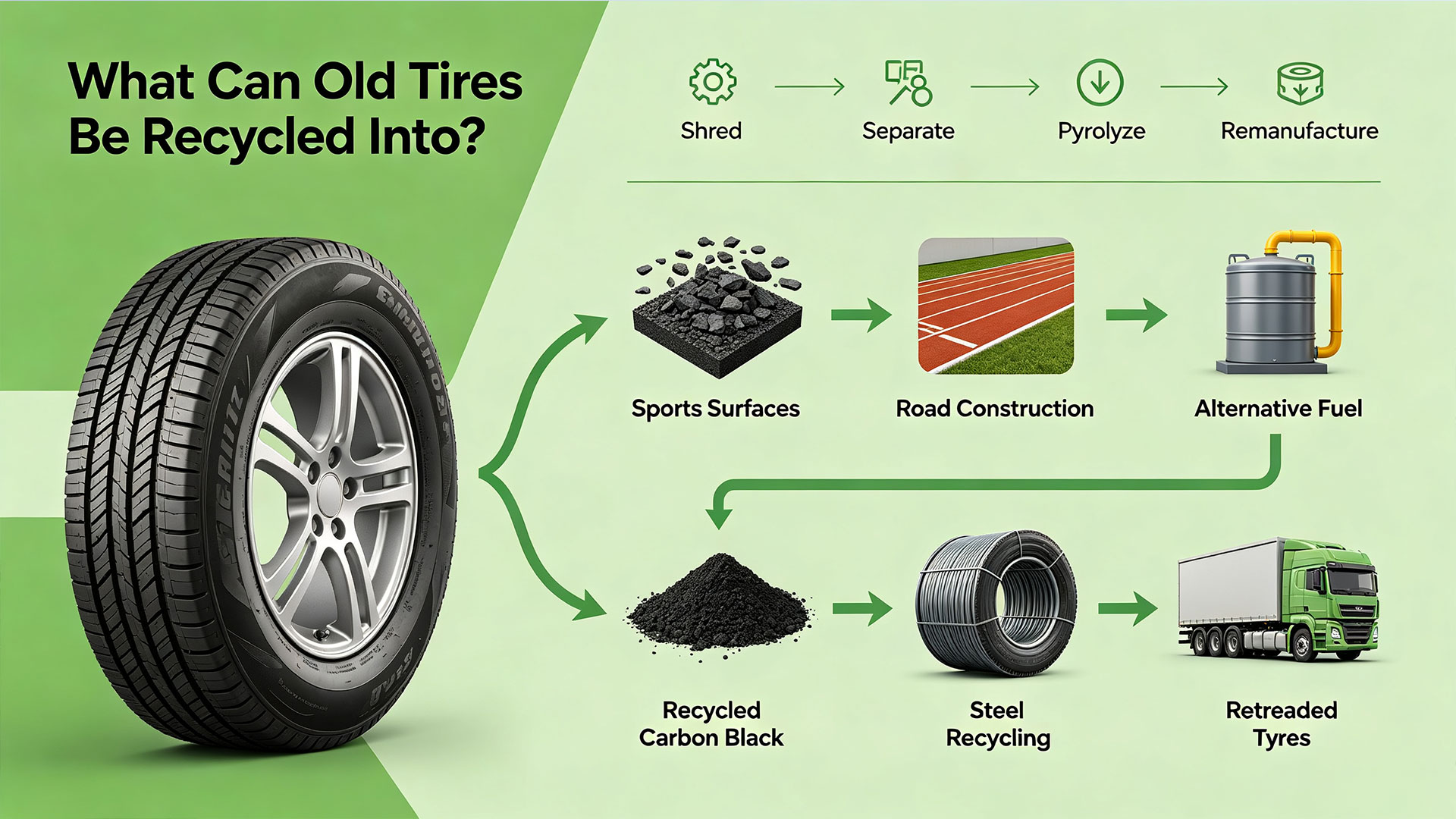
Every year, hundreds of millions of tons of car tires worldwide reach their end-of-life. These high-molecular-weight rubber products take hundreds of years to naturally degrade, and indiscriminate dumping leads to black pollution. However, waste tires are a high-value recyclable resource. What can old tires be recycled into? Through various technologies such as physical crushing, chemical desulfurization, and pyrolysis, waste tires can be transformed into a series of high-value products.
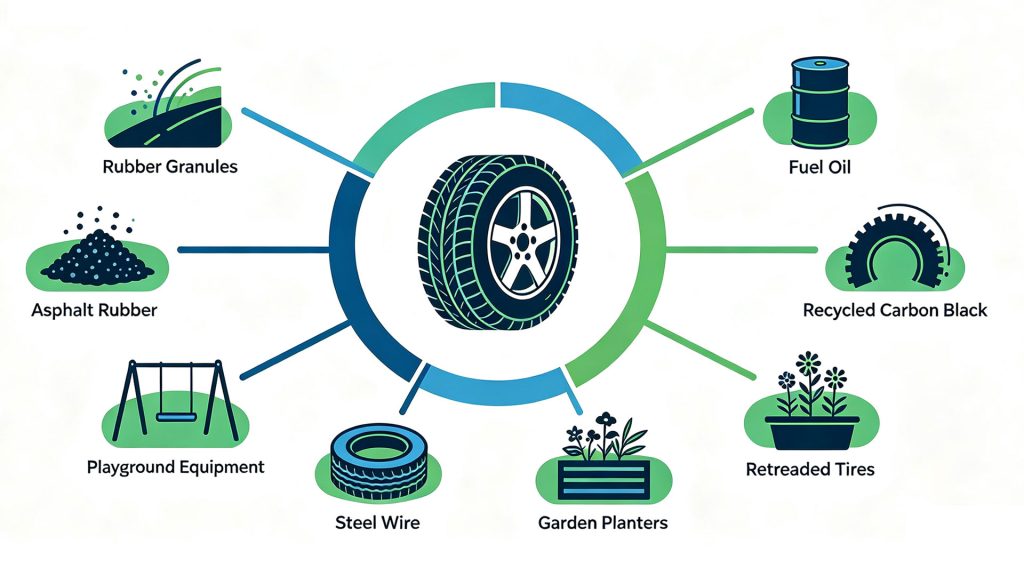
Scrap tires can be converted into products such as fuel, industrial raw materials, construction materials, and consumer goods. Different processing pathways yield different recycled products.
Tire-Derived Fuel (TDF)
Scrap tires possess a very high calorific value. One tonne of scrap tires yields energy equivalent to 1.14 tonnes of standard coal. Consequently, shredding and processing them into Tire-Derived Fuel (TDF) represents another vital recycling pathway.
Scrap tires are sheared and shredded into 25–50mm granules, with steel wire thoroughly removed, to produce TDF solid fuel. TDF is primarily supplied for co-incineration in cement rotary kilns, thermal power plants, and lime kilns.
Simple DIY Upcycling
Beyond industrial-scale recycling, waste tires offer great potential for creative lifestyle applications. With simple cleaning, cutting, painting, and modification, they can be transformed into playground equipment, landscaping features, agricultural tools, outdoor gear, and more.
What Can Old Tires Be Recycled Into by Mechanical Crushing
Mechanical crushing is the most fundamental and widely used method for recycling used tires. It relies solely on physical separation processes such as shearing, shredding, magnetic separation, and air classification. This process does not alter the chemical structure of the rubber.
Rubber Granules
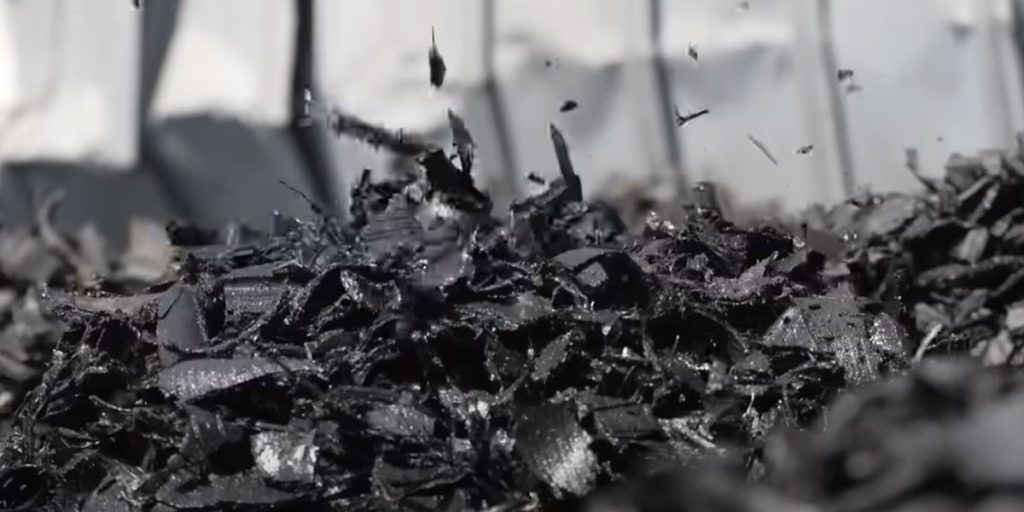
After the removal of steel wires, waste tires are crushed into granules ranging from 3 to 50 mm in size. These granules are used for synthetic running tracks, basketball courts, infill for artificial turf on soccer fields, and cushioning layers for fitness trails. They are also utilized in rubber floor tiles, anti-slip surfaces for residential areas, and shock-absorbing underlays.
Rubber Powder
Rubber granules are ground into ultrafine powder (80–200 mesh). It can be directly blended into asphalt to produce modified asphalt pavement or incorporated into new rubber, plastics, and waterproofing materials.
Recovered Steel Wire
The internal steel wire layers of the tires are completely separated via magnetic separation. They are sent to steel mills for smelting and remanufactured into steel products, rebar, and metal components.
Synthetic Fibers
Internal nylon and polyester tire cords are separated via air classification. Once recovered, they are processed into recycled plastics, fiberfill, and industrial filter fabrics.
What Can Old Tires Be Recycled Into by Pyrolysis
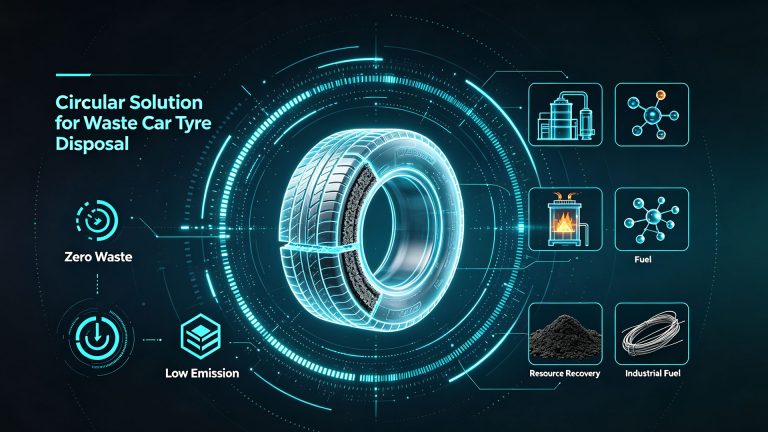
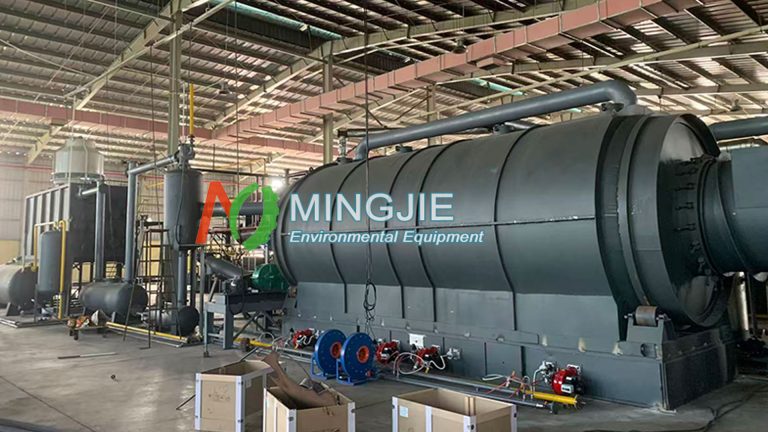
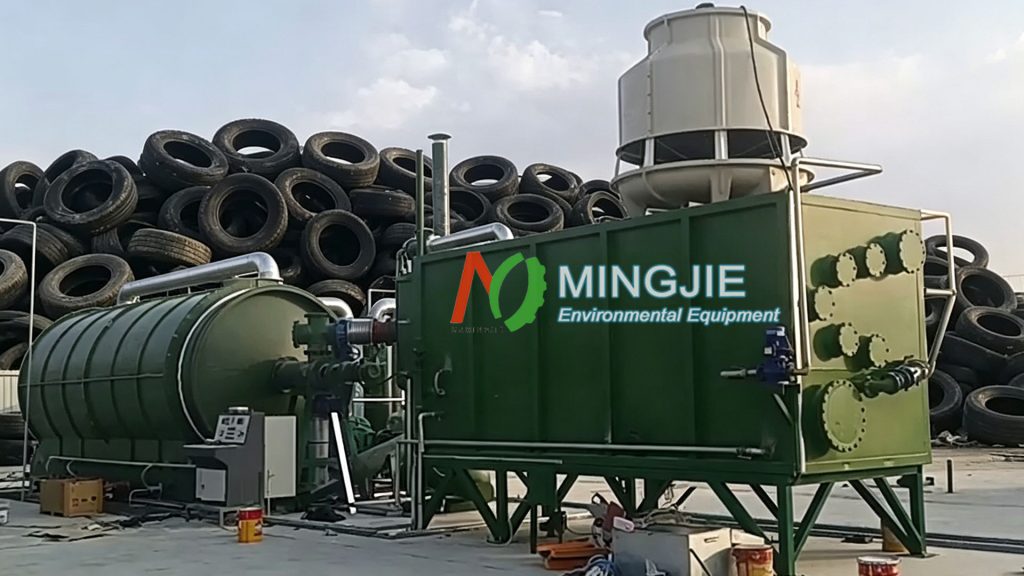
Tyre pyrolysis plant utilizes an oxygen-free, high-temperature pyrolysis process to decompose whole tires, achieving resource recovery of all components. This is a high-end recycling solution promoted by the circular economy, producing pyrolysis oil, carbon black, steel wire, and syngas.
Pyrolysis Oil
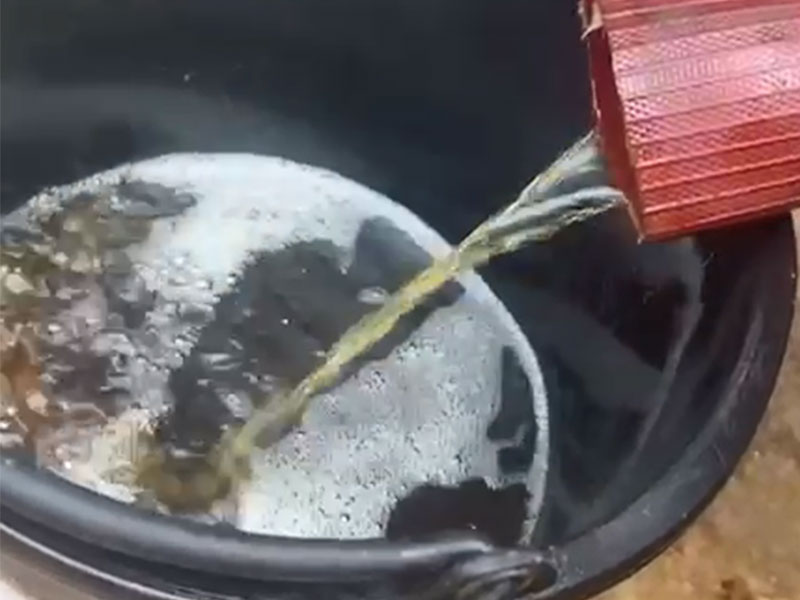
Hydrocarbons in tire rubber are converted into liquid fuel with a calorific value close to diesel. Tire pyrolysis oil can be directly used as auxiliary fuel for industrial boilers, ceramic kilns, thermal power plants, and ships. After deep refining, it can partially replace diesel in construction machinery.
Recycled Carbon Black
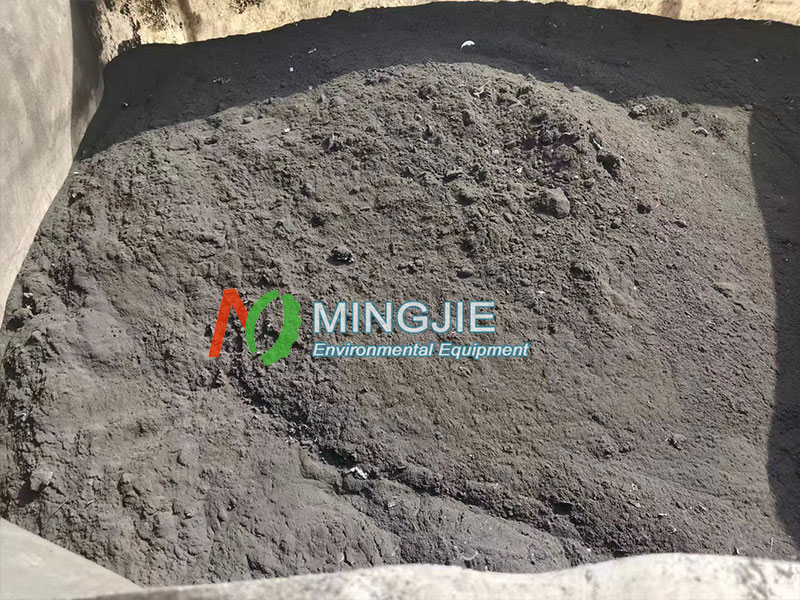
The core solid product of waste tire pyrolysis. After further processing, it can replace petroleum-based virgin carbon black. Used in the production of new tires, rubber seals, inks, coatings, and plastic fillers.
Syngas
Light, combustible gas produced by tire pyrolysis, after desulfurization and purification, is directly fed back into the pyrolysis furnace for combustion and heating. This achieves energy self-sufficiency for the tire pyrolysis oil production line, reducing energy consumption and carbon emissions.
Steel Wire
Completely recycled metal steel wire is used in steelmaking.
Summarize
What can old tires be recycled into? Waste tire recycling forms a multi-level utilization system. Simple, low-end modifications enable short-term reuse of waste tires. Tire shredding can produce rubber granules and powder, meeting the needs of the building materials, road, and sports industries. TDF fuel enables large-scale disposal of waste tires. Thermochemical pyrolysis technology achieves high-value recovery of all components, producing fuel and chemical raw materials. Each end-of-life tire, after undergoing corresponding processes, results in no waste, truly achieving solid waste reduction, harmlessness, and resource recycling.