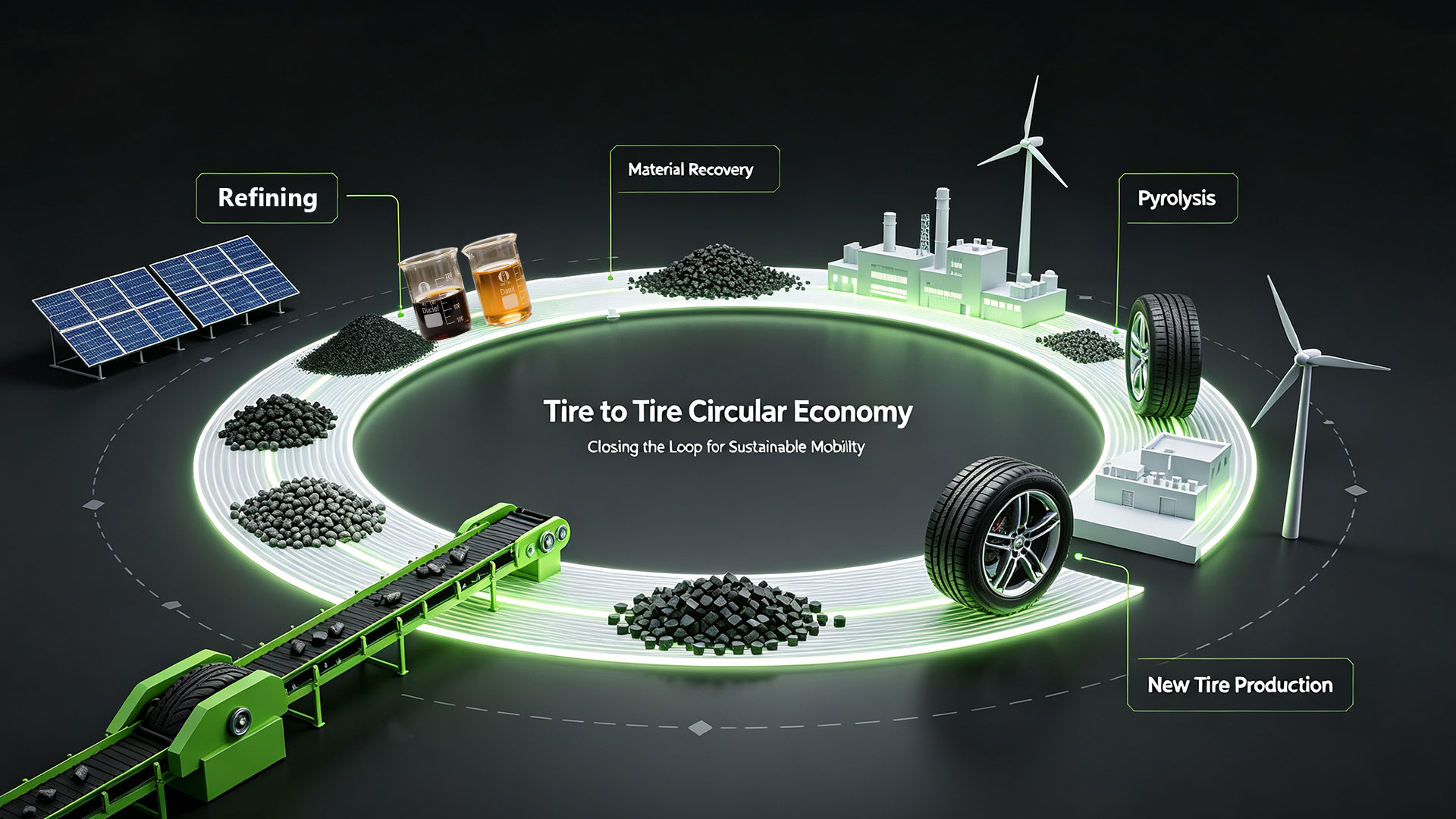
Tire to Tire circular economy offers a transformative alternative, turning waste tires into raw materials for future tires. Realizing a tire-to-tire circular economy is based on a closed-loop recycling strategy built upon pyrolysis technology and collaboration within the tire manufacturing industry.
The Tire to Tire circular economy constructs a closed-loop industrial system. It is driven by advanced tyre pyrolysis technology and guaranteed by standardized industry collaboration. The tire-to-tire closed loop has evolved from a conceptual model into an industrial practice, becoming a core direction for global green tire manufacturing and solid waste recycling.
Core Value of the Tire to Tire Circular Economy
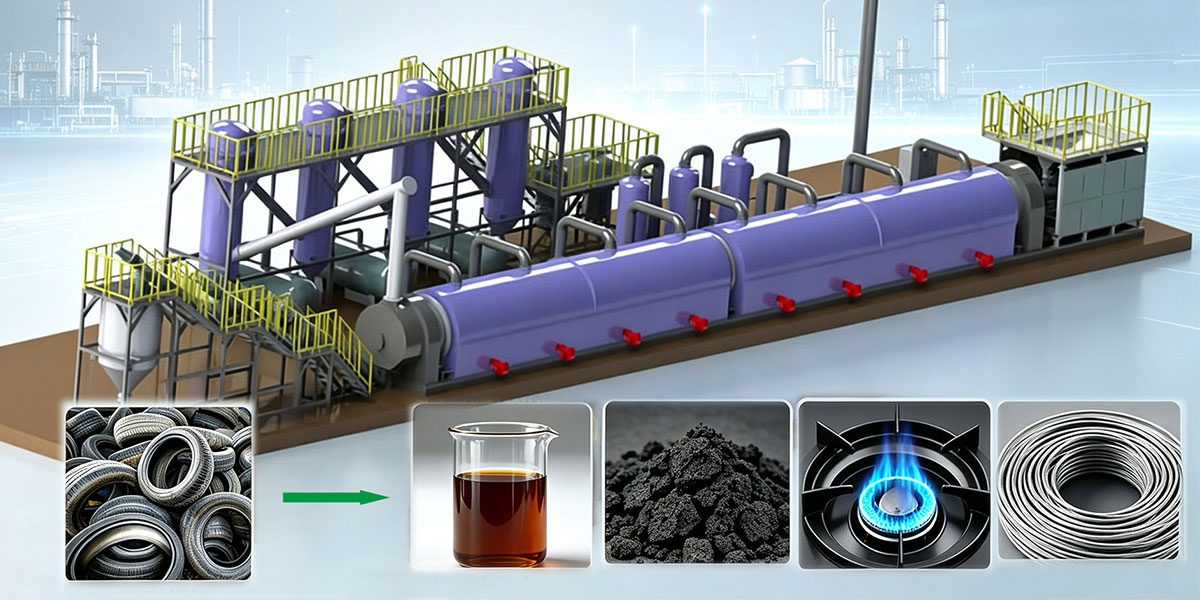
Its core definition is the recovery of high-purity, high-performance raw materials from waste tires and their reuse in the production of new, qualified tires. This achieves infinite material recycling without compromising quality. Key recyclable materials include recycled carbon black (rCB), refined tire pyrolysis oil (TPO), recycled steel wire, and synthetic rubber monomers.

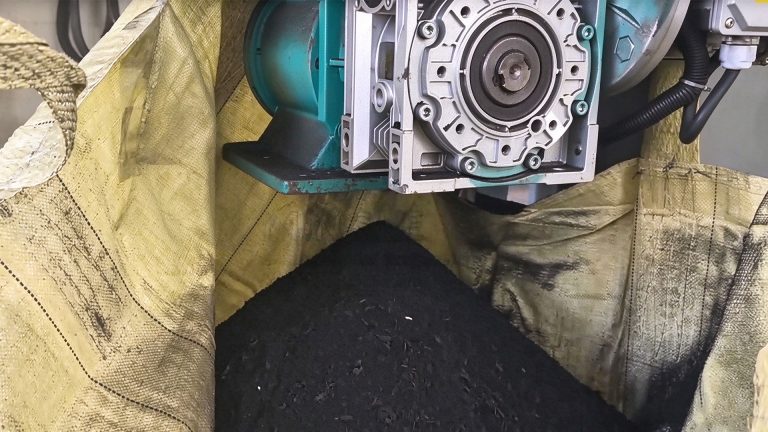
Recycled carbon black (rCB) can replace virgin carbon black in new tire production. Tire pyrolysis oil (TPO) can be refined into oils used in the production of chemicals needed for synthetic rubber.
This Tire to Tire circular model has both environmental and economic value.
- Ecologically, it eliminates landfill and incineration pollution and reduces over-reliance on natural rubber and fossil fuels. It also reduces greenhouse gas emissions throughout the tire’s lifecycle.
- Economically, it stabilizes the supply of raw materials for the recycled industry, reducing production costs for tire companies. It also builds a sustainable green industrial chain, fully aligning with global carbon neutrality and circular economy policies.
Tire Circular Economy Full-Chain Implementation Strategy
A standardized waste tire collection and pre-sorting system is the first step in a closed-loop cycle. Tires of different brands, service lives, and formulations are classified and grouped to ensure consistent raw material performance, providing a reliable raw material foundation for subsequent high-precision pyrolysis regeneration.
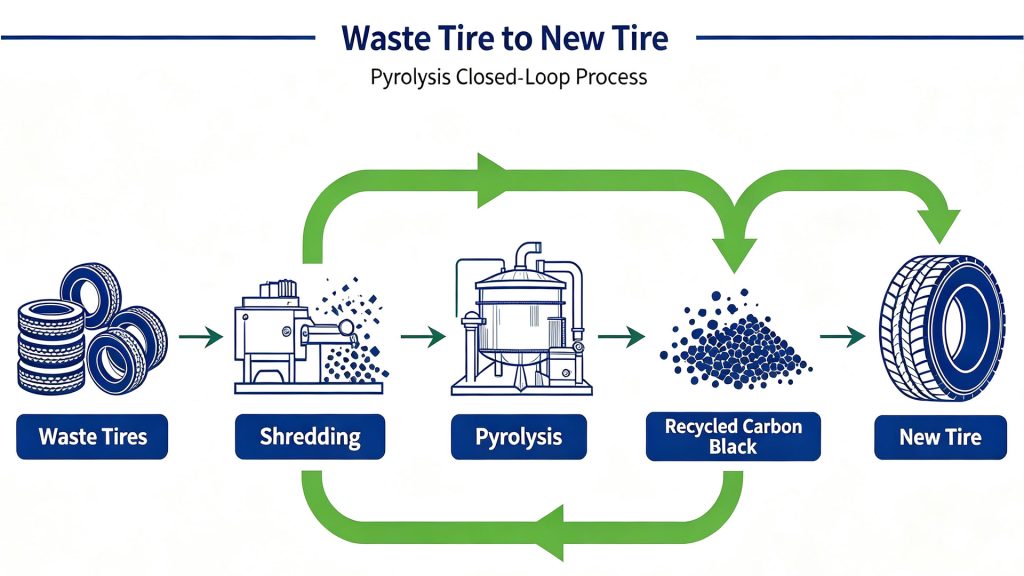
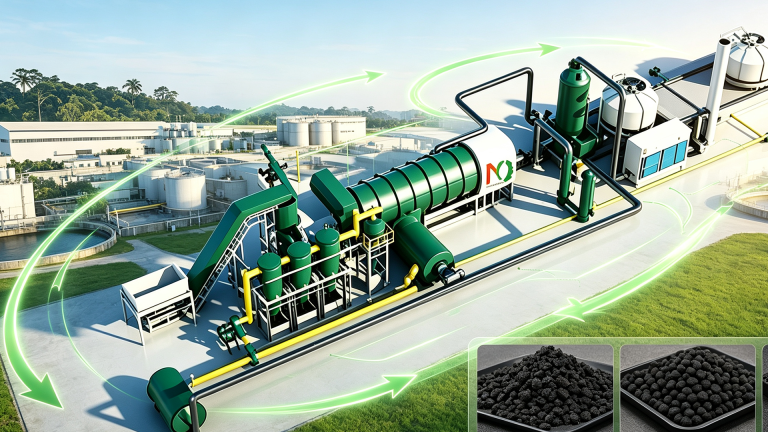
To achieve large-scale production in the tire circular economy, promoting intelligent continuous pyrolysis production lines is crucial. Optimizing temperature control, steam residence time, and catalytic cracking technology can significantly improve the yield and stability of pyrolysis oil and recycled carbon black. Combined with deep desulfurization, deashing, and molecular refining processes, recycled materials can be further upgraded to tire-grade standards.
Tire-to-tire recycling cannot be accomplished independently by a single company. It requires deep collaboration among tire manufacturer, pyrolysis plant manufacturer, and chemical refining companies.
Tire to Tire Circular Economy Case Studies
A leading global case has proven the effectiveness of this collaborative model: Pirelli, in collaboration with Pyrum, BASF, and Synthos, has built a European tire-to-tire closed-loop system. It utilizes pyrolysis-derived recycled carbon black and refined pyrolysis oil to produce brand-new tires with the same performance as the original tires. Bridgestone and Versalis have also adopted a similar industry collaboration model, achieving standardized reuse of recycled materials in tire production.
This cross-industry cooperation enables specialized division of labor, forming a seamless closed-loop industrial chain. Pyrolysis companies complete the decomposition and primary recycling of waste tires. Chemical companies complete deep purification and material modification. Tire manufacturers complete formula optimization and finished product manufacturing.
Current Obstacles to the Tire-to-Tire Circular Economy
While there are mature industrial examples of the tire circular economy, large-scale promotion still faces three major bottlenecks.
- First, the high investment costs of continuous pyrolysis plant and deep refining equipment limit its adoption by small and medium-sized enterprises.
- Second, the performance consistency of recycled materials needs further optimization to meet the demands of high-end tire manufacturing.
- Third, the market premium mechanism and policy incentive system for circular tires are still imperfect.
Conclusion
The tire circular economy is a fundamental solution to the problems of waste tire pollution and resource shortages in the rubber industry. Relying on efficient pyrolysis recycling technology, standardized end-to-end management, and a cross-industry collaborative ecosystem, a closed-loop Tire-to-Tire (T2T) cycle has been achieved. This will promote the green, low-carbon, and sustainable development of the global tire and rubber industry.