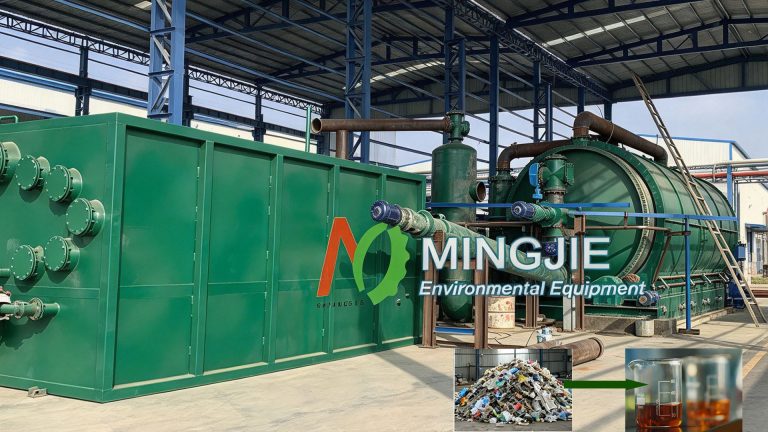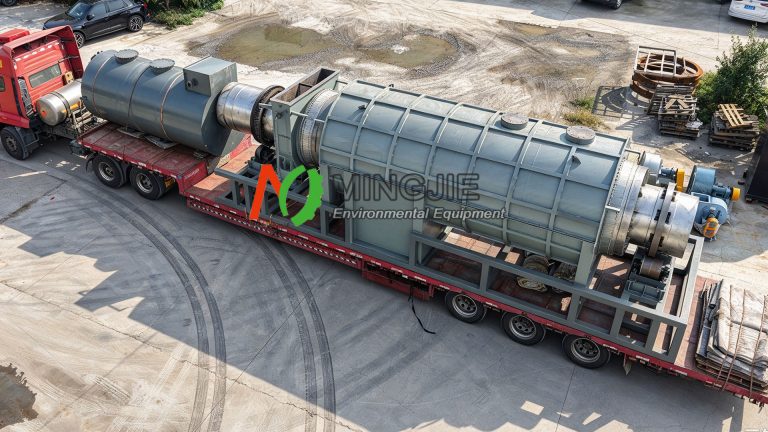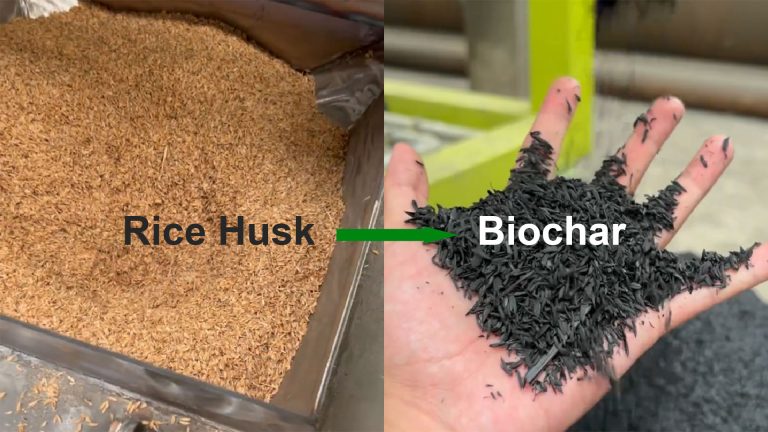

Rice hulls/husks are a major agricultural byproduct of rice processing and hold immense value for resource utilization. Rice hull biochar is characterized by a porous structure, high silica content, and strong adsorption capabilities. It is widely used in fields such as soil amendment, wastewater treatment, industrial metallurgy, and activated carbon production. The Mingjie continuous biomass carbonization plant utilizes continuous pyrolysis technology to achieve a seamless workflow, ranging from raw material pre-treatment to the discharge of the finished biochar product.
For enterprises with a stable supply of rice hulls looking to engage in large scale biochar production, selecting the right carbonization equipment is crucial. Mingjie biomass carbonization plant offers more than just rice husk biochar production equipment. It also enables energy recovery, reduces open-air burning, and facilitates long-term carbon sequestration.

Rice hulls are characterized by low density, high bulk volume, relatively high ash content, and significant dust generation. These properties impose specific requirements on the design of the entire production line, particularly regarding continuous feeding, carbonization, dust removal, and cooling. Mingjie Group offers tailored continuous carbonization equipment solutions for rice hulls pyrolysis, customized to the raw material characteristics, processing capacity, and product requirements.
Continuous Carbonization of Rice Husks
Rice hulls/husks are a typical agricultural biomass resource. Although lightweight, they are available in concentrated quantities, often ensuring a stable and continuous supply of feedstock. Rice hulls are highly suitable for large-scale, continuous carbonization.
Through a biomass carbonization plant, the process flows as follows: rice husk waste → pyrolysis carbonization → rice hull biochar → subsequent resource utilization.
Consequently, for enterprises with abundant rice husk supplies, pyrolysis carbonization serves not merely as a waste disposal method but also as a means to achieve the comprehensive utilization of biomass resources.
However, rice hulls/husks differ significantly from denser biomass feedstocks such as wood blocks or chips. Using wood carbonization equipment to process rice hulls/husks can lead to a range of issues during continuous production. Such as unstable feeding, insufficient equipment capacity, increased dust generation, and difficulties in ash handling.
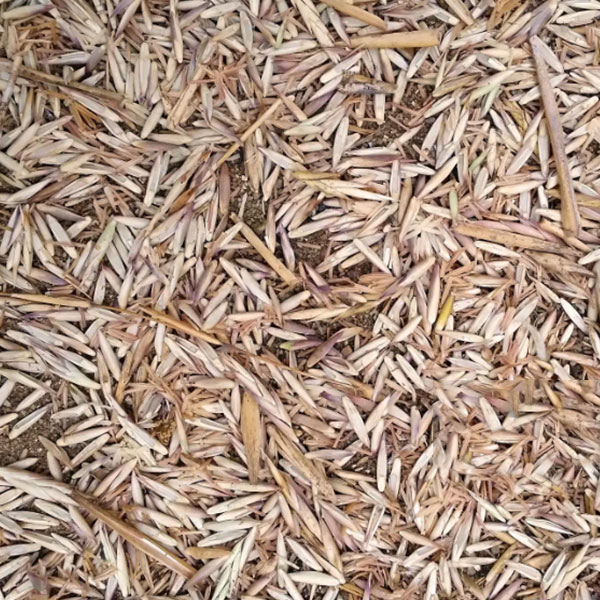

Therefore, successfully implementing a rice husk carbonization project requires a genuine understanding of the feedstock itself.
Processing Capacity of Rice Husk Carbonization Equipment
The defining characteristics of rice husks are their low weight and large volume.
When selecting biomass carbonization equipment, many clients first ask: “How many tons can this machine process per hour?”
However, calculating processing capacity solely by weight is insufficient for rice husks. They are a biomass feedstock with relatively low bulk density. An equal weight of rice husks occupies far more space than denser materials like wood chips.
This means that for rice husk carbonization equipment, the conveying capacity must account for not only tonnage but also the material’s volumetric flow rate.
For example, when planning a project for the continuous production of rice hull biochar, the following points must first be verified:
- Whether the raw material silo has sufficient effective volume.
- Whether the conveying equipment meets capacity requirements.
- Whether the screw conveyor can be consistently filled to capacity.
- Whether the feeding system is prone to bridging or flow interruptions.
- Whether the infeed system supports continuous operation.
Therefore, evaluating rice husk carbonization equipment requires looking beyond mere processing tonnage. One must simultaneously consider mass flow rate, volumetric flow rate, and the material’s actual bulk density.

For continuous biomass carbonization plant, stable and continuous feeding is the fundamental prerequisite for ensuring the steady operation of the entire rice husk biochar production process.
Final Carbon Content of Rice Hull Biochar
Another key characteristic of rice husks is their relatively high mineral and ash content. During the carbonization process, while some organic components undergo pyrolysis, the mineral constituents of the raw material are largely retained in the final product. Consequently, the ash proportion in the resulting biochar may be relatively higher.
This implies that a high yield of rice hull biochar does not necessarily equate to a higher final carbon content.
In practical rice husk biochar projects, clients should not focus solely on yield, such as how many tons of char are produced from 100 tons of raw husks. It is also essential to consider the biochar application and specific parameters. Including fixed carbon, ash content, volatile matter, particle size, stability, and suitability for downstream customer requirements.
Evaluation criteria may vary depending on the intended use of the rice hull biochar. Some clients prioritize fuel performance, others focus on agricultural applications, while some may be interested in adsorption capabilities or suitability for further processing.
Therefore, before launching a continuous rice husk carbonization project, it is advisable to clearly define the target product. Once the product goal is established, the appropriate carbonization process and equipment operating parameters can be determined.

How to Choose Suitable Equipment for the Rice Hull Biochar Continuous Production
When inquiring about continuous rice hull biochar equipment, many clients tend to focus solely on the carbonization reactor itself. However, for industrial large scale biochar production, a stable operation requires consideration of the entire biomass carbonization system.
Depending on the raw materials and production requirements, a continuous rice husk carbonization production line typically includes: raw material storage → conveying → stable feeding → continuous carbonization → combustible gas treatment and utilization → cooling of carbonized material → conveying → finished product storage or packaging.
Depending on the specific circumstances of the biochar project, additional equipment may be configured. Such as screening units, drying equipment, dust removal systems, flue gas treatment equipment, automatic control systems, and post-processing equipment.