As biomass conversion technology advances, investors are increasingly focused on how to transform dispersed biomass feedstocks into valuable biochar using continuous production methods. Achieving the continuous conversion of biomass into biochar requires moving away from batch processing models in favor of continuous carbonization systems.
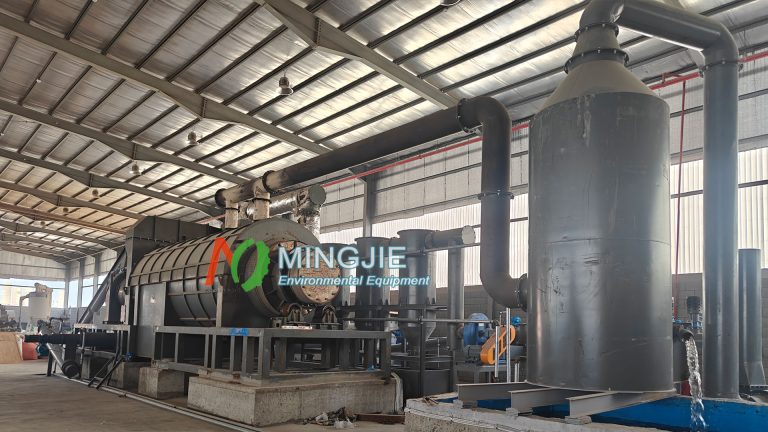
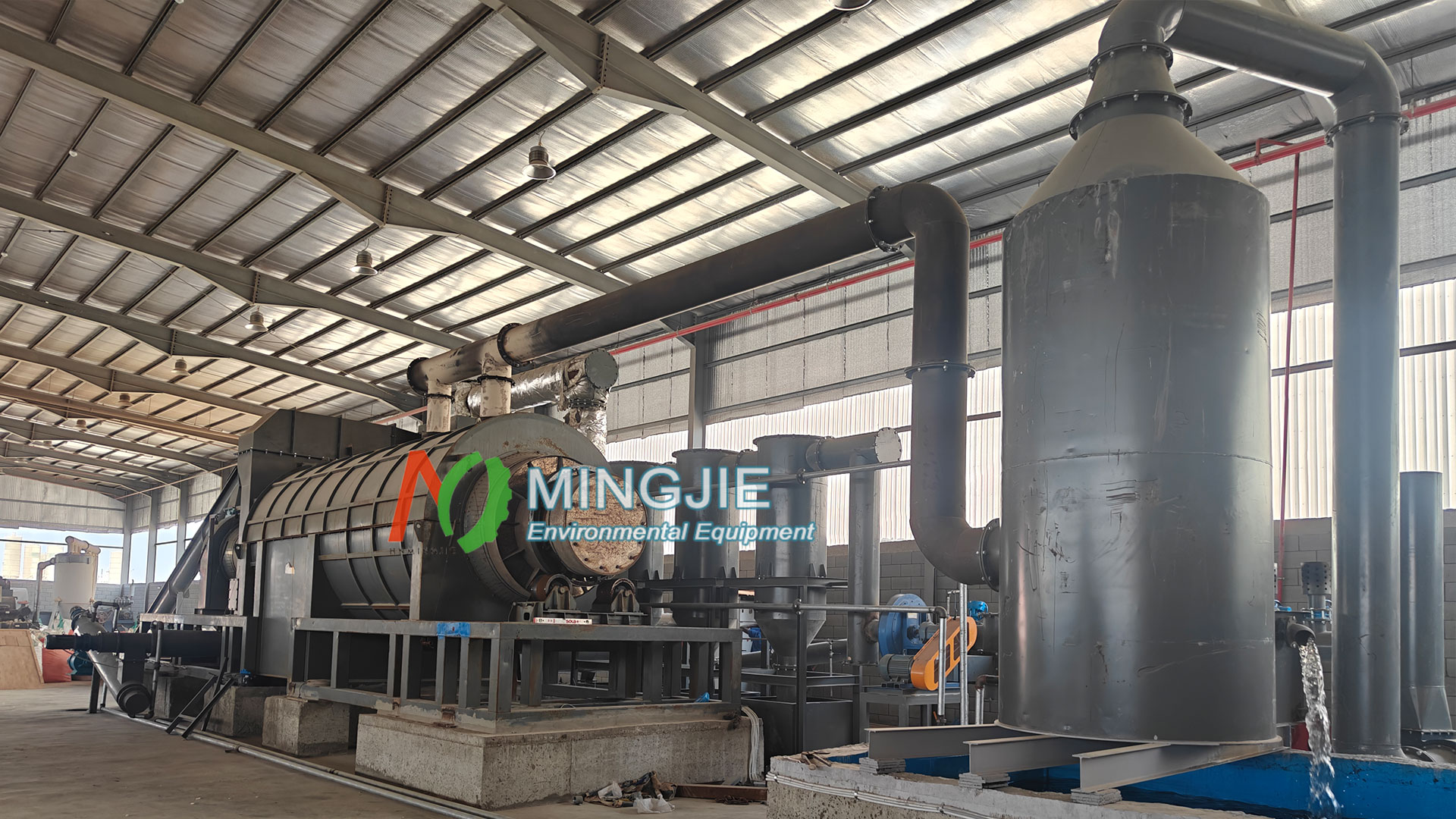
Mingjie Group provides equipment solutions for the continuous conversion of biomass into biochar. The continuous biomass carbonization plant utilizes continuous pyrolysis technology to enable the large scale, automated production of biochar from biomass.
Core Principles of Continuous Biomass to Biochar Conversion
The process of continuously converting biomass into biochar is based on the principles of pyrolysis. Biomass is heated to 400–600°C within a sealed reactor in the absence of air or under low-oxygen conditions. During this process, organic components such as cellulose, hemicellulose, and lignin undergo thermal decomposition. Volatile substances—including syngas, tar, and wood vinegar—are separated and recovered for reuse, while the remaining stable, carbon-rich solid residue constitutes the biochar.
The fundamental difference between continuous carbonization and batch carbonization lies in the dynamic balance between material flow and thermal energy flow. Continuous pyrolysis carbonization systems maintain steady material feed and discharge rates, precisely matching pyrolysis temperatures with residence times in real time. Syngas recovery enables thermal self-sufficiency, thereby avoiding the temperature fluctuations inherent in batch production. This closed-loop thermal cycle ensures the continuity of the carbonization reaction, reduces external energy consumption, and enhances production stability.
Continuous Conversion of Biomass to Biochar Equipment
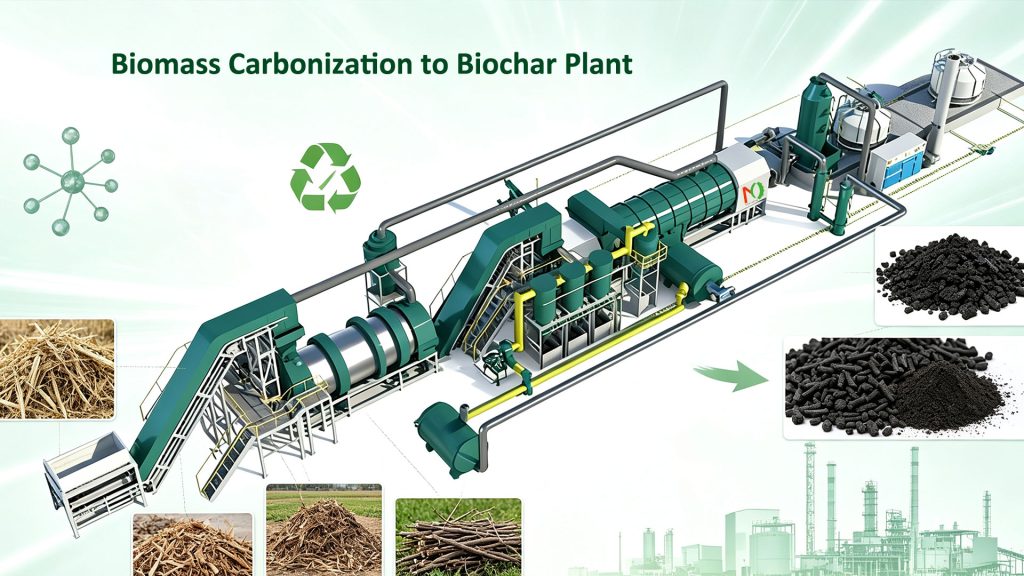
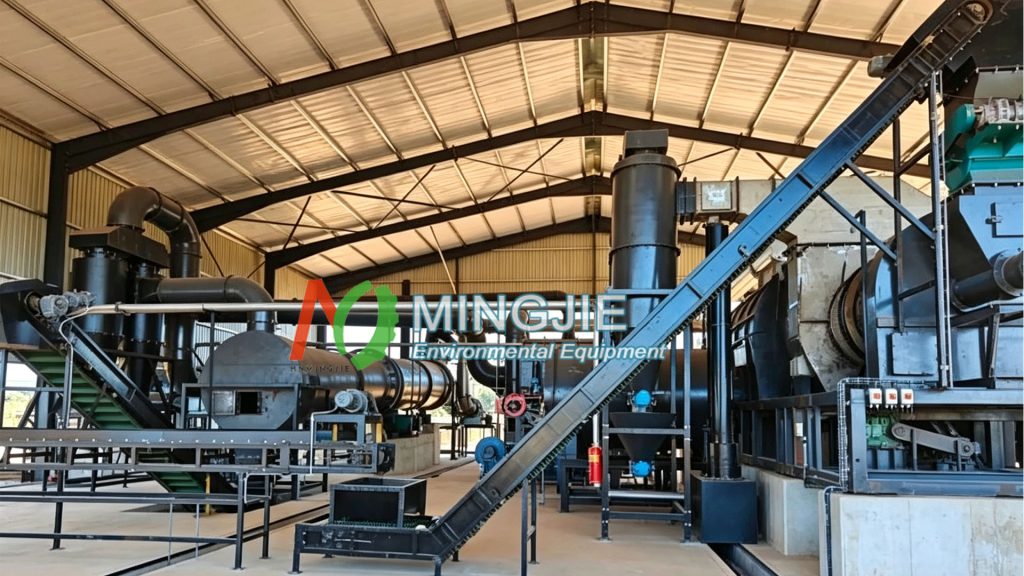
The various systems in biomass carbonization plant are tightly interconnected, ensuring the continuous operation of the entire biochar production line. The continuous conversion of biomass into biochar is a systematic and integrated process that can be divided into five core stages: feedstock pretreatment, continuous carbonization, continuous cooling and discharge, syngas recovery and utilization, and tail gas treatment.
Biochar production line configurations vary depending on the project, as raw material types, processing capacities, and product applications differ.
Raw Material Pre-treatment Equipment
Biomass raw materials vary significantly in size and moisture content. Large-sized materials typically require crushing before entering the continuous carbonization reactor, while materials with high moisture content require drying equipment.
Pre-treatment ensures a more stable feed into the carbonization system and enhances the continuity of the overall production process.
Continuous Feeding System
Stable feeding is fundamental to continuous conversion of biomass to biochar. Conveying equipment transports pre-treated raw material continuously into the carbonization zone. In industrial-scale biochar projects, feed uniformity directly impacts the stability of the subsequent carbonization process.
High-Temperature Continuous Carbonization Reactor
Once inside the reactor, raw materials undergo pyrolysis carbonization under controlled temperature and residence time conditions. Since biomass compositions vary, operating parameters must be adjusted based on the specific raw material. Stable process control ensures consistent biochar quality.
Cooling and Discharge System
Freshly carbonized material is typically very hot. Therefore, after discharge, the biochar must be cooled via dedicated systems before proceeding to storage, packaging, or further processing. An effective cooling design facilitates product collection and enhances overall production safety.
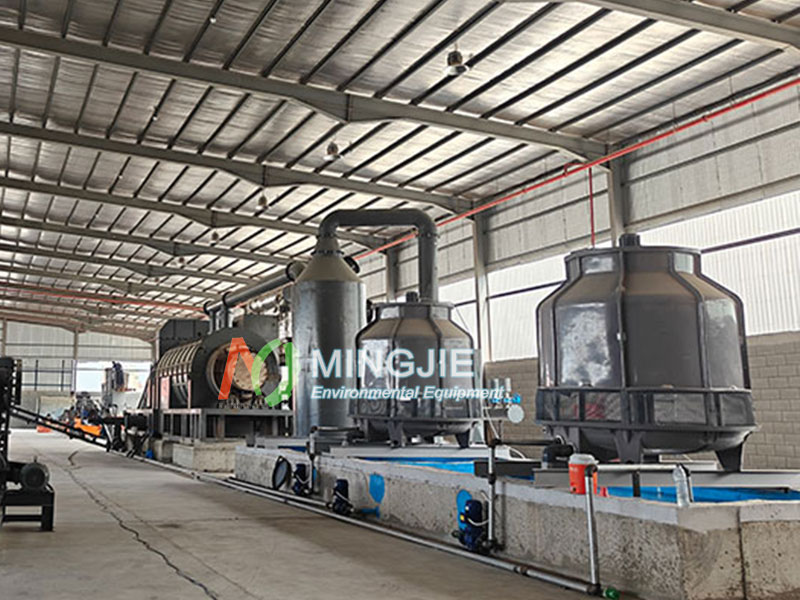
Energy Recovery and Utilization System
A certain amount of syngas is generated during the biomass pyrolysis and carbonization process. With proper system design, a portion of this syngas can be fed back into the combustion system.
The equipment typically requires an external energy source for preheating during the start-up phase. Once the carbonization process stabilizes, the combustible gas generated by the system can be effectively utilized, thereby reducing the consumption of external energy.
Tail Gas Treatment System
The continuous process of conversion biomass into biochar requires careful attention to environmental protection. Depending on local environmental regulations, appropriate tail gas treatment systems. Such as dust removal, cooling, and flue gas purification equipment—can be installed. Flue gas and dust generated during production are treated using suitable processing methods.
Summary
Mingjie Group provides continuous carbonization equipment solutions acoording to specific raw materials, processing capacities, and biochar project plans. Modern continuous carbonization production lines can be equipped with automated control systems, and the continuous carbonization reactor integrates seamlessly with auxiliary equipment, such as crushing, drying, conveying, cooling, and tail-gas treatment systems.