Carbonization of biomass refers to the process of converting organic matter into carbon-rich solid products through thermochemical conversion (pyrolysis) under oxygen-limited conditions. Biomass thermochemical conversion refers to the process of decomposing organic matter through heating, breaking its hydrocarbon bonds, and thus converting it into richer energy forms.
From a chemical perspective, biomass carbonization is a process in which cellulose, hemicellulose, and lignin undergo gradual dehydrogenation, deoxygenation, and condensation under thermal conditions. Biomass raw materials typically contain 45-50% carbon, 6% hydrogen, and 40-45% oxygen. After carbonization, the carbon content can be increased to over 80%. Hydrogen and oxygen are removed as water, tar, and non-condensable gases.

Pyrolysis technology is considered the starting point for all thermochemical conversion technologies. It involves all chemical reactions carried out under anaerobic or oxygen-limited conditions, ultimately producing solid char, liquid bio-oil, and syngas. The gases and bio-oil originate from the volatile components of biomass, while char is primarily composed of fixed carbon.
Biomass is a renewable, sustainable, and carbon-neutral solid fuel and soil fertilizer. Carbonization of biomass is a slow pyrolysis process that produces these different products. This process involves heating biomass to high temperatures in an inert atmosphere until adsorbed volatile substances escape, thereby increasing its calorific value and energy content. Charcoal, produced through a pyrolysis process, has excellent potential for soil fertilization and is therefore called “biochar.”
What is Biochar?

Biochar refers to charcoal used as fertilizer. Biochar production involves the carbonization of biomass at temperatures exceeding 500°C. Biochar is renowned for its carbon sequestration potential and soil-amortizing properties. Because biochar can steadily increase the carbon content in soil, it is considered a pathway to reduce greenhouse gas emissions.
Due to the high-temperature stress during its formation, biochar is difficult to degrade over time. It can maintain its form for hundreds of years, retaining carbon in the soil and thus ensuring soil fertility during this period. The International Biochar Initiative (IBI) provides a standardized definition of biochar properties, which is best suited for soil amendment.
How to Achieve the Carbonization of Biomass
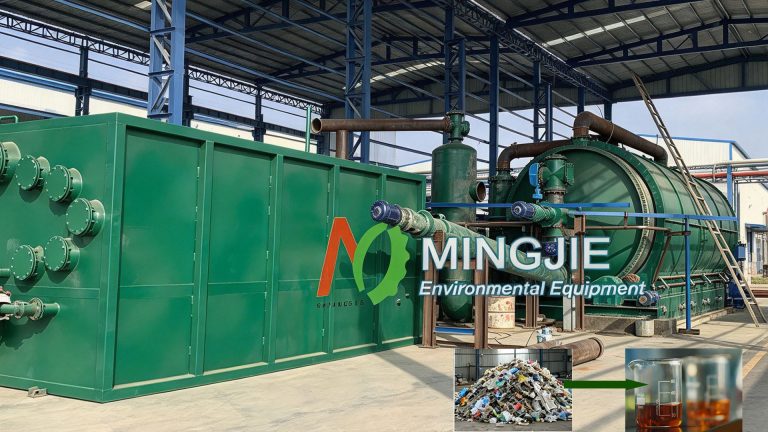
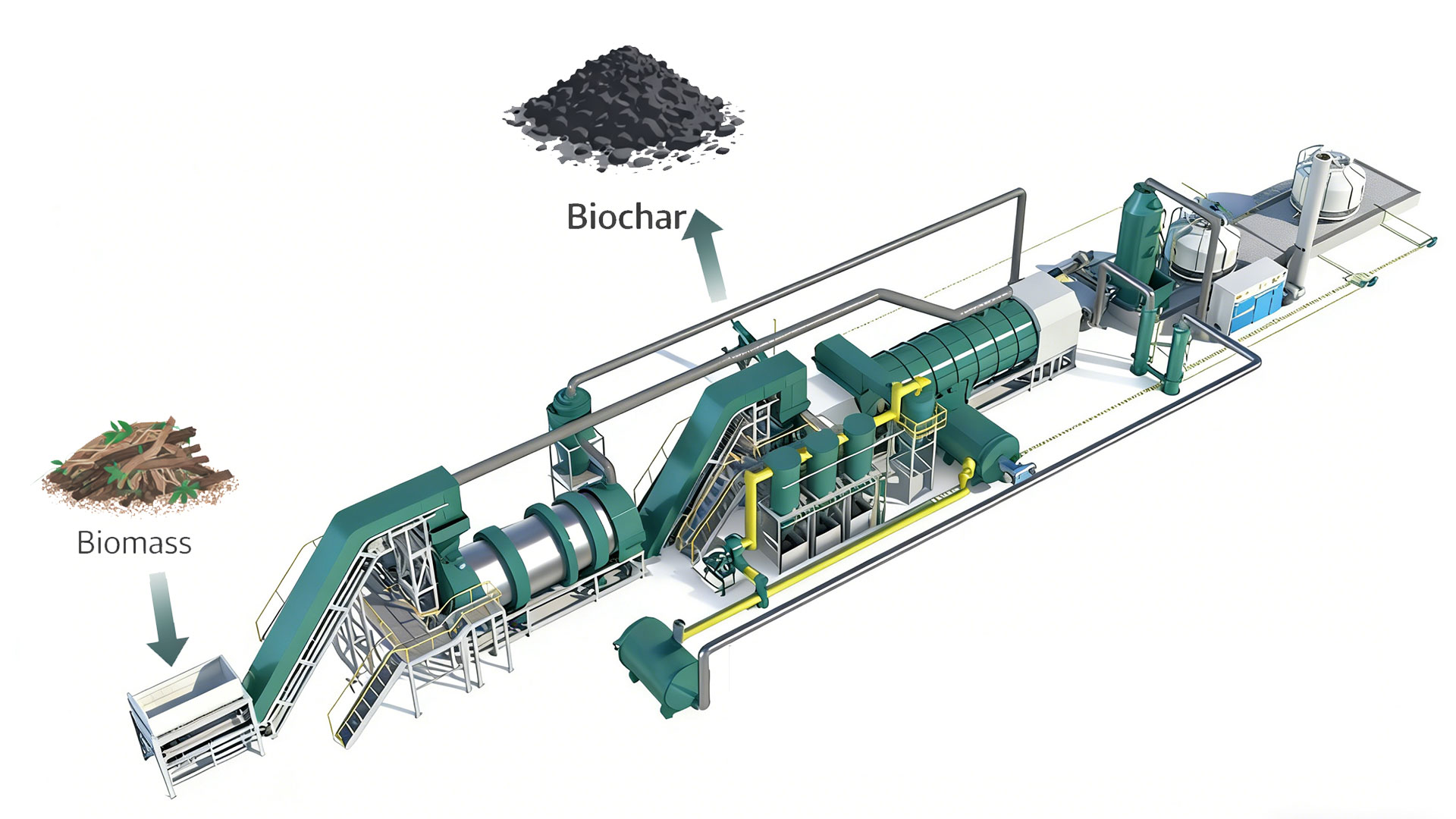
The carbonization of biomass has evolved from batch-type earthen kiln to continuous industrial biomass carbonization plant. While traditional earthen kilns are simple in structure and inexpensive to invest in, they suffer from low yield, uneven product quality, and direct flue gas emissions. Modern biomass carbonization equipment for biochar production offers advantages, such as heat self-balancing, continuous process, and controllable product output.
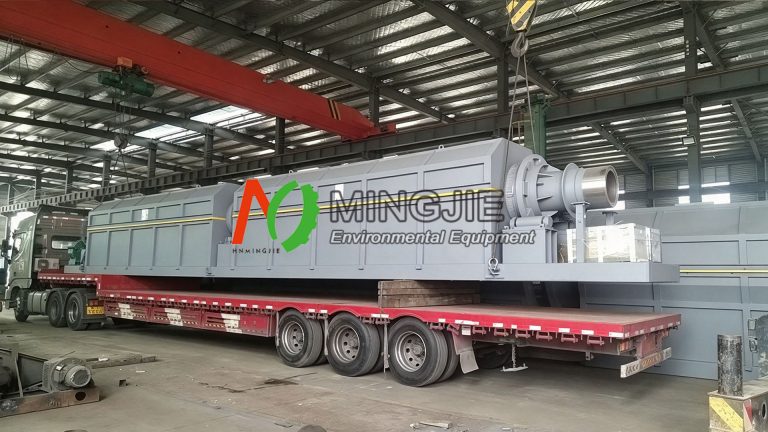
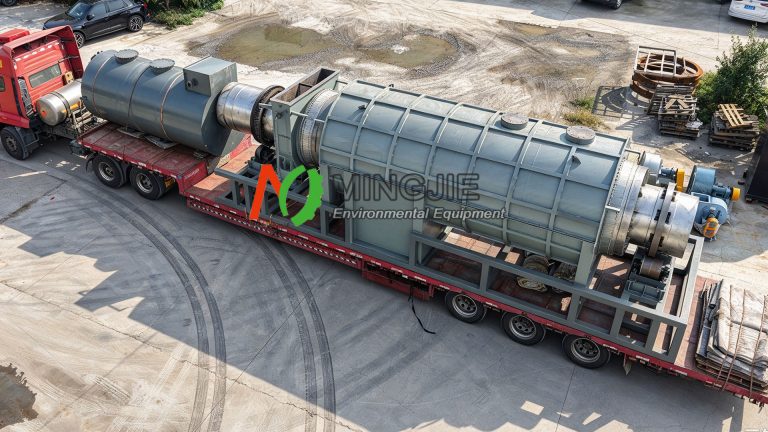
Mingjie continuous carbonization equipment adopts Twin-Cylinder Rotary Kiln as biomass pyrolysis reactor. Materials are propelled within a slightly inclined rotating cylinder. The outer wall of the cylinder is heated, and heat is conducted through the cylinder wall. Its advantages include controllable material residence time and relatively uniform temperature distribution.
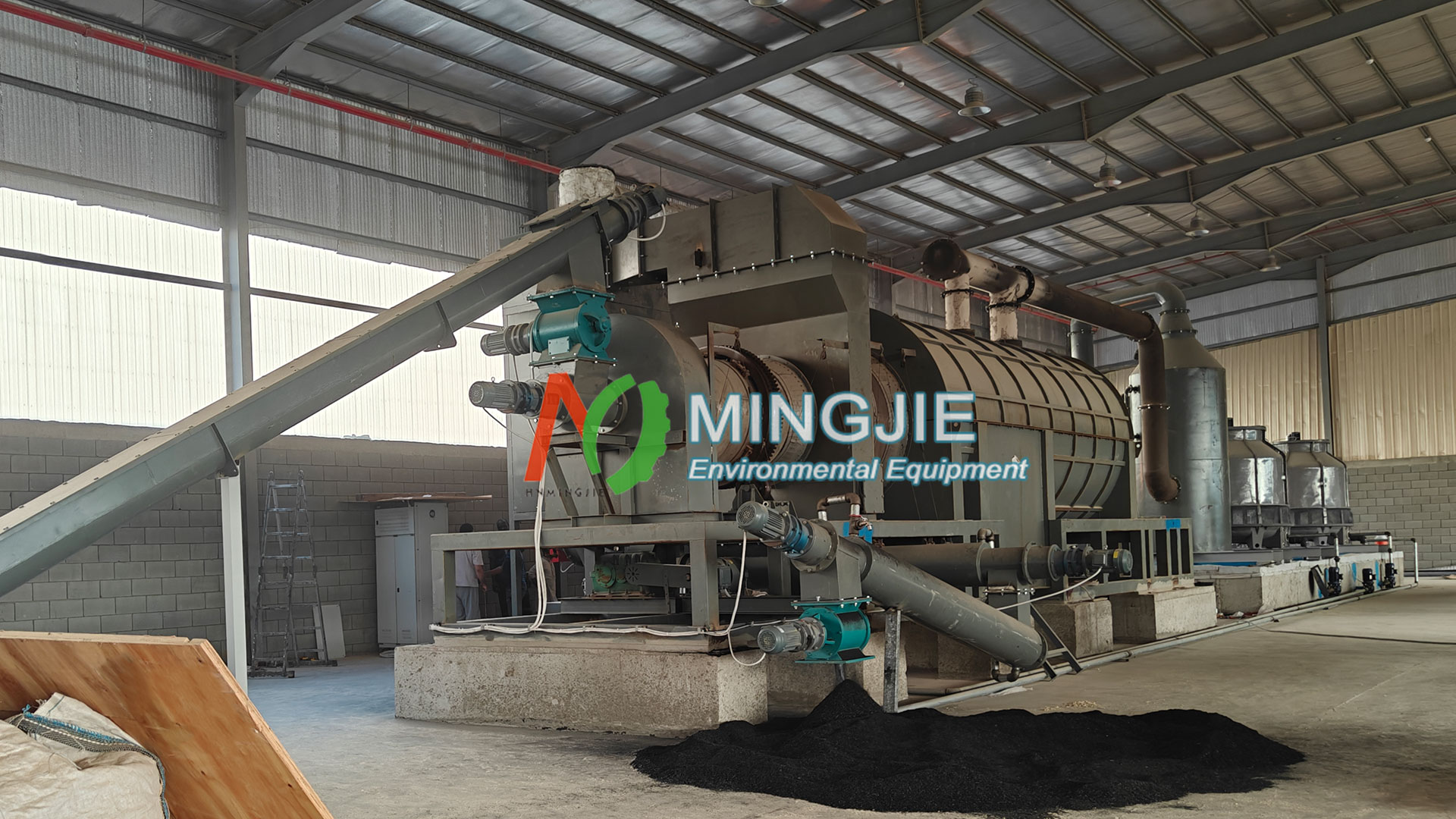
Continuous Carbonization Equipment Manufacturer – Mingjie Group
The MJT series biomass carbonization equipment is selected, equipped with an advanced dust removal system and industrial cooling system. The biochar emission temperature is controlled at 45℃ to prevent high-temperature oxidation and deterioration. A continuous feeding system is also included to achieve continuous production.
Mingjie biomass carbonization plant has a thermal efficiency of over 85%. Product quality is controllable, producing high-value biochar widely used in soil improvement and carbon sequestration. The pyrolysis gas generated during the process can be recycled as a renewable energy source, achieving resource recycling. Biochar can permanently fix carbon in the soil, removing carbon dioxide and contributing to carbon reduction.
Mingjie biomass carbonization equipment has a service life of 5-8 years and low operating and maintenance costs. It is suitable for large-scale biomass processing plants, agricultural waste resource utilization bases, and other large-scale biochar production scenarios. It is particularly suitable for carbon reduction projects.
Meanwhile, for small-scale biomass processing, Mingjie skid-mounted small biomass pyrolysis machine offers flexibility, convenience, low cost, and ease of operation. It enables the optimization and verification of biomass pyrolysis process parameters, providing technical support for large-scale applications.