The global biochar standardization system is gradually moving towards convergence and harmonization. Biochar standards primarily comprise internationally recognized standards, regional standards, national standards, and carbon credit certification standards. Currently, the leading international biochar standards are the World Biochar Certificate (WBC) and the European Biochar Certificate (EBC). These are the two most widely applied biochar standards globally.
Both WBC and EBC biochar standards are held by Carbon Standards International (CSI). Their technical requirements are largely the same, the main differences lie in their applicable geographical scope and regulatory basis.
EBC European Biochar Certificate
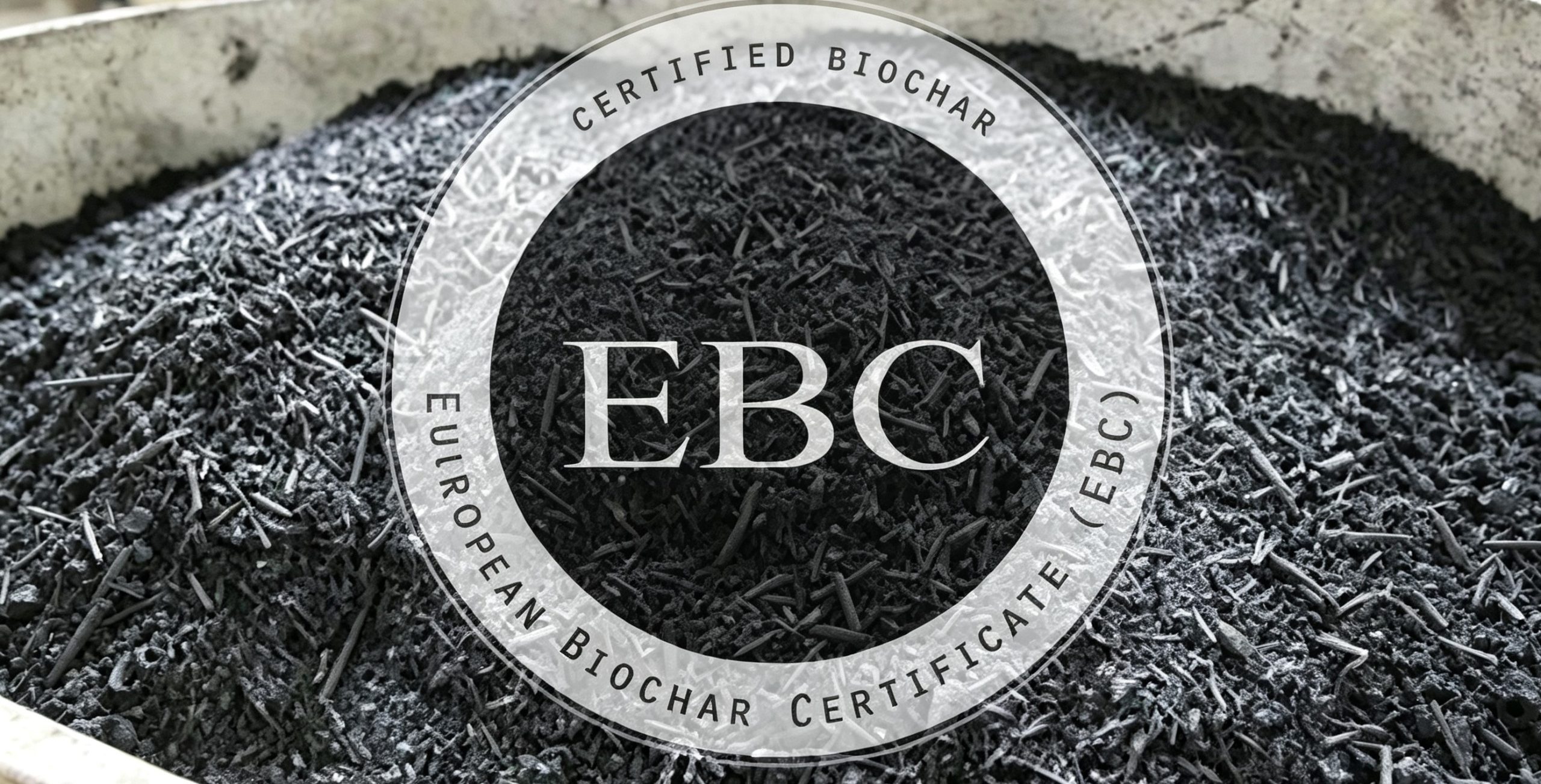
The EBC (European Biochar Certificate) is a voluntary international certification standard issued by the European Biochar Foundation. It aims to provide a rigorous set of guidelines for the production, quality, and sustainability of biochar.
The preferred standard in the EU. As one of the world’s earliest biochar standards, it applies across the EU and European Free Trade Association (EFTA) countries. It imposes rigorous requirements, regulating not only product quality, but also mandating sustainable biomass sourcing, low-carbon production processes, and a minimum energy efficiency of 60%.
WBC World Biochar Certificate
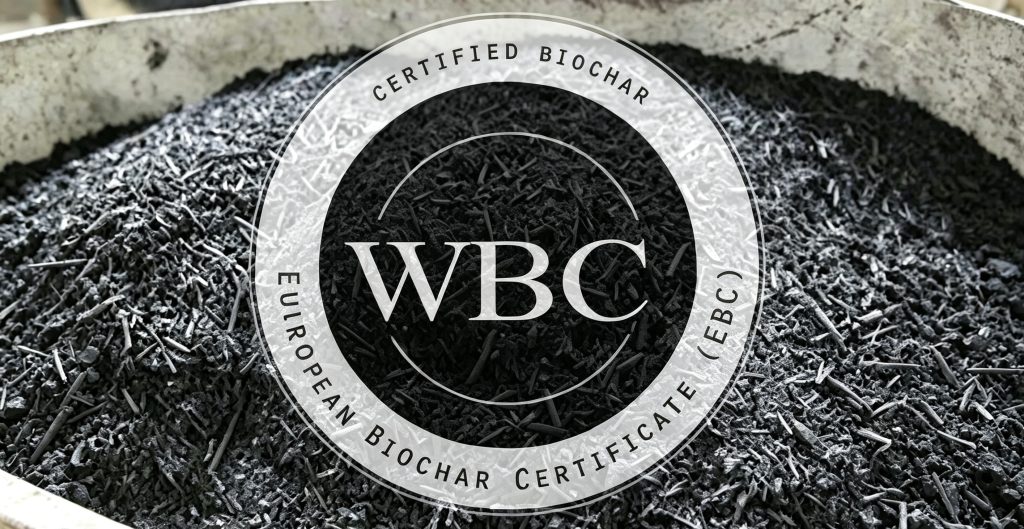
In 2024, the original IBI Biochar Standard merged with CSI’s WBC. It is a globally applicable product quality standard for regions outside the European Union and the European Free Trade Association (EFTA). Certified products are categorized into three grades: Premium, Agro, and Material.
The original standards of the International Biochar Initiative (IBI) officially ceased to be updated and certified in April 2024, and no new projects were accepted. Only existing historical projects remain valid. All new projects are now subject to the World Biochar Council (WBC).
Regional and National Biochar Standards
In addition to the two major biochar standards mentioned above, other regions and countries are actively developing their own biochar standards.
American Society for Testing and Materials (ASTM) Standards: Standards are being developed for the application of biochar in specific fields. For example, there is already a draft specification on the use of biochar in concrete. Their existing analytical methods are frequently cited as testing standards.
Chinese Group Standards: These have developed rapidly in recent years, with several biochar standards already published or under development. Including the Technical Specification for Biochar Preparation, Technical Specification for Quality Control of Biochar Production for Soil Amendment and Remediation, Technical Regulations for Biochar Preparation from Green Plant Waste, and the “Guideline for Biochar Carbon Sequestration Potential Accounting and Reporting.
For biochar production project developers, WBC/EBC is the “gold standard” for product quality. Global biochar carbon sink standards are a key pathway to realizing their environmental value.
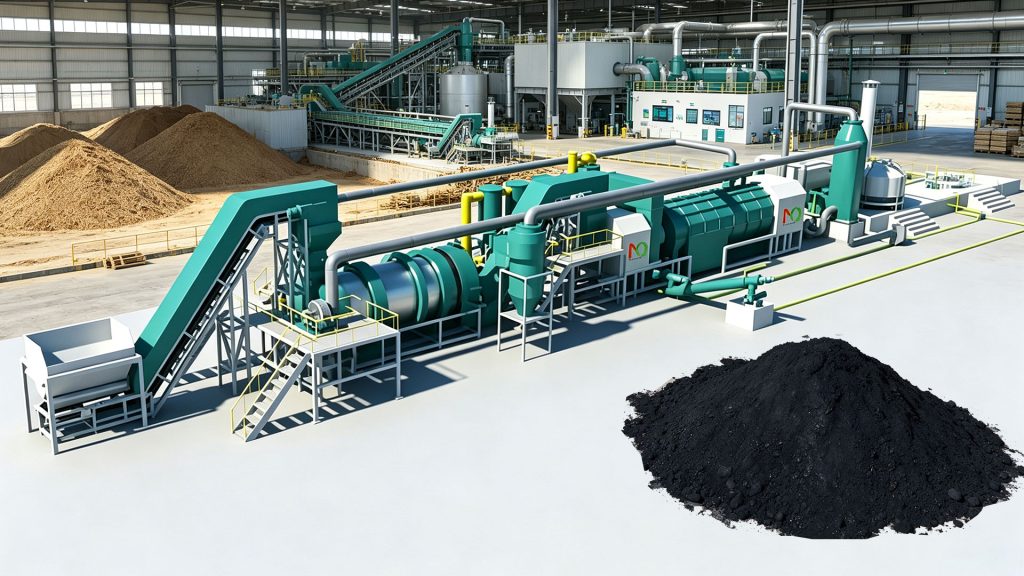
What is the Global Biochar C-Sink Standard?
The Global Biochar C-Sink Standard is a core standard specifically designed for certifying the carbon sink potential and carbon credits of biochar projects. Released in June 2024, it is a comprehensive upgrade of the previous EBC C-Sink standard and became a mandatory standard on June 1, 2025.
Standard Core: From Carbon Reduction to Carbon Sequestration
The core concept of this standard is to shift from simply Reducing Carbon Emissions to Actively Removing Carbon. It uses a rigorous scientific framework to ensure that every unit of biochar carbon sink can be accurately quantified, tracked, and certified.
The Biochar C-Sink Standard provides a crucial entry ticket for biochar projects into the voluntary carbon market.
A necessary prerequisite for obtaining Global Biochar C-Sink Standard certification is that the biochar product itself must first pass EBC (European Biochar Certificate) or WBC (World Biochar Certificate) quality certification. This ensures that only high-quality, sustainably produced biochar can further apply for carbon sink certification.
Through a rigorous scientific framework and end-to-end regulation, Biochar C-Sink Standard offers authoritative certification of the carbon removal benefits of biochar. This is a key step in transforming the environmental value of biochar into tradable carbon assets.
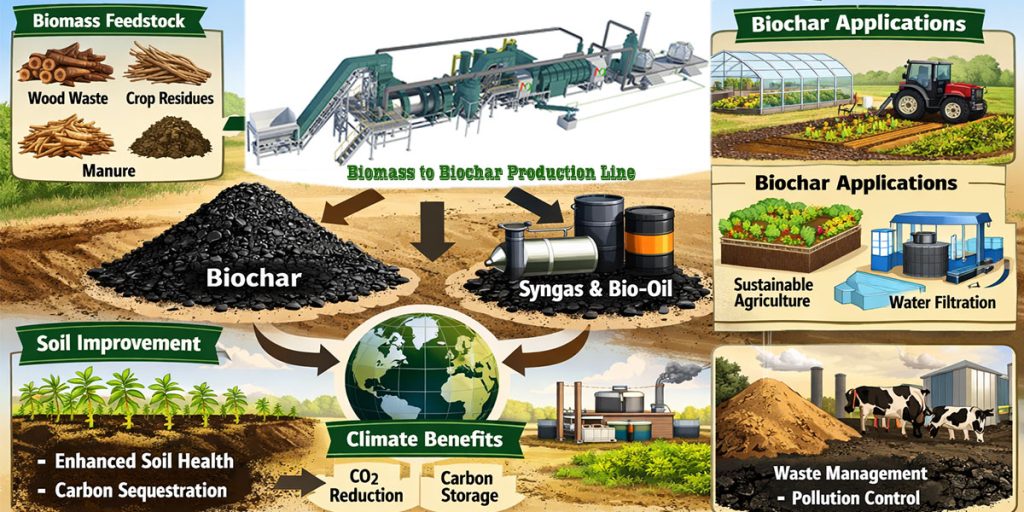
How to Enter the International Voluntary Carbon Market?
For biochar projects with carbon dioxide removal (CDR) attributes, now is an opportune time to enter the international voluntary carbon market. This is because market demand for high-quality carbon credits is growing rapidly, and related standards and methodologies are maturing.
A clear path to entering the international voluntary carbon market: biochar project development and preparation → selection of standards and registration → monitoring, reporting, and verification → issuance and trading.
The international voluntary carbon market (VCM) differs from national mandatory allowance markets. Investors develop biochar carbon removal projects, generate tradable carbon credits, and sell them to companies for compliance with carbon neutrality ESG (Environmental Standards for Carbon).